
Random Topics
Browse topics below and talk about it at home, work and beyond.
See Also: Worldview | Entertainment | Politics
8 Ways Your Life Gets Better When You Stop Drinking
Alcohol is woven into many social and work occasions, so it can be hard to imagine life without it. But many people who cut back or stop drinking are surprised by how much better they feel. Whether you’re considering a break, cutting back or quitting entirely, here are eight ways your life can get better when you stop drinking. If you drink heavily every day, talk with a doctor before stopping suddenly, since withdrawal can be dangerous.
1. Better Sleep
Alcohol can make you drowsy, but it disrupts the deeper stages of sleep. Many people find they sleep more soundly and wake up more refreshed after cutting back.
2. Steadier Mood
Alcohol can worsen anxiety and low mood, especially as it wears off. Without it, many people notice more stable emotions and less “hangxiety.”
3. More Energy and Focus
No hangovers and better sleep mean clearer mornings and sharper focus at work and home.
4. Better Physical Health
Drinking less can lower risks to your liver, heart and blood pressure and reduce your risk of several cancers, according to the National Institute on Alcohol Abuse and Alcoholism.
5. Stronger Relationships
Being fully present, remembering conversations and avoiding alcohol-fueled arguments can deepen trust with family and friends. See Tips for Rebuilding Relationships Post-Addiction.
6. More Money
Drinks add up quickly, especially when you’re out. Many people are surprised by how much they save.
7. More Time
Evenings and weekends open up for hobbies, exercise and connection.
8. Greater Self-Respect
Keeping a commitment to yourself builds confidence and a sense of control.
Getting Support
Changing drinking habits is easier with help. Tell a trusted friend, find alcohol-free activities and connect with a support group or counselor. In the US, the SAMHSA National Helpline (1-800-662-4357) offers free, confidential referrals 24/7.
The Takeaway
When you stop drinking, life can improve through better sleep, steadier mood, more energy, better health, stronger relationships, more money and time, and greater self-respect. If you’re curious, try an alcohol-free month and notice the difference, and reach out for support if you need it.
Talk It Over
Discuss these questions with your group, family, team or mentor:
- Read “The Takeaway” above as a group. What are your initial thoughts about the article?
- What role does alcohol play in social life where you live or work?
- Which of the eight benefits stands out most to you? Why?
- Why can it be hard to cut back on drinking, even when people want to?
- How can friends or coworkers support someone who isn’t drinking?
- What alcohol-free activities do you enjoy?
- If you were to try cutting back, what would help you succeed?
Is Your Workplace Making It Harder To Feel Your Best?
If you leave work drained, tense or unwell more often than not, your workplace may be part of the problem. Stress, long hours, poor relationships, unclear expectations and uncomfortable spaces can all wear on physical and mental health. The good news is that both employees and leaders can make changes that help everyone feel their best.
Chronic Stress and Workload
Constant urgency, unrealistic deadlines and too much work for too few people can lead to exhaustion and burnout. Signs include feeling depleted, cynical about work and less effective. See How a Lack of Control Affects Your Mental Health at Work.
Unclear Expectations
Not knowing what’s expected, or having priorities change constantly, creates anxiety. Clear goals and regular feedback reduce stress. See 5-Point Clarity for the Team.
Relationships and Culture
Toxic coworkers, poor communication or a culture where people don’t feel safe speaking up can make work miserable. Healthy relationships and respect, on the other hand, are powerful buffers against stress. See How To Handle a Toxic Coworker.
Physical Environment and Habits
Long hours sitting, poor lighting, noise, skipped breaks and eating at your desk all take a toll. Small changes help: stand and stretch regularly, step outside for daylight, take real lunch breaks and adjust your workspace for comfort.
What You Can Do
Notice what drains you most and what’s within your control. Set boundaries around work hours, take your breaks, build supportive relationships and talk with your manager about workload or clarity. If you’re struggling, use your employee assistance program or talk with a doctor. See 4 Healthy Boundaries To Set at Work.
What Leaders Can Do
Leaders shape the conditions people work in. Set realistic workloads, clarify priorities, encourage breaks and time off, model healthy boundaries and ask your team regularly, “What’s making it harder to do your best work?”
The Takeaway
Your workplace may be making it harder to feel your best through stress, unclear expectations, unhealthy relationships and physical habits. Identify what drains you most, change what you can and talk with your leader about the rest. This week, take every break you’re entitled to.
Talk It Over
Discuss these questions with your group, family, team or mentor:
- Read “The Takeaway” above as a group. What are your initial thoughts about the article?
- How do you usually feel at the end of a workday? Why?
- What part of work drains you most: workload, clarity, relationships or environment?
- How does a lack of clear expectations affect stress?
- What small physical changes could help you feel better during the workday?
- What can leaders do to make work healthier for their teams?
- What’s one change you’ll make this week to feel better at work?
How To Lead Your Team Through Workplace Change
A new system, a reorganization, a new manager or a shift in strategy: change at work unsettles people, even when it’s good change. Routines get disrupted and uncertainty fills the gaps. To lead your team through workplace change well, give people context early, keep communicating long after the announcement, invite their input, model the new expectations and give everyone room to adjust.
Give Context Before Confusion Grows
When people don’t know why something is changing, they fill in the blanks themselves, often with worst-case stories. Get ahead of that by explaining what’s changing, why it’s happening and what it means for each person’s day-to-day work.
Be honest about what you don’t know yet. “We’re still working out the new schedule, and I’ll update you by Friday” builds more trust than silence or vague reassurance.
Keep Communicating After the Announcement
Many leaders announce a change once and assume the job is done. In reality, people need to hear the message several times, in different ways, before it sinks in. Questions also tend to surface only after people start living with the change.
Build in regular check-ins, short updates and open office hours during the transition. Repeat the “why” often, and share progress so people can see the change is moving somewhere.
Show People Where Their Input Matters
People support what they help shape. Even when the big decision is already made, there are usually many smaller decisions about how it will work in practice. Ask your team for input on those: “What’s going to be hardest about this for you?” or “How should we handle the handoff?”
Your frontline people often see problems leaders miss. When their ideas show up in the plan, they’re far more likely to own it.
Watch What Happens in Real Work
A plan that looks good on paper can create real friction during a busy shift or a tight deadline. Spend time where the work happens. Notice where people are getting stuck, and fix those problems quickly. Connect the change to the people you serve, whether customers, patients or clients, so the team can see the purpose behind the disruption.
Model the Change and Allow Time To Adjust
If leaders keep using the old process while asking everyone else to switch, the change will stall. Show the new expectations in your own work first. At the same time, expect a learning curve. Mistakes and frustration are normal in the early weeks. Acknowledge them, offer training and support, and celebrate early wins. For more on keeping people engaged, see How To Keep Your Team Motivated.
The Takeaway
To lead your team through workplace change, explain the why early, keep communicating, invite input, watch how the change works in real life, model the new expectations and give people time to adjust. If change is coming for your team, schedule your first check-in now.
Talk It Over
Discuss these questions with your group, family, team or mentor:
- Read “The Takeaway” above as a group. What are your initial thoughts about the article?
- What’s one change at work or in life that felt hard at first but turned out well?
- Why do people often assume the worst when they don’t understand why something is changing?
- How many times do you think people need to hear about a change before it sinks in? Why?
- What kinds of decisions during a change could your team have a say in?
- What does it look like when leaders don’t model the change they’re asking for?
- If your team is facing a change right now, what’s one step you can take this week to help people adjust?
How To Speak Up More Confidently in Team Meetings
You have a useful idea, you wait for the right moment, someone else starts talking, and the meeting moves on without you. If that sounds familiar, you’re not alone. Speaking up in team meetings is a skill, not a personality trait, and it gets easier with a few simple habits: prepare one point ahead of time, speak early, find natural ways into the conversation, and stop shrinking your ideas before you share them.
Prepare One Point Before the Meeting
Confidence often comes from preparation. Look at the agenda ahead of time and pick one thing you want to contribute: an idea, a concern or a question. Jot down a sentence or two so you’re not composing it on the spot.
You don’t need a speech. Even something as simple as “I’d like to share what I’m hearing from customers about this” gives you a clear starting point and makes it easier to jump in when the topic comes up.
Speak Early Before You Overthink It
The longer you wait to speak, the bigger the moment feels. Try to say something in the first ten minutes, even if it’s small, like agreeing with a point or asking a clarifying question. Once your voice is in the room, it’s much easier to contribute again later.
Waiting for the perfect comment usually means saying nothing. A clear, ordinary contribution is far more valuable than a brilliant one that never gets shared.
Find a Natural Way In
If interrupting feels awkward, connect your point to what someone just said. Phrases like these can help:
- “Building on what Maria said…”
- “Can I add one thing before we move on?”
- “I see it a little differently. Here’s why…”
- “What would happen if we tried…?”
Questions are a powerful way in, too. A thoughtful question helps the whole group think and often moves the discussion further than a statement would. If you work remotely, use the chat or the raise-hand feature to signal that you have something to add.
Stop Shrinking Your Ideas
Many people start with an apology: “This might be a dumb question, but…” or “Sorry, I just wanted to say…” These openers tell the room not to take you seriously. Drop the disclaimer and say your point plainly.
If someone interrupts you, it’s okay to hold your ground politely: “I’d like to finish this thought, and then I’d love to hear yours.” Calm persistence shows respect for yourself and for the conversation.
Practice Where the Stakes Are Lower
Confidence grows with repetition. Practice in smaller settings first, such as one-on-ones, team huddles or a meeting with a supportive coworker. Ask a mentor or manager for feedback on how you come across. Each time you speak up and the world doesn’t end, the next time gets easier. For more on building confidence at work, see Applying Your EQ to Everyday Environments.
The Takeaway
You can learn to speak up more confidently in team meetings by preparing one point, speaking early, connecting to what others say and dropping the apologies. Before your next meeting, write down one thing you plan to say.
Talk It Over
Discuss these questions with your group, family, team or mentor:
- Read “The Takeaway” above as a group. What are your initial thoughts about the article?
- Are you more of a talker or a listener in meetings? Why do you think that is?
- What usually makes you hesitate before speaking up in a meeting?
- How could preparing just one point ahead of time change how you show up?
- Which of the phrases for joining a conversation feels most natural to you? Why?
- Why do you think people apologize before sharing an idea? What message does it send?
- Think about an upcoming meeting. What’s one thing you will say, and when will you say it?
How To Turn a Hands-On Skill Into a Career
Maybe you can fix an engine, build furniture, weld a clean seam or wire a room, and friends already call you when something breaks. At some point, a question comes up: could I make a living doing this? For many people, the answer is yes. Skilled trades and hands-on work offer steady demand, visible results and room to grow, often without a four-year degree. Turning a hands-on skill into a career means knowing your strengths, finding where demand is, building proof of your work and learning the professional habits that make it sustainable.
Start With What You Already Do Well
People often overlook their strongest skills because those skills feel ordinary to them. Make a list of what you’re good at and what people ask you to help with. Then think about what you enjoy most: problem-solving, building, repairing, working outdoors or working with customers.
Those patterns point toward possible paths, such as electrician, HVAC technician, welder, carpenter, mechanic, plumber or a small business of your own.
Find Where the Demand Is
Many skilled trades have strong demand for qualified workers. Research jobs in your area, talk to people already working in the trade and check sources like the US Bureau of Labor Statistics’ Occupational Outlook Handbook for pay, training and job outlook. Decide whether you want to work for an employer, join an apprenticeship or eventually run your own business. Each path has different trade-offs in stability, freedom and risk.
Build Proof, Not Just Confidence
Employers and customers want evidence. Earn the certifications or licenses your trade requires, take photos of your work, collect references and look for apprenticeships or entry-level roles where you can learn from experienced pros. Formal training can fill gaps and speed your growth.
Treat Reliability as Part of Your Craft
In hands-on work, being skilled is only half of it. Showing up on time, communicating clearly, keeping a clean and safe workspace, and doing what you said you’d do are what build a reputation. If you plan to work for yourself, learn the business side too: pricing, scheduling, insurance and basic bookkeeping. See Next Level Work Ethic.
Keep Growing
The best tradespeople keep learning new tools, codes and techniques, and many eventually train others. Find a mentor early, and when you’re ready, become one. See How to Stay Agile in Your Career.
The Takeaway
You can turn a hands-on skill into a career by building on what you already do well, finding real demand, earning proof of your skills, treating reliability as part of the craft and continuing to grow. This week, talk to one person who already works in the trade you’re curious about.
Talk It Over
Discuss these questions with your group, family, team or mentor:
- Read “The Takeaway” above as a group. What are your initial thoughts about the article?
- What’s something you’ve built, fixed or made with your hands that you’re proud of?
- What hands-on skills do people already ask you for help with?
- Why do you think skilled trades are sometimes overlooked as career paths?
- What’s the difference between working for an employer, apprenticing and running your own business?
- Why is reliability such an important part of hands-on work?
- Who could you talk to this week to learn more about a trade or hands-on career?
How To Balance Work While Caring for Aging Parents
Caring for an aging parent while holding down a job can stretch your time, energy and emotions in every direction. You might answer work emails in the morning, call a doctor’s office on your lunch break and spend your evenings handling errands and appointments. To balance work while caring for aging parents, you need a clear picture of the demands, honest conversations with your employer and family, shared systems, and boundaries that protect your own health.
Get Clear on the Biggest Demands
Start by listing everything caregiving involves right now: appointments, medications, meals, transportation, bills, home help and emotional support. Seeing it all in one place helps you spot which tasks take the most time, which require you specifically and which could be handled by someone else.
This list also makes it easier to plan ahead instead of reacting to each crisis as it comes.
Talk With Your Employer
Many people hide caregiving responsibilities at work and end up exhausted and behind. Consider having an honest conversation with your manager or HR about what you’re managing. You may have options you didn’t know about, such as flexible hours, remote work, an employee assistance program or protected leave. In the US, the Family and Medical Leave Act may allow eligible employees to take unpaid, job-protected leave to care for a parent with a serious health condition. Check with HR on what applies to you.
Come prepared with a plan for how your work will get done. That shows commitment and makes it easier for your employer to say yes.
Share the Load
Trying to do everything yourself is a fast path to burnout. Create a shared calendar for appointments and tasks so siblings, relatives or friends can see what’s needed and sign up. Group similar errands together, and look into community resources, such as your local Area Agency on Aging, meal services or adult day programs.
Whenever possible, let your parent participate in decisions and do what they can for themselves. It protects their dignity and lightens your load.
Protect Your Time and Health
Set boundaries around work hours so caregiving doesn’t spill into every moment, and vice versa. Keep an emergency plan with key contacts, medications and documents in one place so a crisis doesn’t derail everything. Most importantly, protect some time for rest and for the relationships that recharge you. A routine you can sustain matters more than a perfect one you can’t.
The Takeaway
You can balance work while caring for aging parents by getting clear on the demands, talking honestly with your employer, sharing the load and protecting your own health. Start this week by listing every caregiving task you’re handling and circling one you could hand off.
Talk It Over
Discuss these questions with your group, family, team or mentor:
- Read “The Takeaway” above as a group. What are your initial thoughts about the article?
- What’s one thing your parents or grandparents did for you that you’re grateful for?
- If you listed every caregiving task you (or someone you know) handle, what would surprise you most?
- What makes people hesitant to tell their employer about caregiving responsibilities?
- Who could help share the load, and what makes it hard to ask them?
- How can caregivers involve aging parents in decisions while still keeping them safe?
- What’s one boundary or routine you could set to make caregiving more sustainable?
The Effects of Sleep Deprivation on Your Body
Many of us treat sleep as optional, trading it for work, screens or late-night chores. But sleep is when the body and brain recover. The CDC recommends that adults get at least seven hours a night, yet many people regularly get less. Understanding the effects of sleep deprivation on your body can motivate you to make rest a priority, and a few habits can help you sleep better.
Your Brain on Too Little Sleep
Lack of sleep affects attention, memory, decision-making and reaction time. Tired people are more irritable, more emotional and more likely to make mistakes. Drowsy driving is a serious safety risk.
Your Body on Too Little Sleep
Ongoing sleep loss has been linked to a higher risk of health problems such as high blood pressure, heart disease, type 2 diabetes, obesity and weakened immunity. It can also affect hunger hormones, making it harder to maintain healthy eating habits.
Your Mood on Too Little Sleep
Sleep and mental health are closely connected. Poor sleep can worsen anxiety and depression, and those conditions can make sleep harder, creating a cycle. See Why Routines Are So Crucial for Those With Depression.
Habits That Help You Sleep Better
- Go to bed and wake up at the same time every day, even on weekends.
- Keep your bedroom cool, dark and quiet, with good air flow.
- Put screens away at least 30 to 60 minutes before bed.
- Limit caffeine later in the day and alcohol in the evening.
- Get daylight and movement during the day.
- Build a calming wind-down routine, like reading or stretching.
If you regularly struggle to fall asleep, stay asleep, or feel exhausted despite enough time in bed, or if someone notices you snore loudly or stop breathing during sleep, talk with a doctor.
The Takeaway
Sleep deprivation affects your focus, health, mood and safety. Aim for at least seven hours, keep a consistent schedule and build habits that support rest. Choose one sleep habit to improve this week, like a consistent bedtime.
Talk It Over
Discuss these questions with your group, family, team or mentor:
- Read “The Takeaway” above as a group. What are your initial thoughts about the article?
- How many hours of sleep do you usually get? How do you feel?
- What gets in the way of good sleep for you?
- How does lack of sleep affect your mood and focus?
- Why do you think people often treat sleep as optional?
- Which sleep habit would make the biggest difference for you?
- What’s one change you’ll make to your sleep routine this week?
Making Screen-Time Transitions Easier for the Whole Family
“Five more minutes!” Few moments spark as many family arguments as turning off a screen. Kids (and adults) find it hard to stop because games, videos and apps are designed to keep us engaged. Making screen-time transitions easier for the whole family comes down to clear limits, advance warnings, predictable routines and appealing things to do next.
Set Clear Limits Together
Agree on when and how long screens are used, and write it down. Involving kids in setting the rules builds buy-in. Many families protect screen-free times like meals, homework and the hour before bed, and screen-free places like bedrooms. Built-in tools can help kids set limits on their own devices, though conversation matters more than controls.
Give Warnings Before Time’s Up
Abrupt endings feel unfair. Give a 10-minute and then a 2-minute warning, and let kids finish a level or episode when possible. Timers, visual countdowns or a smart speaker announcement can make the end feel less personal.
Build Predictable Routines
When screen time happens at the same times each day, kids know what to expect and push back less. Tie screen time to routines: after chores and homework, or for a set window on weekends.
Have Something Good Next
Transitions are easier when there’s something appealing waiting: a snack, a game together, outdoor play, a craft or a walk. “When the timer goes off, let’s go shoot hoops” works better than “Turn it off now.” See 5 Activities That Will Help Your Family Feel More Connected.
Stay Calm and Consistent
Expect some pushback, especially at first. Acknowledge feelings (“I know it’s hard to stop”), stay calm and follow through on the agreed consequence. And model healthy habits: kids notice when parents can’t put down their phones. See Screen Time and Your Kids.
The Takeaway
To make screen-time transitions easier, set limits together, give warnings, build routines, offer something good next and stay calm and consistent. This week, try a 10-minute warning and a fun next activity at your next screen-time ending.
Talk It Over
Discuss these questions with your group, family, team or mentor:
- Read “The Takeaway” above as a group. What are your initial thoughts about the article?
- What’s the hardest screen to put down in your household, including for adults?
- Why do you think screen time is so hard to end?
- What screen rules would work for your family?
- How could warnings and timers change the way screen time ends?
- What activities could your family look forward to after screens?
- What’s one change you’ll try at your next screen-time transition?
A Teenager’s First Cell Phone: Tips for Parents
Few parenting decisions spark as many questions as a teenager’s first cell phone. A phone can help teens stay connected, safe and independent, but it also brings risks: distraction, lost sleep, online pressure and content they’re not ready for. These tips for parents can help you make a thoughtful decision and set your teen up for healthy habits from the start.
Decide on Timing Thoughtfully
There’s no perfect age. Consider your child’s maturity, responsibility and real needs, like getting to and from activities. Some families start with a basic phone for calls and texts before moving to a smartphone. Talk with other parents and with your teen about what makes sense.
Set Clear Expectations Together
Before handing over the phone, agree on the rules. Many families write a simple phone agreement covering when and where the phone can be used, screen-free times like meals and bedtime, which apps are allowed, how to treat others online and what happens if rules are broken. Involving your teen in creating the rules builds buy-in.
Protect Sleep
Phones in bedrooms often mean late-night scrolling and less sleep, which affects mood and learning. A common rule is charging phones overnight in a shared space, like the kitchen. See The Effects of Sleep Deprivation on Your Body.
Use Parental Controls Wisely
Built-in controls can limit screen time, filter content and require approval for app downloads. They’re helpful, especially at first, but they’re not a substitute for conversation. Explain why the controls are there and plan to loosen them as your teen shows responsibility.
Keep Talking
The most powerful protection is an open relationship. Talk regularly about what your teen is seeing online, how social media makes them feel, cyberbullying, privacy and what to do if something makes them uncomfortable. Let them know they can come to you without automatically losing their phone. Model healthy phone habits yourself. See Digital Detox.
The Takeaway
For a teenager’s first cell phone, choose timing thoughtfully, set clear expectations together, protect sleep, use parental controls as a starting point and keep the conversation going. Sit down with your teen this week to write a simple phone agreement.
Talk It Over
Discuss these questions with your group, family, team or mentor:
- Read “The Takeaway” above as a group. What are your initial thoughts about the article?
- When did you get your first phone? What do you remember about it?
- What do you think is the right age for a first phone? Why?
- What rules would you include in a family phone agreement?
- Why is protecting sleep so important for teens?
- How can parents balance safety with trust and independence?
- What’s one conversation about phones or social media you’d like to have with a teen in your life?
Career Questions To Ask Before Changing Employers
A new job often looks better from a distance. The salary sounds higher, and the fresh start offers relief from whatever pushed you toward the exit. Yet a job change affects far more than your business card. Before you resign, slow down and ask questions that reveal how the new role will shape your workdays and future options.
Explore these career questions before changing employers so you can compare two real situations instead of comparing your current job with an idealized version of the next one. These questions help you slow down before the honeymoon period ends and see the move more clearly.
Why Is This Position Open?
Start by asking why the company needs someone in this role. A newly created position suggests growth, while a replacement role raises different questions. Neither answer should scare you, but each one gives you useful context about what you are walking into.
If the last employee left, ask how long that person stayed. You might also ask what the company wants the next hire to approach differently. Listen for a clear answer rather than polished phrases about seeking “fresh energy.” A vague response sometimes points to expectations the employer has not fully defined.
What Will Success Look Like?
A job description tells you what the company wants done. It rarely tells you which results leaders value most. Ask what success should look like after your first few months and what the employer expects by the end of your first year.
Clear goals help you judge whether the position fits your strengths. They also show whether the manager has realistic expectations. If the interviewer cannot explain the priorities, you might enter a role where everyone measures your performance differently.
Ask How Performance Gets Measured
Find out how often the company reviews performance. Ask who gives feedback and what information shapes each evaluation. A yearly review offers little help when you need direction during your first month.
You should also ask how the company handles missed goals. Healthy managers discuss problems early and work with employees on a response. Poor managers stay quiet until review season, then present a list of surprises nobody mentioned before.
How Does the Team Work Together?
A strong role can feel miserable inside a tense team. Ask how coworkers divide responsibilities and share information. You should understand where your work begins and where someone else’s role takes over.
Useful team questions include:
- How does the team share feedback?
- How often does the group meet?
- What causes the most pressure?
- How does the team resolve conflict?
- Which departments work closely with this role?
- What support will I receive during onboarding?
Listen to the tone behind the answers. Interviewers often reveal more through hesitation than through the words they choose.
What Does the Schedule Look Like?
Ask about the actual schedule rather than the official one. A listing might say 9 to 5, yet employees might answer messages late every evening. Find out when people usually start and finish their workdays.
Remote and hybrid arrangements also need clear definitions. Ask which days require office attendance and whether those expectations change during busy periods. A flexible policy loses value when the manager expects everyone at a desk whenever a meeting appears.
What Growth Does This Role Offer?
A new job should move you toward something, even when the move itself solves an immediate problem. Ask what skills you will build and which responsibilities might expand over time. You want more than a vague promise about “room to grow.” Find out where previous employees moved after succeeding in the role. Their paths show whether the company promotes from within or expects people to leave when they outgrow their positions.
Look Beyond the Next Title
Growth does not always require a promotion. A role might give you stronger experience or exposure to senior leaders. It might also help you enter an industry where you want to build a longer career. Think about the person you want to become through your work. A better title means little when the work keeps you in the same professional place.
What Will Change in My Compensation?
Compare the full compensation package rather than focusing only on salary. A raise might disappear once you account for higher insurance costs or a longer commute. Paid time off also affects the real value of an offer.
Ask when benefits begin. Some companies require employees to wait before health coverage starts. You should also find out when the company reviews salaries and how bonuses work. Give yourself time to compare each part without pressure! A company that rushes you toward a decision might create the same pressure once you work there.
Will This Move Affect My Legal Status?
Employees who rely on employer sponsorship need more information before changing jobs. Ask which immigration support the company provides and who manages the process. A job change might also affect timelines connected to the H-1B to green card process. Speak with a qualified immigration attorney before making a move, as each person’s circumstances differ.
Do not rely on informal advice from coworkers or online discussions when your work authorization depends on accurate guidance! Ask the employer how it has supported sponsored employees in the past. A company does not need to share private details, but it should explain its general process and communication practices.
Why Do I Want To Leave?
Ask yourself the hardest question before you accept anything. Do you want a new opportunity, or do you mainly want relief from one difficult situation? Both reasons feel valid, but they lead to different decisions.
A frustrating manager might push you toward the first available offer. Burnout might make any change look refreshing. Give yourself enough space to separate the problems tied to your employer from the problems tied to your role or industry.
Talk with someone you trust before resigning! Explain what you hope will improve and what concerns you about the offer. A thoughtful conversation often reveals assumptions you have not tested yet.
Make the Decision With Clear Information
Changing employers often brings uncertainty, even when the opportunity looks strong. You do not need perfect answers before moving forward. You do need enough information to understand what you are choosing.
Ask these career questions before changing employers, and have honest conversations with the hiring manager. Remember, a good career decision should support the life you want outside work too.
The Takeaway
A new job can look better from a distance. Before you resign, ask why the role is open, what success looks like, how the team works, how your schedule, growth and pay will change, and why you really want to leave. Clear information leads to better career decisions.
Talk It Over
Discuss these questions with your group, family, team or mentor:
- Read “The Takeaway” above as a group. What are your initial thoughts about the article?
- What is the best or worst job change you’ve ever made? What did you learn?
- What matters most to you when deciding whether to change employers?
- Which part of a job offer deserves more attention than salary?
- How has a manager shaped your experience at a past or current job?
- How can you tell whether you want a new opportunity or just relief from a hard situation?
- What question would you ask before accepting your next job offer?
Turning Workplace Mistakes Into Useful Feedback
When a mistake happens at work, tension often shows up before anyone says a word. You may feel frustrated; the other person may already feel embarrassed or defensive. How you handle that moment decides what happens next. Turning workplace mistakes into useful feedback means sticking to the facts, asking before assuming, explaining the impact, agreeing on a next step and protecting the person’s confidence along the way.
Start With the Facts
Begin with what actually happened, not a judgment about the person. “The client report went out two days after the deadline” is a clear starting point. “You’re unreliable” is a label that invites defensiveness. Facts lower the emotional temperature and give you both something concrete to discuss.
Ask Before You Assume
There’s often more to the story. Maybe the person was waiting on information, juggling competing priorities or unclear about expectations. Ask an open question: “Walk me through what happened.” Listening first helps you understand the real cause, and it shows respect. Sometimes you’ll discover that part of the problem was a process or expectation you can fix. See Getting to the Root of the Problems on Your Team.
Explain the Impact
People are more motivated to change when they understand why it matters. Briefly explain the effect of the mistake: “Because the report was late, the client delayed their decision and we had to reschedule the launch.” Keep it calm and factual, not dramatic.
Agree on a Next Step
Feedback is only useful if it leads somewhere. Work together on what will happen next time: a checklist, an earlier deadline, a check-in point or extra training. Let the person suggest solutions too, so they own the plan. Then follow up to see how it’s going.
Protect Confidence
Correct in private, and make it clear that one mistake doesn’t define someone. Acknowledge what they do well and express confidence that they can improve. People who feel safe admitting mistakes report problems earlier, which helps everyone. See Giving Healthy Feedback in the Workplace.
The Takeaway
To turn workplace mistakes into useful feedback, start with facts, ask before assuming, explain the impact, agree on a next step and protect the person’s confidence. The next time a mistake happens, start the conversation with “Walk me through what happened.”
Talk It Over
Discuss these questions with your group, family, team or mentor:
- Read “The Takeaway” above as a group. What are your initial thoughts about the article?
- Think of a mistake you made at work or school. How did someone respond, and how did it affect you?
- Why does labeling a person make feedback less effective than describing what happened?
- What might you learn by asking questions before assuming why a mistake happened?
- How does understanding the impact of a mistake help someone change?
- What helps people feel safe admitting mistakes?
- How will you handle the next mistake you need to address, and what will you say first?
Why Is Virtual Team Building So Important?
Remote and hybrid work offer flexibility, but they also remove many of the small moments that build relationships: hallway chats, lunch together, a quick question over a cubicle wall. Without those moments, teams can become a collection of people who only talk about tasks. Virtual team building matters because it rebuilds connection on purpose, which strengthens communication, trust, engagement and collaboration.
It Improves Communication
When people only interact in formal meetings, misunderstandings multiply. Messages get read the wrong way, and people hesitate to ask “simple” questions. When teammates know each other personally, they’re more comfortable asking for help, sharing ideas and giving each other the benefit of the doubt.
It Builds Trust
Trust grows through shared experiences. Remote teams have fewer chances to see each other’s character, humor and reliability, so they need intentional opportunities to connect. Even small rituals, like starting meetings with a quick personal check-in, help people see each other as whole humans. See What Google Learned About Team Culture.
It Keeps People Engaged
Remote work can feel isolating. People who feel disconnected are more likely to disengage or leave. Regular team-building moments remind people they’re part of something and that their coworkers care about them.
Ideas That Actually Work
Virtual team building doesn’t have to mean awkward games. Try a few of these:
- A five-minute “highs and lows” round at the start of a weekly meeting
- Virtual coffee pairings between people who don’t usually work together
- A channel for sharing wins, photos or recommendations
- Working through a FlexTalk topic together as a team
- Occasional in-person gatherings when possible
Keep activities optional, short and respectful of time zones and schedules. Ask the team what they’d enjoy.
It Supports Culture Over Time
Culture doesn’t build itself when people are spread out. Consistent, small connection habits help remote teams develop shared values, inside jokes and a sense of belonging that carries them through hard seasons. See also Why Video Calls Are So Exhausting.
The Takeaway
Virtual team building is important because it replaces the casual moments remote teams lose, building communication, trust, engagement and culture. Add one small connection habit to your team’s routine this week.
Talk It Over
Discuss these questions with your group, family, team or mentor:
- Read “The Takeaway” above as a group. What are your initial thoughts about the article?
- What’s your favorite team-building activity you’ve ever done, in person or online?
- What do remote teams miss most compared to working in the same place?
- How does knowing someone personally change how you communicate with them at work?
- Which virtual team-building activities feel meaningful, and which feel forced? Why?
- How can a team make connection activities inclusive for different schedules and personalities?
- What’s one small connection habit your team could start this week?
4 Tips To Help You Switch Your Career Path
Deciding to change careers can feel both exciting and terrifying. A new path might bring more meaning, better balance or room to grow, but it also means leaving the familiar behind. You don’t have to leap blindly. These four tips can help you switch your career path with confidence: understand why you want a change, research your options, make a transition plan and build your network.
Understand Why You Want a Change
Start by getting honest about what’s driving you. Are you looking for better work-life balance, work that fits your values, more income or a fresh challenge? Or are you frustrated with a particular boss or season that might pass?
Write down what you want more of and less of in your work. That clarity helps you avoid trading one bad fit for another, and it gives you a strong answer when people ask why you’re making the move.
Research Your Future Career
Learn as much as you can about the field you’re considering. What does a typical day look like? What skills, training or credentials are required? What’s the pay range and job outlook? The US Bureau of Labor Statistics’ Occupational Outlook Handbook is a good place to start.
Even better, talk to people who do the work. Ask what they love, what’s hard and what they wish they’d known. If possible, try it out through volunteering, a side project or shadowing.
Create a Transition Plan
Most successful career changes happen in steps. Identify the gap between your current skills and what the new role requires, then plan how to close it with courses, certifications or projects. Think about finances too: Do you need savings to cover a pay dip or training costs? Can you start part-time before fully switching?
Look for transferable skills like communication, leadership, problem-solving and customer service, and highlight them as you apply.
Expand Your Professional Network
Many opportunities come through relationships. Connect with people in your target field through professional associations, local events, online communities and friends of friends. A mentor who has made a similar switch can be especially valuable. See How to Stay Agile in Your Career.
The Takeaway
To switch your career path well, understand why you want a change, research thoroughly, create a step-by-step transition plan and expand your network. This week, reach out to one person working in the field you’re considering.
Talk It Over
Discuss these questions with your group, family, team or mentor:
- Read “The Takeaway” above as a group. What are your initial thoughts about the article?
- If you could try any career for a week, what would you choose?
- What’s driving your interest in a career change, or what has driven someone you know?
- How can you tell the difference between needing a new career and needing a new job or season?
- What transferable skills do you have that would help in a new field?
- What practical steps or finances would you need to plan for in a career switch?
- Who’s one person you could talk to about the career you’re curious about?
Your Partner Wants a Divorce, But You Don’t: How To Process
Hearing that your partner wants a divorce when you don’t can feel like the ground has disappeared beneath you. Shock, grief, anger, fear and hope can all crash in at once. There’s no easy way through it, but there are healthy ways to process what’s happening, take care of yourself and make wise decisions during an uncertain season.
Let Yourself Feel It
This is a real loss, even if the marriage isn’t over yet. It’s normal to feel devastated, numb or angry, and for emotions to change from hour to hour. Give yourself permission to grieve. See The Grieving Process.
Seek to Understand
If it’s safe, try to have calm conversations about what’s driving your partner’s decision. Listen to understand rather than to argue. You may learn things that are hard to hear. Couples counseling or discernment counseling, designed for couples where one partner is unsure about divorce, can help some couples explore whether reconciliation is possible.
Focus on What You Can Control
You can’t force someone to stay. You can control how you respond: treating your partner with respect, taking care of your health, reflecting honestly on your own part and making thoughtful decisions rather than reactive ones.
Protect Your Kids
If you have children, keep conflict away from them. Don’t ask them to take sides or carry adult information. Reassure them that they’re loved and that it’s not their fault. See How To Protect Your Child’s Mental Health in a Divorce.
Build Your Support Team
Lean on trusted friends and family, and consider a counselor for yourself. If divorce moves forward, get qualified legal and financial advice so you understand your rights and options. If you ever feel unsafe or hopeless, reach out for help right away; in the US you can call or text 988.
The Takeaway
When your partner wants a divorce and you don’t, let yourself grieve, seek to understand, focus on what you can control, protect your kids and build a strong support team. Reach out to one trusted person this week and tell them what you’re going through.
Talk It Over
Discuss these questions with your group, family, team or mentor:
- Read “The Takeaway” above as a group. What are your initial thoughts about the article?
- What helps people get through a major loss they didn’t choose?
- Why is it important to let yourself feel the grief rather than push it away?
- How can someone listen to a partner’s reasons without arguing?
- What can and can’t you control when a partner wants to leave?
- How can parents protect kids during a separation?
- Who would be on your support team in a hard season like this?
How To Talk With Your Boss About Career Growth
Wanting more from your work doesn’t make you ungrateful. It means you see a future beyond doing the same tasks and hoping someone notices. But many people never bring up career growth with their boss because it feels awkward or presumptuous. A good growth conversation is simpler than you think. Name what you want to learn, connect it to better work for the team, ask for feedback you can act on and keep the conversation going over time.
Start With What You Want To Learn
“I want to move up” is vague and hard for a manager to act on. Instead, name specific skills: leading a small team, handling customer conversations, estimating projects, presenting to leadership or learning a new system. Specific goals give your boss something concrete to respond to and show that you’ve thought about it.
Connect Your Growth to Better Work
Frame growth in terms of how it helps the team. “If I learned to handle scheduling, I could take that off your plate and keep projects moving when you’re out.” Managers are much more likely to invest in growth that also solves a problem for them.
Use Training and Reviews as Openings
If starting the conversation feels hard, look for natural openings: a performance review, a new project, a training opportunity or a team change. You might say, “I noticed there’s a course on project planning. I’d love to take it. Could we talk about where it might lead?”
Ask for Feedback You Can Use
Ask, “What would I need to show you to be ready for more responsibility?” Then listen without defending yourself. The answer gives you a roadmap. Follow up on what you hear and report back on your progress. See Ways To Demonstrate Trustworthiness to Your Work Leadership.
Keep the Door Open
Growth rarely happens after one conversation. Agree on a time to check in again, maybe in a month or a quarter. Meanwhile, keep doing excellent work in your current role. If growth isn’t possible where you are, the conversation still gives you clarity about your next step. A mentor inside or outside your workplace can help you think it through.
The Takeaway
To talk with your boss about career growth, name specific skills, connect your growth to better work, use natural openings, ask for actionable feedback and keep checking in. Write down one skill you want to build and bring it up at your next one-on-one.
Talk It Over
Discuss these questions with your group, family, team or mentor:
- Read “The Takeaway” above as a group. What are your initial thoughts about the article?
- What’s a skill you’d love to learn at work if you had the chance?
- Why do you think many people avoid talking with their boss about growth?
- How could you connect your growth goals to something that helps your team?
- What natural openings for a growth conversation exist at your workplace?
- How would you respond if your boss gave you feedback you didn’t expect?
- What’s one growth goal you’ll bring up with your boss, and when?
How To Keep Your Kids Safe at the Beach This Summer
Families look forward to sunny days by the ocean, but parents should prepare before packing towels and snacks. Knowing how to keep your kids safe at the beach this summer helps prevent injuries and reduces stress during your trip. Children often become distracted at the shoreline, so adults need to stay alert from the moment they arrive. A quick conversation about beach expectations can help everyone feel more prepared.
Watch the Water Closely
Strong waves and changing currents can create dangerous conditions for young swimmers. Parents should stay within arm’s reach of smaller children, even in shallow water. Older kids may appear confident, though rough surf can still pull them farther from shore than expected. Choose beaches with lifeguards whenever possible, and pay attention to warning flags before anyone enters the water.
Children should wear properly fitted flotation devices if they are inexperienced swimmers. Inflatable toys can drift away quickly and should never replace supervision. If conditions look rough, keep children near the shoreline instead of allowing them into deeper areas.
Protect Kids From Heat and Sun
Sunburn and dehydration can ruin a beach day faster than most parents expect. Apply sunscreen before arriving and reapply it after swimming. Wide-brimmed hats and lightweight cover-ups help protect sensitive skin during the hottest part of the afternoon.
Children may become overheated while playing because they often ignore early signs of exhaustion. Encourage regular water breaks and create rest periods in shaded areas. A beach umbrella or pop-up tent gives kids a cooler place to recover between activities.
Stay Aware of Hidden Hazards
Parents often focus on the ocean while overlooking dangers in the sand. Deep holes can collapse without warning, leading to serious injuries. Teach children not to dig tunnels or large pits because sand collapse incidents can happen quickly and are difficult to escape.
Sharp shells, broken glass, and hot sand may also cause harm. Water shoes can protect feet while walking near rocky areas or heated surfaces. Before settling into a spot, scan the area for debris and unsafe conditions.
Keep Track of Children in Crowded Areas
Busy beaches make it easy for children to wander away from family members. Dress your children in bright swimwear that stands out against the sand and water. Parents should identify a meeting point in case anyone becomes separated.
Younger children may panic if they cannot find a parent right away. Show them how to locate lifeguard stations and explain who they can approach for help. Taking a recent photo of your child before heading to the beach can also help if you need assistance locating them.
Enjoy a Safer Beach Day Together
Beach outings create lasting family memories when safety remains the top priority. Parents who stay attentive and prepare for changing conditions can better understand how to keep their kids safe at the beach this summer. Clear rules also help families relax and enjoy the day together.
- What beach safety rule do you think parents overlook most often with young children?
- How can families prepare children for ocean safety before arriving at the beach?
- What signs should parents watch for when a child becomes overheated or dehydrated?
- Why do crowded beaches create additional safety concerns for families with children?
- What steps can parents take to reduce risks from hidden dangers in the sand and water?
The Emotional Benefits of Giving Back at Work
Workdays can blur into routines of deadlines and to-do lists. Small acts of giving, like mentoring a new coworker, helping a teammate meet a deadline or volunteering together for a local cause, can change how work feels. The emotional benefits of giving back at work include a lighter mood, stronger relationships and a deeper sense of purpose. And with a little thought, you can make it easy for coworkers to join in.
Giving Changes Your Perspective
When you give your time or skills, work starts to feel less transactional and more connected to something bigger. Attention shifts from pressure to contribution, which can ease stress. Research has long linked helping others with better mood and wellbeing, sometimes called a “helper’s high.”
It Strengthens Relationships
Giving creates connection. Coworkers who volunteer together or help each other see new sides of one another. Those shared experiences build trust that carries back into daily work. Mentoring, in particular, builds deep relationships across experience levels. See Essential Tips To Foster Connection in Your Workplace.
How To Get Coworkers Interested in Volunteering
If you’d like to organize team volunteering, a few things help:
- Ask what matters to people. Let coworkers suggest causes so the effort reflects their interests.
- Remove barriers. Offer options at different times and lengths, including some during work hours if possible.
- Connect the cause to your values. Explain why this effort fits who your team is.
- Share ownership. Let interested people help plan and lead.
- Keep it truly voluntary. Pressure turns generosity into obligation.
Build a Culture of Contribution
Giving back doesn’t have to be a big annual event. It can be a daily habit: recognizing someone’s effort, sharing knowledge, covering for a coworker in a tough week. When leaders model generosity and celebrate it, it becomes part of the culture. After a volunteer event, share stories and photos to keep the energy going.
The Takeaway
The emotional benefits of giving back at work include less stress, stronger relationships and more purpose. Make it easy and voluntary for coworkers to join, and look for small daily ways to give. This week, offer your help or knowledge to one coworker.
Talk It Over
Discuss these questions with your group, family, team or mentor:
- Read “The Takeaway” above as a group. What are your initial thoughts about the article?
- What’s a time you helped someone and it lifted your own mood?
- Why do you think giving to others can make work feel less stressful?
- How has helping or volunteering alongside someone changed your relationship with them?
- What causes do you think your coworkers would care about most?
- How can a team keep volunteering voluntary while still encouraging people to join?
- What’s one way you’ll give your time, skills or encouragement to someone at work this week?
Building Confidence as a New Worker or Apprentice
Starting a new job, especially an apprenticeship or a hands-on role, can shake even the most motivated person. Every task feels public, every mistake feels huge and experienced coworkers seem to move twice as fast. Most new workers don’t struggle because they lack drive. They struggle because the job demands speed, judgment and communication before those habits have had time to form. Building confidence as a new worker or apprentice takes repetition, good questions and supportive mentors.
Why the First Weeks Feel So Shaky
In a new role, you’re learning more than tasks. You’re learning tools, rules, the pace of the work, unspoken norms and how the team communicates. That’s a lot to absorb at once. Even simple tasks feel heavier when you’re also trying to figure out where to stand and when to speak up.
The Fear of Slowing Everyone Down
Many new workers hesitate to ask questions because they don’t want to look incompetent or hold up the team. But staying quiet often leads to bigger mistakes. A good question at the right time saves everyone time. Try grouping non-urgent questions and asking them during a natural pause.
Small Gaps Feel Huge
When you’re new, a small gap in knowledge, like not knowing a tool’s name or a step in a process, can feel embarrassing. Remember that every experienced person on the team was once new too. Keep a notebook or phone notes of what you learn so you don’t have to ask twice, and review it at the end of the day.
Confidence Grows With Repetition
Confidence isn’t something you have before you start. It comes from doing the work again and again until it becomes familiar. Each repetition builds skill and muscle memory. Celebrate small wins, like the first time you complete a task without help.
What Helps It Stick
Supportive mentors make a huge difference. Experienced workers who explain the why, let new people try and offer calm correction help confidence grow faster. If you’re a leader, pair new hires with a mentor and use a clear training method like 4 Corner Training. If you’re new, look for someone willing to teach and ask them for feedback.
The Takeaway
Building confidence as a new worker or apprentice takes time, repetition, smart questions and supportive mentors. Expect the first weeks to feel shaky, and track your progress. This week, write down three things you’ve learned since you started.
Talk It Over
Discuss these questions with your group, family, team or mentor:
- Read “The Takeaway” above as a group. What are your initial thoughts about the article?
- What was your first job like? How confident did you feel in the first few weeks?
- Why do new workers often hesitate to ask questions?
- What helps you remember new information when you’re learning a lot at once?
- How does repetition build confidence?
- What can experienced coworkers do to help new people grow faster?
- If you’re new somewhere, who could mentor you? If you’re experienced, who could you help?
Creative Ways To Make Teacher Gifts More Personal
Some gifts are long remembered after the school year ends because they feel tied to the little moments that made the classroom special. For families putting together thoughtful teacher gifts, using creative ways to make them more personal turns a simple idea into something full of warmth and character. By the time it is handed over, it feels less like an obligation and more like a genuine thank-you.
Start With What the Teacher Is Known For
First, think about the little things that make that teacher stand out in the classroom. Maybe they always wear bright colors or have a favorite saying that the class repeats all year. Building a gift around those familiar details makes it feel naturally personal instead of generic. Even a mug or a notebook feels more meaningful when it reflects a teacher’s personality.
Add a Student Touch That Feels Genuine
The most personal gifts come from details that only students could give. A short note about a favorite lesson or a drawing tied to the teacher’s style can bring teacher appreciation ideas to life in a way that feels specific instead of routine. Even something small starts to stand out when it reflects the bond built over the school year. Getting personal is what makes a teacher want to hold onto the gift long after the term is over.
Turn Everyday Items Into Something More Meaningful
Practical gifts do not have to feel plain. A set of pens could be inspired by the teacher’s classroom subject, or a small plant could symbolize the growth the teacher help creates in class. Adding a custom label can make ordinary items feel much more intentional. Useful gifts still carry plenty of personality without becoming overly complicated.
Make the Presentation Part of the Gift
Packaging can add charm before the gift is even opened. A decorated box or a themed gift bag can make the whole gesture feel more complete and thoughtful. Younger children can help by decorating the gift with stickers or markers to add another layer of personality. The presentation helps show that care went into every part of the gift.
Keep It Simple but Specific
Personal does not have to mean elaborate. In fact, the most touching gifts are the ones that clearly show someone paid attention to who the teacher is and what they bring to the classroom. When that thoughtfulness comes through, creative ways to make teacher gifts more personal start to feel like real gratitude. Give your teacher’s appreciation gift meaning!
- What makes a teacher gift feel truly personal instead of generic?
- Which classroom memories could inspire a more meaningful gift idea?
- How can children help create a teacher gift in a way that feels genuine?
- What are some simple gifts that can still feel thoughtful and specific?
- Which personal touches are most likely to make a teacher remember the gift?
How To Enhance Your Self-Esteem After a Personal Issue
A job loss, breakup, health issue, family conflict or public mistake can shake how you see yourself. You might feel embarrassed, inadequate or unsure of who you are. That’s a normal response, and self-esteem can be rebuilt. These steps can help you enhance your self-esteem after a personal setback.
Be Kind to Yourself
After a setback, our inner voice can get harsh: “I’m a failure,” “I always mess things up.” Notice that voice, and respond the way you would to a good friend: “This is hard, and I’m doing my best.” Self-compassion isn’t letting yourself off the hook; it gives you the stability to learn and grow.
Separate What Happened From Who You Are
A setback is something that happened, not a definition of your worth. Remind yourself of your strengths, values and past accomplishments. Writing them down can help on hard days.
Build Small Wins
Confidence grows through action. Set small, achievable goals, like finishing a project, exercising, learning a skill or reconnecting with a friend, and notice each one you complete. Small wins rebuild a sense of capability. See Practical Ways To Get Back on Track With Your Goals.
Lean on Supportive People
Spend time with people who see the best in you and encourage you. Limit time with those who tear you down. A trusted friend, mentor or counselor can offer perspective when your own view feels distorted. See Toxic People: How To End an Unhealthy Relationship.
Learn and Move Forward
Ask what the experience taught you and what you’d do differently. Growth can turn a painful season into a source of strength. If low self-worth persists or affects daily life, a counselor can help. See Bouncing Back When Life Gets You Down.
The Takeaway
To enhance your self-esteem after a personal issue, be kind to yourself, separate the event from your identity, build small wins, lean on supportive people and learn from the experience. Write down three strengths you have today.
Talk It Over
Discuss these questions with your group, family, team or mentor:
- Read “The Takeaway” above as a group. What are your initial thoughts about the article?
- What’s something you’ve overcome that you’re proud of?
- How does your inner voice talk to you after a setback?
- Why is it important to separate what happened from who you are?
- What small wins could help rebuild confidence?
- Who in your life helps you see the best in yourself?
- What are three strengths you’ll write down this week?
How To Support a Friend Whose Baby Is in the NICU
When a friend’s newborn is in the neonatal intensive care unit (NICU), they may be dealing with fear, exhaustion, long hospital days and a future that feels uncertain. It can be hard to know what to say or do. The good news is that thoughtful, practical support makes a real difference. Here’s how to support a friend whose baby is in the NICU.
Reach Out, Gently
Send a short message that doesn’t require a reply: “Thinking of you and your little one. No need to respond.” Congratulate them on their baby; NICU parents are still new parents and want their child celebrated. Avoid comparing their experience to others or offering medical advice.
Offer Specific Help
“Let me know if you need anything” puts the burden on them. Offer something concrete: “Can I drop off dinner Tuesday?” or “I’m free Thursday to take your older kids to the park.” Practical help might include meals, groceries, laundry, pet care, rides, childcare for siblings or gas cards for hospital trips.
Respect Their Boundaries
NICUs often limit visitors to protect fragile babies. Don’t push to visit. Follow their lead on how much they want to share, and keep their updates private unless they say otherwise.
Keep Showing Up
NICU stays can last days, weeks or months. Support often fades after the first week, so set reminders to check in regularly. Small, steady gestures, like a text, a coffee or a card, mean a lot over time.
Care for Their Hearts Too
Parents may feel guilt, grief, anxiety or numbness. Listen without trying to fix it. Encourage them to rest and take care of themselves, and gently point them to support if they’re struggling, such as hospital social workers or a counselor. Postpartum mental health matters too. See Spreading Joy.
The Takeaway
To support a friend whose baby is in the NICU, reach out gently, offer specific help, respect their boundaries, keep showing up and care for their emotional well-being. Send a no-reply-needed message today and offer one concrete form of help.
Talk It Over
Discuss these questions with your group, family, team or mentor:
- Read “The Takeaway” above as a group. What are your initial thoughts about the article?
- Have you or someone you know had a baby in the NICU? What helped most?
- Why is specific help more useful than ‘let me know if you need anything’?
- What practical help could you offer a family in a hospital season?
- How can friends respect boundaries while still staying close?
- Why does support often fade after the first week, and how can we keep showing up?
- Who in your life is going through a hard season, and what’s one way you could help?
5 Activities That Will Help Your Family Feel More Connected
Between work, school, sports and screens, families can drift into feeling like roommates who share a calendar. Connection doesn’t require a big vacation. It grows through regular, shared experiences where everyone is present. These five activities can help your family feel more connected, plus ideas for making them stick.
1. Family Meals
Eating together, even a few times a week, creates a natural time to talk. Put phones away and try a simple question like “What was the best and hardest part of your day?”
2. Game or Movie Nights
A weekly board game, puzzle or movie night gives everyone something to look forward to. Let family members take turns choosing.
3. Outdoor Adventures
Hikes, bike rides, park days or backyard projects get everyone moving and away from screens. Shared challenges outdoors, like reaching the top of a trail, build teamwork and great memories.
4. Projects and Service Together
Cook a meal, plant a garden, build something or volunteer as a family. Working toward a shared goal builds connection and teaches kids to contribute.
5. Road Trips and Traditions
Car rides can be great for conversation, especially with podcasts, games or simply open-ended questions. Family traditions, like a special birthday breakfast or an annual camping trip, give kids a sense of belonging.
Make It Stick
Put family time on the calendar like any other commitment. Keep it simple and low-pressure; the goal is being together, not perfection. Talking through a FlexTalk topic as a family is another easy way to connect. See Why Talk as a Family?
The Takeaway
Family meals, game nights, outdoor adventures, shared projects and traditions help families feel more connected. Choose one activity and put it on the calendar for this week.
Talk It Over
Discuss these questions with your group, family, team or mentor:
- Read “The Takeaway” above as a group. What are your initial thoughts about the article?
- What’s a favorite family memory from your childhood?
- What gets in the way of family time in your household?
- Which of these five activities would your family enjoy most?
- What family traditions do you have, or wish you had?
- How can families keep connection time low-pressure and fun?
- What activity will your family do together this week?
Ways To Demonstrate Trustworthiness to Your Work Leadership
Talent can get you noticed, but trust is what gets you more responsibility. When leaders decide who to give a big project, a promotion or a sensitive task, they look for people they can count on. Trust isn’t built with grand gestures. It’s built through small, consistent behaviors over time. Here are the habits that demonstrate trustworthiness to your work leadership.
Follow Through on What You Say
The fastest way to build trust is to do what you said you’d do, when you said you’d do it. Meet deadlines, keep small promises and, when something gets in the way, tell people early. “I’m running behind on the report and will have it Thursday instead of Wednesday” builds more trust than silence followed by a missed deadline.
Communicate Clearly and Honestly
Share regular updates, ask questions when something’s unclear and be honest about problems, including your own mistakes. Leaders trust people who bring them bad news early because it gives them time to respond. Avoid exaggerating progress or hiding issues. See Why Transparency Is So Important in the Workplace.
Take Ownership Without Being Asked
Trusted employees notice what needs to be done and handle it, within their role, without waiting to be told. When something goes wrong, they focus on fixing it rather than assigning blame. See Winning the War Within as a Leader.
Handle Confidential Information Carefully
Leaders notice who can keep a confidence. Avoid gossip, protect sensitive information and respect people’s privacy. Discretion signals maturity and readiness for more responsibility.
Stay Consistent Under Pressure
Anyone can be pleasant on an easy day. Trust is built by how you act when things get hard: staying calm, respectful and focused during a crisis or a tight deadline. Consistency over time tells leaders who you really are. See Emotional Intelligence at Work.
The Takeaway
You can demonstrate trustworthiness to your work leadership by following through, communicating honestly, taking ownership, handling confidential information carefully and staying steady under pressure. This week, pick one commitment and deliver it early or exactly on time.
Talk It Over
Discuss these questions with your group, family, team or mentor:
- Read “The Takeaway” above as a group. What are your initial thoughts about the article?
- Who’s someone at work you trust completely? What did they do to earn it?
- Why does following through on small promises matter so much?
- How do you usually handle it when you’re going to miss a deadline?
- What does taking ownership look like in your role?
- Why do leaders pay attention to how people handle confidential information?
- What’s one habit you’ll focus on this week to build trust with your leadership?
Should Chores Be Used as Punishment?
When a child misbehaves, it’s tempting to hand them extra chores. But many parenting experts caution against using chores as punishment. If cleaning the bathroom is what happens when you’re in trouble, kids learn that helping the family is something unpleasant to be avoided. Chores work best as a normal part of belonging to a family, with a few exceptions.
Why Chores-as-Punishment Can Backfire
Chores teach responsibility, teamwork and life skills. When they’re used as punishment, kids may come to resent them and see contributing as a burden rather than a shared job. It can also blur the connection between the misbehavior and the consequence.
When a Chore Can Make Sense
The exception is when the chore directly repairs the harm. If a child makes a mess, cleaning it up is a natural consequence. If they damage something, helping fix or replace it teaches responsibility. The key is a clear, logical connection. See How to Discipline Younger Kids.
Make Chores a Normal Part of Family Life
Give kids regular, age-appropriate tasks: toddlers can put toys away, young kids can set the table or feed a pet, older kids can do laundry, cook simple meals or mow the lawn. Pet care is a great way for school-aged kids to learn responsibility, like filling water bowls, brushing a dog or helping clean a litter box with supervision. See What Does a Fair Division of Household Chores Look Like?
Better Consequences
For misbehavior, try consequences that relate to the issue: losing screen time after misusing a device, an earlier bedtime after staying up too late or a calm talk and apology after unkind words. Pair consequences with teaching what to do instead.
The Takeaway
Chores work best as a normal part of family life, not punishment, except when they directly repair harm. Give kids regular, age-appropriate tasks and use consequences that connect to the behavior. This week, assign each child one regular family job.
Talk It Over
Discuss these questions with your group, family, team or mentor:
- Read “The Takeaway” above as a group. What are your initial thoughts about the article?
- What chores did you have growing up? How did you feel about them?
- Why might using chores as punishment make kids resent helping?
- When does a chore make sense as a consequence?
- What age-appropriate chores could your kids handle?
- What consequences connect logically to common misbehaviors in your home?
- What regular family job will you give each child this week?
How To Train Your Team Without Overwhelming Them
Training is one of the most valuable things a leader can do, and one of the easiest to get wrong. Pack too much into one session and people nod along, then forget most of it by the next day. Whether you’re onboarding a new hire or teaching your whole team a new system, you can train your team without overwhelming them by breaking information into small pieces, focusing on one goal at a time, making it interactive and following up.
Break It Into Small Pieces
People can only absorb so much at once. Instead of a single marathon session, divide training into shorter segments spread over days or weeks. This approach, sometimes called microlearning, gives people time to practice and helps information stick.
A new hire doesn’t need to learn every system on day one. Start with what they need this week, and add more as they’re ready.
One Goal per Session
Give each training segment a single, clear objective. For example, one session could cover handling phone inquiries and another could cover email complaints. When people know exactly what they’re supposed to learn, they focus better and can tell when they’ve got it.
Make It Interactive
Listening to someone talk is one of the least effective ways to learn. Let people practice: role-play a customer conversation, walk through the system themselves or teach a step back to you. Ask questions and invite them to share what’s confusing.
A simple model works for almost any skill: show it, do it together, let them do it while you watch, then let them do it alone. See 4 Corner Training.
Reinforce and Follow Up
Learning doesn’t end when the session does. Provide quick reference guides, check in a few days later and give feedback as people apply what they learned. Short refreshers help keep skills sharp. Pairing new people with a mentor gives them someone to ask between sessions.
Keep the Conversation Going
Ask your team how the training is going and what would make it better. People learn differently, so adjust your approach based on what you hear. Training that feels supportive builds both confidence and competence. See Building Confidence as a New Worker or Apprentice.
The Takeaway
To train your team without overwhelming them, break information into small pieces, focus on one goal per session, make it interactive and follow up. Look at your next training plan and split it into shorter, focused sessions.
Talk It Over
Discuss these questions with your group, family, team or mentor:
- Read “The Takeaway” above as a group. What are your initial thoughts about the article?
- What’s the best training you’ve ever received? What made it work?
- Have you ever been overwhelmed in a training? What would have helped?
- Why does breaking information into smaller pieces help people learn?
- What makes training interactive rather than just a lecture?
- How can leaders follow up after training without micromanaging?
- What’s one training you’ll redesign or deliver differently in the next month?
The Role of Fun in Building Workplace Culture
Work is serious business, but that doesn’t mean it has to be joyless. Teams that laugh together and enjoy each other’s company often trust each other more, communicate better and stick around longer. The role of fun in building workplace culture is to create connection and energy, as long as it’s inclusive, voluntary and fits the team.
Why Fun Matters
Shared positive experiences build relationships. When coworkers know each other as people, not just job titles, they’re more likely to collaborate, give each other the benefit of the doubt and support one another during stressful seasons. A little lightness can also relieve stress and spark creativity. See What Google Learned About Team Culture.
Keep It Inclusive
Not everyone enjoys the same things. Some people love games and parties; others prefer quieter activities. Vary the options, schedule fun during work hours when possible so people with caregiving responsibilities can join, and avoid anything that singles people out or relies on alcohol.
Keep It Voluntary
Forced fun backfires. Make participation optional and pressure-free. The goal is connection, not mandatory enthusiasm.
Simple Ideas
- Celebrate wins and milestones with a quick team shout-out or treat.
- Start meetings with a light question, like “What’s the best thing you ate this week?”
- Have a monthly team lunch or potluck.
- Try a friendly team challenge, like a step contest or trivia.
- Volunteer together for a local cause.
Leaders Set the Tone
When leaders show a sense of humor, participate in team activities and celebrate people, it gives everyone permission to enjoy their work. Fun works best in a culture of respect, so it should never come at someone’s expense. See Why Is Virtual Team Building So Important?
The Takeaway
Fun helps build workplace culture by strengthening relationships, relieving stress and sparking creativity, as long as it’s inclusive, voluntary and respectful. Try adding one light moment to your next team meeting.
Talk It Over
Discuss these questions with your group, family, team or mentor:
- Read “The Takeaway” above as a group. What are your initial thoughts about the article?
- What’s the most fun you’ve ever had at a job? What made it fun?
- Why do you think fun helps teams work better together?
- What makes a team activity feel forced rather than fun?
- How can teams make sure fun activities include everyone?
- What role should leaders play in workplace fun?
- What’s one small way your team could add more fun this month?
How To Choose a Career That’s Impactful to Your Life
A good salary matters, but most people want more from their work: something that energizes them, fits their life and makes a difference. Finding that kind of work doesn’t happen by accident. Choosing a career that’s impactful to your life means starting with your values, understanding your strengths, researching options that match, testing them in low-risk ways and making a clear plan.
Start With Your Values and Priorities
Your values are the foundation of career satisfaction. What matters most to you: creativity, helping others, financial security, flexibility, stability, adventure? What season of life are you in? A parent of young children may prioritize flexibility; someone early in their career may prioritize learning and growth.
Write down your top values and non-negotiables. They’ll help you filter options quickly. See Values in Leadership.
Know Your Strengths
Look at what you do well and what energizes you. Think about past jobs, school, volunteer work and hobbies. Ask friends, family and coworkers what they see as your strengths. The sweet spot is work that uses your strengths, fits your values and meets a real need.
Research Options That Fit
Once you know what you’re looking for, explore careers that match. Use resources like the US Bureau of Labor Statistics’ Occupational Outlook Handbook to learn about pay, training and job outlook in fields from healthcare and IT to law enforcement, logistics and the skilled trades. Most importantly, talk to people who do the work, and ask what a typical day really looks like.
Test Before You Commit
Before making a big leap, try the work in low-risk ways: volunteer, take a short course, shadow someone, freelance or take on a side project. These experiences show you whether the reality matches your expectations, and they build skills and connections along the way.
Make an Action Plan
Once you’ve found a direction, break it into steps: training you need, people to contact, finances to plan and a timeline. Small, steady steps make big changes possible. See 4 Tips To Help You Switch Your Career Path.
The Takeaway
To choose a career that’s impactful to your life, start with your values, know your strengths, research options that fit, test them in low-risk ways and make a step-by-step plan. This week, write down your top three values and one career you’d like to explore.
Talk It Over
Discuss these questions with your group, family, team or mentor:
- Read “The Takeaway” above as a group. What are your initial thoughts about the article?
- When you were a kid, what did you want to be when you grew up? Why?
- What are your top three values when it comes to work?
- What strengths do other people often notice in you?
- What career have you been curious about, and what do you know about the day-to-day reality?
- What’s a low-risk way you could test that career?
- What’s one step you’ll take toward a more meaningful career this month?
The Art of Saying No Without Feeling Guilty
Many of us say yes far more than we want to. We agree to extra projects, favors and events, then feel stretched thin and resentful. Saying no can feel selfish or rude, but it’s actually a healthy skill. Every yes uses time and energy, and saying no to some things lets you say a real yes to what matters most. Here’s how to practice the art of saying no without feeling guilty.
Why It Feels So Hard
We may worry about disappointing people, seeming unhelpful or missing out. Some of us learned early that our value came from being agreeable. Recognizing these patterns is the first step to changing them. See Stop Doing These 3 Things If You Want To Succeed.
Know Your Priorities
It’s easier to say no when you’re clear about what you’re saying yes to: your health, family, key goals or rest. When a request comes in, ask: Does this fit my priorities? Do I have the time and energy?
Pause Before Answering
You don’t have to answer immediately. Try, “Let me check my schedule and get back to you.” A pause gives you time to decide rather than reacting out of habit.
Keep It Simple and Kind
You don’t owe a long explanation. A clear, kind no is enough: “Thanks for thinking of me, but I can’t take that on right now.” Offering an alternative is optional: “I can’t help Saturday, but I could next week.” At work, you might ask, “If I take this on, which of my other projects should I set aside?”
Handle the Guilt
Guilt often shows up after saying no, especially at first. Remind yourself that boundaries protect your relationships and well-being. Most people respect a respectful no more than an overcommitted, resentful yes. With practice, it gets easier. See What Are Boundaries in Relationships?
The Takeaway
The art of saying no without feeling guilty comes from knowing your priorities, pausing before answering, declining simply and kindly, and reminding yourself that boundaries are healthy. This week, practice one clear, kind no.
Talk It Over
Discuss these questions with your group, family, team or mentor:
- Read “The Takeaway” above as a group. What are your initial thoughts about the article?
- Do you find it easy or hard to say no? Why?
- What fears come up when you think about saying no to someone?
- What priorities would you protect by saying no more often?
- What’s a kind, simple way you could decline a request?
- How do you handle feelings of guilt after setting a boundary?
- What’s one request you’ll say no to, or pause on, this week?
Should You Talk About Pay With Your Coworkers?
Many people have no idea what their coworkers earn. Talking about pay can feel awkward or even forbidden. But open conversations about pay can help people spot unfair gaps, negotiate with better information and build trust with coworkers. In the US, the National Labor Relations Act protects most private-sector employees’ right to discuss wages with each other, though some roles, such as supervisors, aren’t covered. Here’s why talking about pay with your coworkers can help, and how to do it well.
It Can Reveal Pay Gaps
When pay is secret, unfair differences can go unnoticed for years. Two people in the same role with similar experience might be paid very differently for reasons that have nothing to do with their work. Sharing information is often the only way those gaps come to light, so they can be raised and addressed.
It Helps You Negotiate
Knowing what others in similar roles earn gives you a realistic benchmark when you ask for a raise or negotiate a new offer. Combined with market research, it helps you ask for what your work is worth. See Salary Negotiation Tips for Women.
It Can Build Trust
Openness about pay can strengthen relationships when it’s handled with respect. It signals that coworkers are looking out for each other. Organizations that are transparent about how pay is set also tend to earn more trust from employees. See Why Transparency Is So Important in the Workplace.
How To Start the Conversation
Pay is personal, so approach it with care. Choose someone you trust, in a private setting. Lead with your reason: “I’m preparing for my review and trying to understand what’s fair for our role. Would you be comfortable comparing notes?” Offer your own number first, and respect the answer if someone prefers not to share.
Keep differences in perspective. Pay can vary for legitimate reasons, such as experience, certifications or responsibilities. If you find a gap that seems unfair, bring it to your manager or HR calmly, with facts.
For Leaders
If you manage people, consider explaining how pay ranges and raises are decided. Clear, fair systems reduce suspicion and help people focus on growth instead of guessing.
The Takeaway
Talking about pay with your coworkers can reveal gaps, strengthen your negotiating and build trust. In the US, most private-sector employees have the right to do it. Approach the conversation with respect, share your reasons and keep it fact-based.
Talk It Over
Discuss these questions with your group, family, team or mentor:
- Read “The Takeaway” above as a group. What are your initial thoughts about the article?
- Growing up, was money something your family talked about openly? How has that shaped you?
- Why do you think talking about pay feels so taboo for many people?
- What are the possible benefits and risks of sharing your salary with a coworker?
- How would you start a conversation about pay respectfully?
- What are some legitimate reasons pay might differ between people in similar roles?
- If you’re a leader, what could you share about how pay is decided? If not, what would you like to know?
Simple Habits That Can Lift Your Mood
Some days feel heavy for no clear reason. While serious or lasting low mood deserves professional care, many of us can feel noticeably better through small, everyday choices. These simple habits that can lift your mood are easy to overlook, but they add up.
Move Your Body
Even a short walk can improve mood and reduce stress. Movement releases tension, boosts energy and often clears your head. You don’t need a full workout; ten minutes outside counts. See How To Help Yourself Commit to an Active Lifestyle.
Get Some Daylight
Natural light, especially in the morning, helps regulate your body clock and can lift your energy. Open the blinds, eat lunch outside or take a quick walk during daylight hours.
Connect With Someone
A short conversation with a friend, family member or coworker can shift your mood. Send a text, make a quick call or say hello to someone new. Connection is one of the strongest protectors of well-being. See The Life-Changing Act of Saying Hello.
Practice Gratitude
Writing down a few things you’re grateful for, even small ones, helps your mind notice what’s going right. Over time, gratitude can shift your outlook.
Do Something Kind
Helping someone else often lifts our own spirits. Hold the door, offer encouragement or do a small favor. See Spreading Joy.
Protect Your Sleep and Screen Time
Poor sleep and endless scrolling can drag mood down. A consistent bedtime and some screen-free time make a difference. See The Effects of Sleep Deprivation on Your Body.
If low mood lasts more than two weeks or affects daily life, talk with a doctor. See What Is Clinical Depression?
The Takeaway
Simple habits that can lift your mood include moving your body, getting daylight, connecting with others, practicing gratitude, doing something kind and protecting your sleep. Try one today and notice how you feel.
Talk It Over
Discuss these questions with your group, family, team or mentor:
- Read “The Takeaway” above as a group. What are your initial thoughts about the article?
- What’s one small thing that almost always improves your mood?
- Which of these habits do you already practice? Which do you neglect?
- How does connecting with others affect how you feel?
- Why do you think acts of kindness can lift our own mood?
- How do sleep and screen time affect your mood?
- Which habit will you try this week?
Why Some Bosses Don’t Understand Individual Job Duties
Ever feel like your boss has no idea what you actually do all day? You’re not alone. Many employees feel that their manager underestimates their workload or misunderstands the challenges of their role. It’s rarely intentional. Bosses often miss the details because they’re focused on the big picture, rely on outdated assumptions, are under pressure or simply don’t ask. The good news is that understanding can be built from both sides.
The Big-Picture Blind Spot
Managers are responsible for overall results, so they naturally focus on targets and outcomes. That can make the details of individual work invisible. A manager focused on monthly revenue may not notice that a slow approval process is causing a team member to miss deadlines.
Assumptions Based on Old Experience
Some managers once did the job themselves, but tools, processes and expectations have changed since then. Others have never done the work at all. Either way, they may assume tasks are simpler or faster than they really are.
Pressure and Limited Time
Managers juggle competing demands from above and below. When they’re stretched thin, they may prioritize efficiency over understanding, pushing for speed without seeing what it costs.
Not Enough Curiosity or Communication
Sometimes the gap exists simply because no one talks about it. Managers don’t ask, and employees don’t explain, assuming it would sound like complaining.
Building Bridges From Both Sides
If you’re the employee: Help your boss see your work. Share a brief weekly update on what you completed and what’s slowing you down. Offer specific examples and suggest solutions: “The approval step adds two days. Could we try a shared calendar for sign-offs?” Invite them to sit in on part of your day. See How To Speak Up More Confidently.
If you’re the manager: Get curious. Ask, “What’s taking up most of your time?” and “What’s one thing that would make your job easier?” Spend time where the work happens. See Where Should a Commander Be on the Battlefield?
The Takeaway
Bosses often don’t understand individual job duties because of big-picture focus, outdated assumptions, pressure and too little communication. Employees can make their work visible, and managers can get curious. This week, share one clear example of your work, or ask one curious question about someone else’s.
Talk It Over
Discuss these questions with your group, family, team or mentor:
- Read “The Takeaway” above as a group. What are your initial thoughts about the article?
- What’s one part of your job that you think most people don’t understand?
- Why do you think managers sometimes miss the details of individual roles?
- How could you make your work more visible without sounding like you’re complaining?
- If you’re a manager, what questions could help you better understand your team’s work?
- What happens to morale when people feel their work is misunderstood?
- What’s one step you’ll take this week to build understanding with your boss or team?
What Does a Fair Division of Household Chores Look Like?
Few things stir up resentment at home like the feeling that one person is carrying most of the household load. Fair doesn’t always mean a perfect 50/50 split, especially when work schedules differ. It means both partners, and kids as they’re able, share the work in a way everyone agrees is reasonable. Here’s what a fair division of household chores looks like and how to get there.
Count the Invisible Work
Household work includes more than visible tasks like dishes and laundry. It also includes the “mental load”: remembering appointments, planning meals, tracking school forms and noticing when supplies run low. Often one person carries most of this without anyone realizing it. Make it visible.
List Everything
Sit down together and list every recurring task, daily, weekly and occasional. Seeing it all on paper makes conversations more objective and less personal.
Divide Based on Time, Strengths and Preferences
Consider work hours, energy and preferences. One person may love cooking while the other prefers yard work. Give whole tasks to one person, including the planning, rather than one person directing and the other helping. Involve kids with age-appropriate jobs. See Should Chores Be Used as Punishment?
Check In Regularly
Life changes: new jobs, babies, illness. Revisit the division every few months. Thank each other for the work you each do. Appreciation goes a long way.
Handle Disagreements Calmly
If chores are a source of conflict, use “I” statements and focus on solutions: “I’m feeling overwhelmed with the evening routine. Could we split bedtime?” See The State of the Union and Your Marriage.
The Takeaway
A fair division of household chores accounts for invisible work, lists every task, divides based on time and strengths, involves kids and gets revisited regularly. This week, sit down together and list every household task.
Talk It Over
Discuss these questions with your group, family, team or mentor:
- Read “The Takeaway” above as a group. What are your initial thoughts about the article?
- How were chores divided in the home you grew up in?
- What’s the ‘mental load,’ and who carries it in your home?
- Why might listing every task make the conversation easier?
- How could you divide chores based on strengths and preferences?
- How can kids contribute in your household?
- When will you sit down together to talk about household work?
How To Transform Employees Into a High-Performing Team
Hiring talented people is only the beginning. A group of capable individuals doesn’t automatically become a great team. Turning employees into a high-performing team takes a few intentional habits: a clear shared purpose, open communication, regular chances to grow and consistent recognition. When those pieces are in place, productivity tends to follow.
Start With a Clear Purpose
High-performing teams know what they’re trying to accomplish and why it matters. Without that clarity, people work hard in different directions. Define the team’s purpose in a sentence or two, set a few priorities, and make sure everyone can explain how their role contributes.
Revisit the purpose often, especially when new work arrives. A simple question helps: “Does this move us toward our goal?” Tools like 5-Point Clarity for the Team can help you put it into words.
Communicate Openly and Often
Strong teams share information freely, raise problems early and disagree respectfully. Leaders set the tone by being transparent about decisions and inviting honest input. Short, regular check-ins keep everyone aligned without burying people in meetings.
Pay attention to how work actually flows. If people are constantly interrupted, waiting on approvals or unclear on who owns what, productivity drops. Small fixes, like protected focus time or clear decision owners, often make a big difference.
Invest in Growth
People do their best work when they’re learning. Offer chances to build new skills through training, stretch assignments, mentoring or cross-training with teammates. Growth also makes the team more resilient, because more people can cover for each other.
Ask each team member what they want to get better at, and look for ways to connect that to the team’s needs. A one-on-one mentoring relationship is one of the most effective ways to grow people.
Recognize Achievements
Recognition fuels performance. Celebrate both team wins and individual contributions, and be specific about what you appreciated. Recognition doesn’t need to be expensive; a sincere thank-you in front of the team often means more than a gift.
Make recognition part of your rhythm, such as a few minutes at a weekly meeting, rather than something that only happens at year-end. For more ideas, see How To Keep Your Team Motivated.
The Takeaway
You can transform employees into a high-performing team by giving them a clear purpose, communicating openly, investing in their growth and recognizing their achievements. Look at your team and pick the area that’s weakest right now to focus on first.
Talk It Over
Discuss these questions with your group, family, team or mentor:
- Read “The Takeaway” above as a group. What are your initial thoughts about the article?
- What’s the best team you’ve ever been part of, at work or anywhere else? What made it great?
- How clearly could each person on your team explain its purpose? How do you know?
- What gets in the way of open communication on your team?
- Where does work slow down or get stuck for your team? What small fix might help?
- What skill would you love to grow at work, and how could your team support that?
- Which of the four areas is weakest on your team right now, and what’s one step to strengthen it?
Essential Tips To Foster Connection in Your Workplace
People do their best work when they feel seen, valued and connected to the people around them. When connection is missing, even good employees start to feel like interchangeable parts, and engagement drops. Fostering connection in your workplace doesn’t require big programs. It comes from everyday habits: showing individual appreciation, respecting what matters to people, making feedback a two-way street and helping people grow.
Show Individual Appreciation
Generic thanks (“great job, everyone”) is nice, but it doesn’t make anyone feel known. Individual appreciation does. Notice the specific contributions each person makes and tell them: “The way you handled that upset customer kept the whole afternoon on track.”
Learn how different people like to be appreciated, too. Some love public recognition; others would much rather get a quiet note. Asking shows that you see them as individuals.
Respect What Matters to People
Everyone brings different values, backgrounds, and responsibilities to work. One person may be caring for a parent; another may be training for a marathon or studying at night. When leaders and coworkers take the time to understand these things, people feel respected as whole humans, not just job titles.
Simple practices help: asking about people’s lives (without prying), being flexible where you can, and making sure everyone has a voice in meetings, not just the loudest people in the room.
Make Feedback a Two-Way Street
Connection grows when communication flows in both directions. Leaders should give regular, specific feedback, and they should ask for it too. Questions like “What’s one thing I could do to make your job easier?” or “What should we stop doing as a team?” signal that every voice matters.
The key is following through. When people see their feedback lead to real changes, trust and connection deepen. See Giving Healthy Feedback in the Workplace for more.
Prioritize Growth
People feel connected to workplaces that invest in them. Talk with team members about their goals, offer opportunities to learn new skills and pair people with mentors. Growth conversations show people that you care about where they’re headed, not just what they can do for you today.
Mentoring also builds connection across the team. When experienced employees help newer ones, relationships form that make the whole workplace stronger.
The Takeaway
To foster connection in your workplace, appreciate people individually, respect what matters to them, make feedback a two-way conversation and invest in their growth. This week, thank one coworker for something specific they did.
Talk It Over
Discuss these questions with your group, family, team or mentor:
- Read “The Takeaway” above as a group. What are your initial thoughts about the article?
- What’s one small thing a coworker or boss has done that made you feel valued?
- Do you prefer public or private appreciation? Why?
- How well do you know what’s going on in your coworkers’ lives outside of work? How much is appropriate to know?
- When was the last time you asked a leader or coworker for feedback? What happened?
- How does having a mentor, or being one, change how connected you feel at work?
- Who’s one coworker you’ll thank this week, and what specifically will you thank them for?
Lessons To Pass on To Nurture Responsible Young Adults
Every parent hopes their kids will grow into responsible, capable adults. That doesn’t happen by accident or through lectures alone. It happens as kids practice real responsibility, little by little, with support. These lessons to pass on can help you nurture responsible young adults who are ready for life on their own.
Own Your Choices
Teach kids to take responsibility for their actions, including mistakes. When they mess up, help them admit it, make it right and learn from it, rather than rescuing them from every consequence. See Taking Ownership of Your Mistakes.
Manage Money
Give kids chances to handle money: an allowance, a savings goal, a part-time job. Teach budgeting, saving, avoiding debt and giving. Small money mistakes at 15 are far cheaper than big ones at 25.
Work Hard and Show Up
Chores, part-time jobs, sports and volunteering teach reliability and work ethic. Help kids see that showing up consistently and doing quality work earns trust. See Next Level Work Ethic.
Care for Themselves and Their Home
Before they leave home, make sure kids can cook simple meals, do laundry, clean, make appointments, manage a schedule and handle basic repairs.
Build Healthy Relationships
Teach kids how to communicate respectfully, resolve conflict, set boundaries and treat others with kindness. Model these skills at home. See What Does a Healthy Relationship Look Like?
Keep Going When It’s Hard
Resilience grows when kids face manageable challenges and learn they can recover. Encourage effort, problem-solving and asking for help. See The Ultimate Goal of Parenting.
The Takeaway
To nurture responsible young adults, teach ownership, money skills, work ethic, life skills, healthy relationships and resilience through real practice. Choose one life skill this week and let your teen take it on with your support.
Talk It Over
Discuss these questions with your group, family, team or mentor:
- Read “The Takeaway” above as a group. What are your initial thoughts about the article?
- What’s one life skill you wish you’d learned before leaving home?
- Why do kids learn responsibility better through practice than lectures?
- How can parents let kids face consequences without abandoning them?
- What money lessons matter most for young adults?
- Which life skills does your teen already have? Which need work?
- What responsibility will you hand to your teen this week?
How To Progress in Parenthood Amid a Spouse’s Incarceration
When a spouse or co-parent is incarcerated, the parent at home often carries the full weight of the household, along with grief, stress, stigma and financial strain. Kids may feel confused, ashamed or worried. It’s a hard road, but families can stay strong. Here’s how to keep parenting well amid a spouse’s incarceration.
Be Honest, at Their Level
Children usually sense when something is wrong. Many child-development experts recommend age-appropriate honesty: “Dad made a mistake and broke a rule, and he has to stay somewhere else for a while. He still loves you.” Secrets can create more anxiety than the truth.
Reassure and Listen
Kids may feel sad, angry, embarrassed or even responsible. Reassure them it’s not their fault, let them express feelings and keep routines steady. Watch for changes in sleep, behavior or school performance, and talk with teachers or counselors if needed.
Support Healthy Connection
When it’s safe and appropriate, regular contact through letters, calls or visits can help kids maintain a relationship with the incarcerated parent. Prepare kids for what visits will be like. Every family’s situation is different; prioritize your children’s safety and well-being.
Care for Yourself
You’re carrying a lot. Accept help with meals, rides or childcare. Find someone to talk to, whether a friend, counselor or support group for families of incarcerated people. Taking care of yourself helps your kids too.
Find Practical Resources
Look into local family support organizations, school counselors and community programs that help with finances, childcare and mentoring for kids. You don’t have to do it alone. See Protecting Your Child’s Mental Health During Family Changes.
The Takeaway
Parenting amid a spouse’s incarceration means honest, age-appropriate conversations, steady reassurance, safe connection when possible, caring for yourself and finding resources. Reach out this week to one person or organization that can share the load.
Talk It Over
Discuss these questions with your group, family, team or mentor:
- Read “The Takeaway” above as a group. What are your initial thoughts about the article?
- What do you think kids need most when a parent is away for a long time?
- Why might age-appropriate honesty be better than secrecy?
- How can parents help kids handle feelings like shame or anger?
- What role can schools and communities play in supporting these families?
- Why is self-care important for the parent at home?
- How could you support a family in your community facing a parent’s incarceration?
The Estate Planning Talk Families Should Have
Few families enjoy talking about death, money and inheritance. But avoiding the conversation can leave loved ones confused, stressed and even in conflict when the time comes. The estate planning talk is a chance to share wishes, set expectations and protect relationships. This is general information, not legal or financial advice; work with qualified professionals for your situation.
Why It Matters
Without a plan, decisions may fall to courts or state law, and family members may guess, or argue, about what their loved one wanted. Clear plans and conversations reduce stress during an already painful time.
Know the Basics
Common estate planning tools include a will, beneficiary designations on accounts and insurance, a durable power of attorney for finances, a health care proxy or advance directive and, for some families, a trust. An estate planning attorney can explain what fits your situation.
Start the Conversation
Pick a calm time, not a holiday or a crisis. You might say, “I’ve been thinking about making sure everything is clear for you someday. Can we talk about it?” Adult children can start too: “Do you have a plan in place? Is there anything we should know?”
Set Expectations About Inheritance
Surprises about who receives what can cause lasting family rifts. Parents may choose not to share every detail, but explaining the general plan and reasoning, especially if it isn’t equal, helps prevent hurt and misunderstanding. Encourage adult children to plan their own lives without counting on an inheritance.
Share Where Things Are
Make sure someone trusted knows where important documents, accounts and passwords are stored, and who your attorney and financial advisor are. See 5 Things You Should Know About Aging Parents.
The Takeaway
The estate planning talk helps families share wishes, set inheritance expectations and avoid confusion and conflict later. Start by choosing a calm time this month to ask, “Is there a plan in place?”
Talk It Over
Discuss these questions with your group, family, team or mentor:
- Read “The Takeaway” above as a group. What are your initial thoughts about the article?
- Why do you think families avoid talking about wills and inheritance?
- Have you seen confusion or conflict after someone passed? What could have helped?
- What estate planning documents do you know about?
- How can parents explain their plans in a way that protects relationships?
- Why might it be wise not to count on an inheritance?
- What’s one step you’ll take toward having this conversation?
How To Handle a Toxic Coworker
Most people spend a lot of time with coworkers, so one toxic person can make work miserable. Gossip, constant negativity, credit-stealing, belittling comments or undermining others can drain energy and damage the whole team. You can’t control another person’s behavior, but you can protect yourself and respond wisely. Here’s how to handle a toxic coworker.
Recognize the Pattern
Everyone has a bad day. Toxic behavior is a pattern: repeatedly gossiping, blaming others, taking credit, being rude or passive-aggressive, or creating drama. Write down specific incidents, with dates and what happened. Documentation helps you see the pattern clearly and will be useful if you need to involve others. See 5 Signs of Passive-Aggressive Communication.
Protect Your Energy
Limit unnecessary interactions, avoid getting pulled into gossip and keep conversations focused on work. Spend time with positive coworkers who support you. Don’t let one person define your experience of work.
Address It Directly When Safe
If you feel safe doing so, talk with the person privately and calmly. Focus on specific behavior and its impact: “When you shared my idea in the meeting as your own, it was frustrating. I’d like us to give credit clearly going forward.” Many people don’t realize how they come across. See Crucial Conversations.
Set Boundaries
Be clear about what you will and won’t accept, such as not discussing coworkers behind their backs, or ending a conversation when it turns disrespectful. Stay professional and consistent. See 4 Healthy Boundaries To Set at Work.
Know When To Escalate
If the behavior continues, affects your work or crosses into harassment, discrimination or threats, bring it to your manager or HR with your documentation. That’s not tattling; it’s protecting yourself and the team. See How To Identify Verbal Harassment in Your Workplace.
The Takeaway
To handle a toxic coworker, recognize the pattern, protect your energy, address it directly when safe, set clear boundaries and escalate to a manager or HR when needed. Start by writing down specific incidents so you can respond with facts.
Talk It Over
Discuss these questions with your group, family, team or mentor:
- Read “The Takeaway” above as a group. What are your initial thoughts about the article?
- Without naming names, what toxic behaviors have you seen at work?
- How does one toxic person affect the rest of a team?
- What helps you protect your energy around a difficult coworker?
- How could you address a coworker’s behavior directly without making it worse?
- When should someone involve a manager or HR?
- What’s one boundary that could help you with a difficult coworker?
How To Frame a Child’s Allowance as a Teaching Tool
Teaching children about money can feel like a daunting task, but there’s one tried-and-true tool you can use to shape their financial understanding: an allowance. When you frame a child’s allowance as a teaching tool, it becomes much more than just pocket money; it’s a way to help them grasp responsibility, budgeting, and the value of earning. Dive into how parents can use allowances to teach lifelong skills while maintaining a healthy family dynamic.
Make Saving Fun (and Rewarding)
Savings might feel like a boring topic to kids, but it doesn’t have to be. Start by discussing the importance of setting money aside for larger goals or future needs. Consider giving your child an incentive, such as matching a portion of what they save. Watching their money grow can turn saving from a chore into a source of pride and excitement. Real-world examples, like saving for a school trip or a new video game, make the concept tangible for younger minds.
Teach Using Everyday Decisions
Money lessons are everywhere, even in day-to-day choices. Once your child is old enough and sees the value of a dollar, you can begin introducing them to some of the household expenses you face that they contribute to. For example, you can sit them down to review a utility bill with you and explain how inconsistent home temperatures cost the household money. You can also explain why eating leftovers at home is a way to leave room for dining out in the budget. These small, practical lessons can leave a big impression on their understanding of financial trade-offs.
Encourage Smart Spending
Allowance isn’t just about saving; it’s also about learning how to spend wisely. Allow your child to make their own spending decisions, even if it means they make a financial mistake. Did they blow all their money on candy and end up short for something they really wanted? That experience teaches a lesson better than any lecture could. Providing space for trial and error helps their decision-making skills mature.
Connect Chores to Rewards
Tying allowances to chores can help children understand the idea of earning their money. Create a clear list of age-appropriate tasks along with monetary rewards for completing them. For instance, paying them to tidy the living room, take out the trash, or help with yard work can all help them see the value of their efforts. This approach also lays the groundwork for understanding the relationship between work and income, a skill they’ll carry into adulthood effortlessly.
Setting Them Up for Success
When you frame a child’s allowance as a teaching tool, you’re helping them develop critical life skills in an approachable, hands-on way. By encouraging saving, smart spending, and connecting effort to earnings, you’re laying the groundwork for financial independence and responsibility. Your guidance helps create a foundation of money habits they’ll carry for years to come.
- What goals could you save up for with an allowance?
- How does your family decide what’s worth spending money on?
- What chores would you feel proud to get paid for?
- How can you help the family save money around the house?
- What’s one fun way you can spend your allowance this month?
5 Tips To Help You Set Clear Financial Goals
Saying “I want to be better with money” is a good start, but it’s hard to act on. Clear financial goals turn good intentions into real progress by giving you a target, a timeline and a plan. These tips can help you set clear financial goals at any stage of life. This is general information, not personal financial advice; consider a qualified professional for your specific situation.
1. Make Goals Specific
Instead of “save more,” try “save $1,000 for an emergency fund by June.” Specific goals with an amount and a deadline are easier to plan for and track.
2. Mix Short- and Long-Term Goals
Short-term goals, like paying off a credit card or building a small emergency fund, give quick wins. Long-term goals, like buying a home or saving for retirement, keep you focused on the future. Balancing both keeps you motivated.
3. Think About Your Life Stage
Financial priorities shift over time. Early in a career, the focus may be building an emergency fund, paying down debt and starting retirement savings. In mid-life, priorities might include a home, children’s needs and catching up on retirement. Later, the focus shifts toward protecting savings and planning for retirement income. Revisit your goals as life changes.
4. Break Goals Into Steps
Divide big goals into monthly or weekly actions. If you want to save $3,000 in a year, that’s about $250 a month. Automating transfers makes steady progress easier. See 5 Budgeting Tips To Balance Giving, Saving and Spending.
5. Track and Celebrate
Review progress regularly and celebrate milestones. Seeing how far you’ve come keeps you going. If life throws a curveball, adjust the plan rather than abandoning it. See Wealth-Building Habits You Can Start Now.
The Takeaway
To set clear financial goals, make them specific, balance short- and long-term goals, fit them to your life stage, break them into steps and track progress. Write down one financial goal with an amount and a deadline this week.
Talk It Over
Discuss these questions with your group, family, team or mentor:
- Read “The Takeaway” above as a group. What are your initial thoughts about the article?
- What’s a financial goal you’ve reached that you’re proud of?
- Why are specific goals easier to reach than vague ones?
- What short-term and long-term financial goals matter most to you right now?
- How have your financial priorities changed as your life has changed?
- How could you break a big goal into monthly steps?
- What’s one financial goal you’ll write down this week?
How Therapy Can Improve Your Communication Skills
Many people think therapy is only for a crisis. In reality, counseling can be a powerful way to build everyday skills, especially communication. Whether you struggle to express your needs, avoid conflict, get defensive or keep having the same arguments, a good therapist can help you understand your patterns and practice healthier ones. Here’s how therapy can improve your communication skills.
Understand Your Patterns
Therapy helps you notice how you communicate under stress: shutting down, overexplaining, criticizing, people-pleasing. It also helps you explore where those patterns came from, often in your family or past relationships. Awareness is the first step to change.
Learn To Name Feelings and Needs
Many communication problems come from not knowing exactly what we feel or need. Therapists help you put feelings into words and express them clearly, using approaches like “I” statements. See 4 Steps to Expressing Your Emotions.
Practice in a Safe Space
A therapy session is a place to rehearse hard conversations, like asking for a raise, setting a boundary or confronting a family member, and get feedback before you try it in real life.
Improve Listening and Conflict Skills
Good communication is as much about listening as talking. Therapy, including couples or family therapy, can teach active listening, de-escalating arguments and repairing after conflict. See 5 Sayings for Resolving Conflict.
Getting Started
Look for a licensed counselor whose approach and personality fit you. Many workplaces offer free short-term counseling through an employee assistance program. It’s okay to try more than one therapist before finding the right fit.
The Takeaway
Therapy can improve your communication skills by revealing your patterns, helping you name feelings and needs, giving you a safe place to practice and strengthening listening and conflict skills. If communication is a struggle, consider reaching out to a counselor or your EAP this month.
Talk It Over
Discuss these questions with your group, family, team or mentor:
- Read “The Takeaway” above as a group. What are your initial thoughts about the article?
- What do you think about the idea of therapy for skill-building, not just crises?
- What communication patterns show up for you under stress?
- Why can it be hard to name exactly what we feel or need?
- What hard conversation would you like to practice?
- How could couples or family counseling help a relationship?
- What’s one step you could take to strengthen your communication skills?
The Best Ways To Pay Tribute to Our Country’s Veterans
Veterans have served their country at significant personal cost, including time away from family, physical and emotional injuries and sometimes difficult transitions back to civilian life. Honoring them goes beyond a single holiday. These meaningful ways to pay tribute to veterans can show gratitude and offer real support, at work, in your community and in everyday life.
Listen to Their Stories
Many veterans appreciate being asked about their service, but not all want to share. Ask respectfully, listen without judgment and let them decide how much to say. Avoid assumptions or intrusive questions about combat. Simply showing genuine interest can mean a lot.
Support Veterans at Work
Veterans bring valuable skills like leadership, discipline, teamwork and calm under pressure. Employers can support them by recognizing military experience in hiring, creating veteran employee groups, offering mentoring and making sure veterans know about available benefits and resources.
Get Involved in Your Community
Attend Veterans Day or Memorial Day events, volunteer with organizations that serve veterans, or support local veteran-owned businesses. Programs that help with housing, employment and mental health make a real difference.
Remember Families Too
Military families sacrifice as well, through deployments, frequent moves and the challenges of service-related injuries. Offering practical help to families of active-duty service members or veterans is a meaningful way to show gratitude.
Know Where To Point People for Help
Some veterans face struggles with physical injuries, PTSD, depression or the transition to civilian life. In the US, the Veterans Crisis Line is available 24/7: dial 988 and press 1, or text 838255.
The Takeaway
You can pay tribute to veterans by listening to their stories, supporting them at work, getting involved in your community, remembering their families and knowing where to point people for help. This week, thank a veteran you know and ask how you can support them.
Talk It Over
Discuss these questions with your group, family, team or mentor:
- Read “The Takeaway” above as a group. What are your initial thoughts about the article?
- Do you have veterans in your family or circle of friends? What do you know about their experiences?
- What are respectful ways to ask a veteran about their service?
- What strengths do veterans often bring to the workplace?
- How could your workplace or community better support veterans?
- Why is it important to remember military families too?
- What’s one way you’ll honor or support a veteran this month?
Simple Date Night Ideas To Keep Your Relationship Strong
Between work, kids, chores and screens, couples can slip into running a household together without really connecting. Regular date nights help keep a relationship strong by making intentional time for fun, conversation and closeness. They don’t have to be expensive or elaborate. These simple date night ideas can help you reconnect, whatever your budget.
Why Date Nights Matter
Time together reminds couples that they’re partners, not just co-managers of a schedule. Shared new experiences can bring back some of the excitement of early dating, and relaxed conversation helps you keep learning about each other. See What Does a Healthy Relationship Look Like?
Ideas at Home
- Cook a new recipe together, or recreate a meal from a favorite trip.
- Have a phone-free game night or puzzle night.
- Set up a backyard or living-room picnic.
- Watch the movie from your first date.
- Talk through a FlexTalk topic together.
Ideas Out and About
- Take a sunset walk or hike.
- Try a class together, like dancing, pottery or cooking.
- Explore a part of town you’ve never visited.
- Go to a local concert, play or museum.
- Volunteer together for a cause you both care about.
Make It Meaningful
The activity matters less than the connection. Put phones away, avoid turning the date into a logistics meeting and ask questions that go deeper: “What’s something you’re looking forward to?” or “What’s been on your mind lately?” Take turns planning so both people feel invested.
Make It a Habit
Put date nights on the calendar regularly, whether weekly, every other week or monthly. If babysitting is a barrier, trade childcare with friends or plan at-home dates after the kids are in bed. See How To Simply Show Love.
The Takeaway
Simple, regular date nights help couples stay connected through new experiences, meaningful conversation and undivided attention. Put your next date night on the calendar this week, and take turns planning.
Talk It Over
Discuss these questions with your group, family, team or mentor:
- Read “The Takeaway” above as a group. What are your initial thoughts about the article?
- What’s the best date you’ve ever been on? What made it special?
- Why do couples often stop dating after they’ve been together a while?
- Which at-home or out-and-about idea sounds most fun to you?
- What questions help you connect more deeply with your partner?
- What gets in the way of regular date nights, and how could you work around it?
- When will your next date night be, and who will plan it?
Tips for Rebuilding Relationships Post-Addiction
Addiction often damages relationships. Broken promises, dishonesty and hurtful behavior can leave loved ones wary, angry or exhausted. Recovery opens the door to repair, but trust doesn’t return overnight. Rebuilding relationships after addiction takes honesty, patience, consistent action and support for everyone involved.
Focus on Your Recovery First
Your sobriety is the foundation for every relationship you hope to rebuild. Stay connected to your treatment plan, support group, sponsor or counselor. Protecting your recovery is one of the most meaningful things you can do for the people you love.
Take Honest Responsibility
When you’re ready, acknowledge the harm you caused, specifically and without excuses. Many recovery programs include making amends as part of the process. An honest apology can begin to heal wounds, even if the other person isn’t ready to fully forgive. See Asking for Forgiveness When You Mess Up.
Let Actions Speak
After addiction, words alone may not carry much weight. Trust is rebuilt through consistent actions over time: showing up when you said you would, being transparent and following through on commitments, big and small. Expect this to take months or longer.
Respect Others’ Boundaries and Feelings
Loved ones may still feel hurt, angry or cautious. Respect their pace and boundaries. Some relationships will heal quickly, others slowly, and some may not return to what they were. That’s painful, but accepting it is part of healthy recovery. See What Are Boundaries in Relationships?
Get Support Together
Family therapy and support groups for loved ones can help everyone heal. In the US, the SAMHSA National Helpline (1-800-662-4357) offers free, confidential referrals 24/7.
The Takeaway
Rebuilding relationships after addiction starts with protecting your recovery, taking honest responsibility, letting consistent actions speak, respecting others’ pace and getting support together. Choose one small commitment to keep this week, and keep it.
Talk It Over
Discuss these questions with your group, family, team or mentor:
- Read “The Takeaway” above as a group. What are your initial thoughts about the article?
- Why do you think trust takes so long to rebuild after it’s been broken?
- What makes an apology meaningful after serious harm?
- How can consistent small actions rebuild trust over time?
- What might loved ones need in order to heal?
- Why is it important to respect someone’s boundaries and pace during recovery?
- How could you support someone you know who is rebuilding relationships after addiction?
4 Healthy Boundaries To Set at Work
Fast-paced, people-centered jobs like hospitality, retail, healthcare and customer service can be rewarding. They can also be draining, with irregular schedules, demanding customers and constant pressure to say yes. Healthy boundaries aren’t about being difficult; they’re about protecting your health so you can keep doing good work. Here are four healthy boundaries to set at work.
1. Protect Your Scheduled Hours
Many workplaces pressure people to stay late, pick up extra shifts or answer messages on days off. Helping out occasionally is generous, but doing it constantly sets an unsustainable expectation. Be clear about your availability and communicate it to your manager ahead of time.
You might say, “I can stay late on Tuesday this week, but I’m not available on weekends.” Protecting your personal time is what lets you come back energized.
2. Protect Your Physical and Emotional Space
In customer-facing roles, people sometimes cross lines: standing too close, making inappropriate comments or unloading their frustration on you. You have the right to step back, set limits and involve a manager when someone behaves inappropriately.
Emotional boundaries matter too. You can be kind to an upset customer without absorbing their anger. A simple reset, like a few deep breaths or a short break, can help you let it go. Know your workplace’s policies, and report harassment. See How To Identify Verbal Harassment in Your Workplace.
3. Don’t Be a Yes-Person
Saying yes to every request can make you look like a team player in the short term, but it leads to burnout and resentment. It’s okay to say, “I’d like to help, but I can’t take that on right now,” or “If I take this, what should I set aside?” Saying no to some things lets you say a real yes to the most important ones. See Stop Doing These 3 Things If You Want To Succeed.
4. Advocate for Yourself
Boundaries only work if you communicate them. Speak up about unfair schedules, unsafe conditions or a workload that isn’t sustainable. Come with specifics and possible solutions. If your manager can’t help, know when to involve HR.
For Leaders
Managers set the tone. Respect people’s time off, don’t reward constant overtime and back your team when customers cross the line. People stay longer where their boundaries are respected.
The Takeaway
Healthy boundaries at work include protecting your hours, guarding your physical and emotional space, saying no when needed and advocating for yourself. Choose one boundary you need and communicate it clearly this week.
Talk It Over
Discuss these questions with your group, family, team or mentor:
- Read “The Takeaway” above as a group. What are your initial thoughts about the article?
- What’s the most demanding job you’ve ever had? What made it hard?
- Why do many people find it hard to say no at work?
- How can someone be kind to an upset customer without absorbing their anger?
- What’s a respectful way to tell your manager you can’t take on more?
- How can leaders show that they respect their team’s boundaries?
- What’s one boundary you need to set or communicate this week?
Building an Inclusive Support System for Kids With Autism
Every child with autism is unique, with their own strengths, challenges and ways of seeing the world. What helps most kids thrive is a strong, coordinated support system: family, school, health care providers and community working together. Building an inclusive support system for kids with autism takes intention, but it makes a big difference for the child and the whole family.
Start With Your Child’s Strengths and Needs
Get to know what helps your child feel calm, engaged and understood, and what overwhelms them. Notice their interests and strengths, and build on them. Professionals can help with evaluations and recommendations, but parents are the experts on their own child.
Build a Coordinated Team
A support team might include pediatricians, therapists (such as speech, occupational or behavioral), teachers, special education staff and counselors. In US public schools, eligible students may receive an Individualized Education Program (IEP) or a 504 plan. Share information across the team so everyone works toward the same goals.
Create Inclusive Spaces
Inclusion means helping kids participate fully. That might include sensory-friendly environments, visual schedules, clear routines, peer buddies and inclusive sports or activities. Help classmates and relatives understand autism so they can be welcoming. See How Can I Help My Children Learn Empathy?
Support the Whole Family
Parents and siblings need support too. Look for parent support groups, respite care and community programs. Make time for siblings and for your own rest. See Tips for Raising Kids With Disabilities.
Celebrate Progress
Notice and celebrate growth, big and small. Focus on your child’s well-being and happiness, not just milestones.
The Takeaway
Building an inclusive support system for kids with autism means understanding your child’s strengths and needs, coordinating a team, creating inclusive spaces, supporting the whole family and celebrating progress. This week, identify one person or resource to add to your child’s support team.
Talk It Over
Discuss these questions with your group, family, team or mentor:
- Read “The Takeaway” above as a group. What are your initial thoughts about the article?
- What does inclusion look like to you in a school or community?
- Why is it important to build on a child’s strengths, not just address challenges?
- Who might be part of a support team for a child with autism?
- How can classmates and relatives be more welcoming?
- Why do parents and siblings need support too?
- What’s one way your family, school or team could be more inclusive?
How To Navigate Working in a High-Turnover Industry
In industries like retail, hospitality, food service and call centers, coworkers can come and go so quickly that it’s hard to keep track of names. High turnover can make work feel unstable: you’re always training someone new, covering open shifts or adjusting to another manager. Navigating a high-turnover job means understanding why turnover happens, building your own resilience, investing in relationships and using the experience to grow.
Understand Why Turnover Happens
High turnover often comes from seasonal demand, unpredictable schedules, high pressure or limited growth paths. Some of it is simply the nature of entry-level and part-time work, where many people are students or between careers. Understanding these patterns helps you not take it personally and plan ahead.
Build Your Resilience
Constant change can wear you down. Focus on what you can control: your attitude, your skills and how you take care of yourself. Keep routines that ground you, and set boundaries so extra shifts don’t swallow your life. See 4 Healthy Boundaries To Set at Work.
Become the Steady One
In a high-turnover workplace, reliable people stand out quickly. Learning processes deeply, helping new hires and staying calm during busy times make you valuable. Many people in these jobs move into supervisor or trainer roles quickly simply because they stayed and showed up consistently.
If you’re asked to train new coworkers, a simple method helps. See 4 Corner Training.
Build Relationships With Those Who Stay
Look for the coworkers and managers who’ve been around a while. They know the unwritten rules and can offer support and perspective. Welcoming new people warmly also makes the workplace better for everyone, and might help someone decide to stay.
Use It To Grow
High-turnover jobs build valuable skills: adaptability, communication, problem-solving and customer service. Keep track of what you’re learning and the responsibility you take on, and talk with your manager about growth. Whether you stay or move on, these skills travel with you. See How to Stay Agile in Your Career.
The Takeaway
To navigate a high-turnover job, understand why turnover happens, protect your resilience, become a steady presence, build relationships with people who stay and use the experience to grow. This week, help one new coworker feel welcome.
Talk It Over
Discuss these questions with your group, family, team or mentor:
- Read “The Takeaway” above as a group. What are your initial thoughts about the article?
- Have you worked somewhere with lots of turnover? What was it like?
- Why do you think some industries have such high turnover?
- What helps you stay steady when people around you keep changing?
- How can one reliable person make a difference in a high-turnover workplace?
- What skills from a high-turnover job could help in future roles?
- What’s one way you’ll help a new coworker feel welcome this week?
Dare to Lead by Brené Brown
Many of us learned that leaders should be in control, have the answers and never show weakness. In Dare to Lead, researcher Brené Brown challenges that picture. Drawing on years of research on courage, shame and vulnerability, she argues that daring leadership means having hard conversations, showing up authentically, living your values and helping people get back up after they fall. The book’s core message is simple: courage is a skill, and it can be taught.
Rumble With Vulnerability
Brown defines vulnerability as uncertainty, risk and emotional exposure. It’s not weakness; it’s the birthplace of courage, creativity and trust. Leaders who admit mistakes, ask for help and step into tough conversations build deeper trust than those who hide behind armor.
A “rumble,” in Brown’s language, is a conversation where people commit to staying curious and honest, even when it’s uncomfortable. See Being Vulnerable as a Leader.
Live Into Your Values
Brown encourages leaders to name one or two core values, not a long list, and to define the specific behaviors that show those values in action. When values are clear, they guide decisions in hard moments. See Values in Leadership.
Braving Trust
Trust is built in small moments over time. Brown describes trust through elements like boundaries, reliability, accountability, integrity and generosity, which means assuming the best about others’ intentions. Leaders can use these elements to talk about trust in specific, practical terms rather than vague feelings. See How to Repair Broken Trust on Your Team.
Learn To Rise
Everyone fails. Daring leaders help themselves and their teams get back up by recognizing the stories they tell themselves after a setback, checking those stories against reality and learning from the fall. A useful phrase is “The story I’m telling myself is…” It helps people separate facts from assumptions.
Putting It Into Practice
Start small. Admit one mistake to your team. Clarify your top values with specific behaviors. Practice clear, kind communication; Brown often puts it as “clear is kind, unclear is unkind.” Make it safe for others to take risks and speak up.
The Takeaway
Dare to Lead teaches that courageous leadership comes from embracing vulnerability, living your values, building trust and learning to rise after failure. Try using “the story I’m telling myself is…” in your next difficult conversation.
Talk It Over
Discuss these questions with your group, family, team or mentor:
- Read “The Takeaway” above as a group. What are your initial thoughts about the article?
- Who’s a leader you’ve seen show real courage? What did they do?
- How do you react to the idea that vulnerability is a strength rather than a weakness?
- What are one or two core values you want to lead by? What behaviors show them?
- Which elements of trust are strongest on your team? Which are weakest?
- How could the phrase ‘The story I’m telling myself is…’ change a hard conversation?
- What’s one small act of courageous leadership you’ll practice this week?
The Five Dysfunctions of a Team
Why do talented teams so often underperform? In The Five Dysfunctions of a Team, Patrick Lencioni answers with a leadership fable about a new CEO turning around a struggling executive team. His model describes five dysfunctions that build on each other like a pyramid: absence of trust, fear of conflict, lack of commitment, avoidance of accountability and inattention to results. Fix them from the bottom up, and a team can become far more than the sum of its parts.
Absence of Trust
At the base of the pyramid is trust, specifically the kind of trust that lets people be vulnerable with each other. On teams without it, people hide mistakes, avoid asking for help and protect themselves. Building this trust starts with leaders who model openness. See Being Vulnerable as a Leader.
Fear of Conflict
When trust is missing, people avoid honest debate. Meetings stay polite but shallow, and real disagreements go underground into hallway conversations. Healthy teams argue about ideas, not people, and come out with better decisions. See Doing Conflict for the Good of Everyone.
Lack of Commitment
If people never voice their opinions, they don’t really buy into decisions. They may nod along in the meeting but hesitate afterward. Teams that engage in healthy conflict can commit fully, even when not everyone agrees, because everyone was heard.
Avoidance of Accountability
Without real commitment, people hesitate to call out teammates whose behavior hurts the team. Standards slip and resentment grows. Strong teams hold each other accountable directly and respectfully, not just relying on the leader to do it.
Inattention to Results
At the top of the pyramid is results. When accountability is weak, people focus on their own status, departments or egos instead of the team’s collective goals. Great teams keep shared results front and center. A visible scorecard can help.
The Takeaway
The Five Dysfunctions of a Team shows that great teamwork is built from the bottom up: trust, healthy conflict, commitment, accountability and a focus on results. Ask your team which level of the pyramid is weakest and start there.
Talk It Over
Discuss these questions with your group, family, team or mentor:
- Read “The Takeaway” above as a group. What are your initial thoughts about the article?
- What’s the best team you’ve been part of? Which of these five areas did it do well?
- Why do you think trust has to come before healthy conflict?
- Does your team tend to avoid conflict or handle it well? How do you know?
- What happens when people agree in a meeting but don’t truly commit?
- How comfortable is your team holding each other accountable?
- Which level of the pyramid is weakest on your team, and what’s one step to strengthen it?
Leaders Eat Last: Why Some Teams Pull Together and Others Don’t
In the military, there’s a tradition that officers eat last, after their troops have been served. In Leaders Eat Last, author Simon Sinek uses that image to explain why some teams pull together while others fall apart. His answer: great leaders create a sense of safety by putting their people’s well-being ahead of their own comfort. When people feel safe inside the team, they turn their energy toward working together instead of protecting themselves.
The Circle of Safety
Sinek’s central idea is the Circle of Safety. Every organization faces outside threats: competition, economic changes, setbacks. When leaders protect their people from unnecessary threats inside the organization, such as fear of humiliation, unfair treatment or sudden layoffs to hit a short-term number, people trust each other and collaborate. When the circle breaks, people become defensive, guarded and less productive.
Why It Works
Sinek draws on psychology and biology to explain how trust and belonging affect people. Feeling safe and connected tends to bring out cooperation, generosity and loyalty. Chronic stress and fear do the opposite, pushing people to look out only for themselves. In short, how people are treated shapes how they behave.
The Danger of Selfish Leadership
When leaders put their own status, bonuses or image ahead of their people, teams notice. Trust erodes, and people stop going the extra mile. Sinek warns against leadership that treats employees as numbers on a spreadsheet, and argues that long-term success comes from investing in people even when it costs something in the short term.
Trust and Empathy in Practice
Leaders build the Circle of Safety through everyday actions: listening, being honest, sharing credit and taking blame, protecting people in hard times and making time for them. Small, consistent acts of care matter more than grand gestures. See How To Balance Authority With Empathy as a Leader and What Google Learned About Team Culture.
The Takeaway
Leaders Eat Last teaches that teams pull together when leaders create a Circle of Safety by putting their people first, building trust and protecting them from threats inside the organization. Ask yourself this week: what’s one way I can make my team feel safer?
Talk It Over
Discuss these questions with your group, family, team or mentor:
- Read “The Takeaway” above as a group. What are your initial thoughts about the article?
- Have you ever worked for a leader who clearly put their people first? What did they do?
- What does a Circle of Safety look like on a team?
- What kinds of threats inside an organization make people defensive?
- How do you think people’s behavior changes when they feel safe versus afraid at work?
- What are small, everyday ways a leader can show they care about their team?
- What’s one step you’ll take to strengthen the sense of safety on your team?
How To Decide if Your Teen Is Ready for a Car
Getting a driver’s license is a major milestone for teens, and a nervous one for parents. Car crashes are a leading cause of death for US teens, according to the CDC, so readiness matters. Age alone doesn’t mean a teen is ready for a car. Look at their maturity, skills and responsibility, and have clear conversations before handing over the keys.
Signs Your Teen Is Ready
Ready teens show responsibility in other areas: keeping commitments, managing schoolwork, following house rules and making safe choices with friends. They’ve completed plenty of supervised practice in different conditions, such as night, rain, highways and busy traffic, and they stay calm when things go wrong.
Conversations To Have
Distractions: Phones stay out of reach while driving. No texting, scrolling or videos. Passengers: Follow your state’s graduated license rules on passengers and night driving; more friends in the car can mean more risk. Impairment: Never drive after drinking or using drugs, and never ride with an impaired driver. Promise a no-questions-asked ride home. Seat belts and speed: Every person, every trip. What to do in an emergency: crashes, breakdowns or being pulled over.
Write a Driving Agreement
Many families use a written parent-teen driving agreement covering rules, consequences and how privileges expand as trust is earned. Agree on who pays for gas, insurance and maintenance.
Start Gradually
Begin with short, familiar trips in daylight and gradually add freedom. Keep riding along sometimes to coach. See 8 Tips for Parenting Teens.
The Takeaway
To decide if your teen is ready for a car, look at responsibility and skills, not just age, and have clear conversations about distraction, passengers, impairment and safety. Write a simple driving agreement together before they drive alone.
Talk It Over
Discuss these questions with your group, family, team or mentor:
- Read “The Takeaway” above as a group. What are your initial thoughts about the article?
- What do you remember about learning to drive?
- What signs show a teen is responsible enough to drive?
- Why are phones and passengers such big risks for new drivers?
- What should a no-questions-asked ride home agreement include?
- How can driving privileges grow as teens earn trust?
- What would you include in a parent-teen driving agreement?
How To Balance Authority With Empathy as a Leader
Many leaders feel stuck between two extremes. Lean too hard on authority and you come across as cold or controlling. Lean too hard on empathy and you may avoid hard decisions or let standards slip. The best leaders balance authority with empathy: they’re clear about expectations and willing to make tough calls, while showing genuine care for the people doing the work.
Listen and Keep Learning
Empathy starts with listening. When you ask questions and really hear the answers, you learn about the workloads, obstacles and ideas your team is dealing with. That information makes your decisions better, which strengthens your authority rather than weakening it.
Make listening a habit: hold regular one-on-ones, ask “What’s getting in your way?” and follow up on what you hear. People respect leaders who understand the real work, not just the plan on paper.
Communicate Clearly
Clarity is a form of kindness. Vague expectations leave people anxious and guessing. Be specific about goals, deadlines and what good work looks like, and explain the reasoning behind decisions when you can.
When a decision is unpopular, own it. You might say, “I know this adds pressure, and I don’t take that lightly. Here’s why we’re doing it and how I’ll support you.” That message holds both authority and empathy at once.
Know Your Boundaries
Empathy doesn’t mean being everyone’s friend or solving every personal problem. Healthy leaders care deeply while keeping appropriate boundaries. You can be flexible when someone is going through a hard season and still hold the line on performance and fairness to the rest of the team.
Boundaries also protect you. A leader who is always available and never says no will burn out, which helps no one.
Model What You Expect, Including Being Wrong
Your team watches what you do more than what you say. If you want punctuality, respect and follow-through, show them first. And when you get something wrong, admit it. Saying “I made the wrong call there” doesn’t erode your authority; it builds trust and shows your team that accountability applies to everyone. Learn more in Being Vulnerable as a Leader.
The Takeaway
To balance authority with empathy as a leader, listen well, communicate clearly, keep healthy boundaries and model the behavior you expect, including owning your mistakes. Pick one of these areas where you lean too far in one direction and try a small adjustment this week.
Talk It Over
Discuss these questions with your group, family, team or mentor:
- Read “The Takeaway” above as a group. What are your initial thoughts about the article?
- Think of the best boss or coach you’ve had. Did they lean more toward authority or empathy?
- How does listening well actually make a leader’s decisions and authority stronger?
- Why is being clear about expectations a form of kindness?
- Where is the line between caring about your team and trying to fix everything for them?
- How do you react when a leader admits they were wrong? Why?
- Do you tend to lean more toward authority or empathy? What’s one adjustment you’ll try this week?
Spreading Joy: Simple Ways To Brighten a Person’s Day
A kind note, a sincere compliment or a small favor can turn someone’s whole day around. Kindness doesn’t have to be grand or expensive to matter. Spreading joy through simple acts brightens other people’s lives and, research suggests, tends to lift our own mood too. Here are simple ways to brighten a person’s day at home, in your community and at work.
Notice and Name the Good
One of the easiest ways to spread joy is to tell people what you appreciate about them. Be specific: “You always make new people feel welcome here” means more than “You’re great.” A handwritten note or a quick message can be kept and reread.
Offer Small Help
Carry groceries for a neighbor, bring coffee to a coworker who’s had a rough week, shovel someone’s sidewalk or offer to run an errand for a busy parent. Practical help shows care in a tangible way.
Give Your Attention
In a distracted world, full attention is a gift. Put your phone away, listen well and ask follow-up questions. People feel valued when they’re truly heard. See 4 Signs of a Good Listener.
Kindness at Work
Workplaces benefit from kindness too. Welcome new hires personally, recognize a teammate’s effort in front of others, cover for someone who’s having a hard day or simply learn names and say hello. These small acts build a culture where people want to show up. See Essential Tips To Foster Connection in Your Workplace.
Kindness in Your Community
Volunteer, donate items you no longer need, support a local cause or check in on an elderly neighbor. Community kindness strengthens the places we live. See The Life-Changing Act of Saying Hello.
The Takeaway
Spreading joy can be as simple as naming the good in someone, offering small help, giving full attention and practicing kindness at work and in your community. Choose one person this week and do something small to brighten their day.
Talk It Over
Discuss these questions with your group, family, team or mentor:
- Read “The Takeaway” above as a group. What are your initial thoughts about the article?
- What’s a small act of kindness someone did for you that you still remember?
- Why do you think small kindnesses can have such a big impact?
- How does giving someone your full attention show care?
- What are simple ways to show kindness at work?
- How could your family, team or group spread joy in your community?
- Who will you brighten the day of this week, and how?
5 Things You Should Know About Aging Parents
Many adults find themselves in the “sandwich generation,” raising kids or building careers while also helping aging parents. Caring for parents can be meaningful, but it also brings hard decisions about health, money, housing and family roles. Here are five things you should know about aging parents to prepare well and protect your relationships.
1. Start Conversations Early
It’s much easier to talk about wishes before a crisis. Ask your parents about their preferences for health care, living arrangements and finances. Where are important documents? Do they have a will, power of attorney and health care directive? See The Estate Planning Talk Families Should Have.
2. Respect Their Independence
Most older adults want to stay independent and in their own homes as long as possible. Involve them in decisions rather than making choices for them. Simple home changes, like grab bars, better lighting and removing tripping hazards, can help them age in place safely.
3. Know the Housing Options
If living alone becomes unsafe, options include in-home care, moving in with family, an accessory apartment, independent or assisted living, or memory care. Each has different costs and trade-offs. Visit options together and plan ahead when possible.
4. Share the Load Among Siblings
Caregiving often falls on one person, which can breed resentment. Hold a family meeting to divide responsibilities based on location, strengths and availability: one sibling may handle finances, another appointments, another regular visits. Revisit the plan as needs change.
5. Take Care of Yourself
Caregiving is demanding. Accept help, use community resources like your local Area Agency on Aging, and protect time for rest. Talk with your employer about flexibility if needed. See How To Balance Work While Caring for Aging Parents.
The Takeaway
When it comes to aging parents, start conversations early, respect their independence, understand housing options, share the load among siblings and care for yourself. This month, ask your parents one question about their wishes for the future.
Talk It Over
Discuss these questions with your group, family, team or mentor:
- Read “The Takeaway” above as a group. What are your initial thoughts about the article?
- What’s one thing you appreciate about your parents or grandparents?
- Why is it easier to talk about wishes before a crisis?
- How can adult children respect a parent’s independence while keeping them safe?
- How could siblings fairly share caregiving responsibilities?
- What resources exist in your community for older adults?
- What’s one question you’ll ask your parents about their future wishes?
5 Hobbies That Can Teach You Patience
In a world of instant downloads and same-day delivery, patience can feel like a lost art. Yet it’s essential at work, at home and in relationships. One enjoyable way to build it is through hobbies that can’t be rushed. These five hobbies that can teach you patience reward slow, steady effort, and the patience you build carries into the rest of your life.
1. Gardening
You can’t make a seed grow faster by staring at it. Gardening teaches you to plant, wait, tend and accept that some things are outside your control, like the weather. The payoff of a harvest or a blooming bed is worth the wait.
2. Woodworking or Crafting
Measuring carefully, sanding slowly and waiting for glue or finish to dry all require patience. Rushing usually means mistakes. Hands-on crafts teach the value of doing things right rather than fast.
3. Learning an Instrument
Progress on an instrument comes in tiny increments through daily practice. Some days feel like nothing is improving, then suddenly something clicks. It’s a lesson in persistence. See The Power of a Growth Mindset.
4. Puzzles and Strategy Games
Jigsaw puzzles, chess and similar games reward careful observation and slow thinking. They train you to sit with a problem instead of giving up when the answer isn’t obvious.
5. Collecting
Whether it’s stamps, records, art or coins, building a meaningful collection takes time. Collectors learn to research, wait for the right opportunity and resist impulse buys, a valuable lesson in delayed gratification.
Bringing Patience Into Everyday Life
The patience you practice in a hobby can show up elsewhere: waiting calmly in traffic, listening fully to a coworker or giving a child time to learn. Notice when you’re rushing and remind yourself that good things often take time.
The Takeaway
Hobbies like gardening, crafting, music, puzzles and collecting can teach you patience by rewarding slow, steady effort. Try one patience-building activity this week and notice how it affects the rest of your day.
Talk It Over
Discuss these questions with your group, family, team or mentor:
- Read “The Takeaway” above as a group. What are your initial thoughts about the article?
- Would you describe yourself as a patient person? Why or why not?
- What situations test your patience most?
- What hobby have you enjoyed that required patience?
- Why do you think rushing often leads to mistakes?
- How could patience from a hobby carry into your work or relationships?
- What patience-building activity could you try this week?
How To Help Yourself Commit to an Active Lifestyle
Most of us know that regular movement is good for our bodies and minds. The CDC recommends that adults aim for about 150 minutes of moderate activity each week, plus muscle-strengthening activities at least two days a week. But knowing isn’t the same as doing. Committing to an active lifestyle is easier when you start small, choose activities you enjoy, plan around real life and get support.
Start Where You Are
You don’t need to go from zero to marathon. Start with something manageable, like a 10-minute walk after dinner, and build from there. Small, consistent steps are far more sustainable than an all-out start that leads to burnout or injury. If you have health concerns, check with your doctor first.
Find Movement You Enjoy
The best exercise is the one you’ll actually do. Try walking, biking, swimming, dancing, hiking, team sports, yoga or gardening. If you dread it, keep experimenting until you find something that feels good.
Make It Part of Your Routine
Schedule activity like any other appointment. Attach it to something you already do, like a walk after lunch or stretching while the coffee brews. Look for movement in everyday life: take the stairs, park farther away or have walking meetings. See Atomic Habits.
Get Support
Exercising with a friend, coworker or family member makes it more fun and adds accountability. Join a class, a walking group or a community league. Sharing your goals with someone makes it more likely you’ll follow through.
Celebrate Progress, Not Perfection
Notice how activity affects your energy, sleep and mood, not just your weight or appearance. Celebrate consistency. If you miss a day or a week, start again without guilt. See Practical Ways To Get Back on Track With Your Goals.
The Takeaway
To commit to an active lifestyle, start small, find movement you enjoy, build it into your routine, get support and celebrate progress. Schedule three short walks or workouts this week.
Talk It Over
Discuss these questions with your group, family, team or mentor:
- Read “The Takeaway” above as a group. What are your initial thoughts about the article?
- What kind of physical activity have you enjoyed most in your life?
- What gets in the way of staying active for you?
- How could you build movement into your existing routine?
- Who could you invite to be active with you?
- How does exercise affect your mood and energy?
- What’s one active habit you’ll schedule this week?
How To Make Your Resume Stand Out
Recruiters and hiring managers often skim a resume in seconds before deciding whether to read further. In a competitive job market, a generic resume gets lost. A resume that stands out is tailored to the role, shows real results, is easy to read and is backed up by a strong network and clear story. Here’s how to make your resume stand out.
Tailor It to the Role
Tailoring your resume to each job is one of the most important steps. Read the job description carefully and note the key skills and qualifications. Then make sure your resume clearly shows those, using similar language where it honestly fits. Many employers use applicant tracking systems that scan for relevant keywords, so this matters for both software and people.
Show Results, Not Just Duties
“Responsible for customer service” describes a job. “Resolved an average of 40 customer issues a day with a 95% satisfaction rating” shows what you accomplished. Wherever possible, use numbers, outcomes and specific examples. Start bullet points with strong action verbs like led, built, improved, trained or reduced.
Keep It Clean and Easy To Read
A cluttered resume is hard to skim. Use a simple layout, consistent fonts, clear headings and plenty of white space. Put your most relevant experience near the top. For most people, one page is enough; two can work for longer careers. Proofread carefully, and ask someone else to check it too, since typos can cost you an interview.
Highlight Transferable Skills
If you’re changing fields or just starting out, emphasize skills that travel: communication, leadership, problem-solving, customer service and reliability. Volunteer work, side projects and training count too. See 4 Tips To Help You Switch Your Career Path.
Go Beyond the Resume
In a crowded market, relationships often make the difference. Reach out to people at companies you’re interested in, ask for informational conversations and look for referrals. Keep your online profiles consistent with your resume, and prepare a short, clear story about who you are and what you’re looking for. A mentor or career counselor can give helpful feedback.
The Takeaway
To make your resume stand out, tailor it to each role, show measurable results, keep it clean and readable, highlight transferable skills and build relationships beyond the application. Pick one bullet point on your resume and rewrite it to show a result.
Talk It Over
Discuss these questions with your group, family, team or mentor:
- Read “The Takeaway” above as a group. What are your initial thoughts about the article?
- What’s the best or worst resume advice you’ve ever received?
- Why does tailoring a resume to each job make such a difference?
- How could you rewrite one of your job duties as a measurable result?
- What transferable skills would you highlight if you were changing fields?
- How have relationships or referrals helped you or someone you know get a job?
- What’s one change you’ll make to your resume this week?
Practical Ways To Get Back on Track With Your Goals
You set a goal with energy and good intentions, and then life happened. A busy season, an illness or simple discouragement knocked you off track. That’s normal. Everyone stalls sometimes. The key is not to let a pause turn into giving up. These practical ways to get back on track with your goals can help you reset and build momentum again.
Drop the Guilt
Beating yourself up rarely helps you move forward. Acknowledge what happened without harsh judgment: “I got off track, and that’s okay. I can start again today.” Treat yourself the way you’d treat a friend in the same situation.
Reconnect With Your Why
Remind yourself why the goal mattered in the first place. Does it still matter to you? If yes, let that reason fuel your restart. If not, it’s okay to adjust or let go of goals that no longer fit. See One Word That Can Change Your Year.
Simplify and Shrink
Big goals can feel overwhelming after a setback. Break yours into one small next step you can do today, like a ten-minute walk, one page of writing or one phone call. Small wins rebuild confidence and momentum. See Atomic Habits.
Plan for Obstacles
Think about what derailed you before. Was it time, energy, motivation or an unexpected event? Make a simple plan for next time: “If I miss my morning workout, I’ll walk at lunch.” Planning ahead makes you more resilient.
Get Support
Share your goal with a friend, mentor or coworker and ask them to check in. Accountability and encouragement make a big difference, especially after a setback.
The Takeaway
To get back on track with your goals, drop the guilt, reconnect with your why, shrink your next step, plan for obstacles and get support. Choose one tiny action toward your goal and do it today.
Talk It Over
Discuss these questions with your group, family, team or mentor:
- Read “The Takeaway” above as a group. What are your initial thoughts about the article?
- What’s a goal you got off track with, and what happened?
- How do you usually talk to yourself after a setback?
- Why does reconnecting with your why help?
- What’s one small next step you could take toward a goal today?
- What obstacles tend to derail you, and how could you plan for them?
- Who could help keep you accountable as you restart?
How You Can Build Confidence in Your Child
Every parent wants their child to feel confident: willing to try new things, speak up and bounce back from setbacks. Real confidence doesn’t come from constant praise. It comes from kids discovering, through experience, that they can handle challenges. Here’s how you can build confidence in your child.
Praise Effort, Not Just Results
“You worked really hard on that” builds more lasting confidence than “You’re so smart.” Praising effort and strategies helps kids believe they can improve, which makes them more willing to tackle hard things. See The Power of a Growth Mindset.
Give Real Responsibility
Age-appropriate chores and responsibilities show kids they’re capable. Let them make their own lunch, order at a restaurant or handle a problem with a friend, with support if needed.
Let Them Struggle a Little
It’s tempting to rescue kids from every frustration. But working through a hard puzzle, a tough assignment or a disappointing loss teaches them they can cope. Offer encouragement and guidance, not instant solutions.
Help Them Find Their Strengths
Expose kids to different activities, like sports, music, art, building or helping others, and notice what lights them up. Confidence grows when kids get good at something they care about.
Listen and Take Them Seriously
When kids feel heard, they learn their thoughts and feelings matter. Ask their opinion and include them in age-appropriate decisions. See What Kids Want.
Model Confidence
Let kids see you try new things, make mistakes and keep going. How you talk about yourself teaches them how to talk about themselves.
The Takeaway
You can build confidence in your child by praising effort, giving real responsibility, letting them work through struggles, helping them find their strengths, listening and modeling confidence yourself. This week, let your child handle one task on their own that you’d normally do for them.
Talk It Over
Discuss these questions with your group, family, team or mentor:
- Read “The Takeaway” above as a group. What are your initial thoughts about the article?
- What experiences helped you feel confident as a kid?
- Why does praising effort build more lasting confidence than praising talent?
- What responsibilities could your child take on?
- Why can rescuing kids from struggle hold them back?
- What activities seem to light up your child?
- What task will you let your child handle on their own this week?
Tips for Moving Into Your First Place on Your Own
Moving into your first place on your own is a big milestone. It brings freedom and independence, along with new responsibilities: rent, bills, groceries, repairs and sometimes loneliness. A little planning makes the transition much smoother. These tips for moving into your first place can help you start strong.
Build a Realistic Budget
Before you sign a lease, add up the full cost of living on your own: rent, utilities, internet, renter’s insurance, groceries, transportation and household basics. Many people are surprised by how quickly small costs add up. Build in a cushion for unexpected expenses. See 5 Budgeting Tips To Balance Giving, Saving and Spending.
Read the Lease Carefully
Understand what you’re agreeing to: length, deposit, pet rules, who handles repairs and what happens if you move early. Take photos of the place before moving in so you have a record of its condition. Ask questions before you sign.
Start With the Essentials
You don’t need to furnish everything at once. Focus on basics: a bed, a few kitchen tools, cleaning supplies, a first-aid kit and a basic toolkit. Secondhand items and hand-me-downs can save a lot of money.
Learn the Life Skills
Living alone means handling things others may have done for you before: cooking simple meals, doing laundry, paying bills on time, unclogging a drain or talking with a landlord. Don’t be afraid to ask parents, friends or online tutorials for help. Set reminders for bills and recurring chores.
Stay Connected
Independence can be lonely at first. Introduce yourself to neighbors, invite friends over, join a local group or volunteer. Building community where you live makes a new place feel like home. See The Life-Changing Act of Saying Hello.
The Takeaway
Moving into your first place on your own goes better with a realistic budget, a careful look at the lease, essentials first, new life skills and intentional connection. Make a full monthly budget before you sign anything.
Talk It Over
Discuss these questions with your group, family, team or mentor:
- Read “The Takeaway” above as a group. What are your initial thoughts about the article?
- What’s something you’re excited about, or were excited about, in living on your own?
- What expenses do people often forget when they first move out?
- What should someone look for before signing a lease?
- What life skills do you wish you’d learned before living on your own?
- How can someone avoid loneliness after moving to a new place?
- What’s one step that would help you or someone you know prepare to move out?
How To Create Accessible Workplaces for All Employees
When a workplace is designed for a wide range of needs, everyone benefits. Employees with disabilities can do their best work, and the whole team gains from more flexible tools, clearer communication and a culture of respect. Creating an accessible workplace for all employees involves understanding your legal responsibilities, training your team, removing physical barriers, using helpful technology and building an inclusive culture.
Know the Basics of the Law
In the US, the Americans with Disabilities Act (ADA) generally requires employers with 15 or more employees to provide reasonable accommodations to qualified employees with disabilities, unless doing so would cause undue hardship. The Job Accommodation Network offers free, practical guidance on specific accommodations. Laws vary by country and state, so check with HR or a qualified advisor for your situation.
Compliance is the minimum, though, not the goal. The goal is a workplace where people can contribute fully.
Train Your Team
Many accessibility barriers come from simple lack of awareness. Training helps managers and coworkers understand how to respond to accommodation requests, use respectful language and avoid assumptions about what people can or can’t do. Managers especially should know that accommodation conversations should be handled promptly, respectfully and confidentially.
Remove Physical Barriers
Look at your space through fresh eyes: entrances, restrooms, hallways, desks, signage and parking. Ramps, accessible restrooms, adjustable workstations and clear pathways make a big difference. Ask employees what gets in their way; they often know best.
Use Technology Well
Technology can open doors. Screen readers, captioning for meetings and videos, speech-to-text tools, flexible scheduling and remote work options all help a wide range of people. Make sure internal websites and documents are accessible too.
Build an Inclusive Culture
An accessible workplace is as much about attitude as architecture. Make it normal to ask, “What do you need to do your best work?” for everyone, not just people with a known disability. Invite feedback and act on it. Inclusion grows when people feel safe asking for what they need. See What Google Learned About Team Culture.
The Takeaway
To create an accessible workplace for all employees, know your legal responsibilities, train your team, remove physical barriers, use helpful technology and build a culture where everyone can ask for what they need. This week, ask your team, “What would help you do your best work?”
Talk It Over
Discuss these questions with your group, family, team or mentor:
- Read “The Takeaway” above as a group. What are your initial thoughts about the article?
- What’s one feature of a workplace or public space that makes life easier for everyone?
- Why is accessibility about more than just legal compliance?
- What kinds of assumptions can create barriers for coworkers with disabilities?
- What physical or technological barriers might exist in your workplace?
- How can a team make it feel normal for anyone to ask for what they need?
- What’s one step your team could take this month to make your workplace more accessible?
The 7 Habits of Highly Effective People
Many self-help books promise quick fixes. Stephen R. Covey’s The 7 Habits of Highly Effective People takes the opposite approach. It argues that lasting effectiveness comes from character and principles, built through habits over time. The seven habits move from personal mastery (taking charge of yourself), to working well with others, to continual renewal. Decades after it was published, the book remains one of the most practical guides to growing as a person and a leader.
Habits 1–3: Taking Charge of Yourself
1. Be proactive. Take responsibility for your choices instead of blaming circumstances. Focus your energy on what you can control or influence.
2. Begin with the end in mind. Define what matters most to you and where you want to go. Covey encourages writing a personal mission statement to guide decisions. See What’s Your Mission at Work?
3. Put first things first. Prioritize what’s important over what’s merely urgent. This is the idea behind the Eisenhower Priority Matrix.
Habits 4–6: Working Well With Others
4. Think win-win. Look for solutions that benefit everyone involved rather than assuming someone has to lose.
5. Seek first to understand, then to be understood. Listen deeply before trying to make your point. People are far more open to your ideas when they feel heard. See 4 Signs of a Good Listener.
6. Synergize. Value differences and combine strengths, so the team creates something better than any one person could alone.
Habit 7: Sharpen the Saw
7. Sharpen the saw. Keep renewing yourself physically, mentally, emotionally and socially. Rest, learning, relationships and reflection keep you effective over the long haul.
Why It Matters at Work
The 7 Habits give teams a shared language for responsibility, priorities, collaboration and growth. A team where people are proactive, listen first and seek win-win solutions tends to have less drama and better results. Leaders who model these habits set the tone for everyone.
The Takeaway
The 7 Habits of Highly Effective People teaches that effectiveness grows from character: taking charge of yourself, working well with others and continually renewing yourself. Choose one habit to practice intentionally for the next month.
Talk It Over
Discuss these questions with your group, family, team or mentor:
- Read “The Takeaway” above as a group. What are your initial thoughts about the article?
- Which of the seven habits comes most naturally to you? Which is hardest?
- What’s something you’ve been blaming on circumstances that you could take ownership of?
- If you wrote a personal mission statement, what would it say?
- Think of a recent disagreement. What would a win-win solution have looked like?
- How would your team change if everyone practiced ‘seek first to understand’?
- Which habit will you practice for the next month, and how will you track it?
Don’t Panic: 5 Effective Ways To Cope With a Panic Attack
A panic attack can feel like an emergency: a racing heart, shortness of breath, chest tightness, dizziness, trembling and an overwhelming sense of fear or doom. Many people who have one for the first time think they’re having a heart attack. Panic attacks are frightening, but they’re not dangerous in themselves, and they pass, usually peaking within minutes. Knowing what’s happening and having a few coping tools ready can make a big difference.
If you have chest pain or symptoms you’re unsure about, especially for the first time, seek medical care to rule out other causes.
What’s Happening in Your Body
A panic attack is the body’s alarm system, the fight-or-flight response, going off when there’s no real danger. Adrenaline surges, breathing speeds up and your body prepares to run or fight. Understanding this can help you remind yourself, “This is panic. It’s uncomfortable, but it will pass.”
Five Ways To Cope
1. Slow your breathing. Breathe in gently through your nose for a count of four, then out slowly for a count of six. Longer exhales help calm the body.
2. Ground yourself. Use your senses: name five things you see, four you can touch, three you hear, two you smell and one you taste.
3. Name it. Tell yourself what it is: “I’m having a panic attack. It will pass.” Naming it can reduce the fear of the fear.
4. Don’t fight it. Trying to force panic away can make it stronger. Let the wave rise and fall, focusing on your breath.
5. Reach out. Text or call someone you trust, or step outside for fresh air if you can.
Getting Help
If panic attacks happen often, or you start avoiding places for fear of having one, talk with a doctor or mental health professional. Panic disorder is very treatable, especially with cognitive behavioral therapy. See The Science of Anxiety.
The Takeaway
Panic attacks are intense but temporary. Slow your breathing, ground yourself with your senses, name what’s happening, let it pass and reach out for support. If they’re frequent, professional help works. Practice slow breathing this week so it’s ready when you need it.
Talk It Over
Discuss these questions with your group, family, team or mentor:
- Read “The Takeaway” above as a group. What are your initial thoughts about the article?
- What helps you calm down when you feel anxious or overwhelmed?
- Why do you think panic attacks are often mistaken for medical emergencies?
- How might understanding the body’s alarm system make panic less frightening?
- Which coping strategy sounds most helpful to you?
- How could you support a friend or coworker having a panic attack?
- When should someone seek professional help for panic?
The Impact of Alcoholism on Families and Relationships
Alcohol use disorder doesn’t only affect the person drinking. It ripples through marriages, children, finances and family routines. Family members may live with unpredictability, broken promises, conflict or fear, and often feel isolated or ashamed. Understanding the impact of alcoholism on families and relationships is a first step toward getting help and healing.
How It Affects Relationships
Heavy drinking can erode trust through lies, missed commitments and unpredictable behavior. Partners may take on more responsibility, cover for the drinker or walk on eggshells to avoid conflict. Over time, communication and intimacy suffer.
How It Affects Children
Kids in homes affected by alcoholism may feel anxious, responsible for keeping the peace or confused by inconsistent parenting. Some take on adult roles too early. Without support, these experiences can affect emotional health into adulthood. Kids need to hear clearly that it isn’t their fault.
Common Family Patterns
Families often adapt in ways that make sense in the moment but keep the problem going, such as making excuses, hiding the drinking or absorbing the consequences. Learning to set boundaries and let the drinker face natural consequences can be part of healthy change. See What Are Boundaries in Relationships?
Getting Help
Treatment works, and recovery is possible. Options include medical care, counseling, outpatient or residential treatment and mutual-support groups. Family members benefit from support too, through counseling or groups for loved ones of people with alcohol problems. In the US, the SAMHSA National Helpline (1-800-662-4357) offers free, confidential referrals 24/7. If anyone is in danger, call 911.
Healing Takes Time
Rebuilding trust after addiction takes honesty, consistency and patience. See Tips for Rebuilding Relationships Post-Addiction and 8 Ways Your Life Gets Better When You Stop Drinking.
The Takeaway
Alcoholism affects the whole family through broken trust, stress and unhealthy patterns, but help and healing are possible for everyone. If alcohol is affecting your family, reach out this week to a counselor, support group or helpline.
Talk It Over
Discuss these questions with your group, family, team or mentor:
- Read “The Takeaway” above as a group. What are your initial thoughts about the article?
- How can one person’s drinking affect everyone in a family?
- Why might families hide or make excuses for someone’s drinking?
- What do kids in these homes most need to hear?
- What healthy boundaries could help a family affected by alcohol?
- Why do family members need support of their own?
- What resources could you share with someone who’s struggling?
How Cultural Norms Shape Mental Health
Every family, community and culture carries messages about emotions: whether it’s okay to cry, whether problems should stay private, what it means to be strong and whether seeking help is a sign of weakness. These cultural norms shape how we experience mental health, how we describe what we feel and whether we reach out for support. Understanding how culture shapes mental health helps us show more empathy and create space for honest conversations.
Culture Shapes How We Express Distress
In some communities, emotional struggles are openly discussed; in others, they’re expressed through physical complaints like headaches or fatigue, or not discussed at all. People may describe anxiety or depression in very different words depending on their background. Recognizing those differences helps us listen better and avoid assuming everyone experiences mental health the same way.
Stigma Can Keep People Silent
When a culture views mental health struggles as shameful, people may hide what they’re going through, delay getting help or feel they’ve failed. Messages like “just be strong,” “don’t air your dirty laundry” or “real men don’t cry” can make it especially hard for some people to speak up.
Strengths in Every Culture
Culture isn’t only a barrier. Many communities offer strong sources of support, such as close family ties, traditions, shared rituals, faith communities and a sense of belonging. Good mental health care respects and draws on those strengths.
Creating Space for Conversation
At work, at school and at home, we can make it easier for people to talk about mental health by listening without judgment, asking open questions, normalizing help-seeking and learning about others’ backgrounds. Leaders can mention resources like employee assistance programs regularly, so using them feels normal. See What Is Clinical Depression?
If you or someone you know is in crisis, call or text 988 in the US.
The Takeaway
Cultural norms shape how we experience, express and seek help for mental health. By understanding those influences and listening with curiosity, we can reduce stigma and support one another. Reflect this week on the messages about emotions you grew up with.
Talk It Over
Discuss these questions with your group, family, team or mentor:
- Read “The Takeaway” above as a group. What are your initial thoughts about the article?
- What messages about emotions did you hear growing up?
- How did your family or community talk about mental health, if at all?
- Why do you think stigma keeps people from seeking help?
- What strengths in your background support your well-being?
- How can workplaces and schools make it easier to talk about mental health?
- What’s one way you could create space for someone to share how they’re really doing?
How Can I Help My Children Learn Empathy?
Empathy, the ability to understand and care about how someone else feels, is one of the most important skills kids can develop. It helps them make friends, resolve conflicts, resist bullying and grow into caring adults. Empathy isn’t just a personality trait; it can be taught and practiced. Here’s how to help your children learn empathy.
Name Feelings
Kids can’t understand others’ emotions until they can recognize their own. Help them name feelings: “You seem frustrated that the tower fell.” Read books and watch shows together and ask, “How do you think that character feels? Why?”
Model Empathy
Children learn empathy by experiencing it. When you respond to their feelings with understanding, they learn what empathy looks like. Let them see you show kindness to others, too.
Ask Perspective Questions
When conflicts happen, ask, “How do you think your sister felt when that happened?” or “What could you do to help?” These questions build the habit of considering others.
Practice Kindness Together
Look for chances to help: making a card for a sick friend, donating toys, helping a neighbor or volunteering as a family. Talk about how these actions affect others. See Spreading Joy.
Widen Their Circle
Expose kids to people with different backgrounds, abilities and experiences through books, community events and friendships. Understanding grows when kids see the world through other eyes.
Guide, Don’t Shame
When kids act unkindly, focus on repair: “Your friend looks sad. What could you say?” Help them apologize and make things right. See Teaching Kids How To Say Sorry.
The Takeaway
You can help your children learn empathy by naming feelings, modeling empathy, asking perspective questions, practicing kindness together, widening their circle and guiding them toward repair. This week, ask your child how a character in a book or show might feel.
Talk It Over
Discuss these questions with your group, family, team or mentor:
- Read “The Takeaway” above as a group. What are your initial thoughts about the article?
- Who’s the most empathetic person you know? How do they show it?
- Why do you think kids need to understand their own feelings before others’?
- How do children learn empathy from the way adults treat them?
- What perspective questions could you ask your kids during conflicts?
- What kindness projects could your family do together?
- What’s one way you’ll practice empathy with your kids this week?
How To Protect Your Child’s Mental Health in a Divorce
Divorce changes everything for children: where they live, their routines and how their family looks. Many kids adjust well over time, especially when parents handle the transition with care. How parents communicate, manage conflict and support their kids makes a big difference. Here’s how to protect your child’s mental health in a divorce.
Tell Them Together, Simply
If possible, both parents should tell the children together, using age-appropriate language. Focus on what will change and what will stay the same, and reassure them they’re loved by both parents. Avoid blaming each other.
It’s Not Their Fault
Many kids secretly believe they caused the divorce or could fix it. Say clearly and often: “This is a grown-up decision. Nothing you did caused it, and you can’t fix it.”
Keep Conflict Away From Kids
Ongoing conflict between parents is one of the hardest things for children. Don’t argue in front of them, speak badly about the other parent, ask them to carry messages or make them choose sides. See Co-Parenting With the Ex.
Keep Routines Steady
Predictable schedules, consistent rules between homes where possible and familiar activities help kids feel secure during big changes.
Watch for Signs of Struggle
Some sadness, anger or worry is normal. Watch for lasting changes: trouble sleeping, withdrawal, falling grades, acting out, physical complaints or regression in younger kids. Let them talk about their feelings without judgment. If concerns persist, involve a school counselor or child therapist.
Take Care of Yourself
Kids do better when their parents are coping well. Lean on friends, family or a counselor so you can be present for your children.
The Takeaway
To protect your child’s mental health in a divorce, tell them together, reassure them it’s not their fault, keep conflict away, maintain routines, watch for signs of struggle and care for yourself. Tell your child this week, in your own words, that they’re loved and it’s not their fault.
Talk It Over
Discuss these questions with your group, family, team or mentor:
- Read “The Takeaway” above as a group. What are your initial thoughts about the article?
- What do you think kids worry about most during a divorce?
- Why do kids often believe a divorce is their fault?
- What does keeping conflict away from kids look like in practice?
- How can routines help kids feel secure?
- What signs might show a child is struggling?
- How could friends, teachers or extended family support kids going through a divorce?
How To Identify Verbal Harassment in Your Workplace
Everyone deserves a workplace where they feel safe and respected. Verbal harassment, such as demeaning comments, slurs, threats or unwanted remarks, undermines that safety and can harm people’s health, confidence and performance. It isn’t always obvious, and people sometimes brush it off as “just joking.” Knowing how to identify verbal harassment in your workplace helps you protect yourself and support your coworkers.
Insulting or Demeaning Language
Repeated insults, name-calling, mocking someone’s abilities or belittling them in front of others can create a hostile environment. Even when someone has a legitimate performance concern, there’s a difference between honest, respectful feedback and comments meant to humiliate. See Giving Healthy Feedback in the Workplace.
Discriminatory or Biased Comments
Remarks targeting someone’s race, sex, religion, national origin, age, disability or other protected characteristics are especially serious. In the US, harassment based on these characteristics can violate federal law when it’s severe or frequent enough to create a hostile work environment. The US Equal Employment Opportunity Commission explains what’s covered.
Threats and Intimidation
Threatening language, whether about someone’s job, safety or reputation, is never acceptable. Neither is yelling, aggressive tone or comments meant to make someone afraid. Threats of violence should be reported immediately.
Unwanted Personal or Sexual Remarks
Comments about someone’s body, appearance or private life, sexual jokes or repeated unwanted invitations can all be forms of harassment. A good rule of thumb: if a comment makes someone uncomfortable and continues after they’ve signaled it’s unwelcome, it’s a problem.
What To Do
If it’s safe, you can tell the person directly that the behavior is unwelcome. Write down what happened, when, where and who was present. Report it to your manager, HR or another designated contact according to your workplace’s policy. If you witness harassment, check on the person affected and consider reporting it too. Bystanders who speak up help change the culture.
Leaders have a special responsibility to take reports seriously, act promptly and protect people from retaliation. For legal questions, talk with HR or an employment attorney.
The Takeaway
Verbal harassment in the workplace includes demeaning language, discriminatory comments, threats and unwanted personal remarks. Learn the signs, document what happens and report it. Take a few minutes this week to find your workplace’s harassment policy and reporting process.
Talk It Over
Discuss these questions with your group, family, team or mentor:
- Read “The Takeaway” above as a group. What are your initial thoughts about the article?
- What does a respectful workplace look and sound like to you?
- Why do you think some harassment gets brushed off as ‘just joking’?
- What’s the difference between tough feedback and demeaning comments?
- What makes it hard for people to report harassment?
- How can coworkers support someone who’s being harassed?
- Do you know your workplace’s reporting process? What’s one step you’ll take to find out?
Digital Detox: How To Reclaim Your Time and Attention
Phones, laptops and notifications follow us everywhere. They connect us to work, friends and information, but they can also fragment our attention, interrupt sleep and crowd out real-life relationships. A digital detox, taking intentional breaks from screens, can help you reclaim your time and attention. It doesn’t have to mean giving up technology; it means using it on purpose.
Why It Matters
Heavy screen use, especially social media and late-night scrolling, has been linked in research with poorer sleep, more stress and, for some people, more anxiety and low mood. Constant notifications also make it hard to focus deeply. Many people notice they feel calmer and more present after stepping away for a while.
Better Focus and Relationships
Every ping pulls attention away from what’s in front of you, whether that’s a project or a person. Putting devices away during work blocks, meals and conversations makes room for deeper focus and more meaningful connection. See How Modern Life Can Affect Our Mental Health.
Practical Ways To Detox
- Turn off nonessential notifications.
- Keep your phone out of the bedroom, and use a regular alarm clock.
- Set screen-free times, like meals or the first hour of the morning.
- Try a weekly tech-free afternoon or a full day each month.
- Replace scrolling with something you enjoy: a walk, a book, a hobby or a conversation.
Make It Sustainable
A detox works best as a habit, not a one-time event. Notice how you feel when you reduce screen time, and build the changes that help into your routine. Families and teams can do this together, agreeing on device-free times and spaces. See How to Break Habits.
The Takeaway
A digital detox helps you reclaim your time and attention by setting intentional boundaries with technology. Start with one change this week, like keeping your phone out of the bedroom, and notice how you feel.
Talk It Over
Discuss these questions with your group, family, team or mentor:
- Read “The Takeaway” above as a group. What are your initial thoughts about the article?
- How many hours a day do you think you spend on screens outside of work?
- How does heavy screen time affect your mood, sleep or focus?
- When do devices most often interrupt your relationships?
- Which digital detox idea sounds most doable to you?
- How could a family or team agree on healthier tech habits together?
- What’s one screen boundary you’ll try this week?
How To Leverage Your Creativity in the Workplace
Not every job has “creative” in the title, but almost every job needs creativity. If you feel creatively unfulfilled at work, you might not need a new position. You might just need new ways to use your creativity where you are. You can leverage your creativity in the workplace by reframing challenges as puzzles, collaborating on ideas, finding flexibility in your role and protecting time to think.
Reframe Challenges as Puzzles
Problems at work are often the best openings for creativity. A clunky process, a frustrated customer or a tight budget can all be treated as puzzles to solve. Ask, “What if we tried…?” or “How might we…?” Even small improvements, like a simpler form or a better way to share information, are creative contributions.
Collaborate and Share Ideas
Creativity grows in conversation. Share rough ideas with coworkers, build on theirs and invite people with different perspectives. Brainstorming works best when people feel safe offering unfinished thoughts without being shot down. See What Google Learned About Team Culture.
Look for Flexibility in Your Role
Many roles have more room than they first appear. Volunteer for projects that stretch you, offer to improve a presentation or process or ask your manager whether you can try a new approach. Showing initiative often opens doors to more creative work. See How To Talk With Your Boss About Career Growth.
Make Time for Creativity
Creative thinking rarely happens in back-to-back meetings. Block short periods of focus time, take walks, keep a notebook for ideas and give your mind room to wander. Many people get their best ideas when they step away from a problem for a while.
For Leaders
Leaders can unlock creativity by asking for ideas, celebrating smart experiments (even ones that fail) and protecting their team from constant interruptions. See Leading Creative Teams Is Like Herding Tigers.
The Takeaway
You can leverage your creativity in the workplace by treating problems as puzzles, collaborating, finding flexibility in your role and protecting time to think. This week, pick one small process at work and brainstorm a better way to do it.
Talk It Over
Discuss these questions with your group, family, team or mentor:
- Read “The Takeaway” above as a group. What are your initial thoughts about the article?
- Where do you feel most creative: at work, at home or somewhere else?
- What’s a problem at work that could be treated as a creative puzzle?
- What helps you feel safe sharing unfinished ideas with others?
- Where might there be more flexibility in your role than you first assumed?
- When do you get your best ideas? How could you make more space for that?
- What’s one small process you’ll try to improve creatively this week?
What is Gentle Parenting?
Gentle parenting, sometimes called conscious or mindful parenting, has become popular with many families. At its best, it combines warmth and empathy with clear, consistent boundaries. It’s not permissive parenting, and it doesn’t mean never saying no. Here’s what gentle parenting is, what it isn’t and how to use its best ideas.
What Gentle Parenting Is
Gentle parenting focuses on understanding children’s feelings and needs, staying calm, explaining the reasons behind rules and guiding behavior through connection rather than fear, yelling or harsh punishment. Many of its ideas line up with what researchers call authoritative parenting: high warmth and high expectations.
What It Isn’t
Gentle doesn’t mean no limits. Kids still need clear rules and follow-through. Without boundaries, kids can feel unsafe and parents can burn out. The goal is to hold boundaries kindly and firmly: “I won’t let you hit. You can stomp your feet when you’re mad.”
Being a Conscious Parent
A key idea is self-awareness: noticing your own triggers, stress and past patterns so you can respond rather than react. When you feel your temper rising, pause, breathe and choose your response. Repair when you get it wrong: “I yelled, and I’m sorry. Let’s try again.”
Putting It Into Practice
Name feelings (“You’re upset because it’s time to leave the park”). Offer choices within limits. Use natural and logical consequences instead of punishment for its own sake. Spend regular one-on-one time with each child. See What’s Your Parenting Style? and Love and Logic.
The Takeaway
Gentle or conscious parenting pairs empathy and calm self-awareness with clear, consistent boundaries. Use its best ideas by naming feelings, holding limits kindly, offering choices and repairing when you fall short. This week, practice pausing before you respond to a tough moment.
Talk It Over
Discuss these questions with your group, family, team or mentor:
- Read “The Takeaway” above as a group. What are your initial thoughts about the article?
- How would you describe the way you were parented?
- What’s the difference between gentle parenting and permissive parenting?
- Why do kids need both warmth and boundaries?
- What triggers tend to make you react rather than respond as a parent?
- What does repair after a parenting mistake look like?
- What’s one gentle-parenting practice you’ll try this week?
How Being a Parent Prepares You for Leadership
Parenting and leading a team might seem like completely different worlds, but they share a surprising amount. Both require patience, clear expectations, steady encouragement and the ability to juggle many responsibilities at once. If you’re a working parent, you’ve likely been building leadership skills at home every day. Here’s how being a parent prepares you for leadership, and how to bring those skills to work.
Skills That Overlap
Parents wear many hats: caregiver, teacher, coach, scheduler and referee. Each one maps to a leadership skill. Managing a family calendar builds time management and prioritization. Settling sibling disputes builds conflict resolution. Making decisions about school, health and safety builds judgment under pressure.
Empathy is another shared skill. Good parents learn to read moods, notice when something’s wrong and respond to what a child really needs. Leaders who do the same with their teams build trust.
Lessons From Parenthood
Expectations need to be clear. Kids, like employees, do better when they know what’s expected and why. Consistency matters. Rules that change with your mood create confusion and testing. Encouragement beats criticism. Specific praise for effort and growth motivates far more than constant correction.
Your example speaks loudest. Children copy what parents do, not just what they say. Teams watch leaders the same way. Growth takes patience. Kids learn by trying, failing and trying again, and adults do too. See Applying Your EQ To Everyday Environments.
Where the Comparison Stops
Employees aren’t children, of course. Good leaders treat team members as capable adults, give them autonomy and avoid anything that feels patronizing. The point isn’t to parent your team; it’s to recognize that the patience, clarity and care you practice at home are real leadership strengths.
Advice for Working Parents
Talk about these skills with confidence in interviews and reviews. And protect your energy: set boundaries, ask for flexibility when you need it and lean on your support network. See 4 Healthy Boundaries To Set at Work.
The Takeaway
Being a parent prepares you for leadership by building skills like time management, conflict resolution, empathy, clear expectations and leading by example. Think of one parenting skill you use every day and look for a way to apply it at work this week.
Talk It Over
Discuss these questions with your group, family, team or mentor:
- Read “The Takeaway” above as a group. What are your initial thoughts about the article?
- What’s one lesson you learned from a parent or caregiver that still guides you?
- Which parenting skills do you think translate most directly to leadership?
- Why do clear expectations and consistency matter both at home and at work?
- Where should leaders be careful not to treat their teams like children?
- How can working parents talk about these skills with confidence at work?
- What’s one skill from home you’ll intentionally bring to work this week?
Why Routines Are So Crucial for Those With Depression
Depression can make even ordinary tasks feel exhausting. Getting out of bed, eating a meal or answering a message may take enormous effort. In that fog, simple routines can be a lifeline. Routines are crucial for those with depression because they bring predictability, create small wins, support healthy habits and restore a sense of control. Routines aren’t a cure, and they work best alongside professional care, but they can make each day a little more manageable.
Predictability Reduces Overwhelm
When your mind feels chaotic, knowing what comes next can be comforting. A basic structure, like waking at the same time, eating at regular times and winding down at night, reduces the number of decisions you have to make and can ease stress and anxiety.
Small Wins Build Momentum
Breaking the day into small, achievable tasks makes it easier to start. Making the bed, taking a shower or stepping outside for five minutes may seem small, but each completed task brings a sense of accomplishment. Those small wins can build momentum for the next step.
Routines Support Healthy Habits
Sleep, movement, nutrition and connection all affect mood. Building them into a routine, such as a short walk after lunch, a regular bedtime or a weekly call with a friend, makes them more likely to happen even on hard days.
A Sense of Control
Depression can make life feel out of your hands. A routine is something you can shape, even if it’s very simple. Choosing a few anchor activities each day can restore a sense of agency.
Be Gentle With Yourself
Building routines is easier said than done when you’re depressed. Start very small, with one or two anchors, and expect some days to go off track. Self-criticism only makes things harder. If depression is affecting your daily life, talk with a doctor or counselor. If you’re in crisis, call or text 988 in the US. See What Is Clinical Depression?
The Takeaway
Routines are crucial for those with depression because they bring predictability, small wins, healthy habits and a sense of control. Start with one small daily anchor, like a regular wake-up time or a short walk, and be patient with yourself.
Talk It Over
Discuss these questions with your group, family, team or mentor:
- Read “The Takeaway” above as a group. What are your initial thoughts about the article?
- What’s a small daily routine that helps you feel grounded?
- Why might predictability be especially helpful when someone is struggling?
- How can small wins build momentum on hard days?
- Which healthy habits are hardest to keep up when you’re feeling low?
- How can people be gentle with themselves while building routines?
- If you or someone you love is struggling, what’s one small anchor that could help?
Managing Money as a Couple
Money is one of the most common sources of conflict for couples. Different upbringings, spending habits and priorities can lead to tension, secrecy or resentment. But money can also become a source of teamwork. Managing money as a couple comes down to honest conversations, shared goals, a system that works for both of you and regular check-ins. This is general information, not personal financial advice.
Talk Openly About Money
Start by sharing your money stories: how your families handled money and what you learned. Be honest about income, debt, spending and credit. Transparency builds trust; financial secrecy damages it.
Set Shared Goals
Decide what you’re working toward together: an emergency fund, paying off debt, buying a home, travel, kids’ education or retirement. Shared goals make budgeting feel less like restriction and more like teamwork. See 5 Tips To Help You Set Clear Financial Goals.
Choose a System
Couples handle money in different ways: fully joint accounts, fully separate accounts or a mix (joint for shared expenses, separate for personal spending). There’s no single right answer; choose what feels fair to both of you. Agree on a spending limit above which you’ll check with each other first.
Make Smart Early Decisions
For young couples especially, a few choices make a big difference: build an emergency fund, avoid high-interest debt, start retirement savings early, and live below your means. See Wealth-Building Habits You Can Start Now.
Teach Kids Too
Involve kids in age-appropriate money conversations: saving for something they want, comparing prices, giving. Families that talk about money raise more money-wise kids.
Check In Regularly
Hold a short monthly money meeting to review spending, progress and upcoming expenses. Keep it calm and focused on solutions. See 5 Budgeting Tips.
The Takeaway
Managing money as a couple works best with honest conversations, shared goals, a system you both agree on, smart early decisions and regular check-ins. Schedule your first monthly money meeting this week.
Talk It Over
Discuss these questions with your group, family, team or mentor:
- Read “The Takeaway” above as a group. What are your initial thoughts about the article?
- How did your family handle money when you were growing up?
- Why can money become such a source of conflict for couples?
- What financial goals would you and your partner share?
- What money system feels fairest to you: joint, separate or a mix?
- How can families teach kids good money habits?
- When will you hold your first money meeting?
How Much Freedom and Agency Should Parents Give Kids?
Every parent wrestles with how much freedom to give kids. Too little, and children don’t learn to make decisions or handle risk. Too much, too soon, and they may face situations they’re not ready for. The goal is gradually expanding freedom and agency, the ability to make meaningful choices, as children grow and show responsibility.
Why Agency Matters
Kids build confidence, problem-solving and resilience when they make real choices and experience the results. Children who are constantly managed may struggle later to make decisions or handle setbacks on their own. See The Ultimate Goal of Parenting.
Match Freedom to Maturity
Age is a guide, but maturity matters more. Ask: Does my child follow through on responsibilities? Make safe choices? Tell me the truth? Ask for help when needed? Freedom should grow as these skills grow.
Start With Small Choices
Young children can choose clothes, snacks or which chore to do first. School-aged kids can walk to a friend’s house, manage homework time or spend their own money. Teens can manage schedules, part-time jobs and more independence with friends.
Let Them Learn From Mistakes
Allow kids to experience natural consequences when the stakes are low, like forgetting their lunch or a poor grade from not studying. These lessons stick and prepare them for bigger decisions later.
Keep Talking and Adjusting
Explain how kids can earn more freedom, and follow through when they do. When trust is broken, pull back temporarily and give a clear path to earn it back. See 8 Tips for Parenting Teens.
The Takeaway
Parents should give kids gradually expanding freedom and agency, matched to maturity, starting with small choices and allowing low-stakes mistakes. This week, give your child one new choice or responsibility that fits their age.
Talk It Over
Discuss these questions with your group, family, team or mentor:
- Read “The Takeaway” above as a group. What are your initial thoughts about the article?
- How much freedom did you have as a kid? How did that shape you?
- Why is it important for kids to make real choices?
- How can parents tell if a child is ready for more freedom?
- What low-stakes mistakes could your kids learn from?
- How can kids earn back trust after breaking it?
- What new choice or responsibility will you give your child this week?
6 Effective Strategies for Managing Workplace Conflict
Put people with different personalities, priorities and pressures on the same team, and conflict is inevitable. That’s not a bad thing on its own. Handled well, disagreement surfaces problems and leads to better ideas. Handled poorly, it drains energy and trust. These six strategies for managing workplace conflict can help you keep disagreements productive and keep the team moving forward.
Make It Safe To Speak Up Early
Most workplace conflicts get worse because they’re ignored. Small frustrations build until they explode. The first two strategies work together: encourage open communication and address issues early.
Make it normal for people to raise concerns, and thank them when they do. When you notice tension, such as clipped emails, side conversations or someone going quiet, check in privately: “It seemed like that meeting was frustrating. Want to talk about it?” A ten-minute conversation now can prevent weeks of friction.
Stay Fair and Look for the Root
When you’re helping two people work through a disagreement, stay neutral and objective. Hear each person out separately if needed, avoid taking sides too early, and focus on behaviors and facts rather than personalities.
Then identify the root cause. Many conflicts that look personal are really about something else: unclear roles, competing goals, uneven workloads or a process that sets people up to clash. If two coworkers keep arguing about deadlines, the real issue may be that no one agreed on priorities. Fix the root and the conflict often fades. See Getting to the Root of the Problems on Your Team.
Build Collaboration Into the Team
Teams where people compete for credit, resources or attention tend to have more conflict. Promote collaboration over competition by setting shared goals, recognizing team wins and making it clear that helping a colleague succeed is valued.
When people see themselves on the same side, disagreements become problems to solve together rather than battles to win.
Give People the Skills
Finally, provide conflict resolution training. Most of us were never taught how to disagree well. Simple skills like listening to understand, using “I” statements, staying calm under pressure and agreeing on next steps can transform how a team handles tension.
Training doesn’t have to be formal. Working through a FlexTalk topic like Doing Conflict for the Good of Everyone together as a team is a great start.
The Takeaway
Managing workplace conflict well means encouraging open communication, addressing issues early, staying fair, finding the root cause, promoting collaboration and building conflict skills. Choose one of these six strategies to put into practice on your team this month.
Talk It Over
Discuss these questions with your group, family, team or mentor:
- Read “The Takeaway” above as a group. What are your initial thoughts about the article?
- What’s a common source of conflict in most workplaces, from your experience?
- Why do small frustrations at work tend to grow when nobody addresses them?
- What makes someone a fair, neutral helper when two people disagree?
- Think about a recurring conflict you’ve seen. What might the root cause have been?
- How does competition between teammates affect trust and collaboration?
- Which of the six strategies would make the biggest difference on your team, and how could you start?
5 Budgeting Tips to Balance Giving, Saving, and Spending
A budget isn’t just a spreadsheet; it’s a plan that reflects what you value. Done well, it helps you cover your needs, enjoy life, save for the future and give generously, without constant stress about money. These five budgeting tips to balance giving, saving and spending can help you get started. This is general information, not personal financial advice.
1. Set Clear Goals
Start by deciding what you’re working toward. Are you building an emergency fund, paying off debt, saving for a home or planning for retirement? List short-term and long-term goals. Clear goals make it easier to decide where each dollar should go. See 5 Tips To Help You Set Clear Financial Goals.
2. Try a Simple Framework
A popular starting point is the 50/30/20 approach: about 50% of take-home pay for needs (housing, utilities, groceries, transportation), 30% for wants and 20% for savings and debt repayment. It’s not a rule for everyone, especially where housing is expensive, but it gives you a baseline to adjust.
3. Make Room for Giving
Many people find that giving, whether to causes, community organizations or people in need, brings meaning and keeps money in perspective. Decide on an amount or percentage that fits your situation and include it in your plan, rather than giving only what’s left over. See 5 Problems That Come With Greed.
4. Automate Your Savings
Set up automatic transfers to savings and retirement accounts right after payday. When saving happens automatically, you’re less tempted to spend that money, and progress adds up without constant willpower.
5. Track and Review
Review your spending regularly, monthly at least. Look for patterns, celebrate progress and adjust when life changes. A budget that evolves with you is one you’ll actually keep. See Wealth-Building Habits You Can Start Now.
The Takeaway
To balance giving, saving and spending, set clear goals, use a simple framework like 50/30/20, plan your giving, automate savings and review your budget regularly. This week, look at last month’s spending and compare it to what you value most.
Talk It Over
Discuss these questions with your group, family, team or mentor:
- Read “The Takeaway” above as a group. What are your initial thoughts about the article?
- What’s one money habit you learned growing up, good or bad?
- What financial goals matter most to you right now?
- How would a 50/30/20 split compare to how you spend now?
- Why might planning your giving ahead of time feel different from giving what’s left over?
- What could you automate to make saving easier?
- When will you review your spending, and what’s one change you might make?
The Seven Principles for Making Marriage Work
Psychologist John Gottman spent decades studying couples, and in The Seven Principles for Making Marriage Work (written with Nan Silver), he shares what happy, lasting couples do differently. The core finding is encouraging: strong marriages are built on friendship and everyday habits that any couple can learn. Here are the seven principles and how to practice them.
Build Friendship
1. Enhance your love maps. Know your partner’s world: their worries, hopes, friends and favorite things. See Develop Your Love Map. 2. Nurture fondness and admiration. Regularly notice and say what you appreciate about each other. 3. Turn toward each other. Respond to small bids for attention and connection. See Respond to Your Spouse’s Bids.
Handle Conflict Well
4. Let your partner influence you. Be open to your partner’s perspective and share decision-making. 5. Solve your solvable problems. Start conversations gently, make and accept repair attempts, calm down when flooded and compromise. 6. Overcome gridlock. Some differences are perpetual. Instead of trying to win, understand the dreams and values beneath each position and find ways to live with the difference. See The State of the Union and Your Marriage.
Share Meaning
7. Create shared meaning. Build rituals, goals and a sense of purpose together, from Sunday breakfasts to how you celebrate holidays to the legacy you want to leave.
Watch for the Warning Signs
Gottman also identified four communication patterns he calls the “Four Horsemen”: criticism, contempt, defensiveness and stonewalling. Replacing them with gentle complaints, appreciation, taking responsibility and self-soothing protects the relationship.
The Takeaway
The Seven Principles for Making Marriage Work shows that lasting marriages are built on friendship, healthy conflict and shared meaning. Choose one principle to practice this week, like sharing one specific appreciation with your partner each day.
Talk It Over
Discuss these questions with your group, family, team or mentor:
- Read “The Takeaway” above as a group. What are your initial thoughts about the article?
- What couple do you admire? What do they seem to do well?
- How well do you know your partner’s world right now?
- Why does friendship matter so much in a marriage?
- Which of the Four Horsemen shows up most in your conflicts?
- What’s a perpetual difference in your relationship, and how could you understand it better?
- Which principle will you practice this week?
Crucial Conversations: How To Talk When the Stakes Are High
Some conversations matter more than others: asking for a raise, addressing a teammate’s performance, telling a friend something hard or working through a conflict with your partner. In Crucial Conversations, authors Kerry Patterson, Joseph Grenny, Ron McMillan and Al Switzler define these as conversations where stakes are high, opinions differ and emotions run strong. Many of us avoid them, or handle them badly. The book offers practical tools to talk when the stakes are high.
Why We Avoid Tough Conversations
When emotions rise, our brains shift into fight-or-flight mode. We tend to either go silent, avoiding the issue, withdrawing or sugarcoating, or turn to “violence” in the book’s sense: attacking, labeling or trying to control. Avoiding hard conversations rarely makes problems go away. It usually lets them grow.
Start With Heart
Before and during the conversation, ask yourself: What do I really want for myself, for the other person and for the relationship? Keeping that in mind helps you resist the urge to win or punish, and focus on a good outcome.
Make It Safe
People can only talk openly when they feel safe. Watch for signs that someone is moving to silence or attack, and restore safety by showing respect and reminding them of your shared goal: “I want us both to feel good about how we handle this project.” If you’ve been misunderstood, clarify what you do and don’t mean.
Share Facts, Then Your Story
Start with observable facts (“You’ve arrived after 9 three times this week”) before sharing your interpretation (“I’m starting to wonder if the schedule isn’t working for you”). Then invite their view: “How do you see it?” Speak tentatively, and be genuinely open to being wrong.
Agree on What Happens Next
Finish by deciding who will do what by when, and how you’ll follow up. Clear next steps turn a good conversation into real change. See Doing Conflict for the Good of Everyone and 5 Sayings for Resolving Conflict.
The Takeaway
Crucial Conversations teaches that high-stakes talks go best when you start with what you really want, keep it safe, share facts before stories, invite others’ views and agree on next steps. Think of one conversation you’ve been avoiding and plan how you’ll open it.
Talk It Over
Discuss these questions with your group, family, team or mentor:
- Read “The Takeaway” above as a group. What are your initial thoughts about the article?
- What’s a crucial conversation you’ve had recently? How did it go?
- When conversations get tense, do you tend toward silence or attack?
- How does asking ‘What do I really want?’ change how you approach a hard talk?
- What signals tell you someone no longer feels safe in a conversation?
- Why does sharing facts before your interpretation help?
- What conversation have you been avoiding, and what’s your first sentence?
Atomic Habits: How Small Changes Lead to Big Results
Big goals often fail because we try to change everything at once. In his bestselling book Atomic Habits, James Clear argues for the opposite approach: focus on tiny habits that compound over time. Getting just a little better each day adds up to remarkable results. The book offers a practical framework, the four laws of behavior change, for building good habits and breaking bad ones.
Small Habits, Big Results
An “atomic” habit is small and easy, like a single push-up or reading one page, but it’s also the building block of something bigger. Clear also emphasizes identity: instead of focusing only on goals (“I want to run a marathon”), focus on who you want to become (“I’m a runner”). Each small action is a vote for that identity.
The Four Laws of Behavior Change
1. Make it obvious. Design your environment so cues for good habits are visible. Put your workout clothes by the bed or a book on your pillow. Clear also suggests “habit stacking”: linking a new habit to an existing one (“After I pour my coffee, I’ll write my to-do list”).
2. Make it attractive. Pair a habit you need to do with something you enjoy, like listening to a favorite podcast only while exercising.
3. Make it easy. Reduce friction. Start with a two-minute version of the habit so it’s almost impossible to skip.
4. Make it satisfying. Give yourself immediate rewards, and track progress so you can see your streak grow.
To break a bad habit, flip the laws: make it invisible, unattractive, difficult and unsatisfying.
Putting It Into Action
Pick one habit. Decide when and where you’ll do it, start with a tiny version, attach it to an existing routine and track it. When you miss a day, get back on track quickly; Clear’s advice is to avoid missing twice. See The Power of Habit and 5 Keys to Self-Discipline.
The Takeaway
Atomic Habits shows that tiny habits compound into big results when you make them obvious, attractive, easy and satisfying. Choose one two-minute habit and stack it onto something you already do every day.
Talk It Over
Discuss these questions with your group, family, team or mentor:
- Read “The Takeaway” above as a group. What are your initial thoughts about the article?
- What’s a small habit that has made a big difference in your life?
- Why do you think big, sudden changes often fail?
- What kind of person do you want to become? What small habit would be a vote for that identity?
- Which of the four laws would help you most with a habit you’re working on?
- What bad habit could you make less obvious or harder to do?
- What two-minute habit will you start this week, and what will you stack it onto?
Radical Acceptance: How To Embrace the Present Moment
Sometimes life hands us things we can’t change: a loss, a diagnosis, a decision someone else made, a past mistake. Fighting reality in our minds, replaying “this shouldn’t have happened,” often adds more suffering on top of the pain. Radical acceptance is a skill from dialectical behavior therapy (DBT) that means fully acknowledging reality as it is, without judgment or resistance. It can help you find steadiness in the present moment.
What Radical Acceptance Is, and Isn’t
Radical acceptance doesn’t mean approving of what happened, liking it or giving up. It means acknowledging, “This is what’s true right now.” You can accept that a situation happened and still work to change what’s in your control, set boundaries or seek justice. Acceptance simply stops you from spending energy fighting the facts.
Why It Helps
Pain is part of life; suffering often grows when we refuse to accept that pain. Resisting reality can keep us stuck in anger, bitterness or anxiety. Accepting it can lower emotional intensity, clear our thinking and free us to focus on what we can do next.
How To Practice It
Notice resistance. Pay attention to thoughts like “This isn’t fair” or “It shouldn’t be this way.” Name the facts. Describe the situation plainly, without judgment. Breathe and allow. Let yourself feel the emotions that come up instead of pushing them away. Turn your mind. Acceptance often has to be chosen again and again, especially with big losses. Ask what’s next. Once you’ve accepted what is, ask what action, if any, makes sense.
Mindfulness practices, like focusing on your breath or senses, can make acceptance easier. See Avoiding the Happiness Trap.
When To Get Support
If you’re struggling with grief, trauma or overwhelming emotions, a therapist trained in DBT or similar approaches can help you practice these skills. See The Grieving Process.
The Takeaway
Radical acceptance means acknowledging reality as it is, without approving of it or giving up, so you can stop fighting the facts and focus on what’s next. Think of one situation you’ve been resisting and try describing it plainly, without judgment.
Talk It Over
Discuss these questions with your group, family, team or mentor:
- Read “The Takeaway” above as a group. What are your initial thoughts about the article?
- What’s something in life you’ve had to accept that you didn’t want to?
- What’s the difference between accepting something and approving of it?
- Why do you think fighting reality can increase suffering?
- What thoughts signal that you’re resisting something?
- How might acceptance free up energy to change what you can?
- What’s one situation where you could practice radical acceptance this week?
Love and Logic: Less Stressful Parenting
Many parents feel stuck between yelling and giving in. The Love and Logic approach, developed by Foster Cline and Jim Fay, offers another way: respond with empathy, let kids make choices and allow natural consequences to do the teaching. The goal is responsible kids and calmer parents.
Empathy First
When a child makes a poor choice, Love and Logic encourages parents to lead with sincere empathy before the consequence: “Oh, that’s so sad. You forgot your jacket, and it’s cold.” Empathy keeps the focus on the child’s choice, not the parent’s anger, so kids think about their decision instead of fighting you.
Offer Choices
Giving kids small, acceptable choices shares control and reduces power struggles: “Would you like to wear your coat or carry it?” or “Do you want to do homework now or after dinner?” Kids who get to make many small decisions learn to make good ones.
Let Consequences Teach
When it’s safe, let natural consequences happen: a forgotten lunch means a hungry afternoon, a toy left outside gets rained on. When natural consequences aren’t possible, use logical ones connected to the behavior. Small mistakes at a young age are cheaper lessons than big ones later.
Set Limits With Enforceable Statements
Instead of commands that start fights, describe what you’ll do: “I’ll drive you to practice when your room is clean,” or “I listen to kids who talk calmly.” These statements are calm and easy to follow through on. See How to Discipline Younger Kids.
Stay Calm
Anger and lectures often get in the way of learning. Fewer words, more empathy and consistent follow-through work better. See The Freaked-Out Parent Loses.
The Takeaway
Love and Logic helps parents raise responsible kids by leading with empathy, offering choices, letting consequences teach and setting enforceable limits calmly. This week, offer your child two acceptable choices instead of a command.
Talk It Over
Discuss these questions with your group, family, team or mentor:
- Read “The Takeaway” above as a group. What are your initial thoughts about the article?
- What’s a natural consequence you learned from as a kid?
- Why does leading with empathy change how kids respond to consequences?
- What choices could you offer your kids in daily routines?
- When is it okay to let kids experience natural consequences, and when isn’t it?
- What’s an enforceable statement you could use this week?
- Which Love and Logic idea will you try first?
Love and Respect in Marriage
In his book Love and Respect, Emerson Eggerichs describes a common pattern in marriage: when one partner doesn’t feel loved, they react in ways that feel disrespectful, and when the other partner doesn’t feel respected, they react in ways that feel unloving. Around and around it goes. While every couple is different, and both partners need love and respect, the book’s practical insight is that consistently showing both can break negative cycles.
The Crazy Cycle
Eggerichs calls this negative loop the “crazy cycle.” One partner feels hurt and responds harshly; the other feels criticized and withdraws; the first feels even less loved. Recognizing the cycle is the first step to stepping out of it.
What Respect Can Look Like
Respect includes appreciating your partner’s efforts, valuing their opinions, speaking well of them to others and avoiding contempt, eye-rolling or public criticism. Saying “I appreciate how hard you work for our family” can go a long way.
What Love Can Look Like
Love includes closeness, openness, understanding, reassurance and affection. Listening without fixing, spending focused time together and showing care in your partner’s love language communicate love. See The 5 Love Languages.
Break the Cycle
Someone has to go first. Instead of waiting for your partner to change, choose to show love or respect even when you’re frustrated. Then talk calmly about what each of you needs most. Many couples find that small, consistent changes on both sides soften the whole relationship. See The Seven Principles for Making Marriage Work.
A Word of Balance
These ideas are generalizations, and some readers find the book’s gender framing too rigid. Talk with your partner about what makes each of you feel loved and respected. And if a relationship involves abuse or control, safety comes first; see How to Leave an Abusive Relationship.
The Takeaway
Love and Respect highlights how unmet needs can create negative cycles in marriage, and how intentionally showing both love and respect can break them. Ask your partner this week what makes them feel most loved and most respected.
Talk It Over
Discuss these questions with your group, family, team or mentor:
- Read “The Takeaway” above as a group. What are your initial thoughts about the article?
- What’s one way your partner shows you love or respect that means a lot?
- Do you recognize a negative cycle in your relationship? What triggers it?
- What does respect look like in a marriage to you?
- What does love look like in a marriage to you?
- Why is it hard to go first in breaking a negative cycle?
- What will you ask your partner about love and respect this week?
Daring Greatly: Why Vulnerability Is the Key to Connection
Many of us work hard to look like we have it all together. We hide mistakes, avoid hard conversations and keep people at a safe distance. In Daring Greatly, researcher Brené Brown argues that this armor costs us the very things we want most: connection, creativity and belonging. Her central idea is that vulnerability, which she defines as uncertainty, risk and emotional exposure, isn’t weakness. It’s the birthplace of courage and real connection.
Vulnerability Builds Connection
We can’t truly connect with people if they never see the real us. When we’re honest about our struggles, ask for help or share what matters to us, we give others permission to do the same. That mutual openness is where deep relationships grow.
Facing the Fear
Vulnerability feels risky because we fear judgment, rejection or embarrassment. Brown’s research points to shame, the feeling that we’re not good enough, as a major force that keeps us hiding. Naming shame and talking about it with people we trust reduces its power.
Self-Compassion and Empathy
Being kind to ourselves when we fall short makes it easier to take risks. Empathy, responding to others’ struggles with understanding rather than judgment, creates safe places for vulnerability. Together, they build families, friendships and teams where people can show up honestly. See Being Vulnerable as a Leader.
Embracing Imperfection
Perfectionism often looks like high standards, but Brown describes it as a shield against judgment. Letting go of perfection, accepting that we’ll fail sometimes and learning from it, frees us to try new things and connect more authentically. See Dare to Lead.
The Takeaway
Daring Greatly teaches that vulnerability is the path to courage and connection, and that self-compassion, empathy and letting go of perfection make it possible. This week, share something real with someone you trust.
Talk It Over
Discuss these questions with your group, family, team or mentor:
- Read “The Takeaway” above as a group. What are your initial thoughts about the article?
- Who in your life feels safe to be fully honest with? What makes them safe?
- Why do you think vulnerability feels so risky?
- How does shame keep people from connecting?
- What’s the difference between high standards and perfectionism?
- How can you respond with empathy when someone shares something vulnerable?
- What’s one small, real thing you could share with someone this week?
Breaking Barriers for Women in the Workplace
Women make up a large share of the workforce, yet they remain underrepresented in many leadership roles and in some industries, such as construction, engineering and the skilled trades. Barriers can come from outside, like biased assumptions or unequal opportunities, and sometimes from inside, like hesitation to negotiate or apply for a stretch role. Breaking barriers for women in the workplace takes effort from women themselves, from their coworkers and from organizations.
Recognize How Bias Shows Up
Bias is often subtle. A woman’s idea gets overlooked until a man repeats it. Assertive behavior gets labeled “bossy” in women and “leadership” in men. Women may be asked to take on more office housekeeping, like note-taking and party planning, that rarely leads to promotion. Naming these patterns is the first step to changing them.
Step Into Opportunities
Sheryl Sandberg’s book Lean In encouraged women to pursue stretch roles, speak up at the table and negotiate for what they deserve. Whatever you think of the book, its practical advice still helps: apply for the role even if you don’t meet every requirement, volunteer for visible projects and ask for feedback on your readiness. See Salary Negotiation Tips for Women.
Opportunities in Nontraditional Fields
Many fields where women are underrepresented, including skilled trades, technology and engineering, offer strong pay and growth. Apprenticeships, training programs and professional groups for women can help you get started and find mentors who’ve walked the path. See How To Turn a Hands-On Skill Into a Career.
Allies Make a Difference
Coworkers of any gender can help by amplifying women’s ideas in meetings, giving credit where it’s due, recommending women for opportunities and speaking up when they see unfair treatment. Mentors and sponsors, people who advocate for you when you’re not in the room, are especially powerful.
Organizations Can Change Systems
Lasting change also requires fair systems: transparent pay and promotion criteria, flexible work options, consistent evaluation practices and leadership development that reaches everyone. Organizations that track and address gaps send a clear message that talent matters more than stereotypes.
The Takeaway
Breaking barriers for women in the workplace means recognizing bias, stepping into opportunities, exploring nontraditional fields, building allies and sponsors and creating fair systems. This week, either recommend a capable woman for an opportunity or ask someone to sponsor your own growth.
Talk It Over
Discuss these questions with your group, family, team or mentor:
- Read “The Takeaway” above as a group. What are your initial thoughts about the article?
- Who’s a woman whose leadership or career you admire? What stands out about her?
- Where have you seen subtle bias show up at work, toward women or anyone else?
- Why might someone hesitate to apply for a role they’re not fully ‘qualified’ for?
- What could make nontraditional fields more welcoming to women?
- What’s the difference between a mentor and a sponsor? Who plays those roles for you?
- What’s one step you’ll take this week to open a door for yourself or someone else?
Attached: How Attachment Styles Shape Your Relationships
Why do some couples feel steady and safe while others swing between closeness and distance? In Attached, psychiatrist Amir Levine and psychologist Rachel Heller apply attachment theory, research on how we bond with others, to adult romantic relationships. They describe three main attachment styles: anxious, avoidant and secure. Understanding how attachment styles shape your relationships can help you recognize your patterns and build healthier connections.
Where Attachment Styles Come From
Attachment theory suggests that early experiences with caregivers shape how we approach closeness. These patterns can carry into adulthood, influencing how we respond when we feel close, distant, secure or threatened in a relationship. They’re tendencies, not destiny, and they can change over time.
Anxious Attachment
People with an anxious style crave closeness and often worry about whether their partner truly loves them. They may be very sensitive to signs of distance, need frequent reassurance and feel unsettled when a partner pulls away.
Avoidant Attachment
People with an avoidant style value independence and may feel uncomfortable with too much closeness. They might keep partners at arm’s length, downplay their own needs or pull away when a relationship gets more serious.
Secure Attachment
Securely attached people are generally comfortable with intimacy and independence. They communicate needs directly, trust their partners and handle conflict without panicking or shutting down. Secure partners can also help anxious or avoidant partners feel safer over time.
Using This Insight
Knowing your style, and your partner’s, can explain recurring conflicts. An anxious partner and an avoidant partner, for example, may get caught in a cycle where one pursues and the other withdraws. Naming the pattern makes it easier to break. Practice direct, honest communication about what you need, choose partners who are responsive and consider counseling if old patterns feel hard to change. See Why We Pick Difficult Partners and What Does a Healthy Relationship Look Like?
The Takeaway
Attached shows how anxious, avoidant and secure attachment styles shape relationships, and that understanding your style helps you communicate better and build more secure connections. Reflect this week on which style sounds most like you.
Talk It Over
Discuss these questions with your group, family, team or mentor:
- Read “The Takeaway” above as a group. What are your initial thoughts about the article?
- Which attachment style sounds most like you: anxious, avoidant or secure? Why?
- How do you think early relationships shape the way we love as adults?
- What might the pursue-and-withdraw cycle look like between an anxious and an avoidant partner?
- What does secure communication about needs sound like?
- How can people move toward a more secure attachment style over time?
- What’s one need you could communicate more directly in an important relationship?
The Whole-Brain Child: Helping Kids Handle Big Emotions
Why does a child melt down over the “wrong” color cup? In The Whole-Brain Child, psychiatrist Daniel Siegel and therapist Tina Payne Bryson explain that kids’ brains are still developing, especially the parts responsible for self-control, planning and calming down. Understanding how the brain works helps parents respond to big emotions with less frustration and more effective support.
Upstairs and Downstairs Brain
The authors describe a “downstairs brain” responsible for basic functions and strong emotions, and an “upstairs brain” responsible for thinking, planning and self-control. The upstairs brain develops slowly through childhood. During a meltdown, the downstairs brain takes over, and logic doesn’t work until a child calms down.
Connect, Then Redirect
When a child is upset, start by connecting emotionally: get down to their level, use a calm voice and acknowledge the feeling. Once they’re calmer, redirect by talking about what happened and what to do next. Connection helps the upstairs brain come back online.
Name It To Tame It
Helping kids put feelings into words, or retell a scary or upsetting experience, can make emotions more manageable. “You were really scared when the dog barked. Your heart was beating fast.”
Exercise the Upstairs Brain
Give kids chances to make decisions, solve problems and think about others’ feelings. Like a muscle, the thinking brain grows stronger with use. See How Can I Help My Children Learn Empathy?
Take Care of Your Own Brain
Parents flip their lids too. Notice when you’re overwhelmed, take a break and repair afterward. Your calm helps your child’s brain calm down. See The 3 Stages of Emotional Development in Kids.
The Takeaway
The Whole-Brain Child teaches parents to connect before redirecting, help kids name emotions and strengthen their thinking brain over time. Next time your child melts down, focus on calm connection first, and talk it through later.
Talk It Over
Discuss these questions with your group, family, team or mentor:
- Read “The Takeaway” above as a group. What are your initial thoughts about the article?
- What’s a recent big-emotion moment with your child? How did you respond?
- How does the upstairs/downstairs brain idea change how you see meltdowns?
- Why does connecting first work better than reasoning in the moment?
- How could naming feelings help your child?
- What decisions or problems could your child practice solving?
- How do you calm yourself when you feel your own lid flipping?
The 5 Love Languages
Have you ever worked hard to show someone you love them, only to have it fall flat? In The 5 Love Languages, Gary Chapman suggests that people tend to give and receive love in different ways. When partners understand each other’s primary “love language,” their efforts land more often and both feel more loved. The five love languages are words of affirmation, quality time, acts of service, receiving gifts and physical touch.
Words of Affirmation
For some people, words matter most: compliments, encouragement, “I love you,” and thank-yous. A note in a lunch bag or a sincere “I’m proud of you” can mean a lot. Harsh words hurt these people deeply.
Quality Time
Others feel most loved through undivided attention: conversations without phones, walks together, shared activities. Being distracted or canceling plans can feel especially hurtful.
Acts of Service
For these people, actions speak louder than words. Doing the dishes, running an errand or handling a dreaded task says “I care.”
Receiving Gifts
Thoughtful gifts, not necessarily expensive ones, show that you were thinking of them. The meaning behind the gift matters more than the price.
Physical Touch
Hugs, holding hands, a hand on the shoulder or sitting close communicate love and security for people with this language.
Putting It Into Practice
We often show love in our own language. Ask your partner, kids or friends what makes them feel most loved, and pay attention to what they ask for or complain about most. Then make a habit of speaking their language, even when it doesn’t come naturally to you. The love languages apply to families, friendships and even coworkers, where “appreciation languages” shape how people feel valued. See How To Simply Show Love.
The Takeaway
The 5 Love Languages teaches that people feel loved in different ways: words, time, service, gifts and touch. Learn the language of the people closest to you and speak it intentionally. This week, ask your partner which love language fits them best.
Talk It Over
Discuss these questions with your group, family, team or mentor:
- Read “The Takeaway” above as a group. What are your initial thoughts about the article?
- Which love language do you think is yours? Why?
- Which love language do you naturally use to show love to others?
- Have you ever tried to show love in a way that didn’t land? What happened?
- How could knowing your partner’s love language change your relationship?
- How might love languages apply to kids, friends or coworkers?
- How will you speak someone’s love language this week?
How To Prepare for AI in the Workplace
Artificial intelligence and automation are changing how many jobs get done, from drafting emails and analyzing data to scheduling, customer service and manufacturing. For some people, that’s exciting; for others, it’s unsettling. You don’t need to be a tech expert to prepare. Preparing for AI in the workplace means understanding what’s changing in your field, building skills that last, learning to use new tools wisely and talking about it openly with your team.
Understand What’s Changing
AI tends to take over specific tasks rather than entire jobs, especially repetitive, routine or data-heavy work. Look at your own role: which tasks could be automated, and which rely on judgment, relationships, creativity or hands-on skill? That honest look helps you see where your value lies and where you’ll need to adapt.
Build Skills That Last
Skills that are hard to automate are likely to stay valuable: communication, leadership, empathy, problem-solving, critical thinking and the ability to learn quickly. Many hands-on trades also remain in strong demand. Keep growing these alongside any technical skills your field requires. See How to Stay Agile in Your Career.
Learn To Use AI Tools Wisely
People who learn to work alongside AI often become more productive. Experiment with tools your workplace approves, and learn their limits. AI can be confidently wrong, can reflect biases and may not be appropriate for confidential information. Always check its output, follow your organization’s policies and keep a human in charge of important decisions.
Think About the Human Side
Automation raises real questions about job security, fairness and privacy. Leaders should be honest about how AI will be used, involve employees in decisions and invest in retraining when roles change. Employees should feel free to ask questions and share concerns. See Why Transparency Is So Important in the Workplace.
Talk About It as a Team
Change is easier when people face it together. Make AI a regular topic in team conversations: what’s working, what’s worrying people and how roles might evolve. Teams that learn together adapt faster. See How To Lead Your Team Through Workplace Change.
The Takeaway
To prepare for AI in the workplace, understand which tasks are changing, build lasting human skills, learn to use AI tools wisely and talk openly as a team about the impact. This week, list your main tasks and mark which ones rely most on human judgment.
Talk It Over
Discuss these questions with your group, family, team or mentor:
- Read “The Takeaway” above as a group. What are your initial thoughts about the article?
- What’s one way you’ve seen technology change a job in your lifetime?
- Which tasks in your role could AI or automation handle? Which really need a person?
- What skills do you think will stay valuable no matter how technology changes?
- What are some risks of relying too much on AI tools at work?
- How should leaders communicate with employees about AI and automation?
- What’s one step you’ll take this month to prepare for changes in your field?
The Power of a Growth Mindset
Some people see a hard challenge and think, “I’m not good at this.” Others think, “I’m not good at this yet.” That small difference reflects what psychologist Carol Dweck calls a growth mindset: the belief that abilities can be developed through effort, good strategies and help from others. Its opposite, a fixed mindset, assumes talent and intelligence are set. The power of a growth mindset is that it changes how you respond to challenges, feedback and setbacks at work and in life.
Fixed vs. Growth
With a fixed mindset, challenges feel risky because failure might prove you lack ability. People may avoid hard tasks, get defensive about feedback and feel threatened by others’ success. With a growth mindset, challenges are chances to learn, feedback is useful information and other people’s success can be inspiring.
Most of us have a mix of both, and our mindset can shift depending on the situation. The goal is to notice fixed-mindset thinking and choose a more helpful response.
Why It Matters
A growth mindset helps people persist through difficulty, take on stretch assignments and recover from mistakes. At work, it supports learning new skills, adapting to change and building resilience. Teams where people believe they can grow tend to be more open to feedback and experimentation. See How to Stay Agile in Your Career.
How To Build a Growth Mindset
Add “yet.” When you catch yourself saying “I can’t,” add “yet.” It reminds you that skill grows with practice.
Focus on process. Praise effort, strategies and progress, in yourself and others, rather than only talent or results.
Treat feedback as a gift. Ask, “What can I learn from this?” instead of “What does this say about me?” See Giving Healthy Feedback in the Workplace.
Learn from setbacks. After a mistake, ask what happened, what you’d do differently and what to try next.
Seek challenges on purpose. Take on something slightly beyond your current skill level.
A Word of Balance
A growth mindset isn’t just about trying harder. Effort needs good strategies and support. If something isn’t working, change your approach or ask for help. Growth also takes time, so be patient with yourself.
The Takeaway
The power of a growth mindset is believing your abilities can grow, which helps you embrace challenges, learn from feedback and bounce back from setbacks. This week, notice one “I can’t” thought and add the word “yet.”
Talk It Over
Discuss these questions with your group, family, team or mentor:
- Read “The Takeaway” above as a group. What are your initial thoughts about the article?
- What’s something you once struggled with that you’re good at now? How did you improve?
- Where do you notice fixed-mindset thinking in yourself?
- How do you usually react to critical feedback? How could a growth mindset change that?
- Why does praising effort and strategy work better than praising talent alone?
- How could a leader encourage a growth mindset on their team?
- What’s one challenge you’ll take on this month to stretch yourself?
Giving Healthy Feedback in the Workplace
Giving feedback is one of the hardest parts of leading people. Say too little and problems grow; say it too harshly and people shut down. Healthy feedback in the workplace combines two things that can feel like opposites: being direct about what needs to change, and showing that you genuinely care about the person. When you hold both together, feedback stops feeling like an attack and starts helping people grow.
Four Ways Leaders Give Feedback
A helpful way to think about feedback is to picture two dials: how direct you are, and how much personal care you show. Turn them to different settings and you get four very different leaders.
Healthy leaders are direct and caring. They tell you the truth, and you can tell they’re on your side. Aggressive leaders are direct but uncaring, so their feedback comes out harsh or demeaning. Insincere leaders care more about being liked or protecting themselves, so they offer vague praise and avoid hard truths. Avoidant leaders don’t want to hurt feelings, so they put off the conversation until the problem is much bigger than it needed to be.
Most of us drift into one of the unhealthy zones under pressure. Knowing which one you tend toward is the first step to doing better.
Why Kindness Without Candor Backfires
Holding back honest feedback can feel kind in the moment. In reality, it often leaves people confused about where they stand, repeating the same mistakes, and blindsided later when the issue shows up in a review or a lost opportunity. Silence isn’t neutral; it quietly takes away a person’s chance to improve.
Imagine an employee whose reports are always late. If no one says anything for six months, then they’re passed over for a promotion, they’ll feel betrayed, and with good reason. A short, honest conversation early on would have been far kinder.
Why Candor Without Care Backfires
The opposite mistake does damage too. When feedback is blunt, public or personal (“You’re so careless”), people get defensive and stop listening. Over time, the team learns to hide problems rather than raise them, and trust erodes.
Care doesn’t mean softening the message until it disappears. It means making it clear that you’re giving feedback because you believe in the person and want them to succeed.
How To Give Feedback People Can Use
Start by giving feedback soon and in private when it’s corrective. Be specific about the behavior and its impact, not the person’s character: “In yesterday’s meeting, you cut Sam off twice, and he stopped contributing” is much more useful than “You’re rude.” Then ask questions and listen. There may be context you don’t know.
Finish by agreeing on a next step and offering support. And don’t forget the other half of feedback: specific praise. People need to know what they’re doing well just as much as what to fix. Healthy feedback also works both ways, so invite your team to tell you how you can improve. For more on building that kind of honesty, see How to Repair Broken Trust on Your Team.
The Takeaway
Healthy feedback in the workplace is direct and caring at the same time. Avoid the traps of harshness, flattery and avoidance, and instead give specific, timely feedback that shows you’re on the other person’s side. Think of one piece of feedback you’ve been putting off and plan when you’ll share it.
Talk It Over
Discuss these questions with your group, family, team or mentor:
- Read “The Takeaway” above as a group. What are your initial thoughts about the article?
- Who’s someone who gave you feedback that really helped you grow? What made it work?
- Which of the four types of leaders do you tend to drift toward under pressure? Why?
- Why do you think so many people avoid giving honest feedback? What does that silence cost a team?
- Have you seen blunt feedback shut someone down? What could have been done differently?
- How can you make your feedback more specific and focused on behavior rather than character?
- What’s one piece of feedback you need to give, or ask for, this week, and how will you approach it?
Stop Using Universal Quantifiers in Conflict
“You always leave your stuff everywhere.” “You never listen to me.” Words like always and never are called universal quantifiers. They sneak into arguments easily, and they almost always make things worse.
1. They aren’t true
Your spouse probably doesn’t always do the thing that frustrates you, and they’ve probably listened at least once. Exaggeration invites your spouse to argue about the word instead of the issue.
2. They create defensiveness
Universal quantifiers turn a specific complaint into an attack on someone’s character. People naturally defend themselves when they feel labeled.
3. They chip away at trust
Over time, hearing “you always” and “you never” makes your spouse feel that nothing they do is noticed or valued. That erodes goodwill.
What to say instead
Be specific and focus on the recent situation: “Last night when I was talking about work, it felt like you were on your phone. I felt unheard.” Specific statements invite problem-solving.
Watch for other exaggerations
Words like every time, constantly and nothing work the same way.
The Takeaway
“Always” and “never” make conflict worse. Replace them with specific, honest descriptions of what happened and how you felt.
Talk It Over
Discuss these questions with your group, family, team or mentor:
- Read “The Takeaway” above as a group. What are your initial thoughts about the article?
- How do your conflicts typically go? What words tend to derail them?
- Why do you think we exaggerate when we’re upset?
- How do you feel when someone says you “always” or “never” do something?
- Why do specific statements invite problem-solving?
- What other words tend to escalate conflict?
- Practice it: rephrase an “always” or “never” complaint into a specific statement.
Helping Your Kids With Anxiety
Anxiety is one of the most common challenges kids face. It can show up at school, with friends or at bedtime. Parents can’t remove every worry, but they can help kids learn to manage it.
Signs of anxiety in kids
- Trouble concentrating
- Bad dreams or trouble sleeping
- Irritability or quick anger
- Negative or fearful thoughts
- Being tense, fidgety or clingy
- Stomachaches or headaches without a clear cause
Where it comes from
Anxiety can stem from fear of failure, social pressure, changes at home, stranger danger or traumatic experiences. Some kids are simply more sensitive by temperament.
How parents can help
- Normalize it: Let kids know anxiety is a normal feeling and they’re not alone.
- Help them face fears gradually: Avoidance makes anxiety grow. Small brave steps shrink it.
- Teach calming skills: Deep breathing, naming feelings and positive self-talk.
- Keep routines: Predictability helps anxious kids feel safe.
- Model calm: Kids notice how you handle stress.
When to get help
If anxiety interferes with school, sleep or friendships, talk with your pediatrician or a child counselor.
The Takeaway
Anxiety is common in kids. Recognize the signs, normalize it, help them face fears gradually, teach calming skills and get help when needed.
Talk It Over
Discuss these questions with your group, family, team or mentor:
- Read “The Takeaway” above as a group. What are your initial thoughts about the article?
- What did you worry about most as a kid?
- Which signs of anxiety have you noticed in kids you know?
- Why does avoiding fears tend to make anxiety worse?
- What calming skills could you teach a child?
- How does a parent’s own stress affect their kids?
- What is one way you could help an anxious child this week?
How To Predict if Your Marriage Struggles or Thrives
Relationship researchers have found that the way spouses interpret each other’s actions is a strong predictor of whether a marriage thrives or struggles. They call it sentiment override.
Positive sentiment override
In thriving marriages, spouses tend to see the best in each other. They focus on what they love and respect. When one partner makes a mistake, the other assumes good intent, responds with grace, forgives and moves on.
Negative sentiment override
In struggling marriages, spouses see the worst in each other. They focus on what annoys or hurts them. Even neutral actions get interpreted negatively. Conflict is met with criticism, contempt or disgust.
It’s a filter
Sentiment override works like a lens. The same comment, “You’re home late,” can sound caring or accusatory depending on which lens you’re looking through.
How to shift toward positive
- Notice and name what your spouse does right.
- Express appreciation daily.
- Give the benefit of the doubt.
- Repair quickly after conflict.
- Remember why you fell in love.
The Takeaway
Marriages thrive when spouses see each other through a positive lens. Choose to notice the good, give grace and express appreciation every day.
Talk It Over
Discuss these questions with your group, family, team or mentor:
- Read “The Takeaway” above as a group. What are your initial thoughts about the article?
- Which lens do you tend to see your spouse through right now?
- How can the same action be interpreted positively or negatively?
- Why do you think couples slide into negative sentiment override?
- What is something your spouse does that you appreciate but rarely mention?
- How can couples repair quickly after conflict?
- What is one way you’ll express appreciation to your spouse this week?
When Your Kids Get Rejected By Friends
Friend drama is part of growing up. But when your child comes home hurt because friends left them out or turned on them, it’s painful for parents too. How you respond can help your child heal and grow.
1. Don’t overreact
Kids’ friendships shift quickly. What feels like a catastrophe today may be forgotten next week. Stay calm so your child doesn’t feel the situation is worse than it is.
2. Don’t pile on
Your child already feels rejected. Avoid criticizing them (“Maybe if you hadn’t…”) or the other kids in a way that adds drama.
3. Listen with empathy
Before offering solutions, let your child feel heard. “That sounds really hard. Tell me what happened.” Feeling understood is often what they need most.
4. Share your own story
Remind them you’ve experienced rejection too, and that you survived. It helps them see that this pain won’t last forever.
5. Do something fun together
Spend time as a family. Remind your child that home is a place where they always belong.
Watch for bullying
If rejection becomes ongoing exclusion, threats or cruelty, it may be bullying. Talk with the school and stay involved.
The Takeaway
When kids face rejection, stay calm, listen with empathy, share your own experience and remind them they always belong at home.
Talk It Over
Discuss these questions with your group, family, team or mentor:
- Read “The Takeaway” above as a group. What are your initial thoughts about the article?
- What’s your typical reaction when your kids are upset about friends?
- Share a time you were rejected by friends as a kid. How did you handle it?
- Why is it important not to overreact?
- What does listening with empathy look like with a hurting child?
- How can sharing your own story help?
- What is one way your family can remind your kids they belong?
Ethos, Pathos and Logos in Marriage
Over 2,000 years ago, Aristotle described three elements of persuasive communication: logos, ethos and pathos. They’re surprisingly useful for working through conflict in marriage.
Logos: the logic of the message
Before you bring up a concern, think it through. What exactly is the issue? What do you want? Processing your emotions first helps you communicate clearly instead of reactively.
Ethos: the credibility of the speaker
Can your spouse trust that you’re for the marriage and not just for yourself? Credibility is built over time through consistency, kindness and keeping your word. When trust is high, hard conversations go better.
Pathos: the emotions of the listener
Consider how your spouse will feel. Think about the conflict from their point of view. Empathy softens your approach and makes your spouse more willing to listen.
Bring all three
Logic without empathy feels cold. Empathy without clarity feels vague. Both fall flat without trust. Healthy communication needs all three.
The Takeaway
In marital conflict, think clearly (logos), build trust (ethos) and consider your spouse’s feelings (pathos). Together, they make hard conversations more productive.
Talk It Over
Discuss these questions with your group, family, team or mentor:
- Read “The Takeaway” above as a group. What are your initial thoughts about the article?
- Which comes most naturally to you: logic, credibility or empathy?
- Why is it helpful to think through a concern before bringing it up?
- How is credibility built or lost in a marriage?
- What does it look like to see a conflict from your spouse’s point of view?
- Which element is most often missing in your conflicts?
- What is one conversation where you could apply all three this week?
Tips For Offering Constructive Criticism to Your Teens
Teens need feedback to grow, but they’re also especially sensitive to criticism. The way you deliver it can make the difference between a teen who listens and one who shuts down.
Do: Be kind but clear
Your goal is to help them grow, not to make them feel bad. Be specific about the behavior and why it matters.
Do: Give them time to process
They might not agree right away. That’s okay. Many teens need time before they can admit you had a point.
Do: Keep earning trust
Spend time with your teen. Learn what makes them tick and listen to their perspective. Feedback lands better in a strong relationship.
Don’t: Be passive-aggressive
Veiled comments and sarcasm feel like attacks. Say what you mean directly and respectfully.
Don’t: Criticize in public
Correct privately. Embarrassing teens in front of friends or siblings damages trust.
Don’t: Pile on
Focus on one issue at a time. A long list of complaints feels overwhelming and hopeless.
Balance correction with encouragement
Make sure your teen hears far more about what they’re doing right than what they’re doing wrong.
The Takeaway
Give teens feedback that’s kind, clear and private. Be patient, keep investing in the relationship and balance correction with encouragement.
Talk It Over
Discuss these questions with your group, family, team or mentor:
- Read “The Takeaway” above as a group. What are your initial thoughts about the article?
- How did your parents give you feedback as a teen? How did you respond?
- Why are teens often so sensitive to criticism?
- What makes feedback feel kind but clear?
- Why is it important to correct teens privately?
- How can parents balance correction with encouragement?
- What is one piece of feedback you need to give a teen in your life, and how will you say it?
How to Stop Being So Defensive in Marriage
When your spouse brings up a concern, it’s natural to feel attacked. Defensiveness kicks in: you explain, justify or counterattack. But defensiveness shuts down conversation and makes your spouse feel unheard. Here’s how to respond differently in three common situations.
When a complaint feels like blame
Instead of defending yourself, acknowledge the emotion: “I can see you’re hurt, and I want to understand. Can we start again with a calmer tone?” This lowers the temperature without dismissing the concern.
When your spouse points out a blind spot
Ask questions and request examples: “Can you help me understand when you’ve seen that?” Be willing to own it and make changes. Blind spots are hard to see by definition.
When you don’t trust their intentions
If past hurts make you suspicious, say so honestly: “I’m having a hard time hearing this because I feel criticized a lot lately.” Then work on rebuilding trust together, with a counselor if needed.
Pause before you respond
Take a breath. Ask yourself, “Is there any truth in what they’re saying?” Even a small kernel of truth is worth acknowledging.
Take responsibility for your part
Saying “You’re right, I did that” is one of the most disarming things you can say in a marriage.
The Takeaway
Defensiveness shuts down conversation. Acknowledge emotions, ask questions, own your part and look for the truth in what your spouse is saying.
Talk It Over
Discuss these questions with your group, family, team or mentor:
- Read “The Takeaway” above as a group. What are your initial thoughts about the article?
- What does defensiveness look like in you? Explaining, counterattacking or shutting down?
- Why do you think defensiveness is such a natural reaction?
- How does it feel when your spouse responds defensively to you?
- What makes it hard to ask for examples instead of defending yourself?
- Why is saying “You’re right” so powerful?
- What is one way you could respond less defensively this week?
The 4 Types of Fake Friends
Talking Points:
- The User: This friend uses you for what they can get from you. It might be for social power or homework help.
- The Manipulator: This friend always wants things their way. They will do whatever it takes to be the center of attention and the one calling the shots.
- The Abandoner: This friend is hot and cold. One day they’re your best friend and then one day they blow you off for someone else.
- The Gossiper: This friend is nice to your face but then hates on you to others. They might even spread false rumors about you if it serves their purposes.
- Initial reactions to this topic? What jumped out at you?
- Who is your best friend and why?
- Without naming names, think about a User in your life. How have they used you and how did that affect you?
- How does a Manipulator change the dynamics of your friend group? Why is it hard to be around someone who always wants their way?
- Have you ever been abandoned by a friend? Share. Have you ever been guilty of abandoning someone? Why did you do that?
- Why is gossip so toxic to friendships. How have you been guilty of gossip? How have you been hurt by gossip?
- Of the 4 fake friends, which one best describes you? What will you do to start being a better friend?
- Is there a step you need to take based on today’s topic?
Emotional Intelligence and the Fundamental Law of Leadership
You can be brilliant, experienced and hardworking and still hit a ceiling as a leader. Very often, that ceiling is emotional intelligence: your ability to understand and manage your own emotions and to read and influence the emotions of others. A widely used model breaks emotional intelligence into five parts: self-awareness, self-regulation, motivation, empathy and social skill. Each one raises how far you can lead.
Self-Awareness: Know What You’re Feeling
Self-awareness is the foundation. It’s the ability to recognize your emotions, understand what triggers them and see how they affect your thinking and behavior. A leader who can say, “I’m short with people when I’m behind on deadlines,” can do something about it.
Without self-awareness, leaders are often the last to know how they’re coming across. Ask for honest feedback, and pay attention to patterns in how people respond to you.
Self-Regulation: Choose Your Response
Recognizing a feeling is one thing; managing it is another. Self-regulation is the ability to control disruptive impulses, such as snapping at someone, sending the angry email or making a rash decision. It doesn’t mean suppressing emotions; it means pausing long enough to choose a better response.
Teams feel safer with leaders who stay steady under pressure. A simple practice is to wait before responding to anything that triggers a strong reaction.
Motivation: Stay Driven Through Setbacks
Emotionally intelligent leaders can direct their moods toward their goals. They bounce back from disappointments, stay focused on what matters and keep going when progress is slow. That resilience is contagious; teams take their cues from how leaders respond when things go wrong.
Empathy: Understand Others
Empathy is the ability to recognize what others are feeling and see situations from their perspective. Empathetic leaders notice when someone is overwhelmed, consider how decisions will land, and respond to people as individuals. Empathy doesn’t mean lowering standards; it means holding them in a way people can hear. See How To Balance Authority With Empathy as a Leader.
Social Skill: Move People Forward Together
Social skill is where the other four come together. It’s the ability to build rapport, manage conflict, persuade and help a group move toward shared goals. Leaders with strong social skill can rally a team, repair relationships and navigate tense conversations. For a broader look, see Emotional Intelligence at Work: Why IQ Isn’t Everything.
The Takeaway
Emotional intelligence raises the ceiling on your leadership through self-awareness, self-regulation, motivation, empathy and social skill. Pick the one that’s weakest for you and ask a trusted colleague how you could grow in it.
Talk It Over
Discuss these questions with your group, family, team or mentor:
- Read “The Takeaway” above as a group. What are your initial thoughts about the article?
- Think of a leader who stayed calm under pressure. How did that affect the people around them?
- Why is self-awareness the foundation for the rest of emotional intelligence?
- What helps you pause and choose a response instead of reacting?
- How do a leader’s reactions to setbacks shape the mood of a team?
- What’s the difference between empathy and lowering your standards?
- Which of the five parts of EQ is your growth area, and who could give you honest feedback on it?
Test Your Co-Dependency in Parenting
https://youtu.be/ay0OyMrYt_g
Loving your kids is natural. But sometimes love turns into codependency: when a parent’s identity, emotions and decisions revolve around keeping their child happy. It feels caring, but it can keep kids from growing up. Here’s a quick self-test.
Control vs. empowerment
Are you over-involved in your kid’s social life, schoolwork or decisions? Do you do things for them that they could do themselves? Empowering parents let kids try, struggle and learn.
Skewed priorities vs. boundaries
Do your child’s demands consistently come before your own health, marriage or responsibilities? Healthy parents prioritize their kids without abandoning everything else.
Fear vs. confidence
Do you avoid discipline because you’re afraid your kids won’t like you? Are you anxious about their approval? Kids need parents, not best friends.
Why it matters
Codependent parenting can lead to kids who struggle with independence, resilience and responsibility. It can also leave parents exhausted and resentful.
Moving toward health
- Let kids handle age-appropriate challenges.
- Protect time for your marriage, friendships and self-care.
- Set and enforce boundaries, even when it’s unpopular.
- Get support from a counselor if needed.
The Takeaway
Codependent parenting feels like love but can hold kids back. Empower them, keep healthy priorities and parent with confidence instead of fear.
Talk It Over
Discuss these questions with your group, family, team or mentor:
- Read “The Takeaway” above as a group. What are your initial thoughts about the article?
- What does codependency mean to you?
- Which of the three areas do you struggle with most as a parent?
- Why do you think parents fall into codependent patterns?
- What’s the difference between being involved and being over-involved?
- How can parents discipline without fear of rejection?
- What is one way you could empower your kids more this week?
The Biggest Mistakes in Marriage
Many couples spend months planning a wedding and far less time preparing for marriage. Some of the biggest mistakes in marriage actually begin before it starts: not knowing each other well enough, skipping important conversations and underestimating the commitment it takes when life gets hard. The good news is that these mistakes can be avoided, or repaired.
Not Knowing Enough Before Committing
Attraction and fun are important, but they don’t tell you how someone handles money, conflict, stress or family. Take time to see your partner in many situations, and ask the questions that reveal values and habits. See Develop Your Love Map.
Skipping the Hard Conversations
Couples should talk openly about expectations: roles and chores, money, careers, children, in-laws, faith or values, where to live and how to handle conflict. If you disagree on a lot while dating, those differences don’t disappear after the wedding. Premarital counseling can guide these conversations.
Weak Commitment
Every marriage faces curveballs: job loss, illness, kids, stress. Couples who go in with a strong commitment to work through challenges are better equipped to weather them. Commitment means choosing each other on hard days, not just easy ones. See Love Is a Choice, Not Just a Feeling.
Letting the Friendship Fade
After marriage, it’s easy to stop dating and start managing life together. Keep investing: date nights, conversation and appreciation. See Simple Date Night Ideas.
It’s Not Too Late
If you’re already married and see these mistakes in your story, you can still have the conversations you skipped and strengthen your commitment. Counseling can help couples at any stage.
The Takeaway
The biggest mistakes in marriage include not knowing each other well enough, skipping hard conversations, weak commitment and letting the friendship fade. Have one honest conversation about expectations with your partner this week.
Talk It Over
Discuss these questions with your group, family, team or mentor:
- Read “The Takeaway” above as a group. What are your initial thoughts about the article?
- What’s one thing you wish you’d known before getting married, or wish others knew?
- Why do couples often skip hard conversations before marriage?
- Which expectations are most important to discuss: money, kids, roles, in-laws or something else?
- What does commitment look like on a hard day?
- How can married couples keep their friendship strong?
- What conversation will you have with your partner this week?
The 3 Principles of FLEX Parenting for Kids
Most parents want to pass on good values. But lectures and rules alone rarely make values stick. FLEX Parenting is built on three principles that move kids from hearing about values to owning them and eventually helping others live them: discovery, ownership and empowerment.
The Principle of Discovery
Kids internalize values best through meaningful conversations, not just instructions. Ask questions, talk through real situations and let kids explore why values like honesty, kindness and responsibility matter. When children understand the reasons, values become their own. FlexTalk topics are designed for exactly these conversations. See Why Talk as a Family?
The Principle of Ownership
Values become real when kids practice them in everyday life and learn from the results of their choices. Give kids responsibilities, let them make age-appropriate decisions and allow natural consequences. Then talk about what happened and what they learned. See How Much Freedom and Agency Should Parents Give Kids?
The Principle of Empowerment
The ultimate goal isn’t just kids who behave well. It’s kids who help others: friends, siblings, teammates and eventually their own families and communities. Encourage kids to mentor younger siblings, help classmates, serve in the community and lead in small ways. See The Ultimate Goal of Parenting.
Putting It Together
A simple rhythm works: talk about a value (discovery), give kids a chance to practice it (ownership), then invite them to help someone else with it (empowerment). Over time, this builds kids who are not only good, but good for the people around them. See Intro to FLEX Parenting for Kids.
The Takeaway
The three principles of FLEX Parenting are discovery (talking about values), ownership (practicing them) and empowerment (helping others live them). This week, pick one value and walk your child through all three steps.
Talk It Over
Discuss these questions with your group, family, team or mentor:
- Read “The Takeaway” above as a group. What are your initial thoughts about the article?
- What values do you most want to pass on to your kids?
- Why do conversations help values stick better than lectures?
- What responsibilities help kids practice their values?
- How can kids learn from the consequences of their choices?
- What are ways kids can help others live out good values?
- Which value will you focus on with your child this week?
Bringing Out The Good in Your Emotions
Many of us grew up thinking some emotions were good and others were bad: happiness good, anger bad; confidence good, fear bad. But emotions themselves are neutral. They’re signals that tell us something matters. What makes them helpful or harmful is how we respond. Bringing out the good in your emotions comes down to knowing yourself, understanding others and feeling secure enough to be honest about both your strengths and weaknesses.
Emotions Are Signals, Not Verdicts
Anger can signal that something unfair happened. Sadness can signal a loss that matters. Anxiety can signal that something needs attention. When we treat emotions as information rather than commands, we can respond thoughtfully. The goal isn’t to stop feeling; it’s to respond in ways that help.
Self-Awareness: Know Your Own Emotions
Emotional intelligence starts with self-awareness: noticing what you feel, why you feel it and how it affects your behavior. People with strong self-awareness can say, “I’m short-tempered today because I didn’t sleep,” and adjust. See 4 Steps to Expressing Your Emotions.
Other-Awareness: Understand Theirs
The other half is empathy: understanding how someone else feels and seeing things from their perspective. Empathy turns arguments into conversations and helps people feel understood. It takes curiosity and practice: asking questions, listening and imagining yourself in their place.
Security: You Don’t Have To Prove Yourself
Emotionally healthy people don’t need to chase perfection, approval or success to prove their worth. They’re secure enough to admit what they’re good at and where they struggle. That security makes them less defensive and more open to feedback and growth. See The Power of a Growth Mindset.
The Takeaway
You can bring out the good in your emotions by treating them as signals, growing in self-awareness, practicing empathy and resting in a secure sense of your own worth. Today, try naming one emotion you feel and what it might be telling you.
Talk It Over
Discuss these questions with your group, family, team or mentor:
- Read “The Takeaway” above as a group. What are your initial thoughts about the article?
- In your family growing up, were you encouraged to show emotion? How has that shaped you?
- Do you agree that emotions are neutral? Why or why not?
- Share a time you felt angry. Did your response help or hurt?
- On a scale of 1 to 10, how in tune are you with your emotions?
- How do you practice seeing things from someone else’s perspective?
- What’s one emotion you’ve been feeling lately, and what might it be telling you?
Gaslighting 101: Understanding & Overcoming Manipulative Relationships
Gaslighting is a form of manipulation that makes someone question their own memory, perception or sanity. It can happen in marriages, families, friendships and workplaces. Recognizing it is the first step to protecting yourself.
What gaslighting looks like
- Lying or exaggerating: rewriting what happened.
- Denying the truth: “I never said that,” even when they did.
- Minimizing: “You’re overreacting” or “You’re too sensitive.”
- Triangulating: pitting people against each other to gain control.
- Shifting blame: making you responsible for their behavior.
Why it works
Gaslighting slowly erodes your confidence. Over time, you may start doubting yourself, apologizing constantly and relying on the gaslighter’s version of reality.
How to respond
- Name it and trust your instincts. If something feels off, take that seriously.
- Keep records. Write down conversations and save emails or texts.
- Set boundaries. Don’t take responsibility for someone else’s behavior.
- Get outside perspective. Talk with trusted friends, HR or a counselor.
When it’s abuse
In personal relationships, gaslighting is often part of a larger pattern of emotional abuse. The National Domestic Violence Hotline (1-800-799-7233) can help.
The Takeaway
Gaslighting makes you doubt your own reality. Recognize the signs, trust yourself, keep records, set boundaries and get outside support.
Talk It Over
Discuss these questions with your group, family, team or mentor:
- Read “The Takeaway” above as a group. What are your initial thoughts about the article?
- Have you ever heard the term gaslighting? What does it mean to you?
- Which gaslighting tactic do you think is most common?
- Why can gaslighting be so hard to recognize while it’s happening?
- How might gaslighting show up in a workplace?
- Why is keeping records helpful?
- Who could someone turn to for an outside perspective if they suspect gaslighting?
Getting 5 Point Clarity on Parenting
Great teams know who they are and where they’re going. Families can too. Getting 5-point clarity on parenting means answering five questions as parents: Why do we exist as a family? What do we care about? Where are we going? How will we get there? And are we living what we say? Parents who answer these questions together parent with more confidence and consistency. This framework is adapted from 5-Point Clarity for the Team.
Mission: Why Do We Exist?
What’s your main job as parents? Try to put it in a sentence or two, such as “To raise kind, responsible kids who know they’re loved and can stand on their own.”
Values: What Do We Care About?
List the four or five values you most want to pass on, like honesty, kindness, hard work, respect or faith. Define what each looks like in daily life. See Values in Leadership.
Vision: Where Are We Going?
Picture your kids three, five or ten years from now. What kind of people do you hope they’ll be? What kind of family relationships do you want?
Strategy: How Will We Get There?
Values on a plaque don’t change anything without a plan. What habits and practices will help? Family meals, one-on-one time, chores, service projects, regular conversations about values and clear routines are common strategies.
Culture: Are We Living It?
Finally, look honestly at your home. Do your daily habits match your mission and values? Where’s the gap between what you say and what you do? That gap is where to focus.
The Takeaway
Getting 5-point clarity on parenting means defining your family’s mission, values, vision and strategy, then honestly checking whether your culture matches. Sit down with your co-parent this month and write a one-sentence family mission.
Talk It Over
Discuss these questions with your group, family, team or mentor:
- Read “The Takeaway” above as a group. What are your initial thoughts about the article?
- What’s one value your parents passed on to you?
- How would you describe your main job as a parent in one sentence?
- What four or five values matter most for your family?
- Where do you hope your kids will be in ten years?
- What habits or routines help your family live out its values?
- Where’s the biggest gap between what your family says and does?
Learn to Tell the Truth About Your Addiction
You’ll never beat an addiction you won’t tell the truth about. Addiction feeds on excuses, half-truths and secrecy. Recovery requires honesty in three directions: with yourself, with your family and with the people helping you.
Tell yourself the truth
Stop cutting yourself slack. “It’s not that bad,” “I deserve it” and “I’ll quit next week” are the lies addiction depends on. Write down what your addiction has actually cost you: money, health, relationships, opportunities.
Tell your spouse the truth
If you’re married, your spouse deserves honesty. Secrets damage trust more than the addiction itself. Consider having this conversation with the help of a counselor.
Tell your kids the truth, appropriately
Children often sense when something is wrong. Age-appropriate honesty helps them understand that it’s not their fault and that you’re getting help.
Tell your helpers the truth
Counselors, sponsors and support groups can only help with what they know. Be honest about slips and struggles.
Honesty is ongoing
Telling the truth once is a start. Recovery requires a lifestyle of honesty. The SAMHSA National Helpline (1-800-662-4357) can connect you with treatment and support.
The Takeaway
Recovery requires telling the truth to yourself, your family and your helpers, not just once but as a way of life.
Talk It Over
Discuss these questions with your group, family, team or mentor:
- Read “The Takeaway” above as a group. What are your initial thoughts about the article?
- Why do you think honesty is so hard when it comes to addiction?
- What lies do people often tell themselves about their habits?
- How can secrets damage a marriage even more than the addiction itself?
- How should parents talk to kids about a family member’s addiction?
- Why must honesty be ongoing in recovery?
- Is there a truth you need to tell yourself or someone else?
Applying Your EQ To Everyday Environments
Emotional intelligence isn’t just a workplace skill. It shapes how we show up as partners, parents, coworkers and friends. Applying your EQ to everyday environments means understanding your own emotions, reading others well and responding in ways that build people up. Here’s what that looks like in four of the most important roles in life.
As a Partner
An emotionally healthy partner can name their needs clearly instead of hinting, sulking or exploding. They also pay attention to their partner’s needs and are willing to put them first at times.
Direct, kind communication prevents a lot of misunderstanding. “I’ve been feeling disconnected lately. Can we plan a night together?” goes much further than silence or sarcasm.
As a Parent
Emotionally healthy parents give their kids two things at once: warm affirmation and consistent boundaries. Affirmation tells kids they’re loved; boundaries teach responsibility and prepare them for independence.
Parents who only affirm and never hold kids accountable may raise children who struggle with frustration and limits. Parents who only enforce rules may raise kids who feel unseen. The healthy path holds both.
As a Coworker
At work, emotional intelligence shows up as treating everyone with dignity and respect, regardless of their role. Emotionally healthy coworkers work to unify rather than divide. They avoid gossip, assume good intent and address problems directly.
A good question to ask yourself is, “What do my coworkers say about me when I’m not in the room?” and “What do I want them to say?” See Emotional Intelligence at Work for more.
As a Friend
Emotionally healthy friends are authentic. They show up as themselves, celebrate your wins without envy and sit with you in hard times without rushing to fix everything. They’re honest when it matters and loyal when it counts.
Friendship takes intention, especially as life gets busy. Reaching out, remembering what matters to someone and following up all show emotional maturity.
The Takeaway
Applying your EQ to everyday environments means communicating clearly as a partner, balancing love and limits as a parent, unifying as a coworker and showing up authentically as a friend. Choose the role where you want to grow most and take one small step this week.
Talk It Over
Discuss these questions with your group, family, team or mentor:
- Read “The Takeaway” above as a group. What are your initial thoughts about the article?
- Which of these four roles feels most natural to you? Which feels hardest?
- Why is it hard for many people to state their needs clearly in close relationships?
- How can parents balance affirmation and boundaries? What happens when one is missing?
- What do you hope your coworkers say about you when you’re not in the room?
- What traits do you value most in a friend? How are you practicing them yourself?
- Which role do you most want to grow in, and what’s one step you’ll take this week?
How Children and Teens Process Death and Loss
When someone they love dies, children grieve too, but they understand and express it differently than adults, depending on their age. Knowing how children and teens process death and loss helps parents and caregivers explain what happened honestly and support them in ways that fit their stage.
Early Childhood (About 3 to 6)
Young children often see death as temporary or reversible. They may ask when the person is coming back. Use simple, concrete words like “died” rather than “went to sleep” or “we lost him,” which can confuse or frighten them. Expect repeated questions; repetition is how young kids make sense of things.
Middle Childhood (About 6 to 9)
Kids begin to understand that death is permanent and may ask more detailed questions. Give clear, honest, consistent answers. Examples from nature, like plants or animals that die, can help explain.
Late Childhood (About 9 to 13)
Kids understand that death is permanent and happens to everyone, including people they love. They may worry about their own or family members’ deaths. Reassure them and invite them to talk about their fears.
Teens
Teens understand death much as adults do, but may hide grief or turn to friends instead of family. They may feel intense emotions or withdraw. Stay available, respect their need for space and keep gently checking in.
How To Help at Any Age
Be honest, at their level. Let them see that it’s okay to be sad. Keep routines as steady as possible. Include them in memorial activities if they want, and share memories of the person who died. Watch for signs of ongoing struggle, like lasting changes in sleep, behavior or school, and reach out to a counselor if needed. See How To Help Your Child Cope With Grief and The Grieving Process.
The Takeaway
Children and teens process death and loss differently at each age, so use honest, concrete language, answer questions patiently, keep routines steady and stay available. If a child you love is grieving, invite them to share a favorite memory this week.
Talk It Over
Discuss these questions with your group, family, team or mentor:
- Read “The Takeaway” above as a group. What are your initial thoughts about the article?
- What do you remember about your first experience with death as a child?
- Why can phrases like ‘went to sleep’ confuse young children?
- How do kids’ questions about death change as they grow?
- How might teens hide their grief?
- What are healthy ways for families to remember someone who died?
- How could you support a grieving child or teen in your life?
Whatever You Permit, You Promote: Handling Teen Disrespect
Teens test limits; it’s part of growing up. But when disrespect, defiance or other negative behaviors go unaddressed, kids learn that those behaviors work. As the saying goes, “whatever you permit, you promote.” Handling teen disrespect well means responding calmly, setting clear expectations and redirecting your teen toward better choices.
Why Letting It Slide Backfires
Parents often ignore eye-rolling, sarcasm or rude comments because they’re tired or don’t want a fight. But each time a behavior passes without response, it sends a message that it’s acceptable, and it tends to grow.
Stay Calm
Responding to disrespect with anger usually escalates things. Keep your voice steady and your words few. Your calm shows that you’re in charge of yourself, which is the best model for your teen. See The Freaked-Out Parent Loses.
Redirect, Don’t Just React
Most disrespect can be redirected easily: “That tone isn’t okay. Take a minute, and then let’s try again.” Give your teen a chance to gather themselves and return with a respectful approach. When they do, listen to what they’re trying to say; often there’s a real concern underneath.
Use Consequences When Needed
For repeated or serious behaviors, follow through with clear, reasonable consequences that you’ve discussed ahead of time. Connect them to the behavior when possible. See Boundaries With Teens.
Build the Relationship
Teens are more likely to respond respectfully when they feel respected and connected. Spend regular time together, listen to their opinions and notice when they handle things well. See 7 Things Teens Wish They Could Say to Their Parents.
The Takeaway
Whatever you permit, you promote. Address teen disrespect calmly, redirect toward respectful communication, follow through with consequences when needed and keep building the relationship. The next time disrespect shows up, try “Take a minute, and let’s try again.”
Talk It Over
Discuss these questions with your group, family, team or mentor:
- Read “The Takeaway” above as a group. What are your initial thoughts about the article?
- On a scale of 1 to 10, how permissive do you think you are as a parent?
- What behaviors do you tend to let slide? Why?
- Why does staying calm work better than reacting with anger?
- What could a calm redirect sound like in your home?
- What concerns might sit underneath a teen’s disrespect?
- What’s one behavior you’ll address differently this week?
The Freaked-Out Parent Loses
When a teen makes a bad choice, like breaking curfew, lying or failing a class, parents often feel a surge of anger or fear. It’s tempting to respond immediately with yelling or lecturing. But when parents freak out, the conversation becomes about the parent’s reaction instead of the teen’s decision. The freaked-out parent loses, and a calm parent has a much better chance of real influence.
Your Reaction Shapes the Conversation
Teens are experts at noticing when adults lose control. If you explode, they can focus on how unfair or dramatic you’re being, and avoid thinking about what they did. Staying calm keeps the spotlight on their choice and its consequences.
Take a Break First
When you’re upset, it’s okay, even wise, to pause. Say something like, “I’m too upset to talk about this right now. Let’s talk in an hour.” Use that time to calm down, think about what you want your teen to learn and decide on a fair response.
Plan the Conversation
Come back with a calm plan. Describe what happened, ask for their perspective, explain the consequence and talk about how to make better choices next time. Listening first often reveals important context. See How To Have a Difficult Conversation With Your Teen.
Model What You Want To See
How you handle conflict teaches your teen how to handle conflict. When you stay calm under pressure, take responsibility for your own mistakes and respond thoughtfully, you show them what maturity looks like. If you do lose your cool, apologize and try again.
The Takeaway
The freaked-out parent loses because anger shifts the focus away from the teen’s choice. Take a break, plan a calm conversation, listen first and model the self-control you hope to see. The next time you’re upset, try saying, “Let’s talk about this in an hour.”
Talk It Over
Discuss these questions with your group, family, team or mentor:
- Read “The Takeaway” above as a group. What are your initial thoughts about the article?
- How did your parents react when you made a bad choice as a teen?
- Why does freaking out shift the focus away from the teen’s behavior?
- What helps you calm down when you’re upset with your kids?
- How could taking a break change the outcome of a hard conversation?
- What does it teach teens when parents apologize for losing their cool?
- What will you say next time you need a break before responding?
Count the Cost of Competitive Youth Sports
Youth sports can teach teamwork, discipline, resilience and fitness. But competitive club and travel sports have become a big business, with growing costs in money, time, family life and sometimes kids’ health. Before diving in, it helps to count the cost and keep sports in healthy perspective.
Keep Perspective
Many parents hope sports will lead to a college scholarship. In reality, only a small percentage of high school athletes receive athletic scholarships, according to the NCAA, and most kids will go on to do other things. Sports are worth it for what they teach and the joy they bring, not as an investment with a guaranteed payout.
Be Honest About Your Motives
Ask yourself: Is this about my child’s enjoyment and growth, or my own hopes and identity? Kids can feel pressure when parents are more invested than they are.
Count the Financial and Time Cost
Fees, equipment, travel, private coaching and tournament weekends add up quickly. Consider how competitive sports affect family time, siblings, finances and rest.
Help Kids Find the Right Fit
Let kids try different sports before specializing. Many experts encourage variety in younger years to build overall athleticism and avoid burnout or overuse injuries. Pay attention to what your child enjoys and where they thrive.
Consider Safety
Contact sports carry risks, including concussions. Learn the signs of head injury, make sure coaches follow safety protocols and never let a child return to play with concussion symptoms. The CDC’s HEADS UP program offers guidance for parents and coaches.
Give Kids Room To Be Honest
Ask your child regularly whether they still love the sport. Give them freedom to say if they want to change direction, without guilt.
The Takeaway
Competitive youth sports can be valuable, but count the cost: keep perspective about scholarships, check your motives, weigh the time and money, help kids find the right fit, prioritize safety and listen to your child. Ask your child this week what they enjoy most about their sport.
Talk It Over
Discuss these questions with your group, family, team or mentor:
- Read “The Takeaway” above as a group. What are your initial thoughts about the article?
- What role did sports play in your life growing up?
- Why do you think so many parents hope sports will lead to scholarships?
- How can parents tell if they’re more invested in a sport than their child is?
- What costs, in money, time or family life, come with competitive sports?
- Why might trying different sports be good for younger kids?
- What will you ask your child about their sport this week?
How to Have a Difficult Conversation with Your Teen
Sex, drugs, grades, friends, mental health, social media, mistakes: some conversations with teens feel awkward or even scary. Many parents avoid them or rush through them just to check a box. But these talks are a chance to build trust and guide your teen through real challenges. Here’s how to have a difficult conversation with your teen.
Pick the Right Moment
Timing matters. Avoid starting hard conversations when your teen is tired, hungry, rushing out the door or upset. Many teens open up more during side-by-side activities, like car rides, walks or cooking together, where eye contact is optional.
Name the Awkwardness
Be direct and honest from the start: “This is a little awkward for me, but I want to talk about something important.” Naming the discomfort takes pressure off both of you. No one has to pretend to be more comfortable than they are.
Listen More Than You Talk
Ask open questions and really listen: “What have you heard about this?” or “What do your friends think?” Resist the urge to lecture or react strongly to what they share. If they feel judged, they’ll shut down. See How To Get Your Teen To Talk To You.
Share Your Values and Reasons
Teens are more likely to consider your perspective when they understand why it matters to you. Share your values honestly and briefly, and be open to their questions.
Keep the Door Open
A difficult conversation shouldn’t be a one-time event. The goal is an ongoing relationship where your teen knows they can come to you. End with something like, “Thanks for talking with me. You can always come back to me about this.” See 7 Things Teens Wish They Could Say to Their Parents.
The Takeaway
To have a difficult conversation with your teen, pick a good moment, name the awkwardness, listen more than you talk, share your values and keep the door open. Think of one conversation you’ve been putting off and plan when and where you’ll start it.
Talk It Over
Discuss these questions with your group, family, team or mentor:
- Read “The Takeaway” above as a group. What are your initial thoughts about the article?
- What topics did your parents avoid talking with you about as a teen?
- Why do you think hard conversations are so awkward for parents and teens?
- When does your teen seem most open to talking?
- How can parents listen without reacting too strongly?
- Why is it important to share the reasons behind your values?
- What conversation have you been putting off, and when will you have it?
What it Means to Be a Leader
Leadership isn’t a job title. Plenty of people with “manager” on their business card struggle to lead, and plenty of people with no title at all lead well. At its core, being a leader means knowing where you’re going, being able to explain why it’s worth going there, and helping other people choose to come along. Those three things apply whether you’re running a company, a project or a family.
A Leader Knows Where They’re Going
You can’t lead people to a destination you can’t describe. Effective leaders have a clear sense of direction: the goal, the problem they’re solving or the future they’re working toward. Without that clarity, a team stays busy but drifts, and people start following their own priorities instead.
That doesn’t mean leaders have every answer. It means they’ve done the work to define what matters most and can keep pointing the team back to it when distractions pile up. If you’re not sure where your team is headed, that’s the first thing to fix. 5-Point Clarity for the Team is a good place to start.
A Leader Shows Why It’s Worth Doing
Direction alone isn’t enough; people need a reason to care. Good leaders connect the work to something meaningful: the customers it helps, the problem it solves or the growth it creates for the people doing it.
When people understand the “why,” they bring more energy, creativity and resilience. A warehouse team that knows a medical supply shipment will reach a hospital tonight works differently than one that’s just told to move boxes faster.
A Leader Earns Willing Followers
Authority can make people comply, but it can’t make them care. The best leaders help people accept their part voluntarily by showing how the work fits into the bigger picture, and how it connects to people’s own goals and values.
That kind of buy-in comes from trust. People follow leaders who are honest, consistent and genuinely interested in them. It also comes from listening, because people are much more willing to commit to a plan they had a hand in shaping.
Leadership Is for Everyone
You don’t need permission to lead. A new employee who brings clarity to a messy process, a parent who rallies the family around a goal, or a volunteer who organizes neighbors after a storm are all leading. Whatever your role, you can practice knowing where you’re going, explaining why it matters and inviting others to join. For a self-check, see 5 Ways to Know if You’re a Great Leader.
The Takeaway
Being a leader means knowing where you’re going, showing others why it’s worth the effort, and earning people’s willing commitment. Try writing one sentence that describes where you want to lead your team, or your family, in the next year.
Talk It Over
Discuss these questions with your group, family, team or mentor:
- Read “The Takeaway” above as a group. What are your initial thoughts about the article?
- Who’s someone who led you well without having an official title? What did they do?
- Think of a leader who was hard to follow. What was missing?
- Why is it so hard for a team to succeed when the leader isn’t clear on the destination?
- How does connecting work to a bigger purpose change the way people approach it?
- What’s the difference between people complying with a leader and choosing to follow one?
- Where in your life could you step up and lead, and what’s the first thing you’d clarify?
Boundaries with Teens: Challenges of Raising Teens
Raising teens means walking a tightrope. They need increasing independence to grow into responsible adults, but they also need boundaries that teach structure and consequences. Micromanaging every choice can backfire, but so can having no limits. Setting healthy boundaries with teens means focusing on the big lessons and letting some of the small stuff go.
Teens Need Independence
If parents control every detail, teens don’t learn to make decisions or handle consequences. Gradually hand over responsibility for things like schedules, homework, money and chores. Expect mistakes; they’re part of learning. See How Much Freedom and Agency Should Parents Give Kids?
Teens Need Boundaries
Clear limits on things like curfew, safety, technology, driving, substances and respect help teens learn discipline and structure. Boundaries also teach that choices have consequences, good and bad. Explain the reasons behind your rules and involve teens in setting some of them.
Keep the Big Picture in Mind
You’re raising a future adult. Focus on the big lessons: honesty, responsibility, safety and respect. Let some smaller things go, like messy rooms, hairstyles and music choices, especially when they don’t affect safety or values. Choosing your battles keeps the relationship strong. See 8 Tips for Parenting Teens.
Follow Through Calmly
Boundaries only work if they’re enforced consistently. Know the consequences ahead of time, stay calm and follow through. Then give teens a path to earn more freedom. See The Freaked-Out Parent Loses.
The Takeaway
Boundaries with teens balance growing independence with clear limits. Focus on the big lessons, let small things go, explain your reasons and follow through calmly. This week, decide on one area where you’ll give your teen more independence and one boundary you’ll hold firmly.
Talk It Over
Discuss these questions with your group, family, team or mentor:
- Read “The Takeaway” above as a group. What are your initial thoughts about the article?
- What boundaries did you have as a teen? Which helped you most?
- Why can micromanaging backfire with teens?
- Which boundaries matter most in your home right now?
- What small battles could you let go of?
- How can teens earn more independence?
- What area will you give your teen more freedom in this week?
The Cure for Social Anxiety
Social anxiety is more than shyness. It’s an intense fear of being judged, embarrassed or rejected in social situations. It can make meetings, parties, phone calls or even ordering food feel overwhelming. The good news is it’s very treatable.
What it feels like
People with social anxiety may worry for days before an event, replay conversations afterward, avoid eye contact or skip situations altogether. Physical symptoms can include blushing, sweating and a racing heart.
Avoidance makes it worse
Avoiding social situations brings short-term relief but strengthens the fear long term. The brain learns that the situation must be dangerous.
Gradual exposure
Start with small, manageable steps: making eye contact with a cashier, asking a coworker a question, joining a small group. Each success builds confidence.
Challenge anxious thoughts
Ask: What’s the evidence that people are judging me? What’s the worst that could happen, and could I handle it? Most people are far more focused on themselves than on you.
Shift your focus outward
Instead of monitoring how you’re coming across, get curious about the other person. Ask questions and listen.
Get help
Cognitive behavioral therapy is highly effective for social anxiety. Talk with a doctor or licensed counselor.
The Takeaway
Social anxiety is common and treatable. Face fears gradually, challenge anxious thoughts, focus on others and get professional help if needed.
Talk It Over
Discuss these questions with your group, family, team or mentor:
- Read “The Takeaway” above as a group. What are your initial thoughts about the article?
- What social situations make you most nervous?
- What’s the difference between shyness and social anxiety?
- Why does avoidance make anxiety stronger over time?
- What small step could someone take to face a social fear?
- How does focusing on the other person reduce anxiety?
- How can you make social situations easier for someone who is anxious?
How to Stop Your Self-Loathing
Everyone makes mistakes. But for some people, a single mistake turns into a flood of harsh self-talk: I’m stupid. I’m a failure. I always mess things up. Self-loathing doesn’t make you better. It keeps you stuck.
The ABC model
Psychologists describe how our reactions work with a simple model:
- A is the Activating event: what happened.
- B is your Belief about it: what you tell yourself.
- C is the Consequence: how you feel and act.
Often it’s not the event but the belief that causes the most pain.
Challenge your beliefs
One mistake doesn’t make you a terrible person. Ask: Is this belief true? Would I say this to a friend? What’s a more accurate way to see it?
Practice self-compassion
Self-compassion doesn’t mean excusing bad behavior. It means treating yourself with the same kindness and understanding you’d offer someone you love, while still taking responsibility.
Focus on growth
Instead of punishing yourself, ask what you can learn and what you’ll do differently next time.
Get support
If self-loathing is persistent, it may be linked to depression or past trauma. A counselor can help. If you’re having thoughts of harming yourself, call or text 988.
The Takeaway
Self-loathing keeps you stuck. Challenge harsh beliefs, practice self-compassion and focus on growth instead of punishment.
Talk It Over
Discuss these questions with your group, family, team or mentor:
- Read “The Takeaway” above as a group. What are your initial thoughts about the article?
- What kinds of things do you say to yourself after making a mistake?
- How does the ABC model help explain our reactions?
- Would you speak to a friend the way you speak to yourself? Why or why not?
- What’s the difference between self-compassion and making excuses?
- How can focusing on growth change how you respond to mistakes?
- What is one harsh belief about yourself you want to challenge?
The Psychology of Narcissism
“Narcissist” has become a popular label, often thrown around for anyone who seems self-centered. But narcissism is more nuanced. At its core, it involves an inflated, grandiose view of oneself and a strong need for admiration, often paired with a lack of empathy. Understanding the psychology of narcissism helps us recognize it accurately, protect our relationships and avoid labeling people unfairly.
Narcissism Is a Spectrum
Everyone has some self-focus, and healthy self-esteem is a good thing. Narcissistic traits exist on a spectrum, from mild to extreme. At the far end is narcissistic personality disorder, a mental health condition that can only be diagnosed by a professional. It involves a long-standing pattern of grandiosity, a need for admiration, a sense of entitlement and difficulty with empathy.
Grandiose and Vulnerable Narcissism
Researchers often describe two forms. Grandiose narcissism tends to look bold and outgoing: dominant, attention-seeking and confident. Vulnerable narcissism tends to look quieter: easily hurt, defensive and resentful, but still carrying a strong sense of entitlement. Both forms share a focus on the self that can make relationships difficult.
Why It’s Hard on Relationships
Relationships thrive on empathy, mutual respect and give-and-take. Strong narcissistic traits can make those hard. A person may dominate conversations, react badly to criticism, take credit and blame others, or use people to meet their own needs. Over time, those around them may feel unseen, exhausted or manipulated. See 10 Signs You’re Being Manipulated.
Protecting Yourself
If you’re in a relationship with someone who shows strong narcissistic traits, set clear boundaries, keep realistic expectations, lean on supportive people and consider talking with a counselor. You can’t change another person, but you can decide what you’ll accept. See What Are Boundaries in Relationships?
Check Yourself, Too
It’s worth asking honestly where self-focus shows up in our own lives. Practicing empathy, humility and genuine interest in others is the best antidote. See Three Marks of Good Character.
The Takeaway
The psychology of narcissism ranges from everyday self-focus to a diagnosable disorder, with grandiose and vulnerable forms that both strain relationships. Set boundaries with people who show strong narcissistic traits, avoid casual labeling, and keep growing in empathy yourself.
Talk It Over
Discuss these questions with your group, family, team or mentor:
- Read “The Takeaway” above as a group. What are your initial thoughts about the article?
- Why do you think the word ‘narcissist’ has become so common?
- What’s the difference between healthy self-esteem and narcissism?
- How would you describe grandiose versus vulnerable narcissism?
- Why are strong narcissistic traits so hard on relationships?
- How can someone set boundaries with a self-centered person?
- Where might self-focus show up in your own life, and how could you practice more empathy?
Take the Selfishness Test for Your Marriage
Selfishness rarely announces itself. It creeps into marriage through small habits until one spouse feels unseen. This quick self-test can help you spot where you might be putting yourself first a little too often.
Finances
Do your hobbies or purchases dominate the family budget? If your spending limits your spouse’s ability to pursue their interests, that’s a red flag.
Preferences
Do you usually pick the restaurant, the vacation, the movie or the weekend plans? Consistently getting your way signals that your spouse’s preferences aren’t being valued.
Emotions
Does your mood set the tone for the whole house? If everyone walks on eggshells when you’re having a bad day, your emotions may be controlling the family.
Time
Do you protect your free time while your spouse carries more of the load? Fair doesn’t always mean equal, but both people should feel the balance is right.
Intimacy and attention
Are you focused on what you get, or on what you give?
Score yourself honestly
Better yet, ask your spouse how they see it. Their answer may be more accurate than yours.
The Takeaway
Selfishness slips into marriage through finances, preferences, emotions and time. Take an honest look, ask your spouse and look for ways to put them first.
Talk It Over
Discuss these questions with your group, family, team or mentor:
- Read “The Takeaway” above as a group. What are your initial thoughts about the article?
- Which area of the selfishness test was most convicting for you?
- Why is it easy to miss our own selfishness?
- How does one spouse’s selfishness affect the whole family?
- What does it look like to put your spouse first in everyday life?
- How would your spouse score you on this test?
- What is one specific way you can be less selfish this week?
Fathering the Attitude of Your Kids
It’s easy for parents to focus on behavior: did the chores get done, was homework finished, did they say sorry? Those things matter. But great dads go deeper. Fathering the attitude of your kids means paying attention to the heart behind their actions, affirming good attitudes and keeping the long-term goal in mind.
Father the Attitude, Not Just the Action
A child can obey with a grudging, resentful attitude, or with a willing one. Behavior can be forced for a while; attitudes shape who kids become. Notice not just what your kids do, but how and why they do it. Talk about attitudes directly: “I noticed you helped your sister even though you were frustrated. That took maturity.”
Affirm Attitude Adjustments
When your child shifts from complaining to cooperating, or from anger to calm, call it out. Affirming attitude changes, not just obedience, teaches kids that character matters. Specific praise is powerful: “You handled losing that game really well. You congratulated the other team.”
Father With the End in Mind
Ask yourself what kind of adult you hope your child will become: kind, honest, hardworking, resilient. Let that picture guide your daily responses. Small moments, like a bad attitude about chores or a frustrating loss, are opportunities to build character. See The Ultimate Goal of Parenting.
Model the Attitude You Want
Kids learn attitudes by watching. How you respond to stress, setbacks and inconvenience teaches more than any lecture. When you get it wrong, own it. See 8 Things Every Dad Should Teach His Son.
The Takeaway
Fathering the attitude of your kids means looking beyond behavior to the heart, affirming attitude changes, parenting with the end in mind and modeling the attitude you want to see. This week, specifically praise one good attitude you notice in your child.
Talk It Over
Discuss these questions with your group, family, team or mentor:
- Read “The Takeaway” above as a group. What are your initial thoughts about the article?
- How did your dad or another father figure shape your attitudes, not just your actions?
- What’s the difference between obedience and a good attitude?
- When was the last time you affirmed your child? Was it for an attitude or an action?
- What kind of adult do you hope your child becomes?
- How do your own attitudes show up in front of your kids?
- What good attitude will you look for and praise this week?
5 Keys to Self-Discipline
Self-discipline affects almost everything: health, work, money, relationships and goals. Yet most of us struggle with it at times. The good news is that self-discipline isn’t just about having more willpower. It’s about setting yourself up to succeed. These five keys to self-discipline can help you follow through on what matters.
1. Remove Temptation
Willpower runs low when temptation is always within reach. Identify what pulls you off track and put distance between you and it. Keep junk food out of the house, move your phone out of the bedroom or block distracting websites during work hours. Making the right choice easier is far more effective than relying on willpower alone.
2. Watch for HALT
We tend to make poor choices when we’re Hungry, Angry, Lonely or Tired. Before making an important decision, or when you feel a strong urge, check in: Am I one of these? If so, address that need first by eating, calming down, connecting with someone or resting. Eating regularly and healthily helps keep your energy and mood steady.
3. Don’t Wait To Feel Ready
New habits rarely feel comfortable at first. If you wait until you feel motivated, you may never start. Begin anyway, and keep going. Over time, the new habit becomes natural and requires less effort. See The Power of Habit.
4. Schedule Rewards and Breaks
Discipline doesn’t mean constant deprivation. Plan breaks and small rewards when you make progress. They give you something to look forward to and make your efforts sustainable.
5. Forgive Yourself and Keep Going
Everyone slips. What matters is not letting one slip turn into a downward spiral. Acknowledge it, learn what triggered it, and get back on track right away. Bad habits aren’t permanent; with steady effort, they can change. See How to Break Habits.
The Takeaway
Five keys to self-discipline are removing temptation, watching for HALT, starting before you feel ready, rewarding progress and forgiving yourself when you slip. Choose one area where you want more discipline and apply one key this week.
Talk It Over
Discuss these questions with your group, family, team or mentor:
- Read “The Takeaway” above as a group. What are your initial thoughts about the article?
- What’s one area of your life where you’re naturally disciplined?
- Where would you like to be more disciplined? Why?
- What temptations or triggers most often pull you off track?
- Which part of HALT (hungry, angry, lonely, tired) affects your choices most?
- How do you usually respond when you slip up? How could you respond better?
- Which key to self-discipline will you apply this week, and how?
What’s Your Parenting Style?
Every parent has a style, often shaped by how they were raised. Researchers commonly describe three main parenting styles: authoritarian, permissive and authoritative. Understanding them can help you see your own tendencies and move toward a balanced approach that combines warmth with clear expectations.
Authoritarian: High Rules, Low Warmth
Authoritarian parents are strict and firm. They give orders and expect obedience, often without explaining why. Kids may behave well in the short term but can struggle with self-confidence, decision-making or rebellion later.
Permissive: High Warmth, Low Rules
Permissive parents are warm and avoid conflict. They see themselves more as friends than authority figures and enforce few rules. Kids may feel loved but can struggle with self-control, responsibility and limits.
Authoritative: Warmth and Structure
Authoritative parents combine high warmth with clear, consistent expectations. They explain the reasons behind rules, listen to their kids and gradually give more responsibility. Research has generally linked this style with positive outcomes, such as confidence, self-discipline and good relationships. See What Is Gentle Parenting?
Finding Your Balance
Most parents lean one way, especially under stress. If you tend toward authoritarian, practice explaining and listening. If you tend toward permissive, practice setting and enforcing limits kindly. Co-parents often lean in different directions; talk about it and work toward a shared approach. See Getting 5-Point Clarity on Parenting.
The Takeaway
Parenting styles range from authoritarian (strict, low warmth) to permissive (warm, few rules), with authoritative parenting combining warmth and structure. Notice which way you lean, and take one step toward balance this week.
Talk It Over
Discuss these questions with your group, family, team or mentor:
- Read “The Takeaway” above as a group. What are your initial thoughts about the article?
- How would you describe the parenting style you grew up with?
- Which style do you tend toward, especially when you’re stressed?
- What are the strengths and risks of each style?
- Why might authoritative parenting lead to good outcomes?
- If you co-parent, how do your styles compare?
- What’s one step you’ll take toward a more balanced approach?
Answer This Before You Start Dating
Talking Points:
- What’s the point in dating right now? It’s unlikely you’ll end up with someone you date in high school; that’s just the fact of the matter!
- What will you give up? You’ll likely end up spending a lot more time than you might think hanging out with your boyfriend or girlfriend instead of studying, training at sports or music, and building into your close friendships.
- Does this person meet your standards? This has a lot to do with your mindset in dating. If you’re looking to meet someone you could marry, it’s important to learn what your standards are so you don’t waste your time and energy dating someone who will never make the cut.
- Initial reactions to this topic? What jumped out at you?
- What’s the point in dating right now? Explain.
- What will you give up by dating? What have your friends given up?
- Do the people you date (or want to date) meet your standards? What are your standards?
- What are some challenges people face in dating? How will you prepare for those challenges in your own dating life?
- Is there a step you need to take based on today’s topic?
Tips For Safe Internet Use
The internet makes it easy to learn, connect and create. It also makes it easy to share too much, fall for scams and run into harmful content. A few simple habits can keep you safer online.
What you post lasts
Even deleted posts can be screenshotted and shared. Future employers, schools and friends may see what you put online. Before posting, ask: Would I be okay with anyone seeing this years from now?
Protect personal information
Don’t share your address, phone number, school, schedule or passwords publicly. Be cautious about what you share in direct messages too.
Know who you’re talking to
People online aren’t always who they say they are. Never agree to meet someone in person without a trusted adult knowing, and be wary of anyone who asks for photos or secrecy.
Watch for scams
Be careful with links, especially in unexpected messages. Online shopping deals that seem too good to be true usually are. Shop only on secure, reputable sites.
Use strong passwords
Use different passwords for important accounts and turn on two-factor authentication.
Avoid harmful sites
Don’t visit sites that are dangerous or that you’d be embarrassed for your family to see. If something online makes you uncomfortable, tell a trusted adult.
The Takeaway
Stay safer online by thinking before you post, protecting personal information, being cautious about who you talk to and watching for scams.
Talk It Over
Discuss these questions with your group, family, team or mentor:
- Read “The Takeaway” above as a group. What are your initial thoughts about the article?
- What is something you’ve seen someone post that they probably regretted?
- Why do you think people overshare online?
- What personal information should never be shared publicly?
- How can you tell if someone online isn’t who they say they are?
- What online scams have you seen or heard about?
- What is one change you’ll make to stay safer online?
5 Signs of Passive-Aggressive Communication
Passive-aggressive communication expresses frustration or anger indirectly instead of saying it openly. It can be confusing and draining, because the message is hidden beneath the surface. You sense something’s wrong, but nothing is said directly. These five signs of passive-aggressive communication can help you spot it, in others and in yourself.
1. The Silent Treatment
Instead of saying, “I’m upset,” the person goes quiet, gives one-word answers or avoids you. The silence is meant to send a message without having to explain it.
2. Subtle Insults
Comments that leave you wondering whether you were just insulted: “You’re so brave to wear that,” or “Wow, you finally finished.” These backhanded remarks can undermine confidence while giving the speaker deniability.
3. Procrastinating on Purpose
Deliberately delaying a task or response, like “forgetting” to send information you need, can be a way of exerting control or expressing resentment without open conflict.
4. Quiet Sabotage
Sometimes a person deliberately messes something up for someone else, then claims it was an accident. It’s one of the most damaging forms, especially on teams.
5. Keeping Score
Tracking every favor they’ve done and bringing it up later, or retaliating when they feel you haven’t paid them back, turns relationships into transactions.
How To Respond
Stay calm and name the behavior directly and kindly: “It seems like you might be upset with me. Can we talk about it?” Focus on the specific behavior and invite honest conversation. Don’t respond with passive aggression of your own. If the pattern continues, set clear boundaries. See What Are Boundaries in Relationships?
If you recognize these patterns in yourself, ask what you’re really feeling and practice saying it directly. Passive aggression often comes from discomfort with conflict. See How to Be More Confident and Assertive and Why Passive-Aggressive Leadership Backfires.
The Takeaway
Five signs of passive-aggressive communication are the silent treatment, subtle insults, intentional procrastination, quiet sabotage and keeping score. Respond by naming the behavior calmly and inviting honest conversation, and practice saying what you feel directly.
Talk It Over
Discuss these questions with your group, family, team or mentor:
- Read “The Takeaway” above as a group. What are your initial thoughts about the article?
- Which of these five behaviors have you experienced most often?
- Have you ever caught yourself doing any of them? What was going on?
- What do you think motivates passive-aggressive behavior?
- How does passive aggression affect trust in a relationship or team?
- What’s a calm, direct way to respond when you sense passive aggression?
- What’s one frustration you could express more directly this week?
7 Things Every Dad Should Teach His Son
Sons watch their fathers closely, often more than dads realize. How a dad handles success, failure, relationships and everyday responsibilities shapes how his son will handle them too. These seven things every dad should teach his son can help him grow into a confident, kind and capable man. Many apply just as much to daughters, and to any mentor or father figure.
1. How To Win and Lose
How we respond to victory and defeat matters more than the result. Teach your son to be gracious in winning, gracious in losing and willing to learn from both. Model it at the ballgame and the board game.
2. Respect for Women
Sons learn how to treat women by watching how their dads do. Treat women with respect and kindness in public and at home. Involve your son in showing appreciation, like helping plan something thoughtful for his mom or another important woman in his life.
3. What Love and Relationships Are Like
Have honest conversations about relationships, including your own experiences with dating, heartbreak and commitment. Talk about respect, consent and what a healthy relationship looks like. See What Does a Healthy Relationship Look Like?
4. When To Walk Away and When To Stand Up
Help your son discern which situations to walk away from and when to stand up for himself or others, such as defending someone being bullied. Teach him that kindness is not weakness.
5. New Skills
Teach him to fix things, cook, manage money, build, fish, code or whatever you know. A wide range of skills builds confidence and may open doors later.
6. Everyday Life Skills
Doing laundry, washing dishes, ironing a shirt, tying a tie and cleaning up after himself are part of being a capable adult and a good partner.
7. How To Think for Himself
Help him wrestle with big questions, see nuance and develop his own convictions. Talk openly, share your reasons and listen to his. See Fathering the Attitude of Your Kids.
The Takeaway
Every dad can teach his son to win and lose well, respect women, understand relationships, know when to walk away or stand up, learn new skills, handle everyday tasks and think for himself. Pick one lesson and spend time teaching it this week.
Talk It Over
Discuss these questions with your group, family, team or mentor:
- Read “The Takeaway” above as a group. What are your initial thoughts about the article?
- In what ways was your dad, or another man, a positive influence on you?
- Why do sons learn so much by watching their fathers?
- How can dads model respect for women in everyday life?
- How can a dad help his son know when to walk away and when to stand up?
- What skills do you most want to pass on?
- Which lesson will you teach this week, and how?
Getting 5-Point Clarity As a Couple
Organizations use mission, vision and values to stay focused. Couples can do the same. Getting clear together on five key areas helps you make decisions, handle conflict and build the life you both want.
1. Mission
Why does your marriage or family exist? What do you want to contribute to each other and the world?
2. Values
What do you care about most? Honesty, adventure, generosity, faith, education, health? Name three to five core values.
3. Vision
What does your future look like in five or ten years? Where do you want to live? How do you want to spend your time?
4. Strategy
What practical steps will get you there? Think about finances, careers, parenting and time together.
5. Culture
What’s the everyday feel of your home? How do you talk to each other, handle conflict and celebrate?
Make it a date
Set aside a relaxed evening or weekend to talk through these areas. Write down your answers and revisit them once a year.
The Takeaway
Clarity on mission, values, vision, strategy and culture helps couples stay aligned and build the life they want together.
Talk It Over
Discuss these questions with your group, family, team or mentor:
- Read “The Takeaway” above as a group. What are your initial thoughts about the article?
- Have you and your spouse ever talked about your shared mission or values?
- Which of the five areas do you feel most aligned on? Least?
- Why might clarity reduce conflict in a marriage?
- What does your ideal future look like in ten years?
- What kind of culture do you want in your home?
- When could you schedule a clarity conversation with your spouse?
How to Help Someone Who Is Suicidal
If you’re in crisis or thinking about suicide, please reach out now. In the US, call or text 988 to reach the Suicide & Crisis Lifeline, available 24/7. If someone is in immediate danger, call 911.
Few situations feel as frightening as worrying that someone you care about might be thinking about suicide. Many people freeze because they’re afraid of saying the wrong thing. But you don’t need to be an expert to help. Knowing how to help someone who is suicidal comes down to taking them seriously, recognizing warning signs, talking openly, listening and connecting them with professional support.
Take It Seriously
If a friend, family member or coworker mentions suicide or self-harm, even casually, take it seriously. Suicide is one of the leading causes of death among young people, and it affects people of every age and background. Never assume someone is “just saying it for attention.”
Know the Warning Signs
Warning signs can include talking about wanting to die or feeling hopeless, feeling like a burden, withdrawing from friends and activities, big changes in mood or behavior, increased alcohol or drug use, giving away possessions or saying goodbye. Any of these are reasons to reach out.
Start the Conversation
Find a private, comfortable setting and express your concern honestly: “I’ve noticed you seem really down lately, and I’m worried about you.” It’s okay to ask directly, “Are you thinking about suicide?” Research shows that asking does not put the idea in someone’s head, and it can bring relief and open the door to help.
Listen, Don’t Argue
If they share that they’re struggling, your main job is to listen. Avoid arguing, lecturing, promising to keep it a secret or rushing to fix it. Let them talk about why they’re hurting, and tell them you’re glad they told you.
Connect Them With Help
Gently shift the focus toward support. Offer to call or text 988 together, help them contact a doctor or counselor, or connect with a trusted adult or supervisor. If they have a plan or means, don’t leave them alone; call 911 or go to an emergency room. Follow up in the days and weeks afterward. See What Is Clinical Depression?
Take Care of Yourself Too
Supporting someone in crisis is heavy. Talk with someone you trust about how you’re feeling, and remember that you’re not responsible for another person’s choices. Getting them connected to professionals is a powerful act of care.
The Takeaway
To help someone who is suicidal, take them seriously, learn the warning signs, ask directly, listen without judgment and connect them with professional help like 988. Save 988 in your phone today so it’s ready if you or someone you love ever needs it.
Talk It Over
Discuss these questions with your group, family, team or mentor:
- Read “The Takeaway” above as a group. What are your initial thoughts about the article?
- Why do you think people often avoid talking about suicide?
- What warning signs would make you concerned about someone?
- How does it feel to imagine asking someone directly if they’re thinking about suicide? Why might it help?
- What makes someone a good listener in a crisis?
- What resources exist at your school, workplace or community for mental health support?
- Who in your life could you check in on this week?
Family Talk: How To Process Your Emotions
Talking Points:
- Students need to process every emotion- fear, love, hatred and annoyance. Parents can be helpful because they have more experience in dealing with them.
- The temptation is to stuff emotions and try to ignore them but eventually you explode because it gets to be too much.
- Students need to learn how to analyze and understand what they’re feeling and why so they know how to respond to them in a healthy way.
- Initial reactions to this topic? What jumped out at you?
- Parents and students: Share the last time you felt a strong emotion about something. Why did that situation get you so amped up?
- When you’re emotional, what is your typical response to it? How has that response helped and hurt you?
- Parents and students: Share a time you blew up at someone by mistake. Why did that happen?
- Why is it so tempting to stuff emotions rather than dealing with them? If you are a stuffer, why do you choose to stuff?
- In your own words, what are the benefits to understanding your emotions and learning how to express them in a productive way?
- Is there a step you need to take based on today’s topic?
How’s Your Marriage Doing?
Most of us get annual checkups for our health and reviews at work. Marriages benefit from regular check-ins too. Asking “How’s our marriage doing?” on purpose gives couples a chance to celebrate what’s working and address small problems before they grow. Three simple questions can guide the conversation.
“How Am I Doing With Sharing the Load?”
Ask your spouse how you’re doing at carrying household and family responsibilities, including the invisible ones like planning and remembering. Listen to their honest feedback without getting defensive, and look for practical ways to help. See What Does a Fair Division of Household Chores Look Like?
“How Am I Doing at Making Us a Priority?”
It’s easy to “clock in” to marriage while giving your best energy to work, kids or hobbies. Ask whether your spouse feels like a priority. Are you making time for each other, for conversation, fun and intimacy? See Simple Date Night Ideas.
“How Am I Doing With Communication?”
Ask whether your spouse feels heard and whether you’re sharing your own thoughts, feelings and expectations. Ask, “What’s one way I could communicate better?” See Learn How To Really Listen to Your Spouse.
Make It a Habit
Check in monthly or quarterly at a relaxed time, maybe on a walk or over coffee. Start with appreciation, take turns answering, and agree on one small change each. Keep it positive and forward-looking, not a list of complaints. See The State of the Union and Your Marriage.
The Takeaway
Asking “How’s our marriage doing?” regularly, about sharing the load, making each other a priority and communication, helps couples grow closer and fix small problems early. Schedule a relaxed check-in with your spouse this month.
Talk It Over
Discuss these questions with your group, family, team or mentor:
- Read “The Takeaway” above as a group. What are your initial thoughts about the article?
- What’s one thing that’s going really well in your marriage or relationship?
- How are you doing at sharing the burdens of family life?
- How are you doing at making your relationship a priority?
- How are you doing with communication?
- What makes a check-in conversation feel safe rather than critical?
- When will you schedule your first check-in?
Marriage Basics: Keep Talking
Many couples fear conflict, but disagreement isn’t the enemy of a healthy marriage. Avoiding hard conversations is. Healthy couples keep talking. With good communication habits, you can work through conflict with confidence and come out closer. The key is avoiding a few damaging patterns and building a few helpful ones.
Avoid the Damaging Patterns
Escalation: each partner raises the intensity until the argument spirals. Withdrawal: one partner shuts down, leaves or refuses to engage. Invalidation: dismissing or belittling the other person’s feelings or perspective (“You’re overreacting”). Over time, these habits erode trust and make conflict feel dangerous.
Build Healthy Habits
Use “I feel… because…” statements. “I feel overwhelmed because the evenings are so packed” opens a conversation; “You never help” starts a fight. Listen actively. Summarize what you hear before responding. Move toward solutions. Once both people feel understood, brainstorm options and agree on a next step. See Learn How To Really Listen to Your Spouse.
Take a Time-Out When Needed
If a conversation is escalating, it’s okay to pause: “I want to keep talking about this, but I need 20 minutes to calm down.” Then come back. See When It’s Time for a Time-Out in Communication.
Keep Talking About Good Things Too
Communication isn’t just for problems. Share daily highs and lows, dreams, appreciation and laughter. A strong positive connection makes conflict easier to handle.
The Takeaway
Healthy couples keep talking: they avoid escalation, withdrawal and invalidation, and they use “I feel… because…” statements, active listening and solutions. This week, practice one “I feel… because…” statement with your spouse.
Talk It Over
Discuss these questions with your group, family, team or mentor:
- Read “The Takeaway” above as a group. What are your initial thoughts about the article?
- How was conflict handled in your home growing up?
- Which damaging pattern do you fall into most: escalation, withdrawal or invalidation?
- How does an ‘I feel… because…’ statement change a conversation?
- What helps you listen without planning your rebuttal?
- When should couples take a time-out, and how should they come back?
- What’s one communication habit you’ll practice this week?
5-Point Clarity for the Team
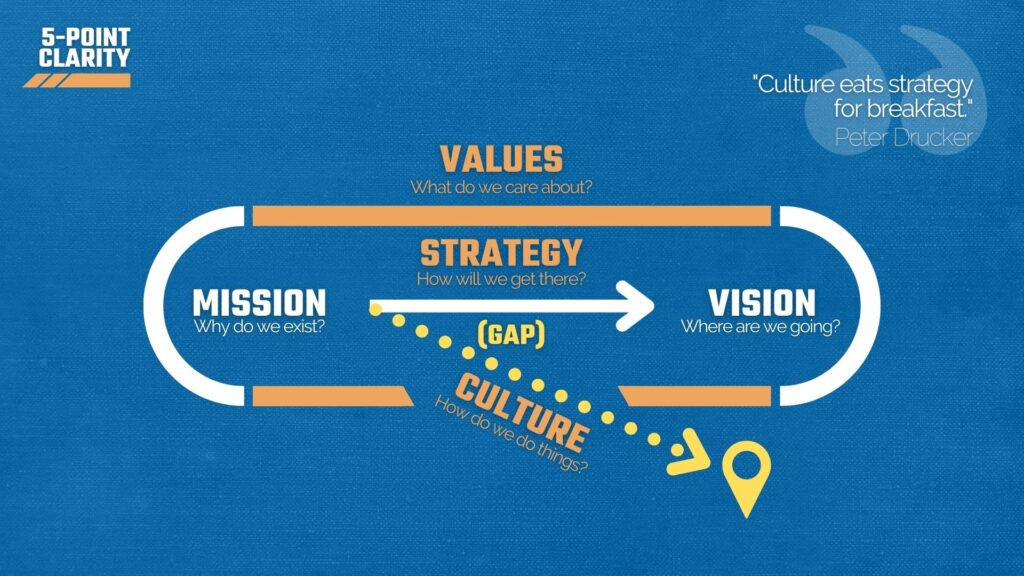
Every great team wants clarity. You can feel the difference when a team knows exactly who they are, where they’re going, and how they’re going to get there. People pull in the same direction. Conflict becomes productive. Accountability feels normal instead of threatening. And the mission actually advances.
But clarity doesn’t happen automatically. It requires leaders to slow down and systematically work through five core components—values, mission, vision, strategy, and culture—and then repeat those answers until the entire team can articulate them.
This article walks your leaders through a simple but powerful framework for organizational clarity, starting where clarity truly begins: your values.
1. Values: What Do We Care About Most?
Values answer the question, “What do we care about?”
Before you define mission or vision, you must define the non-negotiable behaviors and beliefs that shape how your team operates. Values set the tone for decision-making, communication, conflict resolution, and teamwork.
Most teams assume their values are obvious. They’re not. If you’ve never named them, clarified them, and reinforced them, people will fill in the blanks with their own personal preferences.
Clear values:
- Shape who you hire, coach, promote, and release
- Establish the expected behaviors for daily work
- Help everyone know how to act even when no one is watching
- Provide the guardrails for how your mission is lived out
Strong values aren’t aspirational—they describe what must be true in real life, not just in your branding.
Leadership tip: Choose 3–7 values, name them in simple language, and write one sentence explaining what each value looks like in action on your team.
2. Mission: Why Do We Exist?
Once your values provide the relational foundation, your mission defines the organizational purpose.
Mission answers the question, “Why do we exist?” It explains your team’s core job and the overarching contribution you’re trying to make. A mission statement should be simple, memorable, and inspiring.
A good mission statement:
- Acts like a compass, preventing drift
- Clarifies the ultimate purpose behind your work
- Helps teams decide what not to do
- Unifies people around meaning, not just tasks
When mission is unclear, teams lose focus. When mission is clear, teams gain energy and direction.
Leadership tip: Ask your top leaders to write their best one-sentence summary of why the team exists. If the answers differ, that’s a mission-clarity problem worth solving immediately.
3. Vision: Where Are We Going?
If mission provides purpose, vision provides the picture.
Vision answers the question, “Where are we going?” It describes a preferred future—what success looks like three, five, or ten years from now. Vision gives your people something to aim toward, not just something to work on.
Vision should be:
- Specific enough to imagine
- Inspiring enough to motivate
- Future-oriented but grounded in reality
Without vision, teams stay busy without moving forward. With vision, teams see how their daily work contributes to something bigger.
Leadership tip: Write a “future snapshot” that begins with: “Three years from now our team is…” Describe it in concrete, observable terms.
4. Strategy: How Will We Get There?
Once you know who you are (values), why you exist (mission), and where you’re heading (vision), the next question is “How will we get there?”
Strategy is the bridge between vision and daily execution. It identifies the big-ticket objectives—the major moves that will drive progress. Each strategic objective is broken into smaller, actionable steps so people know what to actually do each week.
Healthy strategy:
- Creates focus (3–5 priorities, not 20)
- Helps leaders sequence their efforts
- Filters out distractions, even “good” ones
- Provides measurable progress markers
Strategic clarity prevents “busy without impact” syndrome.
Leadership tip: Identify your top 3–5 strategic priorities for the next 12 months. If your list has 12 items, you don’t have a strategy—just a wish list.
5. Culture: Are We Doing What We Said We’d Do?
Here’s where everything rises or falls.
Culture answers the question, “How do we actually operate day-to-day—and does it match what we say we value and intend to do?”
Culture is not your posters, slogans, or onboarding documents. Culture is about accountability to your strategic objectives. It’s the lived reality of your habits, pace, communication norms, leadership behaviors, and decision-making.
This is where the concept of the culture gap becomes essential.
The Culture Gap: The Distance Between What You SAY and What You DO
Every organization has a gap between:
- Stated values and lived values
- Stated strategy and actual behavior
- Stated priorities and where time actually goes
This culture gap is the difference between your strategic objectives on paper and your real daily habits.
Examples of a culture gap:
- You say collaboration matters, but people work in silos.
- You say the priority is leadership development, but no one’s calendar reflects it.
- You say data matters, but decisions are made on gut instinct.
- You say excellence is important, but deadlines slip regularly.
Closing the culture gap requires:
- Honest assessment
- Clear accountability
- Consistent reinforcement
- Leaders modeling the behaviors they expect
Culture is the scoreboard of leadership. If your culture doesn’t reflect your strategy, your strategy will never become reality.
Leadership tip: Ask, “If an outsider tracked our calendars, conversations, and decisions for 30 days, what would they conclude our real strategy is?” That answer reveals the size of your culture gap.
Bringing the 5 Points Together
Use this framework with your leadership team:
- Define your values (relational clarity).
- Clarify your mission (purpose clarity).
- Paint your vision (future clarity).
- Identify your strategic objectives (execution clarity).
- Evaluate your culture and culture gap (accountability clarity).
Clarity cascades—from leaders to teams to daily habits. When a team aligns values, mission, vision, strategy, and culture, the entire organization becomes healthier, more focused, and more effective.
The Takeaway
5-point clarity for the team means answering five questions together: what you value, why you exist, where you’re going, how you’ll get there and whether your culture matches what you say. Start with values, and keep repeating your answers until everyone on the team can say them.
Talk It Over
Discuss these questions with your group, family, team or mentor:
- Read “The Takeaway” above as a group. What are your initial thoughts about the article?
- If your team were a sports team, what would its nickname be, and why?
- Values: Which values currently shape your team the most—spoken or unspoken—and what values do you need to reinforce or redefine?
- Mission: How aligned are your top leaders when asked, “Why do we exist?” What drift do you need to correct?
- Vision: If you could snap a photo of your ideal team three years from now, what would be happening in that picture?
- Strategy: Which current projects truly support your strategic objectives, and which ones might be stealing focus?
- Culture Gap: Where is the biggest gap between what your team says it’s pursuing and what it actually does each week, and what one behavior will you model to help close it?
Ready to bring 5-point clarity to your team? Schedule a consultation.
3 Pillars Of a Healthy Leader In the Workplace
Skills and experience matter, but they won’t hold a leader up for long without a strong foundation. Healthy leaders rest on three pillars: integrity that earns trust, emotional health that keeps them steady under pressure, and relational health that attracts and keeps good people. When any one of these is weak, the cracks show up quickly, especially in hard moments like conflict.
Pillar One: Integrity
If people don’t believe you’re honest, nothing else you do will land. Integrity means your words and actions line up over time: you keep promises, tell the truth when it’s uncomfortable and treat people fairly whether or not anyone is watching.
Integrity is built slowly and lost quickly. Ask yourself honestly, “Have I earned the trust of my team?” Look for evidence: Do people bring you bad news? Do they believe you when you explain a decision? If not, start with small, consistent acts of honesty. See How to Repair Broken Trust on Your Team.
Pillar Two: Emotional Health
Leaders who lack emotional health often lead from insecurity. They may need to win every argument, take credit for wins, avoid feedback or overreact when challenged. Teams pick up on this quickly, and meetings can spiral out of control when a leader’s ego is driving the conversation.
Emotionally healthy leaders know their triggers, can admit when they’re wrong and stay calm in tense moments. Before stepping into a conflict, it helps to ask, “Is my ego involved here? What am I trying to protect?” Building self-awareness is a big part of emotional intelligence at work.
Pillar Three: Relational Health
Integrity and emotional health pay off in the kind of team you build. Leaders who are trustworthy and secure tend to attract people with the same qualities, and those people want to stay. A relationally healthy team is one where people respect each other, handle disagreement well and support one another.
Take a look at the people you work closest with. Are you surrounding yourself with people of good character who make you better? Healthy relationships don’t happen by accident; leaders model them and protect them.
Strengthening Your Foundation
No leader is perfect on all three pillars. The goal is honest self-evaluation and steady growth. Ask a trusted colleague or mentor to rate you on trustworthiness and emotional steadiness, and be open to what you hear. Pick one pillar to focus on for the next month.
The Takeaway
A healthy leader in the workplace stands on integrity, emotional health and healthy relationships. Evaluate yourself honestly on all three, then choose the weakest pillar and take one concrete step to strengthen it this month.
Talk It Over
Discuss these questions with your group, family, team or mentor:
- Read “The Takeaway” above as a group. What are your initial thoughts about the article?
- Have you ever been in a meeting that got out of control? What was going on underneath?
- Why is integrity the foundation for everything else a leader does?
- What are some signs that a leader is leading from insecurity?
- How can a leader tell when their ego is getting in the way during conflict?
- How does a leader’s character shape the kind of people a team attracts and keeps?
- Which of the three pillars is your strongest? Which needs the most work, and what’s one step you’ll take?
9 Tips for Being a Better Leader
Becoming a better leader rarely comes from one big breakthrough. It comes from small, consistent habits that build trust and help people do their best work. These nine tips for being a better leader fall into three groups: who you are, how you treat people and how you guide the work.
Lead With Character
1. Practice integrity. People don’t follow leaders they can’t trust. Be honest, fair and consistent, especially when it costs you something.
2. Lead by example. Your actions speak louder than any speech. Don’t ask people to do what you wouldn’t do yourself, and model the work ethic and attitude you hope to see.
3. Own your mistakes. Every leader gets things wrong. Admit it quickly, avoid shifting blame and share what you’ll do differently. Owning failures earns far more respect than hiding them. See Being Vulnerable as a Leader.
Treat People Well
4. Make people feel valued. Show real interest in your team members’ lives and goals, and thank them for their work, even small jobs done well.
5. Praise in public, correct in private. Calling someone out in front of the group damages trust and embarrasses everyone. Celebrating someone publicly builds them up and shows the team what good work looks like.
6. Correct with care. When you need to give critical feedback, be specific and kind. Acknowledge what’s going well, clearly name what needs to change and express confidence in the person. The goal is growth, not punishment. See Giving Healthy Feedback in the Workplace.
Guide the Work
7. Explain the why. When you ask someone to take on a task, help them see the benefit for the team, the people you serve and their own growth. People give more when they understand why it matters.
8. Set clear, achievable goals. Successful teams agree on their goals and know their role in reaching them. Make goals specific, check progress regularly and adjust when needed.
9. Keep learning. Know your field and your team’s work well enough to make good decisions, and stay curious. Read, ask questions, find a mentor and learn from the people closest to the work.
Start Small
You don’t have to master all nine at once. Most leaders are naturally strong in a few areas and need work in others. Ask your team or a mentor which habit would make the biggest difference, and start there.
The Takeaway
Being a better leader comes down to everyday habits: leading with character, treating people well and guiding the work with clarity. Choose one of these nine tips to practice deliberately over the next two weeks.
Talk It Over
Discuss these questions with your group, family, team or mentor:
- Read “The Takeaway” above as a group. What are your initial thoughts about the article?
- Which leader has had the biggest positive influence on you? Which of these habits did they show?
- Why do you think integrity and leading by example come first on this list?
- Have you ever been corrected in front of others? How did it affect you and the team?
- What helps critical feedback feel caring rather than harsh?
- How clear are the goals on your team right now? How do you know?
- Which of the nine tips is your growth area, and how will you practice it over the next two weeks?
Toxic People: How To End an Unhealthy Relationship
Some relationships leave you feeling energized and supported. Others leave you drained, anxious or worse about yourself. When a friendship, dating relationship or other close connection consistently brings you down, it may be toxic. Learning to recognize toxic people, and knowing how to end an unhealthy relationship, protects your well-being.
Take Inventory of How You Feel
Pay attention to how you feel during and after time with this person. Do they regularly put you down? Get jealous when you spend time with others? Constantly try to change you? Make you feel guilty, small or on edge? Occasional conflict is normal, but a consistent pattern of feeling worse is a warning sign. See 10 Signs You’re Being Manipulated.
Look at Your Part
This doesn’t mean blaming yourself. But it helps to ask whether you’ve been putting their needs above your own, avoiding conflict or saying yes when you mean no. Patterns like these can make it easier for others to take advantage. Recognizing them gives you power to change the dynamic.
Set Boundaries
Often the first step is setting clear boundaries: “I’m not willing to be spoken to that way,” or “I need you to respect my time with my family.” Boundaries are there to keep you safe and healthy, not to please the other person. See What Are Boundaries in Relationships?
Know When To Walk Away
If someone knows your boundaries and keeps pushing past them, it may be time to step back or end the relationship. That can be painful, especially with long-time friends or family. You can do it kindly but firmly, and you don’t owe a lengthy debate. If the relationship involves threats or abuse, prioritize your safety and get help. See How to Leave an Abusive Relationship.
Build Your Self-Worth
People who don’t value themselves are more likely to stay in harmful relationships. Investing in healthy friendships, your own growth and self-respect makes toxic relationships easier to recognize and leave. See How To Enhance Your Self-Esteem.
The Takeaway
To deal with toxic people, notice how a relationship makes you feel, look honestly at your part, set clear boundaries and be willing to walk away if they’re ignored. Think of one relationship that drains you and decide on one boundary you’ll set.
Talk It Over
Discuss these questions with your group, family, team or mentor:
- Read “The Takeaway” above as a group. What are your initial thoughts about the article?
- What does a life-giving friendship look like to you?
- How can you tell the difference between a rough patch and a toxic relationship?
- Why do people sometimes stay in relationships that make them feel bad?
- What role might people-pleasing play in unhealthy relationships?
- How can someone end a toxic relationship kindly but firmly?
- Is there a relationship where you need a boundary? What will it be?
How to Break Through Your Natural Ceiling of Achievement
Most people hit a ceiling at some point in their career. The strategies that got them this far stop working, and progress stalls. Breaking through usually requires a different approach.
The default approach
Many people keep relying on what has always worked for them: their natural talent, hustle or personality. That’s fine for a while. But what got you here won’t necessarily get you there. Eventually, the same approach produces the same results.
The purposeful approach
Breaking through requires stepping out of your comfort zone and doing what’s necessary, even when it doesn’t come naturally. That might mean learning new skills, delegating, asking for feedback or changing long-held habits.
Learn from those ahead of you
Study people who have succeeded in your field. What do they do differently? How do they spend their time? Find a mentor who can help you see your blind spots.
Get clear on what matters
Connect your goals to a deeper purpose. Knowing why you want to grow helps you push through the discomfort of change.
Measure progress
Track a few key indicators of growth. What gets measured gets improved.
The Takeaway
To break through your ceiling, stop relying only on what’s always worked. Step out of your comfort zone, learn from others and pursue growth with purpose.
Talk It Over
Discuss these questions with your group, family, team or mentor:
- Read “The Takeaway” above as a group. What are your initial thoughts about the article?
- Have you ever hit a ceiling in your career or personal growth? What did it feel like?
- What strengths have gotten you this far?
- Why do our strengths sometimes become limits?
- Who has succeeded in a way you admire? What could you learn from them?
- What comfort zone do you need to step out of?
- What is one thing you’ll do differently this month to grow?
Teaching Kids How to Say Sorry
Parents often insist that kids say sorry. But children learn how to apologize mostly by watching how adults do it. When parents own their mistakes, kids see what accountability really looks like. Teaching kids how to say sorry starts with your own example.
Apologize to Your Kids
When you mess up, by yelling, breaking a promise or being unfair, apologize. Don’t give yourself a pass because you’re the parent. A sincere apology shows kids that everyone makes mistakes and that relationships are worth repairing.
Skip the Excuses
“I’m sorry I yelled, but you were driving me crazy” isn’t really an apology. Own your part clearly: “I’m sorry I yelled. That wasn’t okay. I was frustrated, but I should have stayed calm.”
Back It Up With Change
Kids learn most from what we do. Follow your apology with a real effort to change, so it doesn’t become empty words.
Don’t Control Their Response
Your child may not respond the way you hope, especially teens. That’s okay. Apologize sincerely and give them space.
Teach the Parts of a Good Apology
When your child needs to apologize, coach them through the steps: say what you did, say why it was wrong, say sorry, and say what you’ll do differently next time. Avoid forcing a quick “sorry” just to end the moment. Give them time to calm down first so the apology is real. See Asking for Forgiveness When You Mess Up.
The Takeaway
Teaching kids how to say sorry starts with apologizing to them sincerely, without excuses, backing it up with change and coaching them through the parts of a real apology. The next time you make a mistake with your kids, model a full apology.
Talk It Over
Discuss these questions with your group, family, team or mentor:
- Read “The Takeaway” above as a group. What are your initial thoughts about the article?
- Did your parents ever apologize to you? How did it affect you?
- Why is it important for parents to apologize to kids?
- What makes an apology feel sincere versus forced?
- What are the parts of a good apology?
- How can parents help kids apologize without forcing an empty ‘sorry’?
- When was the last time you apologized to your child?
The Cycle of Accountability
Life happens to everyone. Projects fail, relationships struggle and plans fall apart. When tough things happen, people tend to respond in one of two ways: as an accountable person or as a victim.
The victim cycle
The victim ignores or denies the problem, blames others and waits for someone else to fix it. It feels easier in the moment, but it keeps people stuck and erodes trust.
The accountability cycle
The accountable person acknowledges reality, owns their part, looks for solutions and takes action. This doesn’t mean taking blame for everything. It means focusing on what you can control.
Four steps of accountability
- See it: Face the facts honestly.
- Own it: Acknowledge your part.
- Solve it: Ask, “What else can I do?”
- Do it: Follow through.
Accountability builds teams
When leaders model accountability, teams follow. Blame cultures breed fear and hiding. Accountable cultures breed trust and progress.
The Takeaway
When life gets hard, choose accountability over victimhood. See it, own it, solve it and do it.
Talk It Over
Discuss these questions with your group, family, team or mentor:
- Read “The Takeaway” above as a group. What are your initial thoughts about the article?
- Share a time when you responded as a victim. What happened?
- Share a time when you chose accountability. What was the result?
- Why does blaming others feel easier in the moment?
- Which of the four steps is hardest for you?
- How does a leader’s accountability affect the whole team?
- What is one situation where you need to take ownership right now?
Screen Time and Your Kids
Phones, tablets, games and TV shape how kids spend their time, how they feel about themselves and how they connect with others. Screens aren’t all bad. They can teach, connect and entertain. But without guidelines, they can crowd out sleep, family time and real-world relationships. Managing screen time and your kids starts with clear family rules and parents who model them.
Know the Impact
Heavy screen use can affect kids’ moods, attention, sleep, communication skills and self-image, especially with social media. Pay attention to how your kids act during and after screen time.
Set Guidelines for Everyone
Create family rules about when, where and how long devices are used. One helpful rule: no devices alone in bedrooms, especially for teens and especially at night. Others include screen-free meals and a device curfew before bed. The American Academy of Pediatrics Family Media Plan is a useful tool.
Model Healthy Habits
Kids notice when parents check phones constantly. Follow the same rules you set for them. Your example teaches discipline more than any lecture.
Choose Quality Content
Not all screen time is equal. Encourage creative, educational and connecting uses, like video calls with grandparents or learning a skill, and watch or play together when you can.
Make Transitions Easier
Warnings, timers and fun next activities help screen time end without a battle. See Making Screen-Time Transitions Easier and A Teenager’s First Cell Phone.
The Takeaway
Screen time affects kids’ emotions, relationships and sleep. Set family guidelines, keep devices out of bedrooms, choose quality content and model the habits you want to see. Create or update your family media plan this week.
Talk It Over
Discuss these questions with your group, family, team or mentor:
- Read “The Takeaway” above as a group. What are your initial thoughts about the article?
- How much screen time does your family use on a typical day?
- What effects of screens do you notice in your kids, or yourself?
- What rules about devices would work for your family?
- Why does it matter whether parents follow the same rules?
- What kinds of screen time are most positive for your kids?
- What’s one change to your family’s screen habits you’ll make this week?
Know Your Worth
We live in a culture that seems to value people based on fame, followers, looks or income. It’s easy to believe you don’t measure up. But every person has value, and your worth isn’t determined by anyone else’s opinion.
Your value isn’t up for a vote
Other people’s inability to see your worth doesn’t decrease it. Don’t let someone else’s perception become your reality.
Separate worth from performance
Your achievements matter, but they aren’t the source of your value. Mistakes and failures don’t erase it either.
Stop comparing
Social media shows everyone’s highlight reel. Comparing your everyday life to someone else’s best moments will always leave you feeling short.
Surround yourself with people who see you
Spend time with friends, family and mentors who encourage you and tell you the truth. Distance yourself from people who consistently tear you down.
Treat yourself with respect
Knowing your worth shows up in how you care for your body, set boundaries and let others treat you.
See others’ worth too
When you understand your own value, it becomes easier to recognize and affirm the value of others.
The Takeaway
Your worth isn’t determined by fame, performance or anyone’s opinion. Know your value, stop comparing and surround yourself with people who see it.
Talk It Over
Discuss these questions with your group, family, team or mentor:
- Read “The Takeaway” above as a group. What are your initial thoughts about the article?
- Where do you think people most often look for their sense of worth?
- Why is it so easy to let others’ opinions define us?
- How does social media affect the way people see their value?
- What’s the difference between your worth and your performance?
- Who in your life helps you see your value?
- How can you affirm someone else’s worth this week?
Scorecard for Strategic Planning
Plenty of teams write a strategy and then never look at it again. The plan lives in a slide deck while daily work drifts somewhere else. A scorecard for strategic planning fixes that. It’s a short list of measures that show, week by week, whether your team is actually doing the things that move you toward your vision. When you measure what matters, strategy stops being an idea and becomes part of your culture.
Strategy Is Where Vision Meets Daily Work
Your vision describes where you’re going. Your strategy is the handful of objectives that will get you there, often summarized as a few “boxes” such as growing customers, developing people or improving quality. Each box needs to show up in what people actually do each week.
That’s where many teams stall. Everyone agrees on the objectives in a planning meeting, but nobody can say whether progress is happening. Without a way to see it, the urgent work of the day always wins. If you haven’t defined your vision and strategy yet, start with 5-Point Clarity for the Team.
Measure What Really Matters
For each strategic objective, choose one or two practical measures that show progress. The best measures track behaviors your team controls, not just final results. If one objective is developing leaders, you might track how many mentoring conversations each manager has each month. If another is customer care, you might track follow-up calls made within 48 hours.
Keep it simple. A scorecard with five clear measures will get used; one with thirty will be ignored. Ask, “If we did this consistently, would we be closer to our vision?” If the answer is yes, it’s worth measuring.
Make the Scorecard Visible
A scorecard only works if people see it. Review it in a regular team meeting, post it where everyone can find it, and update it on a predictable schedule. Celebrate the boxes that are on track and talk honestly about the ones that aren’t.
The goal isn’t to catch people failing. It’s to help the team notice drift early and adjust before small gaps become big problems.
Use It for Accountability, Not Blame
Scorecards help teams hold each other accountable in a fair, objective way. Instead of vague frustration (“I feel like we’re not developing people”), the team can look at the numbers together and ask what’s getting in the way. That turns accountability into problem-solving. Over time, the measures you track become the habits that define your culture.
The Takeaway
A scorecard for strategic planning turns your strategy into measurable weekly habits, so you can see whether you’re moving toward your vision. Pick one strategic objective and choose a simple behavior to measure starting this week.
Talk It Over
Discuss these questions with your group, family, team or mentor:
- Read “The Takeaway” above as a group. What are your initial thoughts about the article?
- What’s something in your personal life you track, like steps, savings or reading? Does tracking it change your behavior?
- Why do so many strategic plans get forgotten after the planning meeting?
- What are the three to five strategic objectives your team is working toward right now?
- For one of those objectives, what behavior could you measure each week to show progress?
- How can a team review a scorecard in a way that encourages problem-solving rather than blame?
- What’s one measure you’ll start tracking this week, and where will the team see it?
Why We Pick Difficult Partners
Have you ever wondered why you, or someone you know, keep ending up in the same kind of difficult relationship? Many psychologists suggest that we’re drawn to partners who feel familiar, people who recreate the kind of love and connection we experienced growing up. That familiarity can feel like chemistry, even when it isn’t healthy. Understanding why we pick difficult partners can help us make wiser choices and build healthier relationships.
Familiar Can Feel Like Love
The way we were loved as children shapes what love feels like to us as adults. If affection was warm and steady, we may be drawn to steady partners. If it was unpredictable, distant or came with conflict, those patterns may feel strangely comfortable, and a calm, reliable person might even seem boring at first.
Reflecting on your upbringing isn’t about blaming parents. It’s about understanding the patterns you may be repeating. See Attached.
You Can’t Change Your Partner
Many people enter relationships hoping to change the other person. That rarely works and often leads to frustration. What you can change is yourself: how you respond, what you accept, how you communicate and what you look for in a partner.
Every Partner Is a Mix
No one is easy to love all the time. Every partner has qualities that are wonderful and others that are challenging. Healthy relationships involve learning to adapt to each other’s quirks with patience and honesty. The key is distinguishing between ordinary challenges, which are worth working through, and harmful patterns like control, disrespect or abuse, which aren’t. See What Does a Healthy Relationship Look Like?
Choosing Differently
If you notice a repeating pattern, pause before jumping into the next relationship. Ask trusted friends what they see. Consider talking with a counselor about your history. Pay attention to how someone treats you over time, not just how exciting they feel at first.
The Takeaway
We often pick difficult partners because they feel familiar, echoing the love we knew growing up. You can’t change your partner, but you can understand your patterns, adapt in healthy ways and choose differently. Take some time this week to reflect on what “love” felt like in your home growing up.
Talk It Over
Discuss these questions with your group, family, team or mentor:
- Read “The Takeaway” above as a group. What are your initial thoughts about the article?
- What did love look like in the home you grew up in?
- Do you think it’s true that we’re drawn to what feels familiar? Why or why not?
- Why do people often try to change their partners? What usually happens?
- What’s the difference between normal relationship challenges and harmful patterns?
- How can friends help us see relationship patterns we might miss?
- What’s one pattern in your relationships you’d like to understand better or change?
Blending Families: Co-Parenting with the Ex
Divorce ends a marriage, but when there are kids, it doesn’t end the family. It reorganizes it. Co-parenting with an ex can be one of the hardest parts of a blended or divorced family, especially when old hurts are still fresh. But kids do better when their parents cooperate. These six tips can help.
1. See Your Family as Reorganized, Not Ended
Your children still have two parents. Approaching co-parenting as a shared project for your kids’ sake, rather than a continuation of the marriage conflict, changes the tone.
2. Keep Kids Out of the Middle
Don’t badmouth your ex in front of the kids, ask them to carry messages or spy, or make them choose sides. Children love both parents and are hurt when forced into adult conflict. See How To Protect Your Child’s Mental Health in a Divorce.
3. Find Productive Ways To Communicate
Keep communication businesslike and focused on the kids. Shared calendars or co-parenting apps can reduce friction. Respond calmly, even when provoked; self-control protects your kids.
4. Be Ready To Compromise
Flexibility with schedules and decisions, when it’s reasonable and safe, builds goodwill and makes life easier for everyone.
5. Remember How Hard Transitions Are for Kids
Moving between homes is tiring and emotional. Keep handoffs calm and routines consistent, and give kids time to adjust after switching homes.
6. Let Go of What You Can’t Control
You can’t control what happens in the other home, as long as kids are safe. Focus on making your home a stable, loving place. If there are real safety concerns, seek legal advice. See Tips for Blending Families.
The Takeaway
Co-parenting with an ex works best when you see your family as reorganized, keep kids out of the middle, communicate productively, compromise, ease transitions and let go of what you can’t control. This week, keep every conversation with your ex calm and kid-focused.
Talk It Over
Discuss these questions with your group, family, team or mentor:
- Read “The Takeaway” above as a group. What are your initial thoughts about the article?
- What makes co-parenting so hard emotionally?
- Why does it matter to see the family as reorganized rather than ended?
- What does keeping kids out of the middle look like day to day?
- What tools or habits help co-parents communicate better?
- How can parents make transitions between homes easier on kids?
- What’s one thing about the other home you need to let go of?
Living Paycheck-to-Paycheck
Surveys consistently find that a large share of working Americans live paycheck to paycheck. Many have little or nothing left to save each month. It’s stressful, and it leaves families one emergency away from crisis. The way out starts with a plan.
Have something to aim at
Set a clear, specific goal, such as “Save $1,000 in three months” or “Pay off my credit card by December.” Goals give your money direction.
Build a simple budget
List your income and essential expenses. Then decide ahead of time how much goes to savings, debt and spending. A budget is a plan for your money before the month starts.
Start a small cushion
Even a few hundred dollars set aside can keep a flat tire from becoming a financial crisis. Build to $1,000, then work toward several months of expenses.
Cut and earn
Look for expenses to trim: subscriptions, eating out, phone plans. Consider ways to increase income, like extra shifts, a side job or asking for a raise.
Attack debt
Debt payments eat up future paychecks. List your debts and focus on paying them off one at a time.
Automate
Set savings to transfer automatically on payday so it happens before you can spend it.
The Takeaway
Breaking the paycheck-to-paycheck cycle takes a goal, a budget, a small cushion, cutting and earning, attacking debt and automating savings.
Talk It Over
Discuss these questions with your group, family, team or mentor:
- Read “The Takeaway” above as a group. What are your initial thoughts about the article?
- Have you ever lived paycheck to paycheck? What was it like?
- Why do you think so many people with steady jobs still struggle to save?
- What financial goal would make the biggest difference for you right now?
- What expenses could most people trim without much sacrifice?
- Why is automating savings so effective?
- What is one step you’ll take this month to build breathing room?
The Importance of Structure in the Home
Some families thrive on spontaneity; others love schedules. But every family needs some structure. Structure in the home, meaning predictable routines, clear expectations and consistent rhythms, keeps kids safe, reduces stress and actually creates more freedom for everyone, not less.
Why Structure Matters
Kids feel secure when they know what to expect. Regular mealtimes, bedtimes and routines reduce arguments and anxiety. Structure also teaches responsibility, time management and self-discipline. Without it, households can feel chaotic and parents can burn out.
Structure Creates Freedom
It sounds backwards, but structure frees people. When homework, chores and bedtime follow a routine, there’s less nagging and more time for fun. Kids who learn structure at home gain the self-discipline to handle more freedom later.
What Structure Can Look Like
Consistent morning and bedtime routines. A predictable homework time. Family meals several nights a week. Clear chores and responsibilities. Family rules about screens. A simple weekly calendar everyone can see. See Making Screen-Time Transitions Easier.
Adjust for Each Stage
Structure looks different for toddlers, school-aged kids and teens. Younger children need more routines set by parents. Teens need structure too, but with more input and gradually more ownership. See Boundaries With Teens.
Balance Structure With Flexibility
Too much rigidity can feel controlling. Leave room for spontaneity, special occasions and family fun. The goal is a steady rhythm, not a rigid schedule.
The Takeaway
Structure in the home, through routines, expectations and rhythms, keeps kids safe, reduces stress and creates freedom. Choose one routine to strengthen this week, like a consistent bedtime or a family dinner night.
Talk It Over
Discuss these questions with your group, family, team or mentor:
- Read “The Takeaway” above as a group. What are your initial thoughts about the article?
- Did you grow up in a structured or free-spirited home? How did it affect you?
- What are the positives and negatives of a very unstructured home?
- How would you describe the structure in your home right now?
- How can structure actually create more freedom?
- How should structure change as kids get older?
- What routine will you strengthen this week?
How to Lead an Emotionally Fragile Employee
Every leader eventually manages someone who’s emotionally fragile: an employee who deflects criticism, can’t say “I’m sorry” and reacts strongly to feedback. It’s tempting to handle them with kid gloves. But that usually makes things worse.
Signs of emotional fragility
- Deflecting blame or making excuses
- Struggling to apologize
- Becoming defensive, tearful or angry with feedback
- Others on the team tiptoeing around them
Avoidance compounds the problem
Failing to address a fragile employee might keep the peace in the short run, but it lets problems grow. Worse, healthy team members notice the double standard and may leave.
Lead with strength and care
Lead a fragile employee the same way you lead everyone else: with clear expectations, honest feedback and genuine care. Be direct but kind. Focus on behaviors, not character.
Prepare for the conversation
Choose a private setting. Have specific examples ready. Stay calm if they react emotionally, and give them time to process.
Point to support
Sometimes fragility signals deeper struggles. Remind employees about resources like an Employee Assistance Program.
The Takeaway
Don’t handle fragile employees with kid gloves. Lead them with the same clarity, honesty and care you give everyone, and you’ll protect both them and your team.
Talk It Over
Discuss these questions with your group, family, team or mentor:
- Read “The Takeaway” above as a group. What are your initial thoughts about the article?
- Have you ever worked with someone who was emotionally fragile? How did the team respond?
- Why are leaders tempted to avoid confronting fragile employees?
- How can avoiding the problem hurt healthy team members?
- What does it look like to be direct but kind?
- How should a leader respond if an employee reacts emotionally to feedback?
- Are there areas where you are emotionally fragile? How could you grow?
How to Repair Broken Trust on Your Team
Trust is what lets a team move quickly. When people trust each other, they share information, take on hard work together and give each other the benefit of the doubt. But trust is fragile, and once it’s broken, a team slows down fast. The good news is that you can repair broken trust on your team if you understand how it broke and respond with the right mix of words and actions.
Why Trust Matters So Much at Work
Almost everything a team does depends on trust. You trust that a coworker will finish their part of the project, that your manager will be honest about changes, and that people won’t take credit for your work. Without that trust, people start double-checking everything, holding back ideas and protecting themselves.
That’s exhausting, and it shows up in missed deadlines, turnover and a lot of quiet frustration. Repairing trust isn’t just about feelings; it’s about getting the team working again.
Two Ways Trust Gets Broken
Trust usually breaks in one of two areas. A competence violation happens when someone doesn’t have the skill or follow-through we expected: a missed deadline, a botched report or a promise that couldn’t be kept. An integrity violation happens when someone acts dishonestly or unfairly: hiding a mistake, breaking a confidence or taking credit for someone else’s work.
People tend to respond to these very differently. Most of us are willing to forgive an honest mistake if we see growth, but we’re much slower to forgive a lapse in honesty, because it makes us question someone’s character. Knowing which kind of break you’re dealing with helps you choose the right repair.
Repair With Words and With Actions
There are two main ways to rebuild trust. Verbal repair means owning the problem: a clear, specific apology without excuses (“I missed the deadline, and it put you in a tough spot. I’m sorry.”). For competence issues, a sincere apology plus a plan to improve often goes a long way.
Substantive repair means doing something concrete: changing a process, making up for the harm or accepting accountability that costs you something. Integrity breaks usually need this. Words alone can sound cheap when someone has already been misled, so consistent action over time is what rebuilds belief.
Make Trust Part of the Team’s Rhythm
Trust grows when it’s practiced, not just repaired. Leaders can model it by admitting mistakes quickly, following through on small promises and being transparent about decisions. For more on that, see Being Vulnerable as a Leader and Why Transparency Is So Important in the Workplace.
If trust is broken between two teammates, a calm, private conversation is usually the best place to start. Focus on what happened and what each person needs going forward, rather than relitigating every detail.
The Takeaway
To repair broken trust on your team, first figure out whether it was a competence or an integrity break. Own it clearly, then back up your words with consistent action. Think of one relationship at work where trust could be stronger and take a small step to rebuild it.
Talk It Over
Discuss these questions with your group, family, team or mentor:
- Read “The Takeaway” above as a group. What are your initial thoughts about the article?
- What’s something small a coworker has done that made you trust them more?
- How have you seen broken trust affect the way a team works?
- Why do you think people forgive mistakes in competence more easily than mistakes in integrity?
- What makes an apology feel sincere to you? What makes one feel empty?
- What kinds of actions rebuild trust after someone has been misled?
- Where could trust be stronger on your team, and what’s one step you can take this week to help?
How a Lack of Control Affects Your Mental Health at Work
Most people spend a huge part of their lives at work, yet many don’t feel good about it. Gallup’s State of the Global Workplace research finds that only about one in five employees worldwide is engaged at work. One factor that drags down mental health at work more than almost anything else is a feeling of having no control: over your schedule, your tasks, your future or the decisions that affect you. The good news is that both employees and leaders can do something about it.
Why Control Matters So Much
People need a few basic things to feel well: a sense of belonging, meaning in what they do, feeling valued and a future that feels hopeful. When work strips away any sense of control, all of those take a hit. You may feel like a cog in a machine, unable to change anything, with no clear path forward.
Over time, that powerlessness can feed stress, anxiety and low mood. It’s not just in your head; feeling stuck is a real strain on wellbeing.
Find the Control You Do Have
Even in a rigid job, there’s usually more room than it seems. Start by sorting what you can control, what you can influence and what you can’t change. You might not choose your deadlines, but you can choose how you plan your day, which skills you build and how you respond to setbacks.
Small choices add up. Asking for input on a process, proposing a change to your schedule or volunteering for a project you care about can restore a sense of agency. See How To Speak Up More Confidently in Team Meetings.
Look Ahead
Hopelessness often comes from not seeing a future. Take time to think about where you want to be in five years and what steps would move you in that direction, whether that’s growing in your current role, learning new skills or eventually changing paths. A plan, even a rough one, puts you back in the driver’s seat.
What Leaders Can Do
Leaders have enormous influence here. Give people a voice in decisions that affect them, explain the why behind changes, offer flexibility where you can and talk with team members about their goals. Recognize good work and help people see how their role matters. These steps cost little and can dramatically improve how people feel about their jobs.
If you or someone on your team is struggling with persistent anxiety or depression, encourage them to talk with a doctor or mental health professional, and point them to any employee assistance program your workplace offers. In the US, anyone in crisis can call or text 988.
The Takeaway
A lack of control is one of the biggest threats to mental health at work. Focus on what you can control, plan for your future and, if you lead others, give them a real voice. This week, write down one thing about your work you can change and take the first step.
Talk It Over
Discuss these questions with your group, family, team or mentor:
- Read “The Takeaway” above as a group. What are your initial thoughts about the article?
- What’s one thing you genuinely enjoy about your work?
- Why do you think so few people feel engaged at work?
- When have you felt like you had no control at work? How did it affect you?
- What’s one area of your job you can control or influence more than you’ve been using?
- Where do you want to be in five years, and what’s one step that would move you in that direction?
- If you lead others, how could you give them more voice or control this month? If not, what could you ask your leader for?
Why Teens Need Unconditional Love Through a Turbulent Adolescence
As young children, we often see the world as simple and fair, and our parents as nearly perfect. Adolescence shakes that picture. Teens discover that life is complicated, people are flawed, and they themselves make big mistakes. This turbulence is a normal and even necessary part of growing up. What teens need most during it is parents who stay present and love them unconditionally.
Why Adolescence Feels So Unsettled
Teens are figuring out who they are, what they believe and where they fit. They question family values, push boundaries and experience intense emotions. Their brains are still developing, especially the areas involved in judgment and impulse control. It can be a bumpy ride for everyone.
The Struggle Has a Purpose
Wrestling with hard questions and setbacks helps teens build their own identity, values and resilience. Parents can’t, and shouldn’t, remove every difficulty. Their role is to walk alongside.
Stick Around
Teens may push parents away, but they still deeply want to know their parents aren’t going anywhere. Keep showing up: to games, at dinner, in the car, late at night when they finally want to talk. See How To Get Your Teen To Talk To You.
Love Without Conditions
Teens need to believe their parents’ love is solid, no matter what they do. That doesn’t mean no consequences; it means consequences never come with the threat of losing love. Say it often: “Nothing you do will make me stop loving you.” See 7 Things Teens Wish They Could Say to Their Parents.
The Takeaway
Adolescence is often turbulent as teens discover a complicated world, and that struggle helps them grow. What they need most is parents who stick around and love them unconditionally. This week, tell your teen that your love doesn’t depend on their performance.
Talk It Over
Discuss these questions with your group, family, team or mentor:
- Read “The Takeaway” above as a group. What are your initial thoughts about the article?
- What were you like as a teen? Share a story if you have one.
- What was your relationship with your parents like during those years?
- Why do you think adolescence is often so turbulent?
- How can struggles during the teen years help kids grow?
- What’s the difference between unconditional love and having no consequences?
- How will you show your teen this week that your love is solid?
Teach Your Kids How Not to Play the Comparison Game
Kids compare constantly: their toys, clothes, grades, phones and vacations against their friends’. Social media only amplifies it. Comparison breeds envy and dissatisfaction, and it can chip away at kids’ confidence. The good news is that parents can teach kids how not to play the comparison game by modeling contentment and building gratitude and generosity.
More Is Caught Than Taught
Kids pick up on how we talk about neighbors’ houses, coworkers’ raises or friends’ vacations. If we’re constantly comparing, they will too. Practice contentment out loud: “I’m grateful for our home,” or “I’m happy for them.”
Broaden Their Perspective
In age-appropriate ways, help kids see beyond their own bubble. Serve together at a food bank, learn about kids in other parts of the world or talk about people facing hard circumstances. Perspective helps kids appreciate what they have.
Encourage Giving
Generosity turns kids’ focus outward. Encourage them to give some of their allowance, donate toys or help someone in need. An open-handed attitude leaves less room for envy. See Spreading Joy.
Build Gratitude Habits
Teach kids to say thank you, write thank-you notes and share something they’re grateful for at dinner or bedtime. Gratitude grows with practice.
Celebrate Their Own Growth
Help kids measure progress against their past selves, not their peers: “You read a whole chapter book this month!” See Coach Wooden’s Definition of Success.
The Takeaway
To teach kids not to play the comparison game, model contentment, broaden their perspective, encourage giving, build gratitude habits and celebrate their own growth. Start a simple gratitude habit at dinner or bedtime this week.
Talk It Over
Discuss these questions with your group, family, team or mentor:
- Read “The Takeaway” above as a group. What are your initial thoughts about the article?
- What did you compare yourself to others about as a kid?
- How do adults model comparison without realizing it?
- How can families help kids see beyond their own bubble?
- Why does generosity help reduce envy?
- What gratitude habits could your family start?
- How will you help your child celebrate their own growth this week?
Eliminating Sideways Energy
Every team has limited time and energy. The question is where it goes. Sideways energy is anything that pulls you away from your vision: meetings that don’t lead anywhere, projects that made sense three years ago, habits nobody questions anymore. It feels like work, and it keeps people busy, but it doesn’t move the team forward. Eliminating sideways energy takes clarity about where you’re going and the courage to stop doing things that don’t help you get there.
What Sideways Energy Looks Like
Sideways energy usually hides in daily and weekly routines. It might be a report no one reads, a weekly meeting that has outlived its purpose, a pet project that drains resources, or a constant stream of urgent requests that crowd out important work.
None of these feel harmful on their own. The trouble is that they add up. A team can be exhausted and still be making very little progress toward what matters most.
Start With Your Vision and Strategy
You can’t spot sideways energy until you know which way is “forward.” Your vision describes where you’re going; your strategy is the set of objectives that will get you there. Once those are clear, every activity can be tested with a simple question: “Does this help us reach our vision?” Get clear on both with 5-Point Clarity for the Team.
Keep, Start, Stop
A practical way to tackle sideways energy is to ask three questions as a team. What should we keep doing because it’s working? What should we start doing to reach our vision? And what must we stop doing because it pulls us sideways?
The “stop” list is usually the hardest. People may be attached to certain projects, or worried about disappointing someone. That’s why removing sideways energy takes courage. Strong leaders make those calls, explain the reasons and free their team to focus.
Turn Decisions Into Action
Once you’ve answered keep, start and stop, convert your answers into specific next steps with owners and dates. Then check in regularly, because sideways energy tends to creep back. Reviewing a simple scorecard can help you notice when it does.
The Takeaway
Eliminating sideways energy means getting clear on your vision, testing your activities against it and having the courage to stop what pulls you off course. Sit down with your team and make a keep, start and stop list this week.
Talk It Over
Discuss these questions with your group, family, team or mentor:
- Read “The Takeaway” above as a group. What are your initial thoughts about the article?
- What’s one habit in your personal life that keeps you busy but doesn’t really help you?
- Where do you see sideways energy on your team or in your organization right now?
- How clearly could your team describe its vision? How does that affect what you spend time on?
- What should your team keep doing, and what should it start doing?
- What’s one thing your team should stop doing? What makes it hard to stop?
- What’s one action step, with an owner and a date, you could take this week to reduce sideways energy?
Boundaries In Parenting
The goal of parenting isn’t to control kids forever. It’s to help them take ownership of their own lives. Boundaries in parenting are the internal guidelines kids develop about safety, respect, responsibility and self-control. Parents help build them through clear expectations, practice and fair discipline, gradually handing over more ownership as kids grow.
Parenting Is Transferring Ownership
At first, parents make most decisions. Over time, kids should take on more responsibility for their choices: homework, friendships, money, time and behavior. Boundaries are the skills that make that transfer possible. See The Ultimate Goal of Parenting.
Teach the Core Boundaries
Key areas include safety (what’s dangerous and how to protect yourself), respect (for others’ bodies, belongings and feelings), responsibility (doing your part) and goals (setting them and following through). Talk about these often and explain the reasons behind them.
Discipline Reinforces Boundaries
Discipline is teaching, not revenge. It works best when it is meaningful enough that kids notice it, age-appropriate and proportionate to the offense. Connect consequences to the behavior when possible, and follow through calmly. See How to Discipline Younger Kids.
Model Your Own Boundaries
Kids learn boundaries by watching how parents handle their own: saying no, managing time, respecting others and taking responsibility. See The 10 Laws of Boundaries.
The Takeaway
Boundaries in parenting help kids take ownership of their lives through clear teaching on safety, respect, responsibility and goals, reinforced by fair, proportionate discipline. This week, hand your child ownership of one new responsibility.
Talk It Over
Discuss these questions with your group, family, team or mentor:
- Read “The Takeaway” above as a group. What are your initial thoughts about the article?
- How would you describe your parenting style?
- What does it mean to transfer ownership to your kids?
- Which boundaries matter most for your kids right now?
- What makes discipline fair and effective?
- How do you model boundaries for your kids?
- What new responsibility will you hand your child this week?
The Science of Anger
Anger can flare in seconds, whether someone cuts you off in traffic, a coworker takes credit for your work or a family member says the wrong thing at the wrong time. Understanding the science of anger helps explain why it feels so powerful, why chronic anger is bad for your health and what you can do to cool down.
What Happens in Your Brain and Body
When something triggers anger, the amygdala, the brain’s threat detector, reacts quickly. It sets off the body’s stress response, releasing chemicals such as adrenaline that give you a burst of energy and prepare you for action. Your heart rate rises, your muscles tense and your breathing quickens. This is part of the “fight or flight” response.
That reaction can happen before the thinking part of your brain has fully weighed in, which is why it’s easy to say or do things in anger that you later regret.
Why Chronic Anger Matters
Occasional anger is normal. But frequent, intense or long-lasting anger keeps the body in a stressed state. Research has linked chronic anger and hostility with higher risks of high blood pressure and heart problems, along with damaged relationships and trouble at work.
Healthy Ways To Cool Down
Because anger is partly physical, physical strategies help. Take slow, deep breaths. Step away and go for a walk or get some exercise. Try meditation or relaxation techniques. Do something you enjoy that shifts your mood. Once you’re calmer, think through what happened and how to address it constructively. See 4 Steps to Controlling Anger.
When To Get Help
If anger often feels out of control, people have talked to you about it, or it’s affecting your relationships or job, consider talking with a counselor or joining an anger management program. Learning new skills can make a big difference.
The Takeaway
The science of anger shows that it’s a powerful brain-and-body response that can harm your health and relationships if it becomes chronic. Calm your body first, then address the problem. Next time you feel anger rising, take three slow breaths before you respond.
Talk It Over
Discuss these questions with your group, family, team or mentor:
- Read “The Takeaway” above as a group. What are your initial thoughts about the article?
- Tell about a time you got really angry. What triggered it?
- Would you describe yourself as an angry person? Why or why not?
- Has anyone ever talked with you about your anger, or have you had to confront someone else’s?
- Why do you think we sometimes say things in anger we later regret?
- What helps you calm down when you’re angry?
- What’s one strategy you’ll try the next time you feel anger rising?
Victim Mentality vs. Victor Mentality
Everyone faces unfair treatment, setbacks and disappointments. What makes the difference is how we respond. A victim mentality focuses on what others have done to us and feels powerless to change it. A victor mentality acknowledges the hurt but looks for what we can do next. Understanding victim mentality vs. victor mentality can help you move from feeling stuck to moving forward.
Blame vs. Ownership
A person with a victim mentality says, “Look what they did to me.” A person with a victor mentality asks, “What can I do about this?” Real harm and injustice happen, and naming them matters. The difference is whether we stay focused on blame or turn toward what’s in our control. See Taking Ownership of Your Mistakes.
Comfort vs. Truth
When we’re in victim mode, we often seek out people who will agree that everyone else is wrong. That feels comforting, but it can keep us stuck. A victor mentality seeks out the truth, even when it stings, because honest feedback helps us grow.
Paralyzed vs. Motivated
Both mindsets may feel like the world is against them. The victim feels paralyzed by it: “Why try?” The victor feels motivated: “I’ll show what I can do.” Criticism and obstacles become fuel rather than proof that success is impossible.
Shifting Your Mindset
Most of us slip into victim thinking sometimes. Notice when you’re focused on blame or feel powerless. Then ask: What’s one thing in my control? What can I learn? Who can help? Small steps of action rebuild a sense of agency. See Bouncing Back When Life Gets You Down.
If you’re dealing with abuse or trauma, a victor mentality doesn’t mean pretending it’s okay. Getting support from a counselor can be one of the strongest steps you take.
The Takeaway
A victim mentality focuses on blame, seeks comfort over truth and feels paralyzed; a victor mentality takes ownership, seeks truth and gets motivated. Next time you feel stuck, ask, “What’s one thing I can do about this?”
Talk It Over
Discuss these questions with your group, family, team or mentor:
- Read “The Takeaway” above as a group. What are your initial thoughts about the article?
- Think of someone who overcame a hard situation. What mindset did they show?
- Why is it tempting to stay focused on blame when we’ve been hurt?
- Why do we sometimes seek out people who only tell us what we want to hear?
- How can criticism become motivation instead of discouragement?
- When do you tend to slip into victim thinking?
- What’s one situation where you could ask, ‘What can I do about this?’ this week?
Why Transparency Is So Important In the Workplace
Employees today expect more openness than ever. They want to know how the organization is doing, why decisions are made and how changes will affect them. When leaders hold information back, people fill the gaps with rumors and assumptions. Transparency in the workplace builds trust and loyalty because it treats people as partners, not just as workers who need to be told what to do.
Why Expectations Have Changed
Information moves faster than ever. People are used to getting news instantly and seeing behind the scenes of companies and public figures. That shapes what they expect at work, too. Employees increasingly want access to information and a voice in decisions, rather than a carefully managed message from the top.
Organizations that resist this often find that information leaks anyway, just in less accurate and more damaging forms.
Tell the Truth, Even When It’s Bad News
It can be tempting to delay or soften bad news, such as a lost client, budget cuts or a project that’s behind. But people usually sense when something is wrong. Being honest, early and clear about what you know and don’t know builds far more trust than silence or spin.
For example: “Our biggest client didn’t renew. That’s going to mean some tough choices on spending. I don’t have all the answers yet, but I’ll update you every Friday.” That kind of message helps people stay steady because they know they’ll hear the truth. Learn more in How to Repair Broken Trust on Your Team.
Transparency Is a Two-Way Street
Real transparency isn’t just leaders sharing information; it’s also creating ways for employees to share honestly. Regular surveys, open forums, skip-level meetings and one-on-ones all give people a chance to say how they think things are going.
The key is responding. When people share honest feedback and see leaders listen and act, they keep speaking up. When their input disappears, they stop.
Know the Limits
Transparency doesn’t mean sharing everything. Personal information, legal matters and some business details need to stay confidential. When you can’t share something, say so plainly: “I can’t talk about that yet, but I’ll tell you when I can.” Being honest about the limits is part of being transparent.
The Takeaway
Transparency in the workplace builds trust by telling the truth, sharing bad news early and creating real ways for people to be heard. Look for one piece of information your team would benefit from knowing and share it this week.
Talk It Over
Discuss these questions with your group, family, team or mentor:
- Read “The Takeaway” above as a group. What are your initial thoughts about the article?
- Think of a time you found out something important at work secondhand. How did it make you feel?
- Why do you think employees expect more transparency today than in the past?
- Why is it often better for leaders to share bad news early rather than wait?
- What ways does your workplace give employees a chance to share honest feedback? Do they work?
- Where’s the line between healthy transparency and sharing too much?
- What’s one piece of information your team would benefit from knowing, or one question you could ask your leader?
Success
Talking Points:
- Step #1: Respect everyone. That means you don’t say mean things, you act like others are as important as you are and you treat others how you would want to be treated!
- Step #2: Put others before yourself. Don’t be selfish and look for ways to do nice things for others.
- Step #3: Stay loyal. Be kind to your friends so that they remain your friends for a long time!
- Initial reactions to this topic? What jumped out at you?
- Who is the most successful person you know? What makes them successful?
- What are some things kids do to disrespect each other? Why won’t that bring success in life?
- What are some nice things you can do for your teacher, parents, siblings and friends?
- What does loyalty mean? Why is it important to keep friends?
- Is there a step you need to take based on today’s topic?
Procrastination
Talking Points:
- Tip #1: Take a small step. The hardest part is just getting started so pick a small thing and get it done.
- Tip #2: Map it out. Pull out your calendar and set a goal for each day to get something done on the assignment.
- Tip #3: Don’t complain. Complaining wastes energy and makes the project seem so much bigger and more annoying!
- Initial reactions to this topic? What jumped out at you?
- What does it mean to procrastinate? Are you a procrastinator?
- Share a time you put off an assignment to the very last minute. What happened?
- As a class, come up with a project (real or fake) that students have to complete. Then, work through the first two tips. Come up with some small items you could do to get started on the project. Come up with some tasks you could do each day to stay on schedule.
- How does complaining make you procrastinate more? What’s the better attitude to have?
- Is there a step you need to take based on today’s topic?
How To Spread Your Values Through Mentoring
Most leaders try to spread their mission and values the same way: they say it to everyone at once in an all-hands meeting, an email or a poster. That’s useful, but it rarely changes behavior on its own. A more powerful approach is mentoring. When leaders invest in a few people, who then invest in a few more, values spread through an organization like a positive virus, carried by relationships instead of announcements.
The Announcement Model
In the announcement model, the leader speaks the message to everyone at the same time. It’s efficient and keeps everyone hearing the same words. But it’s top-down and one-directional. People hear the message without seeing it lived out up close, and there’s little chance to ask questions or practice.
That’s why so many value statements never make it past the wall they’re printed on.
The Mentoring Model
In the mentoring model, first-tier leaders personally mentor a small circle of people. They explain the mission, vision and values, show what those look like in real decisions, and teach people how to do the job well. Then they equip those people to mentor their own circle.
Because it’s multiplied through relationships, the message spreads faster and goes deeper. People don’t just know the values; they’ve seen them modeled by someone they trust and practiced them with support.
What Makes Mentoring Spread
For mentoring to multiply, leaders need three things. First, a clear message: everyone should be able to say what the team values and why it exists. 5-Point Clarity for the Team can help. Second, simple tools, such as discussion guides like the FlexTalk topics, so mentors don’t have to invent conversations from scratch. Third, a rhythm: regular meetings where mentors and mentees talk through real situations.
Start small. Pick two or three people you’ll mentor this season, and ask each of them to think about who they could invest in next.
Mentoring Benefits Everyone
Mentoring doesn’t just spread values. It develops future leaders, builds loyalty and makes people feel valued. Mentees grow faster, and mentors often find that teaching sharpens their own leadership. Over time, the organization builds a deep bench of people who live out its mission every day.
The Takeaway
You can spread your values through mentoring by investing personally in a few people and equipping them to mentor others. Choose two or three people to mentor this season, and plan your first conversation.
Talk It Over
Discuss these questions with your group, family, team or mentor:
- Read “The Takeaway” above as a group. What are your initial thoughts about the article?
- Who’s someone who mentored you, formally or informally? What did they pass on?
- Do you tend to lead more by announcing or by mentoring? Why?
- Why do you think value statements often fail to change behavior?
- What makes a message stick when it’s passed through relationships rather than announcements?
- What tools or rhythms would make it easier for leaders on your team to mentor others?
- Who are two or three people you could mentor this season, and when will you meet with the first one?
10 Signs You’re Being Manipulated
Manipulation can be hard to recognize, especially when it comes from someone you care about. You might walk away from conversations feeling confused, guilty or doubting yourself without quite knowing why. Learning the signs you’re being manipulated helps you name what’s happening and protect yourself.
Ten Signs To Watch For
1. You’re always proving yourself. No matter what you do, it’s never enough.
2. They’re demanding and impatient. Their needs always come first, right now.
3. Frequent guilt trips. They use guilt to get you to do what they want.
4. Passive-aggressive communication. Sarcasm, silent treatment and pointed hints instead of direct requests. See 5 Signs of Passive-Aggressive Communication.
5. Talking behind your back. They share criticisms with others or communicate through a middle person.
6. Gaslighting. They twist or deny what happened until you doubt your own memory or perception. This is a serious form of emotional abuse.
7. “Just joking.” Hurtful comments are dismissed as jokes, and you’re accused of being too sensitive.
8. Playing the victim. Everything is somehow your fault, and they never admit wrongdoing.
9. Kindness with strings attached. Favors come with an expectation of something in return.
10. Your problems always seem small. They redirect attention to themselves and minimize what you’re going through.
What To Do
Trust your experience. Write down what happens so you can see patterns clearly. Set clear boundaries and stick to them calmly, without long justifications. Talk with trusted friends or a counselor who can offer outside perspective. See What Are Boundaries in Relationships?
If the manipulation involves threats, control or fear for your safety, reach out for help. In the US, the National Domestic Violence Hotline is available 24/7. See How to Leave an Abusive Relationship.
The Takeaway
Signs you’re being manipulated include constant proving, guilt trips, passive aggression, gaslighting, “just joking,” playing the victim, strings-attached kindness and minimizing your problems. Trust your experience, set boundaries and get outside support.
Talk It Over
Discuss these questions with your group, family, team or mentor:
- Read “The Takeaway” above as a group. What are your initial thoughts about the article?
- Why do you think manipulation can be so hard to recognize from the inside?
- Which of these signs have you seen in relationships, at work or at home?
- What does gaslighting do to a person over time?
- How can someone tell the difference between real kindness and kindness with strings attached?
- What makes it hard to set boundaries with a manipulative person?
- Who could you talk to if you ever felt manipulated, and how could you support someone else in that situation?
Can Being Separated Save a Marriage?
When a marriage is in crisis, some couples consider separating. A separation can become a step toward divorce, or, with the right structure, a chance to cool down, reflect and work on the relationship. Whether a separation can save a marriage depends largely on how it’s done. This is general guidance; a qualified counselor can help you decide what’s right for your situation, and if there’s abuse, safety comes first.
Set Clear Goals and Guidelines
Without shared goals and ground rules, a separation tends to drift toward divorce. Agree together on why you’re separating, what each of you will work on, how often you’ll talk or see each other, how finances and parenting will work and whether you’ll date others (most counselors strongly advise against it).
Use the Time To Reflect
A constructive separation isn’t a time to “cut loose.” It’s a time to think honestly about the marriage, your own contributions to its problems and any personal baggage you bring. Individual counseling can help.
Keep It Time-Limited
Open-ended separations often become permanent. Many counselors recommend setting a defined period, such as a few months, with regular check-ins, especially when children are involved. Decide together when you’ll reassess.
Work With a Counselor
Couples counseling during a separation helps you address core issues, communicate safely and decide on next steps. See Your Partner Wants a Divorce, But You Don’t.
Protect the Kids
Explain the separation to children simply and honestly, without blame, and keep routines as steady as possible. See How To Protect Your Child’s Mental Health in a Divorce.
The Takeaway
A separation can help save a marriage when it has clear goals and guidelines, includes honest reflection, is time-limited, involves counseling and protects the kids. If you’re considering separation, talk with a counselor before making the decision.
Talk It Over
Discuss these questions with your group, family, team or mentor:
- Read “The Takeaway” above as a group. What are your initial thoughts about the article?
- Why might some couples find space helpful during a crisis?
- What’s the difference between a constructive separation and a step toward divorce?
- What ground rules would make a separation healthier?
- Why might reflecting on your own part be so important?
- How can couples protect their kids during a separation?
- What role can counseling play in this season?
What Do I Do if My Kid Is Being Bullied?
Learning that your child is being bullied is painful and can stir up strong emotions. How you respond can make a big difference in how your child copes and how quickly the situation improves. Here’s what to do if your kid is being bullied.
Gather the Facts Calmly
Listen to your child’s story fully without overreacting. Ask what happened, when, where, who was involved and whether adults saw it. Keep notes, and save screenshots of any online bullying. Thank your child for telling you.
Address Danger Immediately
If your child is in physical danger or being threatened, contact the school administration right away, and the police if needed. Take threats of self-harm seriously; in the US, call or text 988 for support.
Work With the School
Share specific information with your child’s teacher, counselor or principal and ask about the school’s bullying policy and next steps. Follow up in writing and check in regularly. StopBullying.gov has helpful guidance for parents.
Empower Your Child
As kids get older, help them build skills to handle situations themselves. Role-play calm responses, like saying “Stop” firmly and walking away, and identify safe adults and friends they can go to. Reacting with big emotions can sometimes give a bully what they want, so practice staying calm.
Protect Their Confidence
Remind your child that being bullied is not their fault. Encourage friendships and activities where they feel valued. Watch for signs of anxiety, depression or avoiding school, and get counseling support if needed. See Signs Your Teen Is Depressed.
The Takeaway
If your kid is being bullied, gather the facts calmly, act quickly on any danger, work with the school, empower your child with skills and protect their confidence. Start by listening fully and thanking your child for telling you.
Talk It Over
Discuss these questions with your group, family, team or mentor:
- Read “The Takeaway” above as a group. What are your initial thoughts about the article?
- Did you experience or witness bullying growing up? How was it handled?
- Why is it important for parents to stay calm when they learn about bullying?
- What information should parents gather before talking to the school?
- What skills could help kids respond to bullying?
- How can parents protect a bullied child’s confidence?
- How could your family or school do more to prevent bullying?
How to Spot a Liar
We’d all like to know when someone is lying to us, whether it’s a coworker covering a mistake, a salesperson overselling or a friend hiding something. Researchers who study language have noticed some patterns that can show up when people aren’t being truthful. But it’s important to know the limits: no single sign proves someone is lying, and most people are far worse at detecting lies than they think. Learning how to spot a liar is useful mostly as a reason to ask better questions, and to look honestly at ourselves.
Patterns That Can Show Up
Less self-reference. People who are bending the truth may use fewer personal pronouns like “I” and “me,” distancing themselves from the story.
Shifting responsibility. They may describe events as things that happened to them, or focus on what others did, avoiding ownership.
Overly simple stories. Building a false story takes a lot of mental effort, so fabricated accounts are sometimes vague or thin on detail, or oddly rehearsed.
Inconsistencies. Details may change when the story is retold or when you ask follow-up questions.
Know the Limits
Nervousness, avoiding eye contact or fidgeting are often mistaken for lying, but honest people do these things too, especially under stress. Cultural differences and personality also affect how people talk. Treat these patterns as signals to ask clarifying questions, not as proof.
Ask Good Questions
If something doesn’t add up, ask open-ended questions: “Can you walk me through what happened?” or “What happened next?” Calm curiosity usually reveals more than accusations.
Start With Yourself
The most useful application of these ideas may be looking inward. Do you shade the truth, shift blame or tell half-stories? Building a life of integrity takes honest self-reflection. See 6 Ways to Lie and Three Marks of Good Character.
If someone close to you lies habitually, protect yourself with clear boundaries. See 10 Signs You’re Being Manipulated.
The Takeaway
Learning how to spot a liar means noticing patterns like distancing language, shifting responsibility, thin stories and inconsistencies, while remembering that no sign is proof. Ask curious questions, and apply the same honesty test to yourself.
Talk It Over
Discuss these questions with your group, family, team or mentor:
- Read “The Takeaway” above as a group. What are your initial thoughts about the article?
- Do you think you’re good at telling when someone is lying? Why?
- Why might liars avoid using ‘I’ or taking ownership of a story?
- What are some signs people often mistake for lying?
- How can asking open-ended questions reveal more than accusing someone?
- Where are you tempted to shade the truth in your own life?
- How should you respond if someone close to you lies habitually?
The 3 C’s to Get Your Team on the Bus
Getting a team moving in the same direction isn’t about one big speech. It comes from three everyday habits that build trust over time: communication, coaching and caring. Communication builds trust, trust generates commitment, commitment fosters teamwork, and teamwork creates results. These 3 C’s are how leaders get their team on the bus and keep it there.
Communication
Where there’s a void in communication, negativity fills it. When people don’t know what’s happening, they assume the worst. Rumors spread, trust erodes and commitment fades.
Good leaders communicate often and clearly. They share what’s going on, explain the reasons behind decisions and give people a chance to ask questions. Even “I don’t know yet, but I’ll tell you when I do” is better than silence. For more, see Why Transparency Is So Important in the Workplace.
Coaching
Coaching is about investing in people. Great coaches see not just where someone is today, but where they could be. They give feedback, provide opportunities to grow and believe in people before those people believe in themselves.
A good exercise is to name three people you’ve invested in over the past year. What did you do for them, and what difference did it make? If the list is short, that’s a signal to start coaching more intentionally.
Caring
Caring means treating people as people, not just as resources. Busyness and stress make it easy to forget, but small acts matter: asking how someone’s family is doing, noticing when they’re overwhelmed, and saying thank you.
Feeling unappreciated is one of the most common reasons people leave their jobs. Recognition is free, and it’s one of the most powerful ways to show you care. Be specific about what you appreciate and say it often. See Essential Tips To Foster Connection in Your Workplace.
How the 3 C’s Work Together
Each habit strengthens the others. Communication without care can feel cold; care without coaching can feel nice but stagnant; coaching without communication leaves people guessing. Together, they create a team that trusts its leader, commits to its mission and works well together.
The Takeaway
The 3 C’s to get your team on the bus are communication, coaching and caring. Practice all three consistently and trust, commitment and results will follow. This week, thank three people on your team for something specific they’ve done.
Talk It Over
Discuss these questions with your group, family, team or mentor:
- Read “The Takeaway” above as a group. What are your initial thoughts about the article?
- Who’s a coach, teacher or boss who brought out the best in you? Which of the 3 C’s did they show most?
- Share a time when a lack of communication hurt a team. What filled the silence?
- Name three people you’ve invested in over the past year. What difference did it make?
- Why is it easy to stop caring for people when you’re busy and stressed?
- Which of the 3 C’s comes most naturally to you? Which is hardest?
- Who are three people you’ll thank this week, and what will you thank them for?
Attachment Types in Parenting
Attachment styles also shape how parents connect with their kids. And because children often absorb their parents’ patterns, understanding your style can help you raise more secure kids.
Secure parents
Secure parents feel confident they can meet their child’s needs. They’re warm and responsive, and they also allow kids to explore and grow independent.
Avoidant parents
Avoidant parents may care deeply but feel uncomfortable with emotional closeness. They might focus on practical needs while keeping some distance. Kids may learn to hide their feelings.
Anxious parents
Anxious parents often doubt their ability to parent well. They may hover, overreact or seek constant reassurance. Kids may pick up on that worry.
Disorganized parents
Parents who experienced trauma may swing between closeness and distance. That unpredictability can be confusing for children.
Moving toward security
- Respond consistently to your child’s needs.
- Name and validate their emotions.
- Repair after conflict: “I’m sorry I yelled. Let’s try again.”
- Work on your own healing, with a counselor if needed.
The Takeaway
Your attachment style influences your parenting. Consistency, emotional validation and repair after conflict help kids grow secure.
Talk It Over
Discuss these questions with your group, family, team or mentor:
- Read “The Takeaway” above as a group. What are your initial thoughts about the article?
- What was your relationship with your parents like growing up?
- Which attachment style best describes your parenting?
- How might a parent’s anxiety or distance affect a child?
- Why is repairing after conflict so important?
- What does it look like to validate a child’s emotions?
- What is one step you could take to help your kids feel more secure?
The Science of Anxiety
Everyone feels anxious sometimes, before a big presentation, during a health scare or when money is tight. That kind of anxiety is normal and can even be useful. But for many people, anxiety becomes persistent and overwhelming, interfering with daily life. Understanding the science of anxiety can help people recognize anxiety disorders, reduce stigma and seek effective treatment.
What Happens in the Brain
When we sense a threat, a part of the brain called the amygdala sounds the alarm, triggering the body’s stress response: faster heartbeat, quicker breathing, tense muscles. Normally, other parts of the brain help evaluate whether the threat is real and calm things down. Research suggests that in some anxiety disorders, the brain’s alarm system is more reactive or less well regulated, making it harder to turn off worry.
Common Types of Anxiety Disorders
Generalized anxiety disorder involves persistent, excessive worry about many things, often without an obvious trigger. Social anxiety disorder involves intense fear of being judged or embarrassed in social situations, sometimes leading people to avoid them. Panic disorder involves repeated, unexpected panic attacks, which are sudden surges of intense fear with physical symptoms. Specific phobias involve intense fear of particular things or situations. The National Institute of Mental Health offers more detail.
Anxiety Is Treatable
Anxiety disorders are among the most treatable mental health conditions. Common approaches include therapy, especially cognitive behavioral therapy, medication and lifestyle changes like regular exercise, good sleep and limiting caffeine and alcohol. Many people improve significantly with treatment. See Don’t Panic: 5 Effective Ways To Cope With a Panic Attack.
Supporting Someone With Anxiety
If someone you know struggles with anxiety, be patient. Listen without dismissing their fears, avoid saying “just calm down” and encourage them to get support. Small accommodations, like a heads-up before plans change, can help.
The Takeaway
The science of anxiety shows that anxiety disorders involve real differences in how the brain handles threat, and that they’re common and treatable. If anxiety is interfering with your life, talk with a doctor or counselor about your options.
Talk It Over
Discuss these questions with your group, family, team or mentor:
- Read “The Takeaway” above as a group. What are your initial thoughts about the article?
- What situations make you feel most anxious?
- What’s the difference between everyday worry and an anxiety disorder?
- How does understanding the brain’s role in anxiety change how you think about it?
- Why do you think people with anxiety sometimes avoid getting help?
- What’s helpful, and unhelpful, to say to someone who’s anxious?
- What’s one way you could care for your own mental health or support someone else this week?
The Eisenhower Priority Matrix for Leaders
Leaders are constantly pulled in many directions. Emails, meetings and fires to put out can fill every hour, while the work that really matters gets pushed to “someday.” The Eisenhower Priority Matrix is a simple tool for leaders that sorts tasks by two questions: Is it urgent? Is it important? The answers tell you whether to do it now, schedule it, delegate it or drop it.
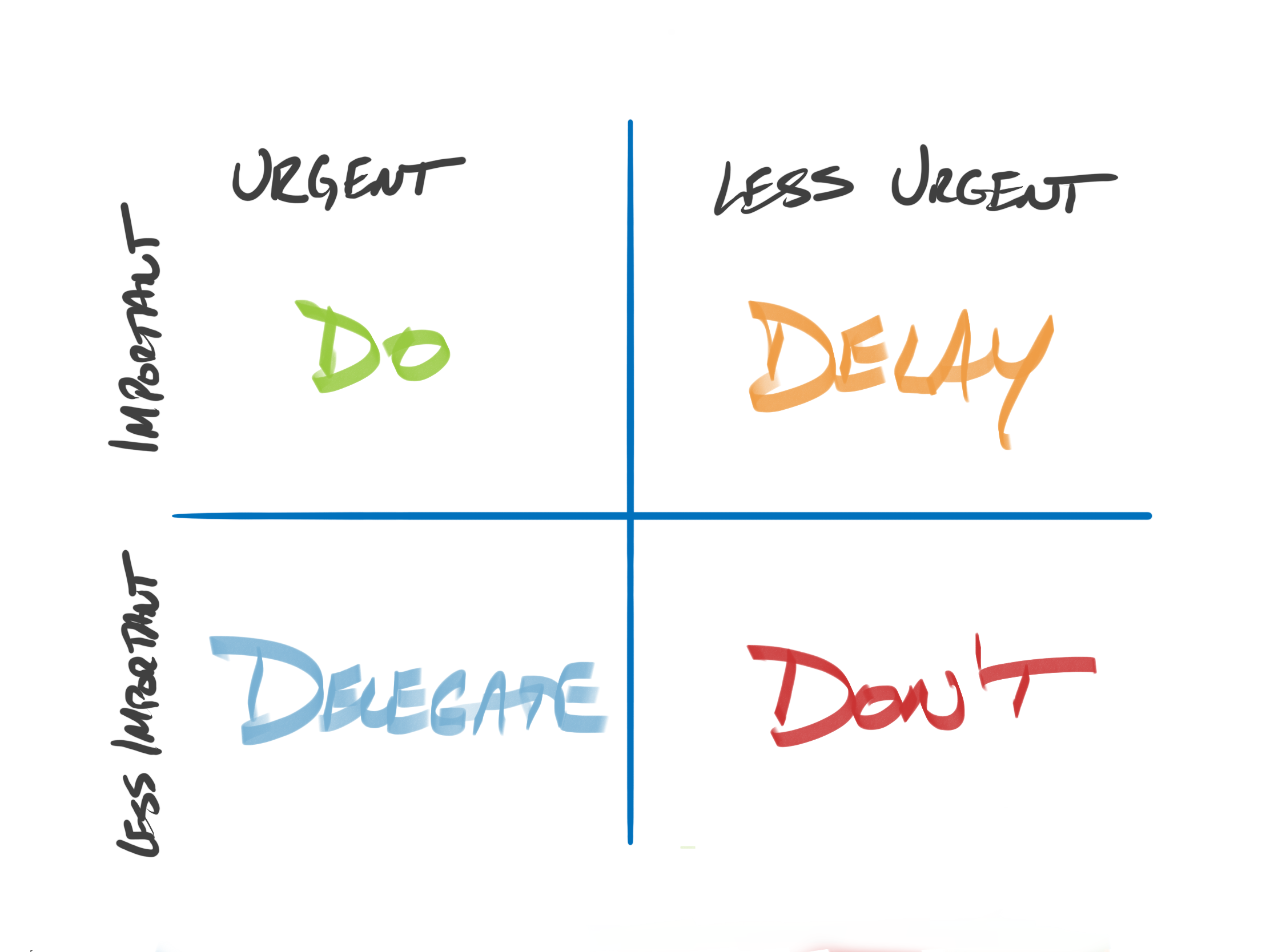
Do: Urgent and Important
These are tasks with real deadlines and real consequences: a client crisis, a safety issue, a project due tomorrow. Do them right away. The goal, though, is to keep this quadrant from growing. If you’re always living here, it’s often a sign that important work wasn’t planned early enough.
Schedule: Important but Less Urgent
This is where great leadership happens: planning, developing people, building relationships, improving processes and thinking strategically. Because nothing forces these tasks to happen today, they’re the easiest to neglect. Put them on your calendar and protect that time. Mentoring conversations, for example, belong here.
Delegate: Urgent but Less Important
Many tasks feel urgent but don’t require you specifically: routine requests, some meetings, scheduling, reports. Delegating them frees you for higher-impact work and gives team members a chance to grow. Delegate clearly, with expectations and the authority to get the job done, rather than just handing off chores.
Drop: Neither Urgent nor Important
Some activities simply don’t matter: busywork, unnecessary meetings, endless scrolling. Eliminate them. This is often the hardest step because habits are sticky, but cutting low-value work is how you make room for what matters. It’s closely related to eliminating sideways energy.
Putting It Into Practice
Try listing everything you spent time on last week and labeling each item 1 (do), 2 (schedule), 3 (delegate) or 4 (drop). Most people find they spend too much time in quadrants 1 and 3 and too little in 2. Then plan next week with quadrant 2 first.
The Takeaway
The Eisenhower Priority Matrix helps leaders do what’s urgent and important, schedule what’s important, delegate what’s merely urgent and drop the rest. This week, block an hour on your calendar for one important but non-urgent task.
Talk It Over
Discuss these questions with your group, family, team or mentor:
- Read “The Takeaway” above as a group. What are your initial thoughts about the article?
- What’s the biggest time-waster in a typical week for you?
- Look at last week. What did you spend most of your time on, and which quadrant does each fall into?
- Why do important but non-urgent tasks so often get pushed aside?
- What tasks could you delegate, and what makes it hard to let go of them?
- What’s one thing you should stop doing altogether?
- What important but non-urgent task will you put on your calendar this week?
The Single Most Important Thing You Can Do For Your Stress
Deadlines, bills, family responsibilities and the news can all pile on stress. We can’t always change our circumstances, but we have more influence over stress than we often realize, because much of it is shaped by how we interpret what’s happening. The single most important thing you can do for your stress is to change your thinking style, and practices like mindfulness and a flexible outlook can help.
Stress Lives Largely in How We Think
Stress has real effects on the body, but it often starts with our thoughts. Two people can face the same situation and experience very different levels of stress depending on how they interpret it. If you believe a challenge is a catastrophe you can’t handle, your body reacts accordingly.
Watch for Thinking Traps
Common thinking traps include assuming the worst (“I’m definitely going to get fired”), all-or-nothing thinking (“If it’s not perfect, it’s a failure”) and giving up before you start (“Why try? It won’t work”). When you notice these thoughts, question them: Is this really true? What’s a more balanced way to see it? What would I tell a friend in this situation?
Practice Mindfulness
Mindfulness means paying attention to the present moment without judgment. Simple practices help: slow, deep breathing; a few minutes of quiet meditation; noticing your senses during a walk; or letting go of distractions to focus on one task at a time. Even a few minutes a day can lower stress over time. See Embrace the Present Moment.
Adapt What You Can’t Control
Much stress comes from trying to control things we can’t. Accepting that change will happen, whether we like it or not, frees energy to focus on what we can influence. Ask, “What part of this is in my control? What can I let go?”
When Stress Is Too Much
If stress is constant, affecting your sleep, health or relationships, consider talking with a doctor or counselor. See The Science of Anxiety.
The Takeaway
The single most important thing you can do for your stress is change how you think about it: catch thinking traps, practice mindfulness and focus on what you can control. Today, notice one stressful thought and ask, “Is this really true?”
Talk It Over
Discuss these questions with your group, family, team or mentor:
- Read “The Takeaway” above as a group. What are your initial thoughts about the article?
- What’s the most stressful thing in your life right now?
- Do you agree that much of our stress is shaped by how we think? Why or why not?
- Which thinking trap do you fall into most: assuming the worst, all-or-nothing or giving up early?
- What mindfulness practices have you tried? What helped?
- What’s something stressing you that’s out of your control? What could you let go?
- What’s one thing you’ll do this week to manage stress differently?
When Your Kid Has an Addiction
Few things are as frightening for a parent as discovering that your child, whether a teen or an adult, is struggling with addiction. Fear, anger, guilt and grief can all hit at once. There’s no quick fix, but understanding addiction, getting professional help and caring for the rest of your family can make the journey more manageable. If your child is in immediate danger, such as an overdose, call 911.
Learn About Addiction
Addiction is complex and rarely looks like it does in movies. Learn about the specific substance involved, how it affects the brain and body, and what treatment options exist. The SAMHSA National Helpline (1-800-662-4357) offers free, confidential referrals 24/7.
Recovery Isn’t a Straight Line
The idea of “hitting rock bottom” is misleading. Some people struggle for a long time; others improve and then relapse. Relapse doesn’t mean failure; it’s often part of recovery. Early treatment is generally better than waiting for things to get worse.
Let Go of Blame
Parents naturally ask, “What did I do wrong?” Reflection can be useful, but endless self-blame drains energy you need for helping your child and caring for your family. Addiction has many causes.
Support Without Enabling
Love your child while setting boundaries: don’t cover up consequences or provide money that might fund substance use. Encourage treatment, and keep communication open. Family counseling and support groups for parents can help you navigate these choices.
Care for Your Family
Don’t let addiction consume everything. Keep investing in your marriage and your other children, who may feel scared or overlooked. Take care of your own health too. See How To Help Your Teen Who Is Using Drugs.
The Takeaway
When your kid has an addiction, learn about it, expect an uneven path to recovery, let go of blame, support without enabling and keep caring for your whole family. Reach out this week to a treatment professional or support group for parents.
Talk It Over
Discuss these questions with your group, family, team or mentor:
- Read “The Takeaway” above as a group. What are your initial thoughts about the article?
- What misconceptions do people often have about addiction?
- Why can the idea of ‘rock bottom’ be misleading?
- Why is self-blame so common for parents, and why can it be harmful?
- What’s the difference between supporting and enabling?
- How can parents care for the rest of the family during a child’s addiction?
- What resources could you share with a family facing this?
Coach Wooden’s Definition of Success
Most of us measure success by comparison: a bigger salary than our friends, a better review than a coworker, a higher ranking than the competition. Legendary UCLA basketball coach John Wooden, who won ten national championships, defined success differently. To him, success was the peace of mind that comes from knowing you made the effort to become the best you’re capable of becoming. Coach Wooden’s definition of success shifts the focus from beating others to giving your best.
Stop Measuring Yourself Against Others
Trying to be better than someone else feels motivating, but it puts your sense of success in someone else’s hands. You can’t control how talented, lucky or hardworking another person is. If they have a great year, you “lose,” even if you did excellent work.
Comparison also tends to steal joy. There will always be someone ahead of you in some area, and chasing them can leave you feeling like you’re never enough.
You Are Your Only Competition
Wooden reportedly rarely talked with his players about winning. Instead, he focused on preparation, effort and doing the little things well, and he trusted the scoreboard to take care of itself. The result was one of the most remarkable records in sports.
The same principle applies at work. Focus on what you control: your preparation, your effort, your attitude and your growth. Ask, “Did I do my best today?” rather than “Did I beat them?” Over time, that approach often leads to better results anyway.
Only You Know Whether You’ve Won
Under this definition, no one else can fully judge your success. A boss might praise you on a day you coasted, or overlook you on a day you gave everything. What matters is whether you know you gave your best effort.
That’s freeing. It means you can feel successful even after a loss, and it means you can’t fool yourself with an easy win. It also makes setbacks easier to handle, because you can learn from them without tying your worth to the outcome. See Next Level Work Ethic for more on effort.
Applying It With Your Team
Leaders can use this mindset too. Praise effort, preparation and growth, not just results. Help team members set personal goals for improvement instead of ranking them against each other. A team where everyone is trying to become their best tends to collaborate better than one where people compete with each other.
The Takeaway
Coach Wooden’s definition of success is doing your best to become the best you can be, not being better than others. Tonight, ask yourself, “Did I give my best today?” and let that question guide tomorrow.
Talk It Over
Discuss these questions with your group, family, team or mentor:
- Read “The Takeaway” above as a group. What are your initial thoughts about the article?
- How would you have defined success when you were a teenager? How about now?
- When was the last time you tried hard to be better than someone else? How did it turn out?
- What would it look like to compete only with yourself at work?
- Do you agree that only you know whether you’ve truly succeeded? Why or why not?
- How could a leader encourage effort and growth instead of competition between teammates?
- What’s one area where you’ll focus on giving your best this week, regardless of how others do?
The Four Types of Meetings in the Workplace
Many teams complain about meetings, and often with good reason. The problem usually isn’t meetings themselves; it’s that every meeting tries to do everything. Strategy gets crammed into a quick check-in, or a two-hour meeting gets wasted on schedule updates. A simple fix is to use four types of meetings in the workplace, each with a clear purpose and length: daily check-ins, weekly tactical meetings, monthly strategic meetings and quarterly reviews.
Daily Check-In (5 Minutes)
A daily check-in is a quick huddle to share schedules, priorities and anything blocking progress. Get in and get out. It works online or in person, and standing up helps keep it short.
The goal is coordination, not problem-solving. If an issue needs discussion, note it and handle it with the right people afterward.
Weekly Tactical Meeting (45–90 Minutes)
The weekly tactical meeting covers short-term milestones and resolves practical issues. Start by reviewing progress on key measures (a scorecard helps), then build the agenda around what’s actually off track.
Avoid rabbit trails into big-picture strategy. If a strategic topic comes up, put it on the list for the monthly meeting.
Monthly Strategic Meeting (2–4 Hours)
This is where the team steps back to brainstorm, analyze strategic objectives and connect them to the larger mission. Limit the topics to one or two big issues so you can go deep.
Expect and welcome constructive disagreement. Strategic meetings are where honest debate leads to better decisions. See Doing Conflict for the Good of Everyone.
Quarterly Review (1–2 Days)
Once a quarter, key leaders step away, ideally off-site, to review overall strategy, team development and outside factors like the market or community. Keep the schedule simple and leave room for reflection.
Before you leave, create a clear plan for communicating outcomes to the rest of the organization, so decisions don’t stay in the room.
The Takeaway
Using the four types of meetings in the workplace, with daily check-ins, weekly tacticals, monthly strategic meetings and quarterly reviews, helps every meeting do one job well. Look at your current meetings and decide which type each one should be.
Talk It Over
Discuss these questions with your group, family, team or mentor:
- Read “The Takeaway” above as a group. What are your initial thoughts about the article?
- What’s the best or worst meeting you’ve ever been in? What made it that way?
- Which of the four meeting types does your team do well? Which is missing or weak?
- What happens when strategic topics get crammed into quick check-ins or tactical meetings?
- How could a scorecard make your weekly meeting more focused?
- Why does a strategic meeting need room for honest disagreement?
- Which of your current meetings will you change, cut or add this month?
Attachment Types in the Workplace
Attachment styles don’t just affect romantic relationships. They show up at work too, in how people collaborate, handle feedback and respond to stress. Understanding them can help leaders and teammates work together better.
Secure
Secure employees build strong working relationships, ask for help when needed and aren’t paralyzed by fear of failure. They tend to handle feedback well.
Avoidant
Avoidant employees prefer to work alone and may keep colleagues at arm’s length. They’re often highly capable but can struggle with collaboration or asking for support.
Anxious
Anxious employees want acceptance and reassurance. They may avoid working solo, seek frequent feedback and take criticism personally.
Disorganized
People with a disorganized style may want connection but distrust it. They can seem unpredictable, pulling close one day and withdrawing the next.
Leading different styles
- Avoidant: respect their independence while gently inviting collaboration.
- Anxious: offer clear expectations and regular, specific feedback.
- Disorganized: be consistent and predictable to build trust.
- Everyone: create psychological safety where people can speak up without fear.
The Takeaway
Attachment styles influence how people work together. Recognize them in yourself and others, and lead each person in a way that builds security and trust.
Talk It Over
Discuss these questions with your group, family, team or mentor:
- Read “The Takeaway” above as a group. What are your initial thoughts about the article?
- Which attachment style best describes how you work?
- How do you usually respond to feedback? What does that say about your style?
- Have you worked with someone who seemed avoidant or anxious? How did it affect the team?
- Why is consistency so important for building trust at work?
- How can leaders create psychological safety?
- What is one way you could adjust how you work with a teammate based on this?
Relational Immediacy at Work
You can usually tell when a coworker is upset: a clipped email, crossed arms in a meeting, a sudden silence. Most of us either ignore those signals or react to them. Relational immediacy is a better option. It means addressing what’s happening between you in the moment, calmly and directly, before it builds into something bigger.
Why it matters
Unspoken tension doesn’t go away. It leaks out through sarcasm, withdrawal or sudden blowups. Addressing it early keeps small issues small and builds trust on your team.
Step 1: Make observations, not judgments
Describe what you notice without assigning motives. Instead of “You’re obviously not on board,” try “I noticed you didn’t say much when we discussed the new schedule.” Observations invite conversation. Judgments invite defensiveness.
Step 2: Invite a response
Ask whether your observation is accurate: “Am I reading that right?” This gives the other person a chance to agree, disagree or explain.
Step 3: Move forward or make it safe
If they agree, work together on a solution. If they disagree or get defensive, don’t push. Make it safe by reaffirming your respect and good intentions, or take a break and come back later.
It takes practice
Relational immediacy can feel awkward at first, especially if you’re used to avoiding conflict. Start with small, low-stakes moments and build from there.
The Takeaway
Relational immediacy means addressing tension in the moment. Share observations rather than judgments, invite a response and either move to solutions or make it safe.
Talk It Over
Discuss these questions with your group, family, team or mentor:
- Read “The Takeaway” above as a group. What are your initial thoughts about the article?
- What signals tell you a coworker is frustrated or stressed?
- How do you typically react to those signals?
- Why do many workplaces avoid addressing tension directly?
- What’s the difference between an observation and a judgment?
- How can a leader make it safe for people to share honest reactions?
- What is one situation at work where you could practice relational immediacy this week?
Attachment Types and Your Marriage
The way we connect with others is shaped by early experiences, especially with caregivers. Psychologists describe these patterns as attachment styles. Understanding yours and your spouse’s can explain a lot about how you handle closeness, conflict and stress.
Secure
Low anxiety and low avoidance. Secure people are comfortable with closeness and independence. They trust their spouse and handle conflict without panicking.
Avoidant
High avoidance and low anxiety. Avoidant people value independence and may pull away when things get emotionally intense. They may seem distant even when they care.
Anxious
Low avoidance and high anxiety. Anxious people crave closeness and reassurance. They may worry about rejection and read too much into small signals.
Disorganized
High avoidance and high anxiety. People with this style want closeness but also fear it, which can lead to confusing push-pull patterns. It’s often linked to past trauma.
The anxious-avoidant trap
Many couples include one anxious and one avoidant partner. One pursues, the other withdraws, and the cycle intensifies. Recognizing the pattern is the first step to breaking it.
You can move toward secure
Attachment styles aren’t fixed. Safe relationships, self-awareness and counseling can help people become more secure over time.
The Takeaway
Your attachment style shapes how you love. Learn yours and your spouse’s, watch for unhealthy cycles and work together toward security.
Talk It Over
Discuss these questions with your group, family, team or mentor:
- Read “The Takeaway” above as a group. What are your initial thoughts about the article?
- Which attachment style sounds most like you? Your spouse?
- How do you think your childhood shaped the way you connect with others?
- Have you seen the anxious-avoidant cycle in your relationship or others’?
- How might understanding attachment styles change how you respond to your spouse?
- What helps people become more secure in relationships?
- What is one step you could take to create more security in your marriage?
Relational Immediacy in Marriage
You can usually tell when your spouse is upset: short answers, a sigh, a closed door. Most of us either ignore those signals or react to them. Relational immediacy is a better option. It means addressing what’s happening between you in the moment, calmly and directly, before it builds into something bigger.
Why it matters
Unspoken tension doesn’t go away. It leaks out through sarcasm, withdrawal or sudden blowups. Addressing it early keeps small issues small and builds trust in your marriage.
Step 1: Make observations, not judgments
Describe what you notice without assigning motives. Instead of “You’re mad at me again,” try “I noticed you got quiet after I mentioned the budget.” Observations invite conversation. Judgments invite defensiveness.
Step 2: Invite a response
Ask whether your observation is accurate: “Am I reading that right?” This gives the other person a chance to agree, disagree or explain.
Step 3: Move forward or make it safe
If they agree, work together on a solution. If they disagree or get defensive, don’t push. Make it safe by reaffirming your respect and good intentions, or take a break and come back later.
It takes practice
Relational immediacy can feel awkward at first, especially if you’re used to avoiding conflict. Start with small, low-stakes moments and build from there.
The Takeaway
Relational immediacy means addressing tension in the moment. Share observations rather than judgments, invite a response and either move to solutions or make it safe.
Talk It Over
Discuss these questions with your group, family, team or mentor:
- Read “The Takeaway” above as a group. What are your initial thoughts about the article?
- What signals tell you your spouse is stressed or annoyed?
- How do you typically respond when you notice those signals?
- Why is it easier to ignore tension than to address it?
- What’s the difference between an observation and a judgment?
- How can you make a conversation feel safe when your spouse gets defensive?
- What is one small moment this week where you could practice relational immediacy?
3 Signs of Relational Health
Some people seem to make every relationship better. They’re easy to trust, easy to talk to and honest even when it’s hard. Others leave a trail of tension wherever they go. What’s the difference? Relationally healthy people tend to share three qualities: they’re authentic, they’re empathetic and they’re willing to step into conflict with honesty and care. These three signs of relational health are skills anyone can build.
1. They’re Authentic
Relationally healthy people know who they are and don’t pretend to be something they’re not. They’re comfortable in their own skin, imperfections included. People pretend for lots of reasons: fear of rejection, wanting to impress or feeling like their real self isn’t enough. But pretending makes real connection impossible, because people can’t connect with someone they don’t actually know.
2. They’re Empathetic
Empathy is the ability to understand what another person is feeling and see things from their point of view. Healthy people listen to understand, not just to reply. They’re curious about others’ experiences and slow to judge. Empathy makes people feel safe and understood. See Emotional Intelligence at Work.
3. They Step Into Conflict With Honesty and Care
Healthy people don’t avoid conflict, and they don’t use it as a weapon. They bravely raise issues that need to be addressed, and they do it with care for the other person. Their goal is to solve problems and strengthen the relationship, not to win or vent. See Doing Conflict for the Good of Everyone.
Growing in Relational Health
No one is perfect in all three. Ask yourself, or someone who knows you well, which area is strongest and which needs work. Practice small steps: share an honest opinion, ask a curious question, or raise a small concern kindly rather than letting it build.
The Takeaway
The three signs of relational health are authenticity, empathy and the courage to engage in conflict with honesty and care. Pick one of the three and practice it in a conversation this week.
Talk It Over
Discuss these questions with your group, family, team or mentor:
- Read “The Takeaway” above as a group. What are your initial thoughts about the article?
- Who’s someone you know who seems relationally healthy? What do they do?
- Why do you think people pretend to be something they’re not?
- Do you agree that being comfortable in your own skin is the start of relational health? Why?
- How would you describe empathy in your own words? What grade would you give yourself?
- How comfortable are you stepping into conflict? Do you do it more out of care or frustration?
- Which of the three signs will you practice this week, and how?
Three Marks of Good Character
Talent and skills can open doors, but character determines whether people trust you once you walk through them. Good character isn’t about being perfect; it’s about consistently doing what’s right, especially when it’s hard. Three marks of good character stand out: honor, integrity and humility.
Honor: Doing the Right Thing
An honorable person believes in doing the right thing and acts on it, even when no one is watching or it costs them something. Honorable people put the good of others above their own preferences. They keep promises, treat people fairly and stand up for what’s right.
Integrity: Being the Same Person Everywhere
Integrity means being one and the same person in every setting: at work, at home, online and with friends. People with integrity don’t change their values depending on who’s watching. That consistency is what makes them trustworthy.
Integrity also means being real, without using “just being honest” as an excuse to be harsh. You can be authentic and kind at the same time. Two-faced behavior, saying one thing to someone’s face and another behind their back, erodes trust quickly. See 6 Ways to Lie.
Humility: Not Taking Yourself Too Seriously
A humble person doesn’t suffer from self-importance. They acknowledge their imperfections, give credit to others and look for ways to serve. Humility isn’t thinking less of yourself; it’s thinking of yourself less. Humble people are easier to work with and more open to learning. See Being Vulnerable as a Leader.
Character Is Built in Small Moments
Character isn’t formed in one big decision but in countless small ones: telling the truth when a lie would be easier, admitting a mistake, helping someone without being asked. Each choice shapes who you’re becoming.
The Takeaway
Three marks of good character are honor, integrity and humility. Look for small moments this week to do the right thing, be consistent across settings and put others first.
Talk It Over
Discuss these questions with your group, family, team or mentor:
- Read “The Takeaway” above as a group. What are your initial thoughts about the article?
- Who’s someone you believe has great character? What have you seen them do?
- How would you define honor in your own words?
- Why are two-faced people so hard to trust?
- Do you act differently in certain settings? Why?
- Can you be authentic while still holding back some of your opinions? Explain.
- Which of the three marks of character will you focus on this week?
How Miscommunication Happens (and How to Avoid It)
Have you ever said something clearly, only to have the other person hear something completely different? Miscommunication happens all the time at home, at work and everywhere in between. It’s usually not because anyone is careless, but because communication is more complicated than it seems. Understanding how miscommunication happens can help you avoid it.
Communication Isn’t a One-Way Delivery
Many of us think of communication as a transmission: I send a message, you receive it, done. In reality, communication is more like a game of catch. Two people create meaning together, throwing ideas back and forth, adjusting as they go. When we treat it as one-way, like firing off a quick email or giving instructions without checking for understanding, misunderstandings multiply.
We All Have Filters
Everyone hears messages through personal filters: past experiences, culture, mood, assumptions and what we expect to hear. A neutral comment can sound critical to someone who’s stressed or feels insecure. Being aware of your own filters, and remembering that others have theirs, helps you interpret messages more generously.
Hearing Isn’t Listening
Passive hearing means the words reach your ears while your mind is elsewhere. Active listening means paying full attention, asking questions and summarizing what you heard. Listen with your eyes as well as your ears, noticing tone and body language, and pay attention to your gut sense of what’s not being said. See 4 Signs of a Good Listener.
Seek To Understand
Before you try to be understood, try to understand. Ask, “What do you mean by that?” or “Here’s what I’m hearing. Did I get it right?” At work, end important conversations by confirming next steps in writing. These simple checks catch misunderstandings before they cause problems. See Tips for Better Communication.
The Takeaway
Miscommunication happens because communication is a two-way process shaped by personal filters, and because we often hear without truly listening. Avoid it by listening actively, checking for understanding and staying aware of your filters. In your next important conversation, summarize what you heard before responding.
Talk It Over
Discuss these questions with your group, family, team or mentor:
- Read “The Takeaway” above as a group. What are your initial thoughts about the article?
- Share a funny or frustrating example of miscommunication you’ve experienced.
- What’s the difference between treating communication as a one-way message and as a game of catch?
- What personal filters might affect how you hear things?
- How can you tell when someone is truly listening versus just hearing?
- Why does checking for understanding help prevent problems at work?
- What’s one habit you’ll practice to reduce miscommunication this week?
One Simple Trick to Stop Your Fights
Many arguments go in circles because neither person feels heard. Each partner keeps repeating their point louder, hoping the other will finally get it. One simple technique can break that cycle: a structured listening exercise from Imago Relationship Therapy, often called the Imago Dialogue. It slows the conversation down and helps both partners feel understood.
Step 1: One Person Talks, the Other Listens
Decide who will speak first. The speaker shares something that’s bothering them, using “I” statements and keeping it reasonably short. The listener’s only job is to listen carefully, without interrupting, defending or planning a response.
Step 2: Mirror Back
The listener repeats back what they heard, as accurately as possible, without adding opinions or edits: “What I heard you say is… Did I get that right? Is there more?” The speaker can clarify until they feel accurately heard.
Step 3: Validate and Empathize
Next, the listener acknowledges that the speaker’s view makes sense from their perspective, even if they see it differently: “That makes sense, because…” Then they express empathy: “I imagine that made you feel…”
Then Switch
Once the first person feels fully heard, switch roles. You may find that once both feel understood, solutions come more easily, or the fight simply loses its heat. See Marriage Basics: Keep Talking and The State of the Union and Your Marriage.
The Takeaway
One simple trick to stop your fights is the Imago Dialogue: one partner speaks, the other mirrors back, validates and empathizes, then you switch. Try it the next time a disagreement starts going in circles.
Talk It Over
Discuss these questions with your group, family, team or mentor:
- Read “The Takeaway” above as a group. What are your initial thoughts about the article?
- What tends to make your arguments go in circles?
- Why is it so hard to listen without planning a response?
- How might mirroring back change how a speaker feels?
- What’s the difference between validating someone’s view and agreeing with it?
- How could empathy statements like ‘I imagine that made you feel…’ cool a conflict?
- When will you try this exercise with your partner?
Budgeting for Beginners
No matter how much money you make, it can seem to disappear without a trace. Plenty of people with good jobs, nice houses and new cars still live paycheck to paycheck. A budget is how you take back control.
A budget is a plan, not a punishment
A budget simply tells your money where to go before you spend it. It gives you freedom by making sure your priorities get funded first.
Step 1: Know your income
Start with your take-home pay each month. If your income varies, base your budget on a lower, conservative month.
Step 2: Track your spending
Look at the last two or three months of bank and card statements. Group spending into categories: housing, food, transportation, debt, savings, giving and fun. Many people are surprised by what they find.
Step 3: Prioritize
Cover essentials first: housing, utilities, food, transportation and minimum debt payments. Then build savings and pay down debt. Then plan for wants.
Step 4: Give every dollar a job
Income minus expenses should equal zero. That doesn’t mean spending everything. It means assigning every dollar to spending, saving or debt.
Step 5: Review and adjust
Your first budget won’t be perfect. Check in weekly and adjust monthly. Use a simple app, spreadsheet or envelope system.
The Takeaway
A budget tells your money where to go. Know your income, track spending, prioritize essentials and savings, give every dollar a job and adjust as you go.
Talk It Over
Discuss these questions with your group, family, team or mentor:
- Read “The Takeaway” above as a group. What are your initial thoughts about the article?
- Have you ever used a budget? What worked or didn’t?
- Why do you think people with good incomes still live paycheck to paycheck?
- What spending category do you think surprises people most?
- What does it mean to give every dollar a job?
- Why is it important to review and adjust your budget regularly?
- What is one step you’ll take this week to start or improve your budget?
Develop Your Love Map
Relationship researcher John Gottman describes a “love map” as the part of your mind where you store information about your partner’s world: their worries, dreams, friends, favorite foods and deepest hopes. Couples with detailed love maps tend to weather stress and change better, because they truly know each other. Developing your love map is about building a deep friendship with your spouse.
Why Love Maps Matter
Life changes constantly: new jobs, babies, moves, losses. If you stop updating your knowledge of your partner, you can drift into living alongside a stranger. Knowing what’s going on in your partner’s inner world helps you support them and stay connected through life’s rough waters.
From the Everyday to the Deep
A good love map includes the small stuff, like their favorite snack, salad dressing or how they take their coffee, and the big stuff, like their fears, dreams, values and what they’re stressed about right now.
Questions To Build Your Love Map
- Who are your closest friends right now?
- What’s stressing you out these days?
- What’s one dream you haven’t told many people about?
- What’s a favorite memory from your childhood?
- What would a perfect day look like for you?
- What are you most looking forward to this year?
Keep It Updated
Ask questions regularly, and listen with curiosity. Show that you want to know every part of your partner, in a way no one else does. See The Seven Principles for Making Marriage Work and Respond to Your Spouse’s Bids.
The Takeaway
Developing your love map means intentionally learning your partner’s world, from everyday preferences to their deepest hopes and fears, and keeping that knowledge current. Ask your partner two love map questions this week.
Talk It Over
Discuss these questions with your group, family, team or mentor:
- Read “The Takeaway” above as a group. What are your initial thoughts about the article?
- What’s one small detail you know about your partner that most people don’t?
- Why do love maps help couples handle stress and change?
- How up to date is your knowledge of your partner’s current worries and dreams?
- Which love map question would you most like to ask your partner?
- How can couples keep learning about each other over the years?
- What two questions will you ask your partner this week?
Personality Types in Marriage
Opposites often attract, and then drive each other crazy. One partner loves parties; the other wants a quiet night. One plans every detail; the other prefers to go with the flow. Understanding personality types in marriage can turn these differences from sources of frustration into strengths. Many couples find a framework like the Myers-Briggs personality preferences helpful for naming their differences.
Introvert and Extrovert
Introverts recharge with time alone or in quiet; extroverts recharge around people. Neither is better. Couples can plan time for both: a social evening, followed by a quiet night at home.
Sensing and Intuition
Sensors focus on concrete facts and practical details. Intuitives love possibilities, ideas and big-picture dreaming. Together, they can dream and plan, if they respect each other’s approach.
Thinking and Feeling
Thinkers make decisions logically and objectively, even if they’re unpopular. Feelers weigh how decisions affect people and value harmony. Both perspectives make decisions better.
Judging and Perceiving
Judgers like routine, order and closure. Perceivers like flexibility, spontaneity and keeping options open. Couples can agree on which areas need structure, such as bills or schedules, and where to leave room for spontaneity.
Making Differences Work
Talk about your preferences without labeling one as wrong. Appreciate what your partner’s style brings. Personality tools are helpful starting points, not boxes; people are more complex than any type. See Develop Your Love Map.
The Takeaway
Understanding personality types in marriage, like introvert and extrovert, sensing and intuition, thinking and feeling, and judging and perceiving, helps couples appreciate differences and work as a team. Talk with your partner this week about one personality difference and how it helps you.
Talk It Over
Discuss these questions with your group, family, team or mentor:
- Read “The Takeaway” above as a group. What are your initial thoughts about the article?
- Are you more of an introvert or an extrovert? What about your partner?
- Which personality difference causes the most friction in your relationship?
- How might that difference actually be a strength?
- How do you and your partner make decisions differently?
- Where does your relationship need structure, and where does it need flexibility?
- What’s one personality difference you’ll appreciate in your partner this week?
7 Signs You Are Going to Be Successful
Experienced coaches, managers and mentors often say they can spot someone who’s headed for success long before it shows up in their results. They’re not reading minds. They’re noticing habits. Signs you’re going to be successful include healthy competitiveness, a habit of finishing what you start, surrounding yourself with people who stretch you and a willingness to keep learning. The best news is that every one of these can be developed.
You Want To Improve
Successful people tend to be competitive, but the healthiest version of competitiveness is internal. They want to get better, not just beat others. That drive keeps them motivated through boring stretches and hard seasons. If you find yourself asking, “How could I do this better next time?” that’s a strong sign.
For a healthy way to think about competition, see Coach Wooden’s Definition of Success.
You Finish What You Start
Plenty of people start projects with enthusiasm. Far fewer finish them. Following through, at school, at work or on personal goals, shows reliability and grit. It also builds trust: people want to give opportunities to those who get things done.
If finishing is hard for you, start smaller. Break big goals into steps you can complete, and celebrate each one.
Your Circle Stretches You
The people you spend time with shape your habits and expectations. People headed for success tend to surround themselves with others who are more experienced, more disciplined or further along than they are, and they learn from them. Those who stay comfortable often choose company that never challenges them.
Look for mentors and friends who push you to grow and who celebrate your progress.
You Keep Learning and Own Your Mistakes
Successful people are curious. They read, ask questions and seek feedback. They also take responsibility when things go wrong instead of blaming others, which lets them learn quickly. A growth mindset sees setbacks as lessons, not verdicts.
You Show Up Consistently
Finally, success comes from steady effort over time. People who show up, prepare and do the work even on days they don’t feel like it build momentum that talent alone can’t match. See Next Level Work Ethic.
The Takeaway
Signs you’re going to be successful include wanting to improve, finishing what you start, choosing people who stretch you, learning from mistakes and showing up consistently. Pick the one that’s weakest for you and take a small step on it this week.
Talk It Over
Discuss these questions with your group, family, team or mentor:
- Read “The Takeaway” above as a group. What are your initial thoughts about the article?
- Who’s someone you knew early on who you could tell was going to do well? What did you notice?
- What’s the difference between healthy and unhealthy competitiveness?
- What’s something you started but didn’t finish? What got in the way?
- Who in your life stretches you to grow? Who could you add to your circle?
- How do you usually respond to mistakes? What would owning them look like?
- Which of these traits is weakest for you, and what’s one small step you’ll take this week?
Should I Rent While Paying off Debt?
When you’re working to pay off debt, buying a home can feel like the responsible next step. But in many cases, renting is the smarter move until your finances are on solid ground.
Owning costs more than the mortgage
Homeownership comes with property taxes, insurance, maintenance and surprise repairs. A new roof or broken furnace can cost thousands. When you rent, those costs belong to the landlord.
Debt makes ownership risky
If you’re still carrying credit card balances, car loans or other debt, one bad year, like a job loss or medical emergency, can put you in danger of losing your home.
Renting buys flexibility
Renting lets you move for a better job, downsize quickly or adjust your living costs as your situation changes.
When to buy
Many financial experts suggest buying when you:
- Are out of consumer debt
- Have a fully funded emergency fund
- Can make a solid down payment
- Can keep housing costs to a manageable share of your income
Owning can still be a good investment
Over the long term, owning often builds wealth. The key is buying when you’re ready, not before.
The Takeaway
If you’re paying off debt, renting may be the wiser choice. Get financially stable first, then buy a home you can comfortably afford.
Talk It Over
Discuss these questions with your group, family, team or mentor:
- Read “The Takeaway” above as a group. What are your initial thoughts about the article?
- Have you rented, owned or both? What did you learn?
- What hidden costs of homeownership surprised you or someone you know?
- Why might buying a home while in debt be risky?
- How does renting provide flexibility?
- What financial milestones would you want to hit before buying a home?
- What is one step you could take now toward your housing goals?
Treating the Whole Person: Anxiety and Depression Beyond Medication
Anxiety and depression involve the whole person: body, mind, emotions, relationships and circumstances. For many people, medication is an important and effective part of treatment, helping balance brain chemistry so they can function. But medication is rarely the whole answer. Treating the whole person means also addressing the thoughts, emotions, habits and life situations that feed anxiety and depression. Always make medication decisions with a doctor.
Symptoms Can Be Signals
Anxiety and depression sometimes signal that something in your life needs attention: an unhealthy relationship, overwhelming stress, unresolved grief or a job that’s wearing you down. Other times, the problem is more about how our minds interpret what’s happening, like catastrophic thinking or harsh self-criticism. Often it’s both.
Medication Can Create Space
For many people, medication eases symptoms enough to make other work possible. When you’re not overwhelmed every moment, it becomes easier to go to therapy, rebuild routines and make changes. Think of medication as one tool that can create space for healing, not a reason to stop there.
Address the Other Sides
Therapy can help you identify and change unhelpful thought patterns, process painful experiences and learn coping skills. Practical changes matter too: regular sleep, movement, time outdoors, healthy routines and limiting alcohol. Relationships are powerful; connection with supportive people protects mental health. See Why Routines Are So Crucial for Those With Depression.
Make a List
A helpful exercise is to list your biggest sources of anxiety or low mood, then note for each one: Is there something practical I can change? Is there a thought pattern I could challenge? Is there an emotion I need to process? Who could help? This turns a cloud of worry into specific steps.
Get Support
If you’re struggling, talk with a doctor or mental health professional. If you’re in crisis, call or text 988 in the US. See What Is Clinical Depression?
The Takeaway
Treating anxiety and depression works best when it addresses the whole person: medication when appropriate, plus therapy, healthy habits, supportive relationships and changes to stressful circumstances. List your top sources of stress this week and choose one practical step for each.
Talk It Over
Discuss these questions with your group, family, team or mentor:
- Read “The Takeaway” above as a group. What are your initial thoughts about the article?
- What helps you feel grounded when life gets stressful?
- Why do you think some people see medication as the whole answer, and others avoid it entirely?
- What are some non-medical factors that can affect anxiety and depression?
- What are your biggest sources of stress or worry right now?
- How do relationships affect mental health, for better or worse?
- What’s one practical step you could take this week to care for your mental health?
The Power and Danger of Dopamine
Dopamine is a natural chemical in your brain that drives motivation and pleasure. It helps you pursue goals, learn and enjoy life. But in a world full of instant rewards, dopamine can also pull us into unhealthy habits.
What dopamine does
Dopamine isn’t just about pleasure. It’s about anticipation. It’s released when you expect a reward, motivating you to go after it. That’s why a notification can feel so compelling.
Quick hits
Many modern habits deliver fast, easy dopamine: social media, video games, junk food, shopping, pornography and drugs. Each provides a quick high with little effort.
The crash
When the brain gets flooded with dopamine repeatedly, it adapts. You need more stimulation to feel the same effect, and normal life starts to feel boring. That’s the path to compulsive habits and addiction.
Healthy dopamine
Dopamine also comes from effort-based rewards: exercise, accomplishing goals, learning a skill, deep conversations and time in nature. These build lasting satisfaction instead of crashes.
Reset your system
- Limit quick-hit habits, like turning off notifications.
- Delay gratification on purpose.
- Pursue goals that take effort.
- Try a short break from a habit you suspect has too much control.
The Takeaway
Dopamine drives motivation, but quick hits can hijack it. Choose effort-based rewards and limit instant ones to keep your brain healthy.
Talk It Over
Discuss these questions with your group, family, team or mentor:
- Read “The Takeaway” above as a group. What are your initial thoughts about the article?
- What habits give you the quickest sense of reward?
- Why do you think notifications are so hard to ignore?
- Have you noticed normal activities feeling boring after a lot of screen time?
- What effort-based activities give you lasting satisfaction?
- Which quick-hit habit would you most like to reduce?
- What would a one-week break from that habit look like?
Don’t Let Your Fear Define You
Everyone feels fear. It’s a natural signal meant to protect us. But when fear starts making our decisions, it can shrink our lives. We avoid opportunities, stay in situations that aren’t good for us or cling to a false sense of control. Don’t let your fear define you. Instead, slow down, examine your fears, check whether your actions fit your values and face what scares you one step at a time.
The Illusion of Control
We all like to feel in control, and fear often pushes us toward habits that give us a false sense of it, like over-planning, avoiding risks, people-pleasing or constantly checking on things. It’s a lot like pressing the “door close” button in an elevator: it feels like you’re doing something, but it may not change much.
Slow Down and Check Your Values
In the rush of daily life, it’s easy to react to fear without noticing. Pause regularly and ask, “Are my choices lining up with what I value most? Or am I making decisions out of fear?” Sometimes the answer reveals that fear has been steering more than you realized. See Values in Leadership.
Fear Is There for a Reason
Fear isn’t always wrong. It can point to real risks or things that matter deeply to you. Instead of ignoring it, get curious. Picture your fear like a snow globe: pick it up, turn it around, examine it, then set it back down once you understand it better. What exactly are you afraid of? How likely is it? What would you do if it happened?
Face It in Small Steps
Facing fear head-on usually shrinks it over time. Start small: have a slightly uncomfortable conversation, try something new or take a manageable risk. Each step builds confidence. If fear or anxiety is constant and overwhelming, a counselor can help. See The Science of Anxiety.
The Takeaway
Don’t let your fear define you: notice when it’s steering your choices, check your actions against your values, examine your fears with curiosity and face them in small steps. Name one fear this week and take one small step toward it.
Talk It Over
Discuss these questions with your group, family, team or mentor:
- Read “The Takeaway” above as a group. What are your initial thoughts about the article?
- What’s something you were once afraid of that doesn’t scare you anymore?
- What’s your biggest fear right now? Can you identify why?
- Where might you be pressing the ‘door close’ button, doing something that feels like control but isn’t?
- Are your current choices lining up with your values? Why or why not?
- What could you learn by examining a fear more closely?
- What’s one small step you’ll take toward a fear this week?
How Introverts Can Thrive in Busy Settings
Being an introvert isn’t the same as being shy or antisocial. An introvert is someone who recharges by spending time alone or in quiet, while extroverts tend to recharge around other people. Introverts can be very social; they just need recovery time afterward. That can be challenging in busy settings like college dorms, open-plan offices or full households. These tips can help introverts thrive wherever they are.
Why Busy Settings Can Be Draining
College life, for example, is full of group projects, shared rooms, constant events and pressure to make friends quickly. Many workplaces bring open offices, back-to-back meetings and team events. For introverts, all that interaction can be exhausting, even when it’s enjoyable.
Know Your Limits
Learn to recognize the signs that you’ve hit your “people limit”: irritability, trouble focusing, feeling drained or wanting to escape. Noticing them early lets you step away before you’re completely worn out.
Find Ways To Recharge
Build in regular time to recharge. Take a walk, go for a drive, read, listen to music or find a quiet corner of the library. In shared living spaces, take advantage of times when you have the room to yourself. At work, block focus time on your calendar or take a short solo break between meetings. You may need to get creative to find solitude.
Socialize in Ways That Fit You
Introverts often prefer deeper conversations with a few people over large groups. Look for smaller gatherings, one-on-one coffee, clubs centered on shared interests or volunteering, where conversation has a natural focus. It’s okay to leave a party early or skip some events.
Communicate Your Needs
Let roommates, friends, family and coworkers know that needing alone time isn’t personal. A simple explanation, like “I’m going to recharge for a bit, but I’d love to hang out later,” prevents misunderstandings. See How to Navigate Roommate Relationships.
The Takeaway
Introverts can thrive in busy settings by knowing their limits, building in time to recharge, socializing in ways that fit them and communicating their needs. This week, schedule one block of quiet time just for you.
Talk It Over
Discuss these questions with your group, family, team or mentor:
- Read “The Takeaway” above as a group. What are your initial thoughts about the article?
- Would you say you’re more of an introvert or an extrovert? Why?
- What settings do you find most draining? Which recharge you?
- How do you know when you’ve hit your ‘people limit’?
- What are your favorite ways to recharge?
- How can introverts and extroverts better understand each other at home, school or work?
- When will you schedule time to recharge this week?
Your Culture Gets the Results It Rewards
If you’re frustrated with the results your team is getting, the problem is rarely a lack of effort. More often, your culture is producing exactly the results it’s designed to produce. How you actually do things, what you reward, tolerate and ignore, shapes the outcomes you get. Your culture gets the results it rewards, and changing results means being honest about your culture and realigning it with your vision.
Be Honest About How Things Really Work
Most teams have two cultures: the one they describe and the one they live. The first sounds great in a mission statement. The second shows up in how decisions get made, who gets promoted, what happens when deadlines slip and how people treat each other under pressure.
Progress starts with honesty. Write down, as a team, how you actually do things today, not how you wish you did. It can be uncomfortable, but you can’t change what you won’t admit. For a framework, see What Is Team Culture.
Take Ownership of Your Results
It’s tempting to blame the economy, the competition or a few difficult people. Outside factors are real, but the results you’re getting now are largely the product of the habits you’ve built. That’s actually good news, because habits can change.
Taking ownership means asking, “What are we doing, or not doing, that leads to these outcomes?” instead of “Who’s to blame?”
Close the Gap With Strategy
Once you see the gap between your current culture and your vision, strategy becomes the bridge. Write out your vision: where you want to be in three, five or ten years. Then identify a few strategic objectives that will move your culture in that direction, and the specific behaviors that support each one.
For example, if your vision includes developing leaders but your culture rewards only short-term output, one objective might be building regular mentoring into every manager’s week. See Strategic Alignment and Scorecard for Strategic Planning.
Reward What You Want More Of
Finally, look at what your team celebrates, pays for and promotes. If you say you value collaboration but only reward individual stars, people will compete. Align recognition, incentives and leadership attention with the culture you want, and behavior will follow.
The Takeaway
Your culture gets the results it rewards. Be honest about how your team really works, own your results, use strategy to close the gap to your vision and reward the behaviors you want more of. Start by writing down how your team actually does things today.
Talk It Over
Discuss these questions with your group, family, team or mentor:
- Read “The Takeaway” above as a group. What are your initial thoughts about the article?
- What’s one unwritten rule on a team you’ve been part of that everyone followed?
- What’s the difference between the culture your team describes and the one it actually lives?
- Why is it so tempting to blame outside factors for disappointing results?
- Where do you want your team to be in three to five years? What’s the biggest gap between that vision and today?
- What behaviors does your team currently reward, intentionally or not?
- What’s one thing your team could start rewarding to move toward the culture you want?
In-Laws and the Holidays
Holidays are supposed to be joyful, but juggling two families’ traditions, expectations and schedules can create real stress, especially for newlyweds and young families. Handling in-laws and the holidays well starts with a simple principle: your new family, you and your spouse (and kids), is now the center. Decisions get made together, and each partner handles their own family.
Your New Family Is the Center
When you marry, your family of origin is no longer the center of the picture. That doesn’t mean loving them less; it means your partnership comes first. Holiday decisions should reflect what’s best for your household.
Decide Together
You can’t please everyone. Talk with your spouse ahead of time about what matters most to each of you, such as certain traditions, travel limits or time for your own family’s rituals. Options include alternating years, splitting days or hosting.
Each Partner Talks to Their Own Family
Communicate plans clearly and kindly, and let each spouse handle conversations with their own parents. This prevents in-laws from blaming the “new” person and keeps you united.
Why Seeing Family Still Matters
Despite the stress, time with extended family can strengthen relationships, give kids a sense of belonging and create lasting memories. Approach gatherings with grace, focus on connection over perfection and plan breaks if you need them. See Boundaries With the In-Laws.
The Takeaway
To handle in-laws and the holidays, treat your new family as the center, decide plans together, let each spouse talk to their own family and focus on connection over perfection. Sit down with your spouse this week and agree on your holiday priorities.
Talk It Over
Discuss these questions with your group, family, team or mentor:
- Read “The Takeaway” above as a group. What are your initial thoughts about the article?
- What holiday traditions from your childhood matter most to you?
- What makes holidays with extended family stressful?
- Why is it important for couples to decide holiday plans together?
- Why should each partner talk to their own family?
- What’s a creative way to balance time with both families?
- What holiday priorities will you and your spouse agree on this year?
The Birds and the Bees: Talking With Kids About Where Babies Come From
Sooner or later, kids ask, “Where do babies come from?” Many parents freeze or deflect. But these questions are a chance to build trust and make sure children learn accurate, age-appropriate information from you, not from friends or the internet. Here’s how to approach “the birds and the bees” conversation.
Start With the Basics
Young children usually need simple, honest answers: a baby grows from a tiny cell made when a sperm from the dad joins an egg from the mom. That cell divides and grows inside the mother’s uterus until the baby is ready to be born. Use correct names for body parts; it helps kids understand their bodies and communicate clearly, including if something ever makes them uncomfortable.
Answer the Question They Asked
Often kids want less information than parents fear. Ask, “What do you think?” to learn what they already know, then answer simply. Let them ask follow-up questions when they’re ready.
Keep the Conversation Going
It’s not one big talk; it’s many small ones over years. As kids grow, add information about puberty, relationships, consent, values and online safety. Being the parent who’s open to questions makes it more likely they’ll come to you later. See How To Talk to Your Kids About Porn.
Share Your Values
Alongside the facts, talk about what your family believes about love, respect, relationships and bodies. Values give kids a framework for future decisions.
Stay Calm and Open
If you’re surprised by a question, it’s okay to say, “That’s a great question. Let me think about how to answer, and we’ll talk after dinner.” Then follow through.
The Takeaway
Talking with kids about where babies come from works best with simple, honest, age-appropriate answers, correct terms, ongoing conversations and your family’s values. Be the parent your kids feel comfortable asking.
Talk It Over
Discuss these questions with your group, family, team or mentor:
- Read “The Takeaway” above as a group. What are your initial thoughts about the article?
- How did you learn where babies come from? How did that shape you?
- Why might it matter that kids hear this from parents rather than the internet?
- Why is using correct names for body parts important?
- How can parents figure out how much information a child is ready for?
- What values would you want to share alongside the facts?
- How can you make it easier for your kids to ask you questions?
How to Help Your Teen Who is Using Drugs
Discovering that your teen is using drugs is frightening. Many teens start out of curiosity or to fit in, then keep using to cope with stress or because the substance has changed how their brain responds. Parents can’t control every choice, but they can respond in ways that make help more likely. If your teen is ever unresponsive or in danger, call 911.
Stay Calm and Talk
Choose a calm moment to talk. Share what you’ve noticed, express love and concern, and listen. Ask what’s going on in their life; drug use is often connected to anxiety, depression, peer pressure or other struggles.
Shift Your Role When Needed
If use has become a pattern, parents may need to shift from caregiver to something more like a fair, firm landlord: clear, written expectations and consequences, delivered matter-of-factly and without yelling. Rules only work when consequences are real and consistent. See Boundaries With Teens.
Get Professional Help
Talk with your teen’s doctor or a substance use counselor about assessment and treatment options. Family therapy can help everyone. In the US, the SAMHSA National Helpline (1-800-662-4357) offers free, confidential referrals 24/7. For opioid use, ask about naloxone, which can reverse an overdose.
Care for Yourself and Your Family
Lean on support groups for parents, keep investing in your marriage and other kids, and remember that recovery can take time. See When Your Kid Has an Addiction.
The Takeaway
To help a teen who is using drugs, stay calm and talk, set clear boundaries with consistent consequences, get professional help and care for your family. If you’re worried, contact your teen’s doctor or a helpline this week.
Talk It Over
Discuss these questions with your group, family, team or mentor:
- Read “The Takeaway” above as a group. What are your initial thoughts about the article?
- Why do you think teens experiment with drugs?
- What might be going on underneath a teen’s drug use?
- What does it look like for a parent to be calm but firm?
- Why do clear, consistent consequences matter?
- What professional help is available in your community?
- How could you support a family dealing with a teen’s substance use?
Anxiety
Talking Points:
- Face your fears. Because when you step into your fears, you will realize that they are not that scary after all.
- Talk about it. Talk to a teacher, parent, counselor or anyone you trust and tell them about your anxiety! You’ll feel better when you do!
- Get an expert’s help. Little anxieties go away once the scary situation passes but big anxiety is always there no matter what. If you have big anxiety, a doctor or counselor can help!
- Initial reactions to this topic? What jumped out at you?
- What is anxiety? When’s the last time you felt anxious about something?
- Who are some safe people that can help you when you feel anxious? Why is it better to talk about your feelings rather than ignoring them?
- As a class, come up with some signs of how to know when anxiety goes from small to big? What should you do if you feel big anxiety?
- Is there a step you need to take based on today’s topic?
Self-Control
Talking Points:
- Tip #1: Just walk away. Walking away not only removes you from your annoying friend, but it also takes away your ability to do something bad.
- Tip #2: Stop and think about it. Ask yourself questions like “Why do I feel this way?” “Is it worth it to act out for this?” What would a good person do?”
- Tip #3: Do something different. If you’re angry at your friend for bragging, you can distract yourself by playing a different game or talking to some other friends.
- Initial reactions to this topic? What jumped out at you?
- Share a time you lost your cool with a friend or sibling. What made you so mad? How did you react to those feelings?
- Why is it better to walk away when you’re angry? How does a lack of self control get you in trouble?
- What are some things you can do to distract yourself the next time you’re upset with someone?
- Role Play. As a class, create a scenario for teaching self control and choose a few kids to act it out. Have the kids show what a kid without self-control would do and what a kid with self control would do. Discuss which one is better.
- Is there a step you need to take based on today’s topic?
Dealing With Thoughts
Talking Points:
- Tip #1: Don’t overthink it. You have over 6,000 thoughts a day and you won’t know why you have them.
- Tip #2: Just kick it out! Any time a weird thought comes into your head, you have to just say to yourself “that’s a silly thought!” And then kick it out!
- Tip #3: Talk to someone. Go to your parents or teacher and say, “I have really been struggling with this thought lately, can you help me figure it out?”
- Initial reactions to this topic? What jumped out at you?
- Have you ever had a weird dream and didn’t know what it meant? Explain.
- We all have lots of thoughts and some of them might be weird or bad. What are some things you can do to get rid of bad thoughts?
- Who are some people you could talk to about your thoughts? Why is it good to talk things out with someone instead of holding it in?
- Is there a step you need to take based on today’s topic?
Don’t Be a Bully
Talking Points:
- #1: Don’t make fun. When you make jokes, don’t make them about someone, because no one likes to be laughed at!
- #2: Don’t use mean words. Anytime you catch yourself or your friends using mean words or calling someone a name, recognize that you are bullying!
- #3: Don’t be a bystander. So if your friends start bullying someone, and you realize it, step in and stop it!
- Initial reactions to this topic? What jumped out at you?
- Share a time you felt bullied by someone (don’t use names). How did you feel? Did anyone help you?
- What’s a good way to know if a joke turns into bullying?
- Words have power. How will you make sure you or your friends don’t hurt others with mean words?
- Have you been a bystander before when someone was bullied? As a class, come up with some things you can do to take action against bullying.
- Is there a step you need to take based on today’s topic?
Integrity
Talking Points:
- Integrity at home. Don’t let your siblings get in trouble for something you did.
- Integrity with friends. Don’t gossip about one of your friends. Treat others the way you want to be treated!
- Integrity also means that you are the same person no matter where you are. So if you act one way around your parents, you should act the same way around your friends, teachers, and coaches.
- Initial reactions to this topic? What jumped out at you?
- Why is integrity important? Why is it always better to tell the truth even if it means getting in trouble?
- As a class, come up with examples of ways you can have integrity at home and at school.
- Why is gossip hurtful? Why don’t good friends do that to others?
- If your parents watched you at recess, would they say you act differently there? Explain. How should you act no matter who is around?
- Is there a step you need to take based on today’s topic?
Take Ownership
Talking Points:
- Tip #1: Don’t play the blame game. If you mess up, just say “Oops, my bad guys” and then try to do better next time!
- Tip #2: Learn to say sorry. Everyone’s first reaction to messing up is to defend themselves but don’t do that just say, “Sorry guys. I messed that up.”
- Tip #3: Do everything 100%. Always give your best so you can be proud of the work you do.
- Tip #4: Keep your head up. Don’t get down on yourself when you mess up, just take ownership of it, and move on!
- Initial reactions to this topic? What jumped out at you?
- What does taking ownership look like? What’s it like to play a game when everyone blames someone else?
- Share a time a game got heated at recess. How did you see a blaming attitude cause the problem? How would’ve it turned out if everyone owned their mistakes?
- How is always giving 100% effort related to taking ownership?
- Role play: As a class, create a situation from recess and have the kids role play not taking ownership and then do it again role playing taking ownership.
- Is there a step you need to take based on today’s topic?
Your Habits
Talking Points:
- Step #1: Name your bad habits. You can’t change them if you don’t know them.
- Step #2: Replace your bad habits with good habits.
- Step #3: Keep practicing. Bad habits don’t go away in a day so keep working at it!
- Initial reactions to this topic? What jumped out at you?
- What are some of your bad habits? Why aren’t those things good for you?
- Think about one of your bad habits. What is a good habit that could replace the bad one?
- Have you ever broken a bad habit in the past? How long did it take to stop?
- Is there a step you need to take based on today’s topic?
Self-Esteem
Talking Points:
- #1: Strike a power pose! A power pose is a position of strength so it makes you feel strong.
- #2: Say nice things to yourself. Say something like: “You are awesome!”
- #3: Build others up. If you are able to compliment another person’s good qualities, that means you already KNOW you have good qualities too!
- Initial reactions to this topic? What jumped out at you?
- Share something you are good at that makes you feel confident.
- Ask a few kids to demonstrate a power pose. Why does our body language help us to be confident?
- As a class, come up with a list of nice things they can say about themselves every morning. Why can that boost your self-esteem?
- As a class, have kids take turns sharing compliments with one another. Why does it boost your own view of yourself if you can make someone else feel good?
- Is there a step you need to take based on today’s topic?
Resolving Conflict
Talking Points:
- Step #1: Stay calm. Take a deep breath.
- Step #2: Use kind words. Don’t be mean to the other person or else they won’t want to talk to you.
- Step #3: Listen. One person should talk at a time and make sure everyone has a chance to share.
- Step #4: Compromise. That’s just a big word for meaning find a way for everyone to win. You might give up something you want but so will the other person.
- Initial reactions to this topic? What jumped out at you?
- What do you argue about with your friends at school? How about at home with your siblings?
- Why is it important to take a breath when you’re frustrated or mad?
- As a class, come up with some kind words you could use for the following scenarios: 1. The other team cheated in a game at recess. 2. Your sibling broke your video game. 3. Your friend took your spot at the lunch table.
- With the scenarios in question 4, as a class come up with compromises for each one.
- Is there a step you need to take based on today’s topic?
5-Star Leadership Assessment
Great leaders don’t just have skills. They have character qualities that make people want to follow them. Use these five stars to assess your leadership honestly.
1. Credibility
Do you live out the values of your organization, or do you secretly think they don’t apply to you? People follow leaders who practice what they preach.
2. Conviction
Do you truly believe in the mission, or are you just giving it lip service? Teams can tell the difference.
3. Clarity
Do you understand the vision and strategy well enough to explain it simply? Or are you making it up as you go?
4. Candor
Are you honest with yourself and your team when things aren’t working? Leaders who avoid hard truths lose trust.
5. Compassion
Do you genuinely care about the people you lead? Results matter, but people won’t give their best for someone who doesn’t care about them.
Rate yourself
Give yourself a score of one to five on each star. Better yet, ask a trusted colleague or mentor to rate you too. Compare the results.
The Takeaway
Strong leaders combine credibility, conviction, clarity, candor and compassion. Rate yourself honestly and pick one star to grow this quarter.
Talk It Over
Discuss these questions with your group, family, team or mentor:
- Read “The Takeaway” above as a group. What are your initial thoughts about the article?
- Who is the best leader you’ve ever worked for? Which stars did they shine in?
- Which of the five stars is your strongest? Which is your weakest?
- Why does credibility matter so much in leadership?
- What makes candor difficult for many leaders?
- How do teams respond to leaders who lack compassion?
- Which star will you focus on growing this quarter, and how?
Do You Know Your Teen’s Love Language?
Teens still need to feel loved, even when they push parents away. One helpful tool is Gary Chapman’s idea of the five love languages: words of affirmation, quality time, acts of service, gifts and physical touch. Every teen tends to feel most loved through one or two of these. Knowing your teen’s love language helps your love land, even during tense years.
Words of Affirmation
Encouragement, praise for effort and “I’m proud of you” mean a lot to these teens. Criticism hits them hard, so balance correction with plenty of affirmation.
Quality Time
These teens feel loved through undivided attention: car rides, a meal out, shooting hoops or watching their favorite show together.
Acts of Service
Teens who notice when others need help, and who pitch in themselves, may feel most loved when you do things for them, like helping with a project or making their favorite meal.
Gifts
Thoughtful, not necessarily expensive, gifts show you were thinking of them.
Physical Touch
Hugs, a hand on the shoulder or a fist bump help these teens feel secure, even if they act embarrassed. Respect their comfort level, especially around friends.
How To Find Out
Watch how your teen shows love to others, what they request most and what they complain about. You can also simply ask. See The 5 Love Languages.
The Takeaway
Knowing your teen’s love language helps you show love in ways that land. Watch, listen and ask, then speak their language often. This week, show love to your teen in the way you think they feel it most.
Talk It Over
Discuss these questions with your group, family, team or mentor:
- Read “The Takeaway” above as a group. What are your initial thoughts about the article?
- What’s your own love language? Was it understood as a teen?
- Which love language do you think your teen has? Why?
- How do your teen’s complaints or requests hint at their love language?
- Why might teens seem to reject love even when they need it?
- How can parents respect a teen’s comfort with physical affection?
- How will you speak your teen’s love language this week?
You Might Just Learn Something in Couples Therapy
Many couples see therapy as a last resort, something you try only when divorce is on the table. But couples counseling can help at any stage, and you might be surprised by what you learn.
A fresh perspective
When you’re in the middle of a conflict, it’s hard to see clearly. A therapist helps you step back and reflect on what’s really going on.
Getting to the root
Many arguments aren’t really about dishes or money. Skilled therapists help uncover deeper feelings and needs behind recurring fights.
Breaking patterns
Couples often fall into cycles of criticism, defensiveness and retaliation without realizing it. A therapist can spot these patterns and help you interrupt them.
Learning new skills
Therapy can teach practical tools for communicating, handling conflict and rebuilding trust.
Don’t wait too long
Research suggests many couples wait years after problems begin before seeking help. Earlier is better. Even healthy couples can benefit from a tune-up.
Finding a counselor
Look for a licensed marriage and family therapist. Check whether your insurance or workplace Employee Assistance Program covers sessions.
The Takeaway
Couples therapy isn’t just for marriages in crisis. It offers fresh perspective, uncovers root issues, breaks harmful patterns and teaches skills that help any relationship.
Talk It Over
Discuss these questions with your group, family, team or mentor:
- Read “The Takeaway” above as a group. What are your initial thoughts about the article?
- What comes to mind when you think about couples therapy?
- Why do you think many couples wait so long to get help?
- What recurring arguments might have deeper roots?
- How could an outside perspective help a couple in conflict?
- What would make you more willing to try counseling?
- How could you encourage a friend who’s struggling in their marriage to get help?
How to Become a Life Hacker
Much of daily life runs on autopilot. We take the same route, follow the same routines and buy the same products, often because they’re familiar, not because they’re the best option. Becoming a “life hacker” simply means looking at those established systems with fresh eyes and finding smarter ways to save time, money and energy.
Notice Your Established Systems
Everyone has systems: how you handle email, plan meals, do laundry, commute or manage bills. Many were set up years ago and never questioned. Start by noticing them. Which ones feel clunky, stressful or wasteful?
Take Stock at the End of the Day
For a few days, go about your normal routine, then spend five minutes at night reviewing it. How much time did different tasks take? When were you most productive, and when did you drift? Where did time or money slip away? Patterns usually show up quickly.
Fix Your Least Efficient Times
Once you know your weak spots, experiment. If your afternoons drag, schedule simpler tasks then and save focused work for when you’re sharpest. If mornings are chaotic, prepare the night before. Batch similar tasks together, like errands or emails, to avoid constant switching. See The Eisenhower Priority Matrix.
Save Money With a Little Ingenuity
We often pay for products and services we could handle ourselves with a bit of effort, or that we don’t really need. Review subscriptions, learn a basic repair skill, cook simple meals at home or borrow instead of buying. Small changes add up. See Simplify Your Life by Decluttering.
Keep Experimenting
Life hacking isn’t a one-time project. Try one change at a time, see if it works and keep what helps. Share ideas with friends, family or coworkers; someone else may have already solved the problem you’re stuck on.
The Takeaway
To become a life hacker, notice the systems that run your life, take stock of how you spend time and money, fix your least efficient habits and keep experimenting. Tonight, take five minutes to review your day and pick one system to improve.
Talk It Over
Discuss these questions with your group, family, team or mentor:
- Read “The Takeaway” above as a group. What are your initial thoughts about the article?
- What’s a clever shortcut or life hack you love?
- What are some established systems in your daily life that you’ve never questioned?
- When are you most productive during the day? When do you drift?
- Where do you think you waste the most time or money?
- What’s one product or service you could replace with a little effort or creativity?
- What’s one system you’ll experiment with improving this week?
Salary Negotiation Tips for Women
Plenty of people accept the first salary offer they get, and many never negotiate at all. Research on negotiation has often found that women are less likely than men to negotiate pay, tend to set more modest goals, and open with less assertive requests. Those small differences can add up over a career. These salary negotiation tips for women, which work for anyone who dreads negotiating, can help you prepare well and ask for what your work is worth.
Why Negotiating Matters
A Pew Research Center analysis found that in 2024, women in the US earned an average of 85% of what men earned. Much of that gap is explained by factors like occupation, hours and experience, and it has narrowed over time. Negotiation isn’t the whole story, but it’s one piece you can control.
Because raises are often a percentage of your current pay, a higher starting salary keeps paying off for years. A single conversation can make a lasting difference.
Prepare Before You Talk
Know your market value. Research what people with your skills and experience earn in your field and area, using salary surveys, professional associations and trusted contacts. Base your request on the value of the role and your skills, not just what you’ve been paid before. In many places, employers aren’t allowed to ask about your salary history, and you can politely redirect the question to the role’s range.
Plan your opening. Decide in advance what you’ll ask for, what you’d be happy with and your walk-away point. Aim high but reasonable, backed by your research.
Start the Conversation
Don’t ask permission to negotiate. Instead of “Is this negotiable?” try “Thank you for the offer. I’m excited about the role. Based on my research and experience, I was hoping for something closer to $X. Is there flexibility there?” Calm, confident and friendly works best.
Negotiate for someone. Research has suggested that people often negotiate more effectively on behalf of others. Picture who you’re advocating for, whether your family, your future self or other people who will hold this role after you. It can make asking feel less self-centered.
Look at the Whole Package
If the salary is truly fixed, other things may not be: start date, flexibility, vacation time, professional development, title or a review after six months. Write down what you agree on so everyone remembers it the same way.
If negotiating feels intimidating, practice with a mentor or friend first. Confidence grows with rehearsal. See How To Speak Up More Confidently in Team Meetings for related tips.
The Takeaway
Salary negotiation tips for women come down to preparing well, knowing your market value, opening confidently, negotiating on behalf of the people you care about and considering the whole package. Before your next offer or review, research your market value and practice your opening line out loud.
Talk It Over
Discuss these questions with your group, family, team or mentor:
- Read “The Takeaway” above as a group. What are your initial thoughts about the article?
- Have you ever negotiated a salary, a price or a deal? How did it feel?
- Why do you think many people, and especially many women, avoid negotiating pay?
- How could you find out your market value in your field and area?
- What would you say if an employer asked about your current salary?
- How might thinking about who you’re negotiating for change how you approach the conversation?
- What’s one step you’ll take to prepare for your next pay conversation?
Taking Ownership of Your Mistakes
When we make a mistake, it’s tempting to minimize it, blame someone else or hope no one notices. But dodging responsibility usually makes things worse, damaging trust and keeping us from learning. Taking ownership of your mistakes is a sign of maturity and strength. It comes down to four steps: admit, apologize, accept and adapt.
Admit
Start by being honest with yourself. Look at what happened and identify your part, without exaggerating it or shrinking it. Focus on what you did, not on what others did. You can’t control whether they own their part, but you can own yours.
Apologize
Say sorry to anyone your mistake affected. Be specific and sincere, and avoid adding “but” or excuses. Resist the urge to fish for an apology in return (“I’m sorry, and I think you owe me one too”). A clean apology stands on its own. See Asking for Forgiveness When You Mess Up.
Accept
Mistakes have consequences. Accept them without complaining or trying to wiggle out. Owning the consequences shows that your apology is real and builds respect with others.
Adapt
Finally, take ownership of the future. What will you do differently next time? Make a specific plan, and follow through. Growth is what turns a mistake into a lesson. See The Power of a Growth Mindset.
Why It’s So Hard, and Why It Matters
Admitting fault can feel embarrassing or threatening, especially if we grew up in environments where mistakes were punished harshly. But people who own their mistakes are usually trusted more, not less. At work and at home, ownership builds credibility and models healthy behavior for others. See Winning the War Within as a Leader.
The Takeaway
Taking ownership of your mistakes means you admit your part, apologize sincerely, accept the consequences and adapt for the future. Think of a recent mistake and walk through all four steps.
Talk It Over
Discuss these questions with your group, family, team or mentor:
- Read “The Takeaway” above as a group. What are your initial thoughts about the article?
- Share a time someone refused to admit any fault in a conflict. How did it make you feel?
- Why do you think it’s so hard for people to admit they were wrong?
- How has a genuine apology affected one of your relationships?
- Why is it tempting to fish for an apology from the other person?
- What does it look like to accept consequences gracefully?
- Think of a recent mistake. Which of the four steps do you still need to take?
Next Level Work Ethic
It’s tempting to coast once you’ve reached a goal. You landed the job, earned the promotion or made the team, so why push so hard? But the people who stay exceptional over the long run rarely coast. They keep the hunger of a rookie fighting for a spot. A next-level work ethic isn’t about working endless hours; it’s about consistently showing up, giving your best and doing a little more than the minimum, especially in the areas you can control.
Stay Hungry After Success
Success can quietly lower our standards. We start relying on reputation instead of effort. The best performers in sports, business and every other field guard against that. They keep practicing fundamentals, asking for feedback and preparing as if they still have something to prove.
That hunger isn’t about insecurity. It’s about loving the work and wanting to keep growing.
Don’t Be a “Sometimes” Teammate
Every team has people who show up only some of the time, giving full effort when it’s convenient or when someone important is watching. They may not realize how much that inconsistency affects everyone else. Teammates can’t count on them, so others have to pick up the slack.
Consistency is what builds trust. Being reliable on ordinary days matters as much as rising to the occasion on big ones.
Do a Little More
Exceptional people tend to go a step beyond what’s required: one more check on the report, one more call to a customer, one more rep in practice. They ask, “What else can I do?” instead of “What’s the least I can get away with?”
This doesn’t mean burning yourself out. It means bringing full attention and care to the work you do. Healthy work ethic includes rest, boundaries and knowing when to stop.
Control the Controllables
You can’t control the economy, your company’s decisions or other people’s talent. You can control your effort, attitude, preparation and how you respond to setbacks. People who focus on the controllables tend to outwork others over time and handle disappointment better. See Coach Wooden’s Definition of Success.
The Takeaway
A next-level work ethic means staying hungry after success, being consistent, doing a little more and focusing on what you can control. Pick one area of your work this week where you’ll give a little extra care.
Talk It Over
Discuss these questions with your group, family, team or mentor:
- Read “The Takeaway” above as a group. What are your initial thoughts about the article?
- Who’s the hardest-working person you’ve ever known? What did their work ethic look like?
- Why do you think people tend to coast after reaching a goal?
- How does an inconsistent teammate affect the rest of the team?
- What’s the difference between a strong work ethic and overworking?
- What are the controllables in your work right now?
- Where will you give a little extra effort or care this week?
Empathy
Talking Points:
- #1: Put yourself in their shoes. Try to feel what they are feeling as if it happened to you.
- #2: Let them know you feel their pain. Say something like, “that really stinks, are you ok?”
- #3: Offer help in any way you can. If they fell, offer to get them an ice pack or bring them a special treat to cheer them up.
- Initial reactions to this topic? What jumped out at you?
- Share a time you felt really sad or embarrassed. What do you wish someone would’ve done to help you?
- What are some other things you could say to someone who feels sad to show that you care?
- What are some nice things you can do for someone who is sad that would cheer them up?
- Role play: Come up with scenario as a class where someone gets hurt or is embarrassed. Then, have kids act out nice things they could say and do to cheer them up!
- Is there a step you need to take based on today’s topic?
Speak Up
Talking Points:
- #1: Tell the bully to stop. Say something like: “Hey, that is not nice, you are really hurting his feelings! Stop calling him names!”
- #2: Get your friends together. Make a promise with your friends that if you ever see bullying you’ll all stand up and stop it.
- #3: Go get an adult. Adults will stop the bullying and will help the bully understand why their behavior is wrong.
- Initial reactions to this topic? What jumped out at you?
- Share a time you felt bullied by someone (don’t use names). How did that make you feel?
- Have you ever seen a person being bullied? What did you do? What do you wish you would’ve done?
- What are some other things you can say to stand up to a bully that doesn’t make you a bully?
- Why is it important to get an adult involved when you see bullying?
- Role play: Create some scenarios as a class and have kids act out the right way to respond to the bully and the wrong way to respond.
- Is there a step you need to take based on today’s topic?
Resilience
Talking Points:
- The two things you can control:
- Your effort. No one can stop you from trying your hardest. It’s a choice you get to make.
- Your attitude. You can choose to be positive, even when you mess up or don’t get your way.
- Use every situation as a way to learn how from your mistakes- that’s resilience!
- Initial reactions to this topic? What jumped out at you?
- Have you ever messed up in a game, in a play, or at a recital? Explain. What was hardest about that situation?
- What are some things that are out of your control when you’re competing or performing?
- How did you respond when you messed up? How did your effort change? How did your attitude change?
- What does resilience mean? What can you learn from a past mistake?
- Is there a step you need to take based on today’s topic?
Stay Curious
Talking Points:
- #1: Stay curious about the world. Ask questions and be explore new things.
- #2: Stay curious about people. Every kid is unique so take time to get to know your classmates.
- #3: Stay curious about your passions. You can always get better at guitar, basketball or cooking so keep working at them!
- Initial reactions to this topic? What jumped out at you?
- Share about your best vacation. Why was that place so cool to you? How was it different than where you live?
- What are some good questions you could ask a classmate to get to know them more?
- What are your passions/hobbies? What more can you learn about those things to get better?
- Is there a step you need to take based on today’s topic?
Grit
Talking Points:
- #1: Control your thoughts. Your thoughts are powerful and will impact what you do.
- #2: Remember your WHY. When you get discouraged, remember what you want to accomplish and keep working!
- #3: Put your head down and work. Things won’t be handed to you so work hard for what you want.
- Initial reactions to this topic? What jumped out at you?
- What do you want to be when you grow up? What will you need to do to accomplish that?
- What are you thinking when you want to practice and work hard? What are you thinking when you don’t want to work hard?
- When have you felt discouraged and wanted to give up? How could grit help you to overcome that?
- Think about a famous person you admire. What did they do to get where they are? What do you need to do to accomplish your future goals?
- Is there a step you need to take based on today’s topic?
Confidence
Talking Points:
- #1: Push out the doubts. Catch your doubting thoughts and throw them out!
- #2: Don’t hold back. Always give your all and go for it!
- #3: Don’t be arrogant. Don’t brag when you succeed because true confidence is in your thoughts, not your words.
- Initial reactions to this topic? What jumped out at you?
- What are some things you’re really good at? How do you know you’re good?
- Share a time you were scared to try something new. How did doubt make you afraid to try?
- Think about that thing you’re really good at. What does it look like to give 100% effort every time?
- How does a bragger act? Why is arrogance bad? How can you show confidence without arrogance?
- Is there a step you need to take based on today’s topic?
Why Passive-Aggressive Leadership Backfires
When someone doesn’t meet expectations, some leaders respond with sighs, sarcasm, cold silence or pointed comments in group emails. That’s passive-aggressive leadership, and it backfires. It creates anxiety, damages trust and rarely fixes the problem, because people are left guessing what’s wrong. Strong leaders do something different: they get clear about expectations, communicate them directly and build a culture where people own their work.
What Passive-Aggressive Leadership Looks Like
Passive-aggressive behavior expresses frustration indirectly. A leader might “forget” to invite someone to a meeting, give the silent treatment, make jokes with an edge, praise one person to send a message to another, or quietly redo someone’s work instead of talking with them.
It often comes from discomfort with conflict. The leader feels frustrated but doesn’t want to have a hard conversation, so the frustration leaks out sideways. Learn to spot it in 5 Signs of Passive-Aggressive Communication.
Why It Backfires
People can tell something’s wrong, but they don’t know what. That uncertainty creates stress and second-guessing. Team members start trying to read the leader’s mood instead of focusing on the work, and trust erodes.
Worse, the original problem usually doesn’t get solved. The person who missed the expectation may not even realize it, so the same issue repeats, and the leader’s frustration grows.
Strong Leaders Get Clear
Many unmet expectations were never clearly stated in the first place. Strong leaders define what good work looks like, when it’s due and why it matters. When something falls short, they address it directly, privately and calmly: “The report came in two days late, and that delayed the client update. What happened, and what do you need to hit the deadline next time?”
Direct doesn’t mean harsh. It means honest, specific and focused on solving the problem. See Giving Healthy Feedback in the Workplace.
Build a Culture of Ownership
Strong leaders don’t just correct; they create a culture where people take ownership. That means clear roles, reasonable consequences that are known in advance, and follow-through when commitments aren’t met. When everyone knows what’s expected and what happens if it isn’t, there’s no need for hints and sarcasm.
The Takeaway
Passive-aggressive leadership backfires because it leaves people guessing and leaves problems unsolved. Instead, get clear about expectations, communicate directly and build a culture of ownership. Think of one frustration you’ve been hinting at and plan a direct, respectful conversation about it.
Talk It Over
Discuss these questions with your group, family, team or mentor:
- Read “The Takeaway” above as a group. What are your initial thoughts about the article?
- Have you ever worked or lived with someone who was passive-aggressive? How did it feel?
- What are some common passive-aggressive behaviors you’ve seen at work?
- Why do you think people, including leaders, fall into passive-aggressive habits?
- How clear are the expectations on your team? Where might people be guessing?
- What would a direct, respectful version of your frustration sound like?
- Who do you need to have an honest conversation with, and what’s keeping you from having it?
Wealth-Building Habits You Can Start Now
Many people who build lasting wealth don’t look rich. They drive older cars, live in modest homes and avoid flashy spending. Their secret isn’t luck or a huge salary; it’s steady habits practiced over many years. These wealth-building habits you can start now are about living below your means, spending with purpose, setting clear goals, investing consistently and finding contentment. This is general information, not personal financial advice; consider talking with a qualified financial professional about your situation.
Live Below Your Means
Building wealth requires discipline and some tough choices. The simplest habit is spending less than you earn. That gap, however small at first, is what allows you to save, pay off debt and invest. Upgrading your lifestyle every time you get a raise makes it hard to ever get ahead.
Spend With Purpose
Know where your money goes. A simple budget helps you spend on what you truly value and cut what you don’t. It’s not about never enjoying anything; it’s about choosing intentionally. See 5 Budgeting Tips To Balance Giving, Saving and Spending.
Set Goals at Every Level
Set monthly, yearly and long-term financial goals. Short-term goals guide everyday spending; long-term goals, like retirement or a home, keep you motivated. Write them down and review them regularly. See 5 Tips To Help You Set Clear Financial Goals.
Build a Cushion, Then Invest Consistently
Many financial educators recommend building an emergency fund and paying off high-interest debt before investing heavily. After that, investing a steady portion of your income for retirement, often suggested at around 15%, lets time and compound growth work for you. Start where you can, even if it’s small.
Practice Contentment and Generosity
Many people who are financially secure say contentment is a big part of how they got there. When you’re satisfied with what you have, you’re less tempted to overspend to keep up with others. Generosity also helps keep money in perspective. See 5 Problems That Come With Greed.
The Takeaway
Wealth-building habits you can start now include living below your means, spending with purpose, setting clear goals, building a cushion, investing consistently and practicing contentment. This week, track every dollar you spend for seven days.
Talk It Over
Discuss these questions with your group, family, team or mentor:
- Read “The Takeaway” above as a group. What are your initial thoughts about the article?
- If you suddenly received a large sum of money, what would you do first? Why?
- Why is it so tempting to increase spending when income goes up?
- How do you currently decide where your money goes?
- What financial goals would you set for this year? For the next ten years?
- How can contentment help with building wealth?
- What’s one money habit you’ll start this week?
Asking for Forgiveness When You Mess Up
Everyone hurts people sometimes, through careless words, broken promises, or choices we regret. Left unaddressed, those hurts can damage relationships and weigh on us for years. Asking for forgiveness when you mess up is one of the most powerful things you can do. It can help heal the other person, free you from guilt and model something valuable for everyone around you.
Words and Actions Leave Marks
What we say and do can cause lasting damage, sometimes more than we realize. A sharp comment, a betrayal of trust or simply ignoring someone’s needs can stay with a person long after we’ve moved on. Acknowledging that impact is the first step toward repair.
It Can Set the Other Person Free
A sincere apology tells someone, “What happened to you mattered, and it wasn’t okay.” That acknowledgment can bring relief and help them move forward. It doesn’t erase the hurt, but it often opens the door to healing.
It Can Set You Free
Unresolved mistakes can eat away at us, showing up as guilt, shame or avoidance. Owning what you did and asking for forgiveness can release that weight, even if the other person isn’t ready to forgive yet. See Taking Ownership of Your Mistakes.
It Sets an Example
When parents, leaders and friends apologize well, they show others that it’s safe to admit mistakes. That example builds healthier families, teams and communities.
How To Apologize Well
Be specific about what you did: “I’m sorry I shared what you told me in confidence.” Avoid excuses and phrases like “I’m sorry if you were offended.” Acknowledge the impact, ask what you can do to make it right and commit to doing better. Then give the other person time; forgiveness can’t be demanded. See 5 Sayings for Resolving Conflict.
The Takeaway
Asking for forgiveness when you mess up can heal relationships, free you from guilt and set an example for others. Apologize specifically, without excuses, and commit to change. Think of one person you need to apologize to, and plan what you’ll say.
Talk It Over
Discuss these questions with your group, family, team or mentor:
- Read “The Takeaway” above as a group. What are your initial thoughts about the article?
- Share a time someone apologized to you. How did it affect you?
- Share a time someone hurt you and never apologized. How has that affected you?
- Why is it so hard for many people to apologize?
- How can owning your mistakes set you free?
- What makes an apology feel sincere?
- Is there someone you need to ask forgiveness from? What’s kept you from doing it?
The Grieving Process: Coping with Death
Losing someone you love is one of the hardest experiences in life. Grief can feel overwhelming, confusing and unpredictable. Some days you may feel okay; other days the sadness hits like a wave. Understanding the grieving process won’t take away the pain, but it can help you know what to expect, be patient with yourself and find ways to cope with death and loss.
Grief Is a Process, Not a Task
There’s no checklist for grief and no deadline for “getting over it.” Grief is a process that unfolds over time, and it’s unique to each person. Two people grieving the same loss may experience it very differently. Comparing your grief to someone else’s often adds unnecessary guilt.
Common Experiences of Grief
You may have heard of the “five stages of grief”: denial, anger, bargaining, depression and acceptance. Many people find these words helpful for naming what they feel, but grief rarely moves in a neat order. You might feel several at once, skip some or return to others years later. It’s normal to experience sadness, anger, guilt, numbness, relief or even laughter.
Acknowledge It and Take Your Time
Healing starts by acknowledging the loss and your feelings. Try not to rush or bury your emotions. Talk about the person you lost, cry when you need to and give yourself grace on hard days, especially around anniversaries and holidays. Take care of the basics: sleep, food, movement and time with people who support you.
Ways To Honor and Remember
Many people find comfort in remembering their loved one intentionally: sharing stories, creating a photo album, planting a tree, supporting a cause they cared about or keeping a meaningful tradition. These acts can turn grief into a way of carrying love forward.
Supporting Someone Who’s Grieving
You don’t need the perfect words. Show up, listen, say the person’s name and offer practical help like meals or errands. Keep checking in weeks and months later, when support often fades. If grief becomes so heavy that someone can’t function, or they’re having thoughts of harming themselves, encourage professional help. In the US, people can call or text 988.
The Takeaway
The grieving process is unique, unpredictable and not something to rush. Acknowledge your feelings, care for yourself, find ways to remember your loved one and lean on others. If someone you know is grieving, reach out to them this week.
Talk It Over
Discuss these questions with your group, family, team or mentor:
- Read “The Takeaway” above as a group. What are your initial thoughts about the article?
- What’s a memory of someone you’ve lost that still makes you smile?
- How have you experienced grief, and how was it different from others around you?
- Why do you think people sometimes try to rush through grief?
- Which part of grief do you think is hardest? Why?
- What are meaningful ways to honor someone who has died?
- How could you support someone who is grieving right now?
What Is Clinical Depression?
Everyone feels sad sometimes. A bad grade, a lost job, an argument or a gloomy week can leave us feeling down. Clinical depression is different. It’s a real health condition, not a weakness or a mood you can just snap out of. Understanding what clinical depression is helps people recognize it in themselves or others and get the right support.
How Depression Differs From Sadness
Ordinary sadness usually passes as circumstances change. Depression lingers. According to the National Institute of Mental Health, symptoms of major depression last most of the day, nearly every day, for at least two weeks, and they interfere with daily life: work, school, relationships and the things you used to enjoy.
Common Signs
Depression can look different from person to person. Common signs include a persistent sad, empty or hopeless mood; loss of interest in activities you once enjoyed; changes in appetite or weight; sleeping too much or too little; low energy; trouble concentrating; feeling restless or slowed down; feelings of worthlessness or guilt; and thoughts of death or suicide.
It’s Not Anyone’s Fault
Depression can result from a mix of genetic, biological, environmental and psychological factors. It can affect anyone, regardless of how successful or happy their life looks from the outside. Some people describe it as heavy and numb rather than sad. It’s important not to judge yourself or others for struggling.
Treatment Helps
Depression is treatable. Many people improve with therapy, medication or both, along with support from friends and family, healthy routines, physical activity and good sleep. Talking with a doctor or mental health professional is an important first step. See Why Routines Are So Crucial for Those With Depression.
How To Support Someone
If you’re worried about someone, talk openly and listen without judgment. Asking directly whether someone is thinking about suicide does not put the idea in their head, and it can open the door to help. If you or someone you know is in crisis, call or text 988 in the US. See How to Help Someone Who Is Suicidal.
The Takeaway
Clinical depression is a real, treatable health condition that lasts at least two weeks and interferes with daily life. Learn the signs, reach out for professional help and talk openly with people who may be struggling. If you’re having a hard time, tell someone you trust today.
Talk It Over
Discuss these questions with your group, family, team or mentor:
- Read “The Takeaway” above as a group. What are your initial thoughts about the article?
- Before reading this, what did you understand about depression?
- How would you describe the difference between sadness and clinical depression?
- Why do you think there’s still stigma around depression?
- What makes it hard for people to ask for help when they’re struggling?
- How could you support a friend or coworker who seems depressed?
- What’s one step you could take to make it easier for people around you to talk about mental health?
Chronic Pain and Mental Health
Chronic pain, pain that lasts for months or longer, affects millions of people. It can wear down your energy, mood and relationships. People with chronic pain are sometimes told it’s “all in your head,” which is hurtful and misleading. The truth is more complex: chronic pain involves real changes in how the nervous system processes pain signals, and mental health plays an important role in how pain is felt and managed. Understanding the link between chronic pain and mental health can help people find more relief.
Pain Is Real, and the Brain Is Involved
Pain is processed through the nervous system and brain. With chronic pain, that system can become more sensitive, amplifying signals even after an injury has healed. This doesn’t mean the pain is imagined. It means the body’s alarm system is stuck on high alert.
Stress, Fear and Worry Can Turn Up the Volume
When we’re stressed, anxious or afraid, the nervous system becomes more reactive, which can make pain flare. Pain can also cause stress and low mood, creating a cycle that feeds itself. Depression and anxiety are common among people with chronic pain, and treating them often helps.
Caring for Your Mind Helps Manage Pain
Learning to manage emotions and stress can help calm the nervous system. Approaches that many people find helpful include relaxation and breathing techniques, mindfulness, gentle movement, counseling and cognitive behavioral therapy. Good sleep matters too, since poor sleep and pain tend to worsen each other. Work with your healthcare providers to build a plan that fits you.
Supporting Someone With Chronic Pain
If someone you love lives with chronic pain, believe them. Ask how they’re doing and what helps. Be patient when plans change because of a flare-up. Understanding the mental health side of pain can deepen your empathy rather than leading to blame. See What Is Clinical Depression?
The Takeaway
Chronic pain and mental health are deeply connected: stress and emotions affect how pain is felt, and caring for your mind can help manage pain. If you live with chronic pain, talk with your healthcare team about including mental health support in your plan.
Talk It Over
Discuss these questions with your group, family, team or mentor:
- Read “The Takeaway” above as a group. What are your initial thoughts about the article?
- What has your experience with chronic pain been, personally or through someone you love?
- Why do you think people with chronic pain are sometimes misunderstood?
- How might stress and worry make pain worse?
- What helps you manage stress when you’re not feeling well?
- How does understanding the mind-body connection change how you view someone’s pain?
- What’s one way you could support someone living with chronic pain?
Setting Solution-Focused Goals for Your Marriage
Many couples talk about problems over and over without making progress. A solution-focused approach shifts the conversation from “what’s wrong” to “what would better look like?” Setting solution-focused goals for your marriage helps both partners know exactly what to work on and celebrate progress along the way.
1. Stay Positive
Frame the issue as an opportunity to grow together, not an accusation. “I’d love for us to have more time to talk in the evenings” invites partnership; “You never talk to me” invites defensiveness.
2. Be Specific
Don’t make your spouse guess. Say clearly what you need: “Could we put our phones away during dinner?”
3. Make It Measurable
Turn hopes into behaviors you can both see, like “a 15-minute check-in three nights a week” or “one date night a month.”
4. Think Baby Steps
Don’t try to fix everything at once. Choose one small change, give it time and be patient with each other as you learn new habits.
5. Celebrate Along the Way
Notice and thank your spouse for their efforts. Appreciation fuels motivation and makes change feel worth it. See How’s Your Marriage Doing? and The State of the Union and Your Marriage.
The Takeaway
Solution-focused goals help marriages grow when they’re positive, specific, measurable, small and celebrated. Choose one area you’d like to improve and set one small, measurable goal together this week.
Talk It Over
Discuss these questions with your group, family, team or mentor:
- Read “The Takeaway” above as a group. What are your initial thoughts about the article?
- What’s one area of your marriage where you’d like to see growth?
- Why does focusing on solutions work better than rehashing problems?
- How could you turn a complaint into a specific, positive request?
- What would a measurable goal look like for that area?
- Why are baby steps more effective than big changes?
- How will you celebrate your spouse’s efforts this week?
Here’s How to Start Mentoring Your Kids at Home
Parents influence kids every day, but intentional mentoring takes that influence further. Mentoring your kids at home means setting aside regular time to talk about real topics that matter to them, using a simple guide like a FlexTalk topic. It doesn’t require special training. Here’s how to get started.
1. Care About Your Kids
Mentoring starts with relationship. Show genuine interest in your kids’ lives, friends, interests and worries. When kids know you care, they’re more open to conversation.
2. Pick a Topic They Care About
Choose something relevant to their world right now: friendships, confidence, screen time, school stress, money, dating or emotions. Let older kids help choose. FlexTalk topics include a short video, an article and discussion questions, so you don’t have to start from scratch.
3. Make It Fun
Create an environment that invites conversation: breakfast out, ice cream, a walk, shooting hoops or a drive. Side-by-side activities often lead to better talks than sitting across a table.
4. Schedule It
Put it on the calendar: 15 to 60 minutes, weekly or every other week. Showing up consistently tells your kids this time matters.
5. Keep Going
Some conversations will feel awkward or short. That’s normal. Keep showing up; the relationship and the conversations grow over time. See The 3 Principles of FLEX Parenting and How To Spread Your Values Through Mentoring.
The Takeaway
To start mentoring your kids at home, show you care, pick a topic they care about, make it fun, schedule it and keep showing up. Choose a FlexTalk topic and schedule your first mentoring time with one child this week.
Talk It Over
Discuss these questions with your group, family, team or mentor:
- Read “The Takeaway” above as a group. What are your initial thoughts about the article?
- Who mentored you as a kid or teen? What did they do?
- What topics do your kids care most about right now?
- Where do your kids tend to open up most?
- What gets in the way of scheduling regular one-on-one time?
- How can parents keep going when conversations feel awkward?
- When will you schedule your first mentoring time, and with which child?
How Emotions Develop in Babies and Toddlers
Emotional development starts early. In the first two years of life, children move from simple reactions to surprisingly complex feelings. Knowing how emotions develop in babies and toddlers helps parents respond with patience and support healthy growth. Every child develops at their own pace, so think of these as general patterns, not strict timelines.
Early Months: Basic Emotions
In the first months, babies show basic emotions like contentment, distress and interest. Social smiles often appear around two months. Babies are learning that their cries bring comfort, which builds trust and security.
Later in the First Year: Personality Emerges
Between about six and twelve months, babies show more personality and a wider range of emotions, including joy, fear and anger. Many experience stranger anxiety and separation anxiety, signs of strong attachment to caregivers.
Toddler Years: Complex Emotions
Around 18 to 24 months, toddlers begin showing more complex emotions like pride, embarrassment and jealousy. They start to understand ideas like sharing and caring, and they’re discovering their own will, which helps explain tantrums.
How Parents Can Help
Respond consistently to your child’s needs. Name emotions out loud (“You’re sad that the ball rolled away”). Stay calm during big feelings, and offer comfort before correction. Model the emotional skills you hope your child will learn. See The Whole-Brain Child.
If you have concerns about your child’s development, talk with your pediatrician. The CDC’s Learn the Signs. Act Early. program offers milestone checklists.
The Takeaway
Emotions develop in stages, from basic feelings in early infancy to complex emotions like jealousy and empathy in the toddler years. Respond consistently, name feelings and stay calm. This week, practice naming your little one’s emotions out loud.
Talk It Over
Discuss these questions with your group, family, team or mentor:
- Read “The Takeaway” above as a group. What are your initial thoughts about the article?
- What emotions have surprised you most in your baby or toddler?
- Why does responding consistently to a baby’s needs matter?
- How might naming emotions help young children?
- What helps you stay calm during a toddler’s big feelings?
- Why do toddlers’ growing wills lead to tantrums?
- What’s one way you’ll support your child’s emotional growth this week?
Simplify Your Life by Decluttering
Many of us own far more than we need: closets we can’t close, garages we can’t park in, drawers full of things we forgot we had. All that stuff costs money, space, time and mental energy. Decluttering isn’t just about a tidy house; it’s about making room for what matters. You can simplify your life by decluttering with a few practical steps: take inventory, figure out what you really value, let go of the rest and keep it from piling up again.
Take an Honest Inventory
Walk through your home and look at what you own. How often do you use each item? Some things you use daily; others haven’t been touched in years. Consider what your stuff costs you, too: storage units, bigger homes, time spent cleaning and maintaining things.
Compare What’s Valuable With What You Love
Try making two lists: the ten most expensive things you own and the ten things you love most. Is there any overlap? Often the things that bring the most joy aren’t the priciest. That insight can make it easier to let go of things you own mostly out of habit or obligation.
Use a Simple Test
If you’re unsure what to keep, try a practical experiment. Box up or cover items you’re not sure about. If you don’t need anything from the box after a few weeks, donate it. Start with one room or even one drawer so it doesn’t feel overwhelming. Donating usable items lets someone else benefit.
Enjoy the Breathing Room
Many people say decluttering brings a sense of relief and calm. Less stuff means less cleaning, less searching for lost items and more space to relax. It can also free up money and time for experiences and relationships.
Keep It Simple Going Forward
A minimalist mindset doesn’t mean owning nothing; it means owning things on purpose. Before buying, ask, “Do I need this? Where will it go?” Try a “one in, one out” rule for clothes or toys. Revisit your spaces every few months. See 5 Problems That Come With Greed.
The Takeaway
You can simplify your life by decluttering: take inventory, focus on what you truly value, test what you really need, let go of the rest and buy more intentionally. Choose one drawer, closet or shelf to declutter this week.
Talk It Over
Discuss these questions with your group, family, team or mentor:
- Read “The Takeaway” above as a group. What are your initial thoughts about the article?
- What’s one item you own that you truly love? Why?
- Where does clutter tend to pile up in your life?
- If you compared your most expensive things with your most-loved things, what would you find?
- What makes it hard to let go of stuff?
- How do you think having less might change your daily life?
- What space will you declutter this week?
How to Get Your Teen to Talk to You
Many parents feel shut out during the teen years. Questions get one-word answers, and doors close more often. Teens are going through huge changes and often struggle to put feelings into words. But they still need their parents. Here’s how to get your teen to talk to you.
Spend Time Together
Kids often spell love T-I-M-E. Conversations happen more easily during shared activities: driving, cooking, walking the dog, late-night snacks. Be around and available, especially when they seem ready to talk.
Ask Better Questions
Swap “How was school?” for open questions: “What was the funniest thing that happened today?” or “What’s something you’re looking forward to?” Keep a list of questions handy.
Be a Steady, Calm Presence
Teens are often confused by their own emotions. They need parents who stay calm and steady, not ones who overreact. If they share something surprising, take a breath before responding. See The Freaked-Out Parent Loses.
Lecture Less
If a conversation goes on too long, it starts to feel like a lecture, and teens tune out. Listen more, ask what they think and keep advice short.
Be Vulnerable
Share stories from your own teen years, including mistakes. It shows you understand and makes it easier for them to open up. See 7 Things Teens Wish They Could Say to Their Parents.
The Takeaway
To get your teen to talk to you, spend time together, ask better questions, stay calm, lecture less and share your own stories. This week, try one open-ended question during a car ride or snack.
Talk It Over
Discuss these questions with your group, family, team or mentor:
- Read “The Takeaway” above as a group. What are your initial thoughts about the article?
- When did you most enjoy talking with your parents as a teen?
- Why do teens often give one-word answers?
- What open-ended questions could you ask your teen?
- How can parents stay calm when teens share something surprising?
- Why do lectures make teens tune out?
- What story from your teen years could you share with your teen?
How to Simply Show Love
Advertising often tells us that love means buying something: the right gift, the perfect surprise, the bigger present. Gifts can be meaningful, but they’re not the heart of love. People feel loved most through commitment, trust, understanding and time. Learning how to simply show love is about everyday actions that tell someone they matter.
Gifts Aren’t Enough
There’s nothing wrong with giving gifts. But if gifts replace attention, kindness and presence, they ring hollow. Someone who receives expensive presents but feels ignored or disrespected won’t feel loved. What we do day to day speaks much louder than what we buy.
Build on Commitment, Trust and Understanding
Lasting love grows on a few foundations. Commitment means showing up consistently, in good times and hard ones. Trust means being reliable and honest. Understanding means trying to see things from the other person’s perspective and accepting them as they are. See What Does a Healthy Relationship Look Like?
Love Shows in Thoughts, Actions and Intentions
Love is visible in small things: listening without checking your phone, remembering what matters to someone, offering help before being asked, speaking kindly about them to others, and treating them with respect even when you disagree. These everyday actions build a sense of being cared for over time.
Give Your Time
Time may be the most meaningful gift of all, because it can’t be replaced. Make space for the people you love: regular meals together, walks, phone calls, a game night or simply being present. Ask what makes each person feel most loved; the answer may surprise you.
The Takeaway
To simply show love, focus less on gifts and more on commitment, trust, understanding, respect and time. This week, choose one person you love and give them your full attention for an hour.
Talk It Over
Discuss these questions with your group, family, team or mentor:
- Read “The Takeaway” above as a group. What are your initial thoughts about the article?
- What’s the most meaningful non-material thing someone has done for you?
- Why do you think our culture connects love so closely with gifts?
- What does commitment look like in everyday relationships?
- What small actions make you feel most loved?
- How do you know what makes the people in your life feel loved?
- Who will you give your full time and attention to this week?
Tips for Raising Kids with Disabilities
Parents of children with disabilities often feel a strong pull to protect and do everything for their kids. Love and advocacy are vital. But kids with disabilities, like all kids, also need to build independence, contribute meaningfully and develop real self-worth. These tips for raising kids with disabilities focus on helping children grow into capable, confident adults.
Build Independence
Look for ways your child can do more for themselves, with the right supports and adaptations. Independence builds confidence and prepares kids for adulthood. Work with therapists and teachers to set realistic, growing goals.
Encourage Real Contribution
Kids feel valued when they genuinely help. Give your child meaningful chores and responsibilities at home, at school and in the community. Real contribution does more for self-worth than empty praise.
Avoid Patronizing
Hold reasonable expectations, and treat your child according to their age. A teenager with a disability is still a teenager who needs privacy, growing responsibility and a voice in decisions.
Keep the World in Perspective
Kids with disabilities often get a lot of attention. Help them develop empathy and humility by encouraging them to notice and help others too. See How Can I Help My Children Learn Empathy?
Build a Support Team and Care for Yourself
Doctors, therapists, educators, other parents and community programs can all be part of your team. Caregiving is demanding, so look for respite care and support groups. See Building an Inclusive Support System.
The Takeaway
Raising kids with disabilities well means building independence, encouraging real contribution, avoiding patronizing, nurturing empathy and building a strong support team. This week, give your child one new responsibility that stretches their independence.
Talk It Over
Discuss these questions with your group, family, team or mentor:
- Read “The Takeaway” above as a group. What are your initial thoughts about the article?
- What does independence look like for a child with a disability?
- Why does real contribution build self-worth more than praise?
- How can parents avoid being patronizing while still offering support?
- How can kids with disabilities learn to notice and help others?
- Who might be on a family’s support team?
- What new responsibility could your child take on this week?
The Life-Changing Act of Saying Hello
It’s easy to go through the day without really seeing the people around us: the bus driver, the cashier, the coworker down the hall, the neighbor we pass every morning. But a simple “hello” can be surprisingly powerful. It tells someone they’re seen and that they belong. The life-changing act of saying hello can transform both the person you greet and you.
Stepping Out of the Box
This topic’s video tells the story of William, a transit worker who grew up with a speech impediment. For years he felt like he lived “in a box,” watching life from the outside rather than taking part. Eventually he realized that staying in the box was, in part, his choice, and that he could choose differently.
Many of us have our own boxes: shyness, busyness, past hurts or fear of rejection. Recognizing them is the first step to stepping out.
Helping Others Feel They Belong
Once William stepped out, he made it his mission to help others feel they belonged. He greets everyone who boards his train, learns names, and offers handshakes, fist bumps and hugs to regulars. Small gestures turn strangers into a community.
Research on social connection suggests that even brief, friendly interactions with acquaintances and strangers can lift people’s mood and sense of belonging. Loneliness is widespread, and a hello costs nothing.
Bringing It to Work and Home
At work, greeting people by name, asking how their weekend went or welcoming a new hire can shift the culture. At home and in your neighborhood, saying hello and learning names builds the kind of connection people increasingly miss. See Essential Tips To Foster Connection in Your Workplace.
Start Small
If greeting people feels uncomfortable, start small: make eye contact and smile, then add a simple “good morning.” Try learning one new name each week. It gets easier with practice. See Spreading Joy: Simple Ways To Brighten a Person’s Day.
The Takeaway
The life-changing act of saying hello helps others feel seen and helps you step out of whatever box keeps you separate. This week, greet someone you usually pass by, and learn their name.
Talk It Over
Discuss these questions with your group, family, team or mentor:
- Read “The Takeaway” above as a group. What are your initial thoughts about the article?
- Who’s someone, like a server, driver or neighbor, who always brightens your day? What do they do?
- Have you ever felt like you were living ‘in a box’? What kept you there?
- Why do you think a simple greeting can make someone feel they belong?
- What gets in the way of saying hello to people around you?
- How could greeting people by name change the culture of your workplace or neighborhood?
- Who will you greet this week, and whose name will you learn?
Preparing for Marriage in Later Life
Finding love later in life, after divorce, widowhood or years of being single, can be a wonderful new chapter. But marrying later also brings unique challenges: established habits, past relationships, adult children and complex finances. Preparing for marriage in later life means addressing these openly before you say “I do.”
Be Aware of Your Baggage
Past relationships shape how we love, trust and handle conflict. Reflect on what you learned and what wounds you’re still carrying. Counseling can help you bring healthy patterns, not old hurts, into your new marriage.
Navigate Competing Preferences
After years of doing things your way, compromise can be an adjustment. Talk about daily routines, where you’ll live, holidays, hobbies and household roles. Expect to give and take.
Clarify Expectations About Adult Children
It’s natural to favor your own children. Discuss how you’ll relate to each other’s kids and grandkids, how holidays will work, and whether and how you’ll help them financially. Adult children may have mixed feelings about the marriage; give them time and grace. See Tips for Blending Families.
Get Clear on Finances and Estate Plans
Discuss income, debt, retirement, housing and how you’ll handle money. Update wills, beneficiary designations and estate plans. Some couples consider a prenuptial agreement. Get advice from qualified legal and financial professionals. See The Estate Planning Talk.
The Takeaway
Preparing for marriage in later life means reflecting on past baggage, navigating competing preferences, clarifying expectations about adult children and getting clear on finances and estate plans. Have one honest conversation about each of these before the wedding.
Talk It Over
Discuss these questions with your group, family, team or mentor:
- Read “The Takeaway” above as a group. What are your initial thoughts about the article?
- What’s unique about finding love later in life?
- How can past relationships affect a new marriage?
- What daily habits or preferences might need compromise?
- How should couples handle relationships with each other’s adult children?
- Why is it important to update financial and estate plans?
- Which conversation would be most important to have first?
Avoiding the “Happiness Trap”
Most of us want to feel happy, so it makes sense to try to avoid painful thoughts and feelings. But constantly pushing away discomfort can backfire. The harder we try to get rid of anxiety, sadness or painful memories, the more they seem to stick around. Psychologist Russ Harris calls this the “happiness trap” in his book of the same name, drawing on an approach called acceptance and commitment therapy (ACT). Avoiding the happiness trap means accepting hard feelings, staying present and living by your values.
We Carry Both Good and Hard Things
Life shapes us through both highlights and trials. Painful experiences are part of everyone’s story. Trying to pretend they don’t exist, or to feel good all the time, is exhausting and often impossible.
Avoidance Makes Burdens Heavier
When we try to push away difficult thoughts and feelings by distracting ourselves, numbing out or avoiding situations that trigger them, they often grow stronger. Avoidance can also shrink our lives, as we skip opportunities, conversations and relationships to escape discomfort.
Acceptance Brings Freedom
Acceptance doesn’t mean liking pain or giving up. It means making room for difficult feelings instead of fighting them. A helpful practice is to notice a thought, like “I’m going to fail,” and label it: “I’m having the thought that I’m going to fail.” That small step creates distance, so the thought has less power over you. See Embrace the Present Moment.
Live for What Matters
Once you stop spending all your energy avoiding pain, you can focus on what matters most to you: your values, like kindness, courage, family or growth. Then take small actions in line with those values, even when difficult feelings come along for the ride. A meaningful life often includes discomfort, and that’s okay.
If painful feelings are overwhelming or persistent, a counselor trained in approaches like ACT can help. See The Science of Anxiety.
The Takeaway
Avoiding the happiness trap means accepting that life includes both good and hard things, making room for difficult feelings rather than fighting them, and taking action toward what matters most. Today, notice one difficult thought and try labeling it as “just a thought.”
Talk It Over
Discuss these questions with your group, family, team or mentor:
- Read “The Takeaway” above as a group. What are your initial thoughts about the article?
- Share one highlight from your life so far, and one trial you’ve faced.
- Do you think the more we push problems away, the heavier they become? Why?
- How has avoidance created problems for you or someone you know?
- What’s the difference between accepting a feeling and giving up?
- What values matter most to you right now?
- What’s one small action you could take this week that fits your values, even if it feels uncomfortable?
One Word That Can Change Your Year
New goals often start strong and fade by February. Long lists of resolutions are hard to remember, and distractions pile up. A simple alternative is to choose one word that sums up what you want to focus on for the year: a word like “present,” “brave,” “health,” “finish” or “connect.” One word can change your year because it’s easy to remember and helps you say no to distractions and yes to what matters most.
Why One Word Works
Distractions are the enemy of greatness. With a single word, you have a quick filter for decisions. Facing a choice about how to spend an evening, a weekend or a budget? Ask, “Does this fit my word?” A short, clear focus is far easier to hold onto than a page of goals.
It’s a lot like the end of a long race. People tend to find extra strength when they can see the finish line. A clear word keeps the finish line in view.
Choosing Your Word
Look back at the past year. What went well? What do you want to change? Then look ahead: What do you most want this next season to be about? Brainstorm a few words, sit with them for a few days and choose the one that feels both inspiring and practical.
Write it somewhere you’ll see often, like your phone, your mirror or your desk.
Choose a Word Together
One word works for families and teams too. A family might choose “together” for a year focused on connection; a team might choose “simplify” or “excellence.” Invite everyone to suggest words and agree on one. Talking about it regularly helps everyone rally around it. See Eliminating Sideways Energy.
Keep It in Front of You
A word only helps if you remember it. Revisit it monthly: Where did I live it out? Where did I drift? What’s one step to refocus? Celebrate the moments when your word guided a good decision.
The Takeaway
One word can change your year by giving you a simple, memorable focus that helps you cut through distractions. Choose your word this week, write it where you’ll see it and share it with someone who will remind you.
Talk It Over
Discuss these questions with your group, family, team or mentor:
- Read “The Takeaway” above as a group. What are your initial thoughts about the article?
- If you had to sum up your past year in one word, what would it be? Why?
- What words have defined some of the most important seasons of your life?
- Why might one word be easier to stick with than a list of resolutions?
- What word would you choose for the coming year? What does it mean to you?
- What word might your family or team choose? Would everyone agree?
- Where will you put your word so you see it often?
Signs Your Teen Is Depressed
Teens have ups and downs, so it can be hard to tell normal moodiness from depression. Depression is a real health condition that affects many teens and is treatable. Knowing the signs your teen is depressed helps you step in early. If your teen talks about suicide or self-harm, act right away: call or text 988 in the US, or 911 in an emergency.
Signs To Watch For
Look for changes that last two weeks or more: ongoing sadness, irritability or anger; losing interest in activities they used to enjoy; withdrawing from friends and family; changes in sleep or appetite; falling grades; low energy; trouble concentrating; feelings of worthlessness; or talk of hopelessness or death.
Start a Conversation
Teens may not volunteer how they feel. Gently point out specific changes you’ve noticed and ask about them: “You haven’t wanted to see your friends lately, and you seem really tired. What’s going on?” Listen without lecturing or minimizing. There’s never harm in caring enough to ask. See How To Get Your Teen To Talk To You.
Get Professional Help
Talk with your teen’s doctor or a mental health professional. Treatment, often therapy and sometimes medication, works for many teens. Ask directly about thoughts of self-harm, and take any mention seriously. See Signs That Your Teen Might Be Suicidal.
Support at Home
Encourage sleep, movement, healthy meals and time with supportive friends. Stay connected, keep routines steady and be patient. See What Is Clinical Depression?
The Takeaway
Signs your teen is depressed include lasting changes in mood, interests, sleep, appetite, energy and grades. Start a caring conversation, get professional help and stay connected. If you’ve noticed changes, check in with your teen this week.
Talk It Over
Discuss these questions with your group, family, team or mentor:
- Read “The Takeaway” above as a group. What are your initial thoughts about the article?
- How can parents tell normal teen moodiness from depression?
- Which warning signs would concern you most?
- How could a parent start a caring conversation about changes they’ve noticed?
- Why might teens hide how they’re feeling?
- What support could help a depressed teen at home?
- Who could you check in with this week?
Boundaries In Marriage
Boundaries aren’t walls that keep your spouse out. They’re clear lines that help each person take responsibility for themselves, so the marriage can be healthier for both. Here are four areas where boundaries matter most.
1. Your feelings
You’re responsible for your own emotions. Your spouse can’t fix them for you or guess what they are. Be brave enough to name what you feel and share it honestly.
2. Your expectations
Your spouse can’t read your mind. Share what you expect about chores, money, time and intimacy. Then be ready to listen and compromise.
3. Your work and capacity
No one can do everything. Be honest about what you can handle at home and at work. Saying yes to everything leads to resentment and burnout.
4. Your time and relationships
Agree on boundaries with extended family, friends, work and technology. A marriage needs protected time and space to thrive.
Boundaries aren’t control
A healthy boundary is about your own behavior: “I won’t keep talking if we’re yelling.” Control tries to dictate your spouse’s behavior. Respect goes both ways.
The Takeaway
Healthy boundaries in marriage help each spouse own their feelings, expectations, capacity and time. Communicate them clearly and respectfully.
Talk It Over
Discuss these questions with your group, family, team or mentor:
- Read “The Takeaway” above as a group. What are your initial thoughts about the article?
- What comes to mind when you hear the word “boundaries”?
- Why is it important to take responsibility for your own feelings?
- What expectations have caused conflict in your relationships because they weren’t spoken?
- Why is it hard to be honest about your limits?
- What is the difference between a boundary and control?
- What is one boundary you need to communicate more clearly?
Keeping Romance Alive in Later Years
After years focused on careers and kids, many couples find their romance has quietly faded. But you’re never too old to enjoy a warm, exciting relationship with your spouse. Keeping romance alive in later years means recalibrating from a kid-centered marriage, being intentional and creative and building emotional closeness.
Recalibrate From a Kid-Centered Marriage
When kids leave home, or become more independent, couples sometimes realize they’ve been operating as co-parents more than partners. Use this season to rediscover each other: new interests, shared goals and time just for the two of you.
Be Intentional
Romance rarely happens by accident. Schedule regular date nights, morning coffee together or evening walks. Protect that time from distractions. See Simple Date Night Ideas.
Be Creative
Try something new together: a class, a trip, a hobby or a place you’ve never been. Novelty brings back some of the excitement of early romance.
Build Emotional Intimacy
Emotional closeness and physical affection go hand in hand. It’s easier to be affectionate when you feel safe, heard and connected. Share your thoughts and feelings, express appreciation and keep learning about each other. See Develop Your Love Map.
Get Away Sometimes
An occasional getaway, even one night, lets you focus on each other without daily routines and responsibilities.
The Takeaway
Keeping romance alive in later years means shifting from a kid-centered marriage, being intentional and creative, building emotional intimacy and getting away together. Plan one new experience with your spouse this month.
Talk It Over
Discuss these questions with your group, family, team or mentor:
- Read “The Takeaway” above as a group. What are your initial thoughts about the article?
- What’s one of your favorite romantic memories with your spouse?
- How can a kid-centered season change a marriage?
- What would being intentional about romance look like for you?
- What new experience could you try together?
- How are emotional and physical intimacy connected?
- What will you plan with your spouse this month?
You Don’t Have to Lose Your Identity in Marriage
Some couples merge so completely that they lose themselves. Others drift so far apart they feel like roommates. Healthy marriages find a balance: enough togetherness to feel deeply connected, and enough individuality for each person to keep growing. You don’t have to lose your identity in marriage. Three relationship patterns help explain the balance.
Pattern A: Borrowed Functioning
Early in relationships, couples often do everything together and lean heavily on each other for their sense of self. That closeness feels wonderful at first, but over time it can become suffocating. One or both partners may lose touch with their own friends, interests or opinions.
Pattern B: Emotional Distance
At the other extreme, couples live parallel lives. They may manage a household well but feel more like roommates than partners. Emotional and physical intimacy fade.
Pattern C: A Healthy Couple Identity
The goal is a balance: enough overlap to feel connected, with shared time, values and goals, and enough space for each person to have their own friendships, interests and growth. Healthy individuals make healthier couples.
Finding Your Balance
Talk with your spouse about how much together time and individual time each of you needs. Support each other’s personal goals and friendships. Keep investing in shared experiences and meaningful conversation. See What Does a Healthy Relationship Look Like? and Personality Types in Marriage.
The Takeaway
You don’t have to lose your identity in marriage. Aim for a healthy couple identity that balances deep connection with individual growth. This week, ask your spouse how you can support one of their personal goals.
Talk It Over
Discuss these questions with your group, family, team or mentor:
- Read “The Takeaway” above as a group. What are your initial thoughts about the article?
- Have you ever felt like you lost yourself in a relationship? What happened?
- What does borrowed functioning look like in a couple?
- What are signs that a couple has drifted into emotional distance?
- How much together time and individual time do you need?
- How can spouses support each other’s personal growth?
- What personal goal of your spouse’s will you support this week?
How to Talk to Your Kids About Porn
Many kids encounter pornography online, often accidentally and at younger ages than parents expect. It’s an uncomfortable topic, but if parents don’t talk about it, kids will learn from the internet or their peers. Knowing how to talk to your kids about pornography can help them handle what they see, understand healthy relationships and come to you with questions.
Find Your Courage
This isn’t an easy conversation, and that’s okay. Remind yourself that talking early and openly protects your kids. A little awkwardness is far better than silence.
Start Early and Keep It Age-Appropriate
With younger kids, keep it simple: “Sometimes you might see pictures or videos of people without clothes online. If that happens, turn it off and come tell me. You won’t be in trouble.” With older kids and teens, talk more directly about what pornography is and why it’s harmful.
Explain Why It Matters
Pornography often presents unrealistic and sometimes violent or degrading pictures of sex and relationships. Researchers have raised concerns about its effects on young people, including compulsive use and distorted expectations about consent and respect. Talk about what healthy, respectful relationships look like instead. See What Does a Healthy Relationship Look Like?
Be Honest and Approachable
Share your values and, when appropriate, your own struggles or mistakes. Kids are more likely to come to you if they know you won’t explode or shame them.
Use Practical Safeguards
Use filters and parental controls, keep devices out of bedrooms at night and talk regularly about what kids see online. Safeguards help, but ongoing conversation matters most. See Screen Time and Your Kids.
The Takeaway
To talk to your kids about pornography, find your courage, start early with age-appropriate language, explain why it matters, stay honest and approachable and use practical safeguards. Plan a simple first conversation with your child this week.
Talk It Over
Discuss these questions with your group, family, team or mentor:
- Read “The Takeaway” above as a group. What are your initial thoughts about the article?
- Why do you think parents avoid talking about pornography with their kids?
- What age seems right to start this conversation, and how?
- How can parents explain why pornography is harmful in an age-appropriate way?
- What helps kids feel safe coming to parents after seeing something online?
- What safeguards make sense for your family?
- When will you have a first or follow-up conversation with your child?
Set the Right Goals for Your Team and Adjust as You Go
Every team tracks something: sales, tickets closed, response times, projects shipped. Those numbers, often called key performance indicators or KPIs, are powerful because people work toward whatever gets measured. That’s also the risk. Measure the wrong thing and you can reinforce the wrong habits. To set the right goals for your team, start with what matters most, choose measures that point toward it, watch for side effects and be willing to adjust as you go.
Start With What Matters Most
Before you pick a single metric, get clear on what’s most important for your organization right now. Is it customer loyalty? Quality? Growth? Developing people? Your goals should flow from those priorities, not from whatever data happens to be easy to collect.
If you’re not sure what matters most, work through 5-Point Clarity for the Team first.
Know Whether a Measure Is a Means or an End
Some measures are ends in themselves, like customer retention. Others are means: they’re useful only because they lead to something else, like the number of follow-up calls made. Confusing the two causes trouble. If “calls per hour” becomes the goal, people may rush customers off the phone, hurting the very loyalty the calls were supposed to build.
For each measure, ask, “What are we really trying to achieve, and does this number move us toward it?”
Watch for Unintended Consequences
Measures change behavior, sometimes in unexpected ways. A goal for fewer reported defects can lead people to stop reporting them. A sales quota can encourage pushing products customers don’t need. On the other hand, a well-chosen measure, like tracking mentoring conversations, can build healthy habits across a team.
Talk with the people doing the work. They’ll usually know quickly whether a goal is helping or creating workarounds.
Adjust as You Go
Good goals aren’t set once and forgotten. Markets shift, priorities change and you’ll learn what works. Review your measures regularly, perhaps in a monthly strategic meeting, and be willing to drop, tweak or replace them. Setbacks are useful information, not just failures. A simple scorecard makes this review easier.
The Takeaway
To set the right goals for your team, start with what matters most, distinguish means from ends, watch for unintended consequences and adjust as you learn. Look at one number your team tracks and ask whether it’s leading to the behavior you really want.
Talk It Over
Discuss these questions with your group, family, team or mentor:
- Read “The Takeaway” above as a group. What are your initial thoughts about the article?
- What’s a goal or number you’ve been measured on at work or school? How did it shape your behavior?
- What’s most important for your team or organization right now?
- Can you think of a measure that encouraged the wrong behavior? What happened?
- What’s the difference between a measure that’s a means and one that’s an end?
- How often does your team review whether its goals still make sense?
- What’s one number your team tracks that you’ll examine or adjust this month?
How to Motivate Underperformers
Few leadership situations are as uncomfortable as an employee who isn’t meeting expectations. It’s tempting to avoid the issue, vent about it or jump straight to consequences. But many underperformers can turn things around with the right mix of belief, clarity and support. To motivate underperformers, let them know you’re on their side, remind them why they were chosen, and commit to working with them, while being clear about what needs to change.
“I’m Rooting for You”
Struggling employees often assume their manager has already given up on them. That belief drains motivation. Saying “I’m rooting for you” and meaning it changes the tone of the conversation. It tells the person you want them to succeed, not to catch them failing.
“I Chose You for a Reason”
Remind the person that you (or the organization) saw something in them when they were hired or promoted. “I believed in you when I brought you into this role, and I still do.” This helps them remember their strengths at a moment when they may only see their weaknesses.
“I’ll Work With You To Get There”
Commit to doing your part: “I’m going to work with you and do everything I can to help you reach the bar, or go beyond it.” Then follow through with coaching, resources, training or adjusted workloads where appropriate. This also makes clear that improvement is a shared effort, but they still have to do their part.
Get Specific About Expectations
Encouragement only works if the target is clear. Many people underperform because they don’t fully understand what “good” looks like. Write down a short list of clear expectations, how they’ll be measured and when you’ll check in. Then meet regularly to review progress and adjust.
Ask questions, too. Is something outside work affecting them? Are they missing a skill, a tool or information? Is the role a poor fit? The answers shape the right next step. For a feedback approach that balances care and candor, see Giving Healthy Feedback in the Workplace.
Know When To Make a Change
Sometimes, despite real support, things don’t improve. If that happens, the clarity you’ve built makes the next conversation fairer for everyone. Follow your organization’s process and involve HR as needed. A respectful, well-documented process honors both the employee and the team.
The Takeaway
To motivate underperformers, show you’re on their side, remind them why they were chosen, commit to helping, and set clear, measurable expectations with regular check-ins. If someone on your team is struggling, schedule a supportive one-on-one this week.
Talk It Over
Discuss these questions with your group, family, team or mentor:
- Read “The Takeaway” above as a group. What are your initial thoughts about the article?
- Think of a time you were struggling at work or school. What helped you turn it around?
- Why do struggling employees often assume their manager has given up on them?
- Which of the three messages would be hardest for you to say sincerely? Why?
- What’s your part as a leader in helping someone improve?
- What clear expectations and check-ins would help a struggling team member?
- If someone on your team is underperforming, what will you say in your next conversation with them?
10 Things People Waste Money On
Most of us don’t blow our money on one big mistake. It slips away a little at a time. Here are ten common money wasters and what to do instead.
- Overdraft fees: Track your balance and set up low-balance alerts.
- Credit card interest: Pay the full balance every month or stop using the card until it’s paid off.
- Eating out often: Restaurant meals add up fast. Plan meals and cook at home more.
- Unused subscriptions: Review streaming services, apps and memberships every few months and cancel what you don’t use.
- Daily coffee runs: A $5 habit five days a week is over $1,200 a year.
- The newest phone: Keep your phone longer or buy refurbished.
- Extended warranties: Most go unused. Put that money in an emergency fund instead.
- Brand names: Store brands are often just as good for much less.
- Impulse buys: Wait 24 hours, or 30 days for big items.
- Late fees: Set up autopay or reminders.
Small changes add up
You don’t have to cut everything you enjoy. Choose the spending that matters most to you and trim the rest. Redirect the savings toward debt, an emergency fund or a goal you care about.
The Takeaway
Money usually leaks away in small amounts. Identify your biggest money wasters, trim them and put the savings toward what matters most.
Talk It Over
Discuss these questions with your group, family, team or mentor:
- Read “The Takeaway” above as a group. What are your initial thoughts about the article?
- Which of these money wasters have you fallen for in the past year?
- What other money wasters would you add to the list?
- Why do small expenses feel harmless even though they add up?
- Which spending brings you real value and is worth keeping?
- How could you redirect money you save toward a goal?
- What is one money waster you’ll cut this month?
Fathering When You Can’t Fire Your Kids
At work, if an employee keeps failing, you can let them go. Parenting doesn’t work that way. You can’t fire your kids. They’re yours for life, through the easy seasons and the hard ones. That reality calls dads to be strategic for the long haul: proactive rather than reactive, and always fathering with the end in mind.
Stay Committed
Every parent has moments of frustration when they’d like to quit. Those moments pass. Your steady commitment, especially during your child’s hardest seasons, tells them they’re loved no matter what. See Why Teens Need Unconditional Love.
Be Proactive, Not Reactive
Reactive parenting responds to problems as they come, often with frustration. Proactive parenting thinks ahead: setting expectations, building routines, having important conversations before they’re needed and investing in the relationship when things are calm.
Father With the End in Mind
Like a good leader with a vision, decide what you want for your kids: the character, skills and relationships you hope they’ll have as adults. Then lead them toward those goals step by step. See Getting 5-Point Clarity on Parenting.
Adjust as They Grow
Your role shifts as kids grow, from caretaker and teacher, to coach, to mentor and eventually friend. Recognize which stage each child is in and adapt your approach. See Fathering the Attitude of Your Kids.
The Takeaway
You can’t fire your kids, so father for the long haul: stay committed, be proactive, keep the end in mind and adjust your role as they grow. Write down one long-term goal for each of your kids this week.
Talk It Over
Discuss these questions with your group, family, team or mentor:
- Read “The Takeaway” above as a group. What are your initial thoughts about the article?
- Who’s the best boss you’ve ever had? What made them great?
- When was the last time you felt like ‘firing’ your kid? What did you do instead?
- What’s the difference between proactive and reactive parenting?
- What do you hope your kids will be like as adults?
- What stage of parenting are you in with each of your kids?
- What long-term goal will you write down for each child this week?
How to Manage Your Energy, Not Just Your Time
Everyone gets the same 24 hours, but not everyone has the same energy throughout those hours. Managing your energy can be even more important than managing your time.
Know your energy patterns
Pay attention to when you feel sharpest. For many people it’s mid-morning. Schedule creative and demanding work during your peak hours, and save routine tasks like email for low-energy times.
Physical energy
Sleep, movement, water and good food are the fuel for everything else. Short bursts of activity, like a quick walk or a few push-ups each hour, can boost alertness.
Emotional energy
Negative emotions drain energy fast. Gratitude, encouragement and positive relationships restore it. Notice which people and activities leave you energized or depleted.
Mental energy
Multitasking drains your focus. Work in focused blocks with breaks in between. Many people find 60 to 90 minutes of concentrated work followed by a short break works well.
Purpose energy
Work that connects to something you care about gives you energy. Remind yourself why your work matters.
Recharge on purpose
Rest isn’t laziness. Schedule real breaks, protect your weekends and take time off to fully recharge.
The Takeaway
Don’t just manage your time. Manage your physical, emotional, mental and purpose energy, and schedule your hardest work during your peak hours.
Talk It Over
Discuss these questions with your group, family, team or mentor:
- Read “The Takeaway” above as a group. What are your initial thoughts about the article?
- When during the day do you have the most energy? The least?
- Which drains you more: physical, emotional or mental fatigue?
- What people or activities give you energy?
- How could you rearrange your day around your energy patterns?
- Why do many people feel guilty about resting?
- What is one change you’ll make to protect your energy this week?
Keeping Your Kids Safe On Their Phones
Most kids today get a smartphone before they’re teenagers. Phones open up a world of learning and connection, but also exposure to pornography, predators, cyberbullying and endless scrolling. Parents can’t control everything, but they can be the biggest influence on how their kids use technology.
1. Engage early
If you don’t shape your child’s understanding of technology, someone else will. Start conversations before your child gets a phone, and keep them going. Talk about what they see online and how it makes them feel.
2. Set clear boundaries
Agree on rules together and write them down. Examples:
- Phones charge outside the bedroom at night.
- No phones at meals.
- Parents know passwords and can check the phone.
- New apps need permission first.
Use built-in parental controls and content filters, and adjust them as your child grows.
3. Don’t freak out
Your kids will see things they shouldn’t, and they’ll make mistakes. If they come to you, stay calm. Thank them for telling you. A parent who reacts with panic or anger teaches kids to hide things. A parent who listens becomes a safe place.
Model healthy habits
Kids notice how you use your own phone. Put yours down at dinner and during conversations.
The Takeaway
Keep kids safer on their phones by engaging early, setting clear boundaries and being a calm, safe person they can come to when something goes wrong.
Talk It Over
Discuss these questions with your group, family, team or mentor:
- Read “The Takeaway” above as a group. What are your initial thoughts about the article?
- On a scale of 1 to 10, how aware are you of your kids’ phone use?
- What conversations have you had with your kids about phones and the internet?
- Why do many parents avoid these conversations?
- Which boundaries do you think matter most?
- Why is it so important not to freak out when kids share a problem?
- What is one change you could make to your family’s phone habits this week?
What Is Team Culture (and Why Is It So Important)?
Every team has a culture, whether anyone planned it or not. Team culture is the answer to a simple question: “How do we actually do things around here?” It’s not the values poster on the wall; it’s how people treat each other, make decisions and handle pressure on an ordinary Tuesday. That’s why team culture is so important. It shapes whether people trust each other, do their best work and want to stay.
A Healthy Culture Has Integrity
When we talk about a person’s integrity, we mean that their words and actions line up. A team culture works the same way. In a healthy culture, the mission, vision, values and daily habits all fit together. The team does what it says and says what it does.
For example, a team that says “we value people” and then actually protects lunch breaks, listens in meetings and follows through on promises has integrity. A team that says the same thing but routinely expects late-night emails and dismisses concerns does not, and everyone can feel the difference.
How Mission Drift Creeps In
Unhealthy cultures rarely start that way. More often they drift. A deadline leads to cutting a corner, the corner becomes the norm, and soon the team is operating far from the values it once agreed on. Different people start pulling in different directions, and frustration grows.
Mission drift usually shows up in small signs first: meetings where no one speaks honestly, decisions that surprise the people they affect, or good team members quietly checking out. Noticing these early makes them much easier to fix.
Take an Honest Look at Your Culture
A simple exercise can be eye-opening. Ask your team to list words that describe how things really work right now, not how you wish they worked. Then write down your mission, vision and core values and compare the two lists. Circle the words that match, and make another list of what’s missing.
The gap between those lists is your work. It may point to habits to change, conversations to have, or expectations that need to be clarified. Tools like 5-Point Clarity for the Team can help leaders put mission, vision, values and strategy into plain words.
Build Culture One Habit at a Time
Culture changes through repeated behavior, especially from leaders. If you want more honesty, model it by admitting mistakes. If you want more collaboration, reward people who help others succeed. Make your values specific enough to guide decisions, and talk about them often.
Start with your leadership team so you’re aligned, then bring the conversation to everyone else. People support what they help build, so invite the whole team to shape the habits that will define “how we do things here.”
The Takeaway
Team culture is how your team actually does things, and it’s important because it shapes trust, performance and retention. Look honestly at where your words and actions don’t match, then choose one habit to change together.
Talk It Over
Discuss these questions with your group, family, team or mentor:
- Read “The Takeaway” above as a group. What are your initial thoughts about the article?
- If you had to describe your team’s culture in three words, what would they be?
- Where do your team’s stated values and everyday actions line up well? Where don’t they?
- What early signs of mission drift have you noticed on teams you’ve been part of?
- What words would you put on a list of what your culture is missing right now?
- What’s one habit a leader could model that would shift your team’s culture in a healthy direction?
- What’s one specific step your team could take this month to close the gap between your values and your actions?
How To Keep Your Team Motivated
Most teams start a big project with plenty of energy. A few weeks later, deadlines slip, meetings drag, and people quietly start doing the minimum. If you want to keep your team motivated, you don’t need a pep talk. You need a few simple habits that keep everyone clear on the goal, connected to each other, and able to see that their work matters.
Agree on How You’ll Work Together
A lot of frustration on teams comes from unspoken expectations. One person thinks “done” means a rough draft; another thinks it means finished and polished. One person answers messages at night; another never does. When those gaps go unnamed, people start to resent each other, and motivation leaks away.
A simple team agreement fixes much of this. Keep it short: what you’re trying to accomplish, who owns what, and the few norms that matter most, such as how quickly you respond, how you handle disagreement, and what happens when someone falls behind. Write it down together so everyone has a voice, and revisit it when things feel off. People work harder for a plan they helped shape.
Meet Often, but Keep It Short
Long, infrequent meetings let a team drift. By the time you check in, problems have grown and people have lost the thread. Short, regular check-ins work better. Fifteen minutes once or twice a week is often enough to ask three questions: What did we get done? What’s next? What’s in the way?
Use those check-ins to look at the team agreement and the goal, not just the task list. When someone is stuck, the team can help right away instead of discovering the problem at the deadline. Many teams find that standing up for these meetings keeps them brief and focused.
Give People Room To Share Wins
Recognition is one of the most powerful motivators at work, and it costs nothing. Build a regular moment, even two minutes at the start of a meeting, for people to share what they’ve accomplished. It lets people feel seen, and it shows everyone else that progress is happening.
Be specific when you recognize someone. “Great job” is nice, but “the way you organized that client call saved us a week” tells a person exactly what to keep doing. When work gets tough, celebrate small wins on purpose. A hard season feels very different when people can see they’re getting somewhere. For more on this, see Giving Healthy Feedback in the Workplace.
Help Everyone See the Finish Line
People lose motivation when their work feels disconnected from anything that matters. A data-entry task is tedious; a data-entry task that gets a family their insurance payout faster is meaningful. Leaders create that “line of sight” by regularly connecting individual tasks to the bigger goal and to the people who benefit.
Share customer feedback, show the progress chart, or invite the people your team serves to tell their story. When the work gets hard, honest context helps too: explain why the push matters, how long it will last, and what support is available. Motivation grows when people understand the why behind the work, a theme that runs through a healthy team culture.
The Takeaway
You can keep your team motivated with a few steady habits: agree on how you’ll work together, check in often and briefly, give people room to share wins, and keep the finish line in view. Pick one of these to try with your team this week.
Talk It Over
Discuss these questions with your group, family, team or mentor:
- Read “The Takeaway” above as a group. What are your initial thoughts about the article?
- What’s one project, at work or anywhere else, that you remember being really energized about? What made it that way?
- What unspoken expectations might be causing friction on your team right now? What would you want in a simple team agreement?
- How would you describe your team’s meetings today? What would make them shorter or more useful?
- Think about a time someone recognized your work in a specific way. How did it affect your motivation?
- How clearly can your team see the “finish line” and who benefits from the work? How could you make that clearer?
- Which one habit from this article will you try first with your team, and when?
Learn How To Really Listen to Your Spouse
One of the most common complaints in marriage is “You don’t listen to me.” Feeling heard is a deep need, and when it’s unmet, frustration builds. The good news is that listening is a skill anyone can improve. Learning how to really listen to your spouse starts with recognizing what gets in the way.
Common Roadblocks
Feeling like listening means admitting fault. Some people respond immediately because silence feels like conceding. Planning a rebuttal. Instead of listening, you’re preparing your defense. Tuning out. If one spouse complains often, the other may stop taking any concern seriously. Distraction. Phones, TV and to-do lists pull attention away. Reading in your own meaning. You hear what you expect instead of what your spouse is actually saying.
How To Really Listen
Give full attention. Put down the phone and turn toward your spouse. Listen to understand, not to respond. Your goal is to grasp their feelings and perspective. Reflect back. “It sounds like you felt alone handling the kids tonight. Is that right?” Ask questions. “Tell me more about that.” Hold off on solutions. Often your spouse wants to be understood before being helped.
Listening Isn’t Agreeing
You can understand your spouse’s view without agreeing with it. Once both of you feel heard, it’s much easier to work out differences. See One Simple Trick To Stop Your Fights and 4 Signs of a Good Listener.
The Takeaway
To really listen to your spouse, notice your roadblocks, give full attention, listen to understand, reflect back and hold off on solutions. In your next important conversation, summarize what you heard before you respond.
Talk It Over
Discuss these questions with your group, family, team or mentor:
- Read “The Takeaway” above as a group. What are your initial thoughts about the article?
- When do you feel most heard by your spouse?
- Which listening roadblock do you struggle with most?
- Why can listening feel like admitting fault?
- How does reflecting back change a conversation?
- Why might your spouse want understanding before solutions?
- How will you practice listening in your next conversation?
What’s Your Mission at Work?
Ask five people on a team why it exists, and you’ll often get five different answers. That’s a problem, because a team without a shared mission tends to pull in different directions. A mission statement answers one question: why are we here? The best ones share three qualities. They’re stable, they’re concise and they’re easy to share. Knowing your mission at work gives everyone a reason to row in the same direction.
A Good Mission Is Stable
Your mission shouldn’t change very often. Strategies, products and goals will shift over time, but the fundamental reason your organization exists should stay steady. That stability gives people something solid to anchor to during change.
If your mission changes every year, it’s probably describing a goal or strategy instead of a purpose.
A Good Mission Is Concise
Long mission statements are hard to remember and easy to ignore. Aim for one memorable sentence, as short as you can make it without losing clarity. A useful test: could a new employee repeat it after hearing it once or twice?
For example, a home health agency might say, “We help people stay safe and independent at home.” A youth sports league might say, “We build confident kids through the love of the game.” Both are short, clear and point to the people being served.
A Good Mission Is Easy To Share
The best mission statements work inside and outside the organization. Employees can use them to make decisions, and customers or partners immediately understand what you’re about. A strong mission clarifies “the win” for every interaction: if this conversation, product or project helped fulfill the mission, it was a success.
Writing Your Mission
Start by asking your team: Who do we serve? What difference do we make for them? Why does it matter? Draft a few versions, then cut words until only the essentials remain. Test it with people at different levels of the organization. Once it’s set, repeat it often and connect daily work back to it.
Mission is one of five key areas of team clarity. See 5-Point Clarity for the Team for the full framework, and Start With Why for how mission motivates people.
The Takeaway
A strong mission at work is stable, concise and easy to share, and it tells everyone why the team exists. Ask three people on your team to describe your mission this week and see how closely their answers match.
Talk It Over
Discuss these questions with your group, family, team or mentor:
- Read “The Takeaway” above as a group. What are your initial thoughts about the article?
- What’s a company or organization whose mission you could actually name? Why does it stick?
- If someone asked why your team exists, what would you say?
- Why should a mission rarely change, even when strategy does?
- Who does your team serve, and what difference do you make for them?
- How could your mission help you decide what counts as a win in everyday work?
- What’s one way you’ll bring your team’s mission into a conversation or decision this week?
Strategic Alignment: How To Get Your Team Pulling in the Same Direction
Some days a team just feels off. Projects stall, emails cross, people seem busy but nothing moves. Often the problem is misalignment: people are working hard in slightly different directions. Strategic alignment fixes that by connecting everyone’s daily tasks and bigger goals to a small set of shared objectives. When work lines up with strategy, energy stops leaking and the team moves forward together.
Signs Your Team Is Misaligned
Misalignment usually grows from a few common causes. A blurry vision: when goals are vague, people fill in the blanks with their own assumptions. Values that live only on the wall: stated values don’t match how decisions get made. Clogged communication: information gets stuck between departments or levels. Missing recognition: people don’t see how their individual work contributes, so they drift toward whatever feels most urgent.
If any of these sound familiar, the good news is that alignment can be rebuilt. It starts with getting clear on what matters most.
Define Your Five Boxes
Take time to decide what your team is really trying to accomplish. Then name your top strategic objectives, ideally about five “boxes” that together will move you toward your vision. Examples might include serving customers well, developing people, improving quality, growing the business and strengthening culture.
These boxes become a filter for everything else. If you haven’t yet clarified your values, mission and vision, start with 5-Point Clarity for the Team.
Sort Your Tasks and Goals Into the Boxes
Next, translate the team’s work into those boxes. Tasks are daily or weekly habits, like customer follow-ups or one-on-ones. Goals are larger quarterly or yearly projects, like launching a training program. Every task and goal should fit clearly into one of your five boxes.
Then look at what’s left over. Work that doesn’t fit any box is either necessary support work or sideways energy that can be cut.
Bring It to the Team
Alignment can’t happen in a leader’s head alone. Share the boxes with your team, invite their input and help each person see where their work fits. Over-communicate the why, and recognize people when their work moves a box forward. Track progress with a simple scorecard.
The Takeaway
Strategic alignment gets your team pulling in the same direction by defining a few strategic boxes, sorting tasks and goals into them, cutting what doesn’t fit and keeping everyone connected to the why. Draft your five boxes this week and share them with your team.
Talk It Over
Discuss these questions with your group, family, team or mentor:
- Read “The Takeaway” above as a group. What are your initial thoughts about the article?
- Have you ever been on a team where everyone was busy but nothing seemed to move? What was going on?
- Which sign of misalignment do you see most often: blurry vision, wall-only values, clogged communication or missing recognition?
- What would your team’s five strategic boxes be?
- What daily tasks or bigger goals fit clearly into those boxes? What doesn’t fit anywhere?
- How could you help each person on your team see where their work fits?
- What’s the first step you’ll take to align your team this month?
The Power of Habit
Habits shape much of our daily lives, from how we start the morning to how we respond to stress. Researchers and writers like Charles Duhigg, author of The Power of Habit, describe habits as a simple loop with three parts: a cue, a routine and a reward. Understanding the habit loop is the key to breaking bad habits and building good ones.
The Three Parts of a Habit
The cue is the trigger that starts the habit: a time of day, a place, an emotion or other people. The routine is the behavior itself, like grabbing a snack or checking your phone. The reward is what you get out of it: comfort, relief, energy or distraction.
Over time, your brain links the cue to the reward, and the routine becomes automatic. That’s why habits can feel so hard to change. For example, the cue might be boredom at 3 p.m., the routine is a trip to the vending machine and the reward is a break and a small energy boost.
Breaking a Bad Habit
Most people try to break a habit by focusing only on the routine and simply forcing themselves to stop. That rarely works for long. Instead, identify the cue and the reward. What triggers the habit? What are you really getting from it? Then find a new routine that responds to the same cue and delivers a similar reward. In the example above, a short walk or a conversation with a coworker might give you the same break without the sugar crash.
Building a Good Habit
To create a new habit, choose a specific, consistent cue (like right after your morning coffee), keep the routine simple and give yourself a small reward afterward. Repeating the loop consistently is what makes it stick. See Atomic Habits and How to Break Habits.
The Takeaway
The power of habit comes from the cue-routine-reward loop. To change a habit, identify the cue and reward, then swap in a better routine; to build one, attach a simple routine to a consistent cue and reward yourself. Pick one habit this week and map out its loop.
Talk It Over
Discuss these questions with your group, family, team or mentor:
- Read “The Takeaway” above as a group. What are your initial thoughts about the article?
- What’s a habit someone else has that bugs you? Why does it bother you?
- Do you think it’s easier to break a bad habit or build a good one? Why?
- Pick one of your habits. What are its cue, routine and reward?
- Why does simply trying to stop a routine often fail?
- What new routine could replace a habit you want to change but give you a similar reward?
- What’s one good habit you’ll start this week, and what cue will you attach it to?
How To Be More Persuasive: Ethos, Logos and Pathos
Whether you’re pitching an idea to your boss, asking for a raise or rallying a team behind a new plan, you need to persuade people. More than two thousand years ago, the Greek philosopher Aristotle described three ways speakers win people over: ethos (credibility), logos (logic) and pathos (emotion). Learning to use all three, honestly, can make you more persuasive in almost any setting.
Know What Kind of Argument You’re Making
Aristotle also noticed that persuasive speech tends to focus on different time frames. Some arguments are about the past, judging what happened. Some are about the present, praising or criticizing what is. And some are about the future, urging people to make a choice.
At work, most persuasion is future-focused: “We should adopt this new process,” or “Let’s hire for this role.” Keeping your eye on the decision you want people to make keeps your message focused.
Ethos: Earn Credibility
People listen to those they trust. Ethos is your credibility: your experience, character and track record. You build it long before you speak by being reliable, honest and competent.
In the moment, you can strengthen ethos by sharing relevant experience (“I’ve run this report for three years”), acknowledging what you don’t know and treating opposing views fairly. Overselling destroys credibility fast.
Logos: Make It Make Sense
Logos is the logic of your argument: facts, data, examples and clear reasoning. Lay out the problem, your proposed solution and why it works better than the alternatives. Use numbers when you have them, and explain what they mean in plain language.
A clear structure helps: here’s the situation, here’s what I recommend, here’s why, and here’s what it will take.
Pathos: Connect to What People Care About
Pathos appeals to emotion: hopes, fears, values and stories. A short, true story about a customer or coworker can make an abstract idea feel real. Emotion is powerful, which is why it’s often overused in advertising and social media.
Use it honestly. Connect your idea to what your audience already cares about, and never manipulate people’s feelings to get your way. The strongest persuasion combines all three appeals: you’re trustworthy, your case makes sense and it matters.
The Takeaway
To be more persuasive, focus on the decision you want, build credibility, make a logical case and connect honestly to what people care about. Before your next pitch, check that your message includes ethos, logos and pathos.
Talk It Over
Discuss these questions with your group, family, team or mentor:
- Read “The Takeaway” above as a group. What are your initial thoughts about the article?
- Do you enjoy speaking up or presenting? Why or why not?
- What’s one of the most persuasive talks, speeches or conversations you remember? What made it work?
- How do you build credibility at work long before you need to persuade anyone?
- Which comes more naturally to you: logic or emotion? How could you strengthen the other?
- Where’s the line between honest emotional appeal and manipulation?
- What idea do you need to pitch soon, and how will you use ethos, logos and pathos?
How to Discipline Younger Kids
Young children test limits; that’s how they learn how the world works. Discipline isn’t about punishment for its own sake. It’s about teaching. The most effective discipline for younger kids is consistent, calm and clear, with follow-through they can count on.
Consistency Is Everything
Kids learn best when rules and consequences are the same every time. That takes energy: calmly repeating and reinforcing rules day after day. But consistency is what makes boundaries stick. Make sure all caregivers are on the same page.
Follow Through
If you say there will be a consequence, follow through. Empty threats teach kids that rules are negotiable. Choose consequences you’re willing and able to enforce, and connect them to the behavior when possible, like losing a toy that was thrown.
Stay Calm
Kids don’t need to be yelled at or shamed to understand that something is wrong. A calm, firm voice and clear instructions often change behavior faster than an explosion. Get down to their level and keep it simple: “We don’t hit. Hitting hurts. You can squeeze this pillow when you’re mad.”
Teach What To Do Instead
Pair correction with teaching. Show kids the behavior you want, practice it and praise them when they get it right. Positive attention for good behavior is one of the most powerful tools you have.
Prevent When Possible
Many meltdowns happen when kids are tired, hungry or overstimulated. Routines, snacks and warnings before transitions can prevent problems. See The Importance of Structure in the Home and Parenting a Strong-Willed Child.
The Takeaway
To discipline younger kids, be consistent, follow through, stay calm, teach what to do instead and prevent problems when possible. This week, choose one rule to enforce calmly and consistently every time.
Talk It Over
Discuss these questions with your group, family, team or mentor:
- Read “The Takeaway” above as a group. What are your initial thoughts about the article?
- How were you disciplined as a young child? What worked?
- Why is consistency so hard, and so important?
- What happens when consequences are threatened but not enforced?
- Why does staying calm work better than yelling?
- How can parents teach the behavior they want to see?
- What rule will you enforce consistently this week?
How to Stop Overthinking and Get Out of Your Own Head
Overthinking can trap you in a loop of worry, replaying conversations and imagining worst-case scenarios. Your brain is wired to keep you safe, so it scans for problems. But when that system runs nonstop, it steals your peace and energy.
Notice the loop
The first step is recognizing when you’re overthinking. Are you solving a problem or just rehearsing it? If you’ve thought about the same thing for an hour without progress, you’re stuck in a loop.
Quality-check your thoughts
Ask: Is this thought true? Is it helpful? Can I do anything about it right now? If not, consciously let it go.
Replace, don’t suppress
Trying not to think about something usually makes it louder. Instead, redirect your mind toward something productive, like a task, a conversation or an activity.
Do a brain dump
Each night, write down what’s on your mind. Tell yourself you’ll deal with it tomorrow. Getting thoughts onto paper reduces the pressure to keep holding them.
Be present
Get out of your head by paying attention to the world around you: what you see, hear and feel. Exercise, time outdoors and conversations with others all help.
Get help if it’s constant
If overthinking is tied to persistent anxiety, talk with a doctor or counselor.
The Takeaway
Overthinking keeps you stuck. Notice the loop, quality-check your thoughts, redirect your mind and practice being present.
Talk It Over
Discuss these questions with your group, family, team or mentor:
- Read “The Takeaway” above as a group. What are your initial thoughts about the article?
- What tends to set off overthinking for you?
- How can you tell the difference between solving a problem and just rehearsing it?
- Why does trying not to think about something often make it worse?
- Have you ever tried writing down your worries? Did it help?
- What activities help you get out of your head?
- What is one strategy you’ll try the next time you catch yourself overthinking?
Blending Families: Start With The Right Expectations
When two families come together through remarriage, many people hope for instant harmony. Reality is usually slower and messier. Blending families is more like a slow cooker than a blender: it takes time for everyone to warm up to each other and find their place. Starting with the right expectations makes the journey much smoother.
Expect It To Be Challenging
Bringing together two households with different histories, routines, rules and loyalties is hard. Kids may grieve the loss of their old family, feel torn between parents or resent new siblings. Expecting challenges helps you respond with patience instead of disappointment.
Give It Time
Bonds between stepparents, stepchildren and stepsiblings develop gradually. Many experts suggest it can take years for a blended family to feel settled. Don’t force closeness. Let relationships grow naturally through shared time and kindness.
Help Everyone Feel Necessary
Each family member needs to feel they belong and matter. Create new traditions together, give everyone a voice in family decisions and make room for each person’s interests and history.
Be Ready To Negotiate
Everyone, adults included, will get their way in some things but not all. Talk openly about rules, routines and expectations, and be willing to adjust. See Make the Marriage a Priority and Tips for Blending Families.
The Takeaway
Blending families works best when you expect challenges, give relationships time, help everyone feel they belong and stay ready to negotiate. Start one new tradition together this month.
Talk It Over
Discuss these questions with your group, family, team or mentor:
- Read “The Takeaway” above as a group. What are your initial thoughts about the article?
- What do you think is hardest for kids in a blended family?
- Why might blending a family be more like a slow cooker than a blender?
- How long do you think it takes for a blended family to feel settled?
- How can every family member feel they belong?
- What rules or routines might need negotiation?
- What new tradition could your family start?
The Four Laws of Combat in Leadership
Military leaders learned hard lessons on the battlefield about what makes teams succeed under pressure. Four principles stand out, and they apply just as well in an office, a classroom or a family.
1. Cover and move
No one wins alone. Every part of the team must support the others to accomplish the mission. When departments or individuals compete instead of cooperate, everyone loses.
2. Keep it simple
Plans must be simple enough that everyone understands them and can explain them. Complex plans fall apart under stress. If your team can’t repeat the plan, it’s too complicated.
3. Prioritize and execute
When multiple problems hit at once, don’t try to solve them all at the same time. Step back, identify the highest priority, tackle it, then move to the next.
4. Decentralize command
Leaders can’t make every decision. Equip people at every level to understand the mission and the boundaries, then trust them to act. This makes teams faster and more resilient.
Putting it together
These principles reinforce each other. Simple plans make it easier to decentralize. Clear priorities help teams cover and move together.
The Takeaway
Great teams support each other, keep plans simple, tackle priorities one at a time and empower people at every level to lead.
Talk It Over
Discuss these questions with your group, family, team or mentor:
- Read “The Takeaway” above as a group. What are your initial thoughts about the article?
- Which of these four principles is your team’s strongest? Which is weakest?
- Share a time when a plan failed because it was too complicated.
- Why is it tempting to try to solve every problem at once?
- What keeps leaders from decentralizing decisions?
- How could these principles apply to a family?
- What is one principle you want to apply with your team this week?
How to Leave an Abusive Relationship
If you’re in a relationship where you feel afraid, controlled or hurt, you’re not alone, and it’s not your fault. Leaving an abusive relationship can be one of the hardest things a person ever does. It can also be dangerous, so it’s important to plan carefully. If you’re in immediate danger, call 911. In the US, the National Domestic Violence Hotline offers free, confidential support 24/7 at 1-800-799-7233, or by texting START to 88788.
Recognize the Warning Signs
Abuse isn’t always physical. It can include constant criticism, threats, isolating you from friends and family, controlling your money or phone, extreme jealousy, pressuring you sexually, or making you feel like you’re “going crazy.” Many people take a long time to admit they’re in an abusive relationship, especially when there are good moments too.
Being honest with yourself about what’s happening is a brave first step. See 10 Signs You’re Being Manipulated.
Build Your Support Team
Abusers often isolate their partners, so reconnecting with people who care about you matters. Think about friends, family, coworkers, counselors or others you trust. Tell at least one or two people what’s going on. They can offer emotional support, a place to stay or practical help.
Plan for Safety
Leaving can be the most dangerous time, so a safety plan is important. Domestic violence advocates can help you create one, including where you’ll go, how you’ll get there, what documents and essentials to take, and how to stay safe afterward. Think about using a safe device or private browsing when looking for help, since abusers sometimes monitor phones and computers.
Get Professional Help
Hotlines, local domestic violence programs, counselors and legal advocates can help with shelter, protective orders, finances and healing. You don’t have to figure it out alone.
If You’re Worried About Someone Else
If you suspect a friend or coworker is being abused, listen without judgment, believe them, avoid pressuring them to leave before they’re ready and share resources. Your steady support can make a real difference.
The Takeaway
Leaving an abusive relationship means recognizing the warning signs, building a support team, planning carefully for safety and getting professional help. You deserve to be safe. If you or someone you know needs help, reach out to a hotline or trusted person today.
Talk It Over
Discuss these questions with your group, family, team or mentor:
- Read “The Takeaway” above as a group. What are your initial thoughts about the article?
- What do you think makes it so hard for people to recognize or admit they’re in an unhealthy relationship?
- What are some warning signs of abuse that aren’t physical?
- Why does isolation make abuse harder to escape?
- Who would be on your support team if you ever needed help?
- How can you support a friend who may be in an abusive relationship without pushing them away?
- What’s one way you could make it easier for someone in your life to ask for help?
Being Vulnerable as a Leader
Many leaders believe they need to look like they have it all together. In practice, the opposite often builds more trust. Being vulnerable as a leader means being willing to say things like “I got that wrong” or “I don’t know yet.” That kind of honesty isn’t weakness. It shows your team that you’re human, that mistakes can be discussed openly, and that it’s safe for them to be honest too.
Trust Grows Through an Exchange of Vulnerability
Trust between people tends to grow in small steps. One person takes a risk by admitting a mistake, asking for help or sharing a concern, and the other responds with respect instead of judgment. Each exchange makes the next one easier.
On a team, someone has to go first, and that’s usually the leader’s job. When a manager openly owns a missed call, team members learn that they can raise problems early instead of hiding them. That openness is what lets teams fix issues while they’re still small.
Why It Feels So Hard
Vulnerability is difficult for leaders for understandable reasons. You may worry that admitting a mistake will cost you respect, or that people will take advantage. Many of us learned early in our careers that confidence means never showing doubt.
But people usually already know when a leader has made a mistake. What they’re watching for is whether the leader will own it. A leader who pretends nothing happened loses far more credibility than one who says, “That decision didn’t work. Here’s what I learned and what we’ll do next.”
Healthy Vulnerability Has Boundaries
Being vulnerable doesn’t mean sharing every feeling or turning team meetings into therapy sessions. Healthy vulnerability is honest and purposeful. It focuses on things that help the team: admitting mistakes, acknowledging uncertainty, asking for input and recognizing your own limits.
A good test is to ask, “Does sharing this help the team trust me and do its work better?” If it does, it’s probably healthy. If it puts your emotional burden on people who report to you, it may be better shared with a peer, mentor or friend.
Ways To Practice It
Start small. In your next meeting, ask, “What am I missing?” and really listen. When you make a mistake, name it quickly and specifically. Thank people who bring you bad news. Ask for feedback on your leadership and act on some of it.
Over time, these habits create a team where people speak up, take smart risks and support each other. To go further, see How to Repair Broken Trust on Your Team.
The Takeaway
Being vulnerable as a leader builds trust because it shows your team that honesty is safe. Own your mistakes, admit what you don’t know and keep it purposeful. This week, try asking your team, “What am I missing?”
Talk It Over
Discuss these questions with your group, family, team or mentor:
- Read “The Takeaway” above as a group. What are your initial thoughts about the article?
- Think of a leader, coach or teacher you really respected. How open were they about their own mistakes?
- Why do you think trust grows when someone is willing to go first and be honest?
- What makes it hard for leaders to admit they got something wrong?
- Where is the line between healthy vulnerability and oversharing at work?
- How do you usually respond when someone brings you bad news or admits a mistake? What does that teach them?
- What’s one small way you could practice healthy vulnerability with your team or coworkers this week?
Where Should A Commander Be On The Battlefield?
Military leaders have long asked a simple question: where should a commander be on the battlefield? If they’re too far back, they lose touch with what’s happening. If they’re on the front line doing every task themselves, they can’t see the big picture or direct the unit. Every leader faces the same question. The answer is to position yourself where you have the greatest impact and influence, and to resist getting lost in every small detail.
Don’t Get Lost in the Details
Many leaders were promoted because they were great at the work itself. That’s a strength, but it can become a trap. It’s easy to keep doing what you’re good at, answering every question, fixing every problem and reviewing every email, while the bigger responsibilities of leadership go undone.
When a leader is buried in tasks, the team loses direction. Decisions stall, people wait for approval and nobody is looking ahead.
Find Your Point of Greatest Influence
Look honestly at your role and ask: Where can I make the biggest difference that no one else can? For many leaders, it’s setting direction, developing people, removing obstacles, building relationships with key partners and making the hard calls.
Once you’ve identified those areas, protect time for them. Delegate tasks others can do, even if they do them differently than you would. That’s how your team grows. See The Eisenhower Priority Matrix for Leaders for a simple way to sort your tasks.
Stay Close Enough To See
Positioning yourself well doesn’t mean disappearing into an office. A good commander stays close enough to understand conditions on the ground. Leaders should regularly spend time where the work happens, listen to frontline people and check that plans are working in practice. The goal is to see clearly without taking over.
Balance Work and Life With Vision
The same principle applies to your whole life. Without clear goals, the urgent will always crowd out the important, at work and at home. Knowing what matters most to you, such as your health, family and purpose, helps you decide what has to be done today and what can wait.
The Takeaway
Like a commander on the battlefield, a leader should be where they have the greatest impact: close enough to see the work, but not lost in every detail. Identify the two or three areas where only you can lead, and block time for them this week.
Talk It Over
Discuss these questions with your group, family, team or mentor:
- Read “The Takeaway” above as a group. What are your initial thoughts about the article?
- Describe a typical workday for you. What tends to overwhelm you?
- Have you ever let daily tasks crowd out the bigger picture? How did it affect your team?
- Where do you think you can make the biggest impact in your organization?
- What tasks could you delegate, even if someone does them differently than you would?
- How can a leader stay close to the work without taking it over?
- What will you change in your schedule this week to focus on your point of greatest influence?
Blending Families: Make The Marriage a Priority
When blending families, parents often pour all their energy into helping the kids adjust. That matters. But if the marriage isn’t strong, the whole family struggles. In a blended family, making the marriage a priority isn’t selfish; it gives kids a stable foundation that can withstand the stresses of becoming a new family.
Why the Marriage Comes First
Blended families face extra pressure: different parenting styles, ex-spouses, loyalty conflicts and kids testing the new relationship. A united, healthy couple can handle those pressures together. A divided couple gets pulled apart by them.
Commit to Total Honesty
Talk openly about everything: your fears, concerns, expectations and frustrations. Commit to working through issues as they come up rather than letting them pile up.
Leave Old Baggage Behind
Past relationships can shape how we react in new ones. Avoid assuming your spouse has the same motives or flaws as a former partner. When you feel hurt, say so honestly instead of reacting from old wounds. Counseling can help.
Present a United Front
Agree on household rules and parenting approaches privately, then support each other in front of the kids. Many experts suggest that biological parents handle most discipline at first while stepparents focus on building relationships. See Start With the Right Expectations.
Protect Couple Time
Schedule regular time for just the two of you, even if it’s simple. See Simple Date Night Ideas.
The Takeaway
In a blended family, a strong marriage is the foundation for everyone. Commit to honesty, leave old baggage behind, present a united front and protect couple time. Schedule a weekly check-in with your spouse this week.
Talk It Over
Discuss these questions with your group, family, team or mentor:
- Read “The Takeaway” above as a group. What are your initial thoughts about the article?
- Why might prioritizing the marriage feel selfish in a blended family?
- What pressures do blended families face that others might not?
- How can past relationships affect a new marriage?
- Why is presenting a united front so important?
- How should discipline be handled by stepparents at first?
- When will you schedule time just for the two of you?
What if a Kid’s Most Annoying Trait Is Also Their Biggest Talent?
Some kids can’t sit still. Others argue every point, climb everything or ask endless questions. These traits can drive parents and teachers crazy. But what if a kid’s most annoying trait is also their biggest talent? Often the behavior that frustrates us most is a raw strength waiting to be channeled.
Kids Can Be Misjudged
It’s easy to label kids as distracted, defiant or unteachable, especially when there seems to be plenty of evidence. History is full of people whose early teachers underestimated them. A child who struggles in one setting may shine in another.
Every Kid Has Native Skills
Children have different natural strengths. Some thrive with traditional homework and tests; others learn by building, moving, talking, creating or leading. Understanding how your child learns helps you support them.
Look Beneath the Behavior
A child who argues may have strong reasoning and conviction. A child who climbs everything may be brave and physically gifted. A child who talks constantly may be a natural connector. Ask, “What strength might be underneath this?”
Channel, Don’t Crush
Instead of only correcting the behavior, look for healthy outlets: debate club, sports, climbing gyms, drama, building projects or leadership roles. Set boundaries where needed, but help kids use their strengths well. See Parenting a Strong-Willed Child and How You Can Build Confidence in Your Child.
The Takeaway
A kid’s most annoying trait may be their biggest talent. Look beneath the behavior, identify native skills and find healthy ways to channel them. This week, name one frustrating trait in your child and the strength it might reveal.
Talk It Over
Discuss these questions with your group, family, team or mentor:
- Read “The Takeaway” above as a group. What are your initial thoughts about the article?
- What ‘annoying’ trait did you have as a kid? Did it turn into a strength?
- Why are kids sometimes misjudged by adults?
- How does your child learn best?
- What strength might be underneath your child’s most frustrating behavior?
- What outlet could help your child channel that strength?
- What trait will you reframe as a strength this week?
Signs That Your Teen Might Be Suicidal
If your teen is in immediate danger, call 911. If you’re worried your teen may be thinking about suicide, call or text 988 in the US, available 24/7.
The teen years bring real challenges, and most struggles are a normal part of growing up. But sometimes pain reaches dangerous depths. Knowing the signs that your teen might be suicidal, and how to respond, can save a life.
Warning Signs
Take seriously any talk about wanting to die, feeling hopeless, being a burden or having no reason to live. Other warning signs include withdrawing from friends and activities, big changes in mood or personality, increased drug or alcohol use, giving away belongings, saying goodbye, searching for ways to die or sudden calm after a period of deep depression. Trust your instincts if something seems off.
Ask Directly
Asking “Are you thinking about killing yourself?” can feel frightening, but research shows it does not plant the idea, and it often brings relief. It shows your teen you see their pain and want to help.
Listen Without Minimizing
Avoid statements that dismiss their pain, like “You have so much to live for” or “It’s not that bad.” Instead, listen and acknowledge: “That sounds incredibly painful. I’m so glad you told me.”
Act Quickly
Don’t leave a teen alone if they’re in danger. Remove or lock up firearms, medications and other means of harm. Contact 988, your teen’s doctor or a mental health professional right away, and follow their guidance. See How to Help Someone Who Is Suicidal and Signs Your Teen Is Depressed.
The Takeaway
Know the warning signs of teen suicide, ask directly, listen without minimizing and act quickly by connecting your teen with help and securing anything they could use to harm themselves. Save 988 in your phone today.
Talk It Over
Discuss these questions with your group, family, team or mentor:
- Read “The Takeaway” above as a group. What are your initial thoughts about the article?
- What makes it hard for parents to talk with teens about suicide?
- Which warning signs would you watch for most closely?
- Why might asking directly about suicide help rather than harm?
- What statements might accidentally minimize a teen’s pain?
- Why is securing firearms and medications so important?
- What’s one step you’ll take to be prepared to help a teen in crisis?
Brain Chemistry and the 4 Love Types
Why are we drawn to certain partners, and why do some couples clash in predictable ways? Anthropologist Helen Fisher proposed that four broad temperament types, which she linked to brain chemistry, influence how people approach love and relationships. Her model isn’t the final word on personality, but it can be a helpful lens for understanding yourself and your partner.
Explorers
Fisher associated Explorers with dopamine. They tend to be curious, spontaneous, energetic and adventurous, and they often want a partner who’s also a playmate.
Builders
Builders, associated with serotonin, tend to be calm, loyal, traditional and organized. They like plans, routines and stability, and they value dependability in a partner.
Directors
Directors, associated with testosterone, tend to be analytical, direct, decisive and focused. They value logic and aren’t easily swayed by emotion.
Negotiators
Negotiators, associated with estrogen, tend to be imaginative, intuitive, empathetic and verbal. They see the big picture and often seek a deep, soulful connection.
Using the Model
Most people are a blend of types, with one or two that stand out. Understanding your mix can explain why you’re drawn to certain people and why some differences cause friction, like a spontaneous Explorer with a plan-loving Builder. Use it as a conversation starter, not a box. See Personality Types in Marriage.
The Takeaway
Helen Fisher’s four love types, Explorer, Builder, Director and Negotiator, offer a lens for understanding how you and your partner approach love. Talk with your partner this week about which types fit you best.
Talk It Over
Discuss these questions with your group, family, team or mentor:
- Read “The Takeaway” above as a group. What are your initial thoughts about the article?
- Which of the four types sounds most like you? Your partner?
- How might your types complement each other?
- Where might your types cause friction?
- Why is it important to treat personality models as lenses, not boxes?
- How could understanding these types help a dating relationship?
- What will you talk about with your partner after reading this?
How Pornography Affects a Marriage
Pornography is widely available and often treated as harmless. But many couples find that it quietly erodes intimacy, trust and connection. Understanding how pornography affects a marriage can help couples talk openly, set healthy boundaries and seek help when needed.
It Turns Intimacy Into a Solo Act
Healthy sexual intimacy is shared, centered on two people connecting and caring for each other. Pornography can shift the focus toward self-gratification, making a partner feel like a means to an end rather than a person to know and love.
It Can Damage Trust
Secret pornography use often feels like a betrayal to the other spouse. Discovering it can bring feelings of hurt, inadequacy and anger. Secrecy, more than anything, erodes trust.
It Can Distort Expectations
Pornography often presents unrealistic bodies and scenarios. Over time, it can affect expectations, satisfaction and how partners see each other.
It Can Become Compulsive
For some people, use becomes hard to control, taking more time, escalating or continuing despite harm to relationships. That’s a sign to get professional help.
Steps Toward Healing
Honesty is the first step. Talk openly with your spouse, take responsibility and be willing to listen to their hurt. Use filters and accountability tools if they help. A counselor or therapist who specializes in this area can help individuals and couples rebuild trust. See Affair-Proofing Your Marriage and How To Talk to Your Kids About Porn.
The Takeaway
Pornography can affect a marriage by turning intimacy into a solo act, damaging trust, distorting expectations and becoming compulsive. Honesty, boundaries and professional help can lead to healing. If this is an issue in your marriage, take one honest step this week.
Talk It Over
Discuss these questions with your group, family, team or mentor:
- Read “The Takeaway” above as a group. What are your initial thoughts about the article?
- Why do you think pornography is often treated as harmless?
- How can secrecy damage trust in a marriage?
- How might pornography affect expectations about intimacy?
- What are signs that use has become compulsive?
- What would an honest first conversation look like?
- Where could a couple find help for rebuilding trust?
Boundaries With The In-Laws
In-law conflicts are among the most common sources of tension in marriage: unsolicited advice, holiday tug-of-wars, unannounced visits or feeling caught between your spouse and your parents. Ongoing conflict usually points to boundary issues. Setting boundaries with the in-laws protects your marriage while preserving important family relationships.
Step 1: Look Inward
Before talking to anyone, figure out what’s really bothering you and why. Is it a specific behavior, a feeling of being disrespected, or a difference in expectations? Understanding your own reaction helps you communicate clearly.
Step 2: Talk Honestly With Your Spouse
Share your feelings and concerns calmly, without attacking your spouse’s family. Listen to their perspective too; they may feel loyal to their parents and protective of them. Your goal is to get on the same team.
Step 3: Set Boundaries and Hold Them
Agree together on reasonable boundaries, such as calling before visiting, how much involvement grandparents have in parenting decisions or how holidays are split. Then each spouse communicates with their own family, kindly and firmly. Consistency matters; boundaries only work if you hold them. See In-Laws and the Holidays and What Are Boundaries in Relationships?
Stay Respectful
Boundaries aren’t about punishment. Show appreciation for what your in-laws contribute and keep the door open to a warm relationship.
The Takeaway
Boundaries with the in-laws start by looking inward, talking honestly with your spouse and setting and holding boundaries together, with respect. If in-law tension is building, sit down with your spouse this week to talk about it.
Talk It Over
Discuss these questions with your group, family, team or mentor:
- Read “The Takeaway” above as a group. What are your initial thoughts about the article?
- What’s your relationship like with your in-laws?
- What in-law situations tend to cause tension?
- Why is it important to look inward before addressing the issue?
- How can couples get on the same team about in-laws?
- Why should each spouse talk to their own family?
- What boundary might help your family right now?
Mission, Vision, Values for Teens
Teens are more motivated when goals come from inside rather than being imposed by parents. Helping your teen define their own values, mission and vision gives them a sense of ownership and direction. Parents provide structure and guidance; teens do the choosing.
Ownership Comes First
When teens set their own goals, they pursue them with more energy, and they’re less paralyzed by fear of disappointing you. Your role is to ask good questions, offer guidance and provide structure, not to dictate.
Values: What Matters to You?
Values are the principles that guide decisions: hard work, kindness, honesty, faith, family, courage, creativity. Help your teen name a few that matter most to them and think about what those look like in daily life. See Values in Leadership.
Mission: What Are You Trying To Do?
A mission is the “what” of life right now: becoming a great athlete, excelling in music, serving others, preparing for a career or being a good friend. Encourage your teen to write a sentence that captures it.
Vision: Where Are You Going?
Vision looks ahead: Where do you want to be in three, five or ten years? What kind of person do you want to become? Help them connect their vision to small steps they can take now.
Revisit It Together
Teens grow and change, and their values, mission and vision will too. Check in a few times a year, celebrate progress and adjust. See Getting 5-Point Clarity on Parenting.
The Takeaway
Helping teens define their values, mission and vision gives them ownership and direction. Ask your teen this week to name three values that matter most to them.
Talk It Over
Discuss these questions with your group, family, team or mentor:
- Read “The Takeaway” above as a group. What are your initial thoughts about the article?
- What values mattered most to you as a teen?
- Why are teens more motivated when they own their goals?
- What values do you think matter most to your teen?
- What might your teen’s mission be right now?
- Where does your teen hope to be in five years?
- When will you have this conversation with your teen?
How to Help Your Child Cope with Grief
When a child loses someone they love, they grieve too, but often in ways that look different from adult grief. Kids may seem fine one minute and upset the next, act out or ask the same questions repeatedly. Knowing how to help your child cope with grief can make a hard season a little easier.
Consider Their Age
A child’s age shapes how they understand death. Young children may think it’s temporary; older kids understand it’s permanent and may worry about others dying. See How Children and Teens Process Death and Loss.
Watch for Grief Reactions
Grief shows up in thoughts, feelings and behaviors: sadness, anger, guilt, fear, trouble sleeping, clinginess, stomachaches, acting out or changes in school performance. Many reactions are normal; patience helps.
Share the Facts Honestly
Use clear, age-appropriate language. Say “died” rather than euphemisms that confuse. Answer questions honestly, even when you don’t have all the answers.
Stay Connected
Keep routines steady, spend extra time together and let your child see that it’s okay to be sad. Stay connected to the memory of the person who died through stories, photos, traditions or projects like a memory box.
Know When To Get Help
If grief reactions are intense or last a long time, or your child talks about wanting to die or be with the person, reach out to a counselor or pediatrician. Many communities have grief programs for children. See The Grieving Process.
The Takeaway
To help your child cope with grief, consider their age, watch for grief reactions, share the facts honestly, stay connected and get help when needed. Invite your child to share a favorite memory of the person you lost this week.
Talk It Over
Discuss these questions with your group, family, team or mentor:
- Read “The Takeaway” above as a group. What are your initial thoughts about the article?
- How well do you think your child understands death or loss?
- What grief reactions have you noticed in your child?
- Which reactions seem healthy, and which might need extra support?
- Why is honest, clear language important with grieving kids?
- What are meaningful ways to stay connected to someone’s memory?
- How will you support a grieving child this week?
What Parents Need To Know About Vaping
E-cigarettes and vapes are often marketed with sweet flavors and sleek designs, and many teens see them as harmless. But they’re not safe for young people. Most vapes contain nicotine, which is highly addictive and can harm the developing adolescent brain, affecting attention, learning, mood and impulse control. Here’s what parents need to know about vaping.
Why It’s Risky for Teens
The brain keeps developing into the mid-20s, and nicotine exposure during adolescence can make it easier to become addicted to nicotine and other substances. Many teens don’t realize how much nicotine they’re getting; some products contain as much as a pack of cigarettes or more. Vaping has also been linked to higher anxiety and mood problems in young people, and some youth who vape go on to smoke cigarettes.
Signs Your Teen May Be Vaping
Look for unfamiliar devices that resemble USB drives, pens or highlighters; sweet or fruity smells; increased thirst; irritability or restlessness when they can’t vape; and spending money without explanation.
How To Talk About It
Stay calm and curious: “What do you know about vaping? What are kids at school saying?” Share facts without lecturing, and listen. Talk about how marketing targets young people, and how nicotine addiction takes away freedom. If you use nicotine yourself, be honest about how hard it is to quit. See How To Have a Difficult Conversation With Your Teen.
Help Them Quit
If your teen is vaping, offer support rather than just punishment. Talk with their doctor about quitting options, and look for teen-focused quit programs, such as text-message programs offered by public health organizations. See 3 Steps to Beating Peer Pressure.
The Takeaway
Vapes are not safe for kids: nicotine is highly addictive and can harm the developing brain. Know the signs, talk calmly and openly and support your teen in quitting if needed. Ask your teen this week what they know about vaping.
Talk It Over
Discuss these questions with your group, family, team or mentor:
- Read “The Takeaway” above as a group. What are your initial thoughts about the article?
- Why do you think many teens see vaping as harmless?
- What do you know about how nicotine affects the teen brain?
- What signs might suggest a teen is vaping?
- How can parents talk about vaping without lecturing?
- How could a parent support a teen who wants to quit?
- What will you ask your teen about vaping this week?
How to Be a Parenting Genius
Most parents know the feeling: you give a perfectly reasonable lecture, and your child tunes out halfway through. The most effective parents rarely rely on lectures. They help kids discover life lessons for themselves. Being a parenting genius isn’t about knowing everything; it’s about guiding kids from what they know to what you know.
Help Them Discover the Lesson
Kids remember lessons they figure out far better than lessons they’re told. Instead of force-feeding the answer, set up situations and conversations where they can connect the dots themselves.
Ask Better Questions
Questions invite thinking: “What do you think would happen if…?” “How did that make your friend feel?” “What would you do differently next time?” Good questions lead kids to insights without making them defensive. See How To Start Mentoring Your Kids at Home.
Tell Stories
Share stories from your own life, especially times you made mistakes or learned something the hard way. Stories show kids you’ve been where they are, and they stick far better than rules.
Resist the Urge To Lecture
The next time you feel a lecture coming, pause. Ask a question, share a short story or simply listen. Your child will be more open, and the lesson will last longer. See The 3 Principles of FLEX Parenting.
The Takeaway
A parenting genius helps kids discover lessons through better questions and honest stories instead of lectures. In your next teachable moment, ask a question before you give an answer.
Talk It Over
Discuss these questions with your group, family, team or mentor:
- Read “The Takeaway” above as a group. What are your initial thoughts about the article?
- What’s a lesson you learned best by discovering it yourself?
- Why do kids tune out lectures?
- What questions could help your child think through a problem?
- What story from your life could teach your kids something important?
- When are you most tempted to lecture?
- How will you replace one lecture with a question this week?
How Modern Life Can Affect Our Mental Health
We live with more comfort, convenience and opportunity than any generation before us, yet rates of anxiety and depression remain high. Part of the reason may be some of the big ideas that shape modern life. They bring real benefits, but when they’re out of balance, they can leave us feeling like we’re never enough. Understanding how modern life can affect our mental health helps us find a healthier balance.
The Pressure To Earn Everything
Modern culture often tells us that anyone can succeed with enough talent and effort. That message is motivating, but it has a downside: if success is fully earned, then failure must be fully deserved. In reality, luck, timing and circumstances play a role too. Recognizing that can make us kinder to ourselves when things don’t go well, and more compassionate toward others who are struggling.
The Belief That Ordinary Isn’t Enough
We’re surrounded by stories of extraordinary people: celebrities, entrepreneurs and influencers. It’s easy to feel that an ordinary life is a failure. But most people live ordinary lives, and there’s deep value in them: good relationships, meaningful work, community and simple everyday pleasures. Learning to appreciate the ordinary can bring a lot of peace.
Losing Sight of Something Bigger
Many people today feel disconnected from a larger sense of meaning, whether that comes from community, purpose, nature, faith traditions or causes bigger than themselves. Without it, our own problems can feel huge. Connecting to something beyond yourself, like serving others or being part of a community, can put daily stress in perspective.
Constant Comparison
Social media makes it easy to compare our everyday lives with other people’s highlights. That constant comparison can fuel envy, insecurity and loneliness. Limiting screen time and focusing on real-life relationships can help. See The Rise of Digital Detox.
Finding Balance
None of these ideas are all bad. Ambition, individuality and choice have improved many lives. The goal is balance: pursuing growth while also practicing gratitude, compassion and connection. If you’re struggling with ongoing anxiety or depression, talk to a doctor or counselor. See What Is Clinical Depression?
The Takeaway
Modern life can affect our mental health through pressure to earn everything, the belief that ordinary isn’t enough, disconnection from meaning and constant comparison. Balance them with compassion, gratitude and connection. This week, notice one ordinary moment you’re grateful for.
Talk It Over
Discuss these questions with your group, family, team or mentor:
- Read “The Takeaway” above as a group. What are your initial thoughts about the article?
- What’s one ordinary, everyday pleasure you really enjoy?
- Do you think success is mostly earned, mostly luck or a mix? Why?
- Why do you think so many people feel an ordinary life isn’t enough?
- Where do you find a sense of meaning bigger than yourself?
- How does comparing yourself to others online affect you?
- What’s one change you could make to bring more balance to your life this week?
Emotional Intelligence at Work: Why IQ Isn’t Everything
Being smart can help you land a job, but it won’t carry you through every challenge at work. Emotional intelligence, often called EQ, is your ability to understand and manage your own emotions and to read and respond well to the emotions of others. Since almost all work involves people, emotional intelligence at work often makes the difference between someone who is simply capable and someone others want to work with and follow.
Why IQ Isn’t Everything
IQ reflects skills like reasoning and problem-solving, and those matter. But past a certain point, raw intelligence doesn’t explain why some people thrive and others struggle. Most jobs require persuading, collaborating, handling setbacks and staying calm when things go wrong.
That’s where EQ comes in. Research in organizational psychology has long found that emotional and social skills help distinguish outstanding performers, especially in leadership roles. The good news is that, unlike IQ, these skills can be learned and practiced throughout your career.
Understanding Yourself
EQ starts on the inside. Self-awareness means noticing what you’re feeling and why. Self-management means choosing how to respond rather than simply reacting. Someone with strong self-awareness might notice, “I’m irritated because I feel rushed,” and decide to take a breath before replying to that tense email.
A helpful habit is to pause a few times a day and name your emotion. It sounds simple, but putting words to a feeling makes it easier to manage. Learn more in Applying Your EQ to Everyday Environments.
Reading Other People
The other half of EQ is social: noticing how others feel and responding with empathy. This might mean picking up on a coworker’s frustration in a meeting, realizing a new team member is overwhelmed, or adjusting your tone when someone is clearly stressed.
Good listening is the heart of this skill. Ask open questions, pay attention to body language and tone, and check your assumptions (“It sounds like this deadline is weighing on you. Is that right?”).
Putting EQ To Work
Emotional intelligence shows up in everyday moments: giving feedback without crushing morale, staying steady during a crisis, handling a frustrated customer, or resolving a disagreement before it turns personal. Teams with emotionally intelligent members tend to communicate better and recover from setbacks faster.
To grow your EQ, ask trusted colleagues how you come across, reflect on tense moments afterward, and practice one skill at a time, like listening without interrupting.
The Takeaway
Emotional intelligence at work is about understanding yourself and reading others well, and it often matters more than IQ for how far you go. Choose one EQ skill to practice this week, such as naming your emotions or listening without interrupting.
Talk It Over
Discuss these questions with your group, family, team or mentor:
- Read “The Takeaway” above as a group. What are your initial thoughts about the article?
- Who’s someone you’ve worked with who seemed especially good with people? What did they do?
- Why do you think IQ alone doesn’t predict who will thrive at work?
- How often do you stop to notice what you’re feeling during the workday? What might change if you did it more?
- What signals help you read how a coworker is feeling? Which ones do you tend to miss?
- Describe a work situation where strong emotional intelligence could have changed the outcome.
- Which EQ skill do you most want to grow, and what’s one way you’ll practice it this week?
Giving Your Partner the Benefit of the Doubt
When we make a mistake, we tend to explain it by circumstances: “I was tired” or “Traffic was terrible.” When someone else makes a mistake, we often blame their character: “He’s so thoughtless.” Psychologists call this the fundamental attribution error. In marriage, it can be especially damaging. Giving your partner the benefit of the doubt is one of the simplest ways to protect your relationship.
Why We Assume the Worst
When you’re hurt or stressed, it’s easy to jump to the most negative explanation. Over time, those assumptions harden into a story about who your partner is, and every new mistake seems to confirm it.
What Happens When We Don’t
Assuming the worst leads to the patterns relationship researcher John Gottman calls the Four Horsemen: criticism, contempt, defensiveness and stonewalling. These patterns erode trust and affection. See The Seven Principles for Making Marriage Work.
How To Give the Benefit of the Doubt
When your partner lets you down, pause and ask: “What else might explain this?” Consider stress, fatigue or a simple misunderstanding. Remember their track record of good intentions. Ask before you assume: “I noticed you didn’t call. Is everything okay?”
Use “I Feel” Statements
If something still bothers you, address it without attacking character. “I felt hurt when plans changed without a heads-up” invites conversation. “You never think about anyone but yourself” invites a fight. See Marriage Basics: Keep Talking.
The Takeaway
Giving your partner the benefit of the doubt means resisting the urge to assume the worst, considering other explanations, asking before you judge and using “I feel” statements. This week, the next time your partner lets you down, ask a question before you assume.
Talk It Over
Discuss these questions with your group, family, team or mentor:
- Read “The Takeaway” above as a group. What are your initial thoughts about the article?
- When do you find it hardest to give someone the benefit of the doubt?
- Why do we excuse our own mistakes but blame others’ character?
- How can negative assumptions harden into a story about a person?
- Which of the Four Horsemen shows up most in your relationship?
- How could asking before assuming change a conflict?
- Where will you practice giving the benefit of the doubt this week?
Is Forgiveness the Same as Forgetting?
“Forgive and forget” is a common phrase, but it can make forgiveness feel impossible. How can you forget something that really hurt you? The good news is that forgiveness doesn’t require amnesia. It’s about choosing not to let the offense control your life.
Forgiveness isn’t forgetting
You may always remember what happened. Forgiveness means releasing your right to get even and letting go of the bitterness, even if the memory remains.
Bitterness is toxic
Holding onto resentment is like drinking poison and hoping the other person gets sick. Bitterness affects your emotions, health and relationships. It can make you say and do things that hurt others.
Live above the offense
You can live underneath the power of what happened, letting it shape your moods and decisions, or you can rise above it. Forgiveness is how you take back control.
Forgiveness isn’t trust
Forgiving someone doesn’t mean you must trust them again right away or put yourself back in harm’s way. Trust is rebuilt through changed behavior over time. Healthy boundaries are still wise.
It’s often a process
For deep hurts, forgiveness may happen in layers. You may need to choose it again and again. A counselor can help with especially painful wounds.
The Takeaway
Forgiveness isn’t forgetting or excusing. It’s letting go of bitterness so the offense no longer controls you, while still setting healthy boundaries.
Talk It Over
Discuss these questions with your group, family, team or mentor:
- Read “The Takeaway” above as a group. What are your initial thoughts about the article?
- What does “forgive and forget” mean to you? Is it realistic?
- Why do you think holding onto bitterness is so tempting?
- How have you seen bitterness affect someone’s life?
- What is the difference between forgiving someone and trusting them?
- Why might forgiveness be a process rather than a single decision?
- Is there someone you need to forgive, even if you never forget?
I’m Not Your Friend, Kid
Every parent wants their kids to like them. But one of the hard truths of parenting is that kids need you to be the “bad guy” sometimes. They need a parent who sets limits, holds standards and teaches right from wrong, not just another friend. Ironically, relationships with kids often grow stronger when parents stop fearing their child’s anger.
Kids Need Limits
Rules and boundaries help kids feel safe and learn that life has limits. Children without them often feel anxious and struggle with self-control. Setting limits is an act of love that prepares kids for the real world. See Boundaries in Parenting.
Friendship Can Get in the Way
Parents who prioritize being their kid’s friend may avoid tough decisions to keep the peace. But kids have plenty of friends. What they need from you is guidance, protection and steady leadership.
It’s Okay if They’re Mad
When you make a tough call with your child’s good in mind, they may be upset. That’s normal. Stay calm, explain your reasoning briefly and hold the line. Kids often come to respect and appreciate those decisions later.
Warmth and Authority Together
Being the parent doesn’t mean being cold. The healthiest approach combines warmth with clear expectations: lots of love, connection and fun, alongside firm boundaries. As kids grow into adults, the relationship can naturally become more of a friendship. See What’s Your Parenting Style?
The Takeaway
Kids need a parent more than a friend. Set limits with love, hold the line even when they’re upset and pair authority with warmth. This week, make one tough call calmly, and let it be okay if your child is unhappy about it.
Talk It Over
Discuss these questions with your group, family, team or mentor:
- Read “The Takeaway” above as a group. What are your initial thoughts about the article?
- Did your parents act more like friends or more like parents? How did that affect you?
- Why do kids need limits to feel safe?
- What makes it hard for parents to be the ‘bad guy’?
- How do you handle it when your child is angry with you?
- How can parents combine warmth with authority?
- What tough call do you need to make calmly this week?
5 Problems That Come with Greed
Wanting a good life, financial security and nice things is natural. Greed is different. It’s an endless desire for more, whether money, status or possessions, that never feels satisfied. Greed promises happiness but tends to deliver the opposite. Here are five problems that come with greed, and what to choose instead.
1. It Breeds Jealousy
Greed keeps you comparing yourself to others, and there will always be someone with more. That constant comparison turns into jealousy, making it hard to enjoy what you already have or celebrate other people’s success.
2. It Tempts You To Cut Corners
When getting more becomes the top priority, honesty starts to feel optional. Greed can lead people to exaggerate, cheat or take advantage of others, at work, in business or in relationships. Those shortcuts may pay off briefly, but they usually cost trust and reputation.
3. It Makes Relationships Shallow
A greedy person tends to value people for what they can provide. Relationships become transactional, and others can sense it. Deep friendships require generosity, loyalty and caring about someone for who they are, not what they offer.
4. It Distracts From Your Mission
Whether in life or business, greed shifts the focus from purpose to profit. Organizations that chase short-term gain over their mission often lose their way. People do too. See What’s Your Mission at Work?
5. It Never Satisfies
The biggest problem with greed is that “more” is a moving target. If your goal is always to have more, you’ll never get there. That leaves people restless and unhappy, no matter how much they acquire.
What To Choose Instead
The antidotes to greed are gratitude and generosity. Notice and appreciate what you have. Give time, money or help to others. Set clear financial goals that fit your values rather than chasing someone else’s lifestyle. See 5 Budgeting Tips To Balance Giving, Saving and Spending.
The Takeaway
The problems that come with greed include jealousy, dishonesty, shallow relationships, lost purpose and constant dissatisfaction. Gratitude and generosity lead to real contentment. This week, write down three things you’re grateful for and one way you could be generous.
Talk It Over
Discuss these questions with your group, family, team or mentor:
- Read “The Takeaway” above as a group. What are your initial thoughts about the article?
- Name a character from a movie, book or show known for greed. How did their story end?
- Why do you think comparing ourselves to others is so tempting?
- Have you seen greed affect a workplace, business or relationship? What happened?
- How can greed make relationships shallow?
- What’s the difference between healthy ambition and greed?
- What’s one way you’ll practice gratitude or generosity this week?
Blending Families: Co-Parenting in the Home
In a blended family, parenting together brings unique challenges. Kids may resist a new stepparent’s authority, and couples may disagree about rules and discipline. Co-parenting in the home works best when the couple is united, the family communicates regularly and the stepparent builds relationships patiently.
Start With a United Front
The biological parent should make it clear to the kids that their new spouse is a parent figure in the home and part of family decisions. Kids need to see the couple working together.
Hold Regular Family Meetings
Family meetings are a chance to set new household rules, talk about expectations, solve problems and let everyone be heard. They help kids feel included in shaping the new family.
Stepparents: Build Relationships First
Trust takes time. Stepparents should focus on getting to know the kids, showing interest and being kind and consistent. Many experts recommend that the biological parent handle most discipline early on, while the stepparent supports and gradually grows into more authority as relationships deepen.
Handle Frustrations Privately
Disagreements about parenting are normal. Discuss them in private, not in front of the kids, and come back with a shared plan.
Address Disrespect Together
When kids are disrespectful to a stepparent, the biological parent should step in and address it. That shows support and reinforces the stepparent’s place in the family. See Make the Marriage a Priority and Co-Parenting With the Ex.
The Takeaway
Co-parenting in a blended home works best with a united front, regular family meetings, a stepparent who builds relationships first, private problem-solving and the biological parent addressing disrespect. Schedule a family meeting this week.
Talk It Over
Discuss these questions with your group, family, team or mentor:
- Read “The Takeaway” above as a group. What are your initial thoughts about the article?
- What’s hardest about parenting together in a blended family?
- Why does a united front matter so much?
- What could a family meeting look like in your home?
- Why might stepparents need to build relationships before disciplining?
- How should couples handle parenting disagreements?
- What’s one step you’ll take toward stronger co-parenting this week?
Boundary Conflict With Friends
Friendships can be one of life’s greatest gifts, but they can also leave you tired, frustrated or hurt when boundaries get blurry. Often the problem follows a predictable pattern, especially when one person is “compliant,” someone who says yes to keep the peace. Recognizing the type of boundary conflict with friends you’re in helps you know what to do about it.
Two People Who Never Say What They Want
When both friends are compliant, neither is honest about their preferences. You both say “I don’t care, whatever you want,” and neither of you ends up happy. The fix is simple but takes courage: speak up. Share your real opinion about where to eat, what to do or how often to get together.
A Yes-Person and a Steamroller
When a compliant friend is paired with an aggressive one, the aggressive friend makes the plans, sets the tone and pushes past objections. The compliant friend keeps saying yes and quietly grows bitter. The fix: learn to say no and stand your ground calmly. “I’m not up for that this weekend” is a complete sentence.
A Yes-Person and a Manipulator
Some friends get their way more subtly, through guilt trips, hints or passive-aggressive comments. The compliant friend keeps giving in and ends up tired and resentful. The fix: name the behavior directly and kindly. “It sounds like you’re upset I can’t come. Can we talk about it?” See 5 Signs of Passive-Aggressive Communication.
Reaching Out to Someone Who Doesn’t Respond
Sometimes you’re the one seeking connection, and the other person doesn’t reciprocate. You keep inviting and texting, and they rarely answer. It hurts. The healthy response may be to take the hint and step back, giving your energy to friendships that are mutual. That doesn’t have to mean bitterness. See Grudge vs. Boundary in Relationships.
The Takeaway
Common boundary conflicts with friends include two people who never speak up, a yes-person with a steamroller, a yes-person with a manipulator, and one-sided friendships. Each calls for a different response: speaking up, saying no, naming the behavior or stepping back. Think of a challenging friendship and identify which pattern fits.
Talk It Over
Discuss these questions with your group, family, team or mentor:
- Read “The Takeaway” above as a group. What are your initial thoughts about the article?
- What’s a quality you value most in a friend?
- Think of a friendship that’s been challenging. Which of the four patterns fits best?
- Why is it hard for some people to share their honest preferences with friends?
- How could you respond calmly to a friend who pushes past your no?
- What does it look like to name passive-aggressive behavior kindly?
- Is there a friendship where you need to speak up, say no or step back? What’s your next step?
5 Ways to Know if You’re a Great Leader
Having a title doesn’t make you a leader, and not having one doesn’t mean you aren’t. A better test is to look honestly at what’s happening around you. These five questions can help you know if you’re a great leader at work, at home or in your community: Are people following you? Do you have the clearest picture of the goal? Do you have the deepest conviction? Are you the most authentic? And are you accountable to good leaders yourself?
Are People Following You?
This is the most basic definition of leadership. Look behind you: are people actually following? And is it because they want to, or only because they have to? Great leaders have real relationships with the people they lead, not just transactions.
If people comply but don’t engage, it may be a sign that trust or connection is missing.
Do You Have the Greatest Clarity?
Leaders see the goal clearly and can explain it simply. If someone else on your team understands the mission better than you do, they may be the one people are really following. Teams that are unclear on their bottom line tend to drift, argue over priorities and burn energy on the wrong things.
Ask yourself whether you could describe your team’s purpose in one or two sentences, and whether your team would describe it the same way.
Do You Have the Deepest Conviction?
Great leaders believe in the mission enough to sacrifice for it. They’re willing to take the hard conversations, absorb criticism and put in the extra effort when it counts. People can tell the difference between a leader who is committed and one who is just going through the motions.
Are You the Most Authentic?
Authentic leaders live out their values consistently. They’re not perfect, but they’re the same person in the meeting and in the hallway, and they act with the whole team in mind. That consistency is what makes them trustworthy. Learn more in Values in Leadership.
Are You Accountable to Good Leaders?
Every good leader stands on the shoulders of others. Leaders who refuse input and go it alone often make costly mistakes. Do you have mentors, a supervisor or trusted peers who can challenge you? Being willing to learn from and answer to others is a mark of strong leadership, not weakness.
The Takeaway
To know if you’re a great leader, ask whether people are following, whether you have clarity and conviction, whether you’re authentic and whether you’re accountable to others. Answer each question honestly, then pick the one that’s hardest for you and work on it.
Talk It Over
Discuss these questions with your group, family, team or mentor:
- Read “The Takeaway” above as a group. What are your initial thoughts about the article?
- Name a great leader in your life. Which of these five questions would they pass most easily?
- What’s the difference between people following you because they have to and because they want to?
- What happens to a team, at work or at home, when no one is clear on the goal?
- What are the signs that a leader truly believes in what they’re leading?
- Who are you accountable to as a leader? Who challenges you and helps you grow?
- Which of the five questions is hardest for you to answer with a confident yes? What’s one step to change that?
When Anger Is Your Only Emotion in Marriage
Anger in marriage isn’t always about anger. For many people, especially those who were taught not to show vulnerable feelings, anger becomes the only emotion they express. Underneath, there’s often hurt, fear, disappointment or shame.
Anger as a cover
Anger feels powerful. Hurt and fear feel weak. So many people skip straight to anger because it’s safer. But when anger is all your spouse sees, they can’t understand what’s really going on.
Find the feeling underneath
When you feel angry, pause and ask: What else am I feeling? Am I hurt? Afraid? Embarrassed? Lonely? Naming the deeper emotion helps both you and your spouse respond better.
Share the vulnerable emotion
Saying “I felt hurt when you didn’t call” invites connection. Yelling “You never think about me!” invites defensiveness.
Build an emotional vocabulary
Many people simply don’t have words for what they feel. A feelings list or chart can help expand your vocabulary over time.
Get help when anger is out of control
If anger leads to yelling, threats or fear in your home, talk with a counselor. If anyone feels unsafe, call the National Domestic Violence Hotline at 1-800-799-7233.
The Takeaway
Anger is often a cover for more vulnerable emotions. Look underneath, name what you really feel and share it with your spouse.
Talk It Over
Discuss these questions with your group, family, team or mentor:
- Read “The Takeaway” above as a group. What are your initial thoughts about the article?
- What emotions were acceptable to show in your family growing up?
- Why do you think anger feels safer than hurt or fear?
- What emotions tend to hide under your anger?
- How does sharing a vulnerable emotion change a conversation?
- Why might a larger emotional vocabulary help a marriage?
- What is one step you could take to express deeper emotions with your spouse?
Should Parents Argue in Front of the Kids?
Every couple disagrees. The question isn’t whether to have conflict; it’s how. Kids learn a lot from watching how their parents handle disagreements. Healthy conflict can teach them valuable skills. Unhealthy fighting can make them anxious and model harmful patterns. So should parents argue in front of the kids? It depends on how you do it.
What Harms Kids
Yelling, name-calling, threats, slamming doors and storming off are frightening for children, and they teach kids that conflict is dangerous or that aggression is how you win. Ongoing hostility between parents is one of the most stressful things a child can experience. Serious topics, like finances in crisis, divorce or adult issues, also belong out of earshot.
What Helps Kids
Calm disagreements can be a great model. When kids see parents state their views respectfully, listen, compromise and stay affectionate, they learn that people can disagree and still love each other.
Never Fighting Isn’t the Goal
Couples who never disagree may be avoiding important issues. Healthy conflict means having the conversation, respectfully, rather than burying it.
Let Kids See the Repair
If kids witness a disagreement, let them also see you make up: apologize, hug or say, “We worked it out.” Repair teaches kids that conflict can end well. See When It’s Time for a Time-Out in Communication.
The Takeaway
Parents can disagree in front of kids if they do it calmly and respectfully, and let kids see the repair. Avoid yelling, name-calling and adult-only topics. The next time you disagree in front of your kids, make sure they also see you resolve it.
Talk It Over
Discuss these questions with your group, family, team or mentor:
- Read “The Takeaway” above as a group. What are your initial thoughts about the article?
- How did your parents handle disagreements in front of you?
- What do kids learn from watching unhealthy fighting?
- What can kids learn from watching healthy disagreement?
- Why might never disagreeing be a warning sign?
- Why is it important for kids to see parents make up?
- What’s one way you’ll model healthy conflict for your kids?
The Fundamental Law of Parenting
Parenting has one big goal: raising kids who can eventually stand on their own and contribute to others. Children move through three stages on the way there. Understanding them helps parents know what to aim for.
Stage 1: Dependent
Babies and young children depend on adults for everything. Their world naturally revolves around their needs. That’s normal and healthy at this stage.
Stage 2: Independent
As kids grow, they assert themselves, explore and want to do things on their own. This is an important step, but it’s still largely “me-centered.” Many people get stuck here, even as adults.
Stage 3: Interdependent
True maturity is moving beyond independence to interdependence: looking for ways to help, serve and work with others. Interdependent people understand that life works best in community.
How parents can help
- Give age-appropriate responsibility, like chores and decisions.
- Let kids solve problems before stepping in.
- Model service and generosity.
- Look for opportunities for kids to help others, such as neighbors, siblings or community projects.
The Takeaway
The goal of parenting isn’t just independent kids, but interdependent ones who know how to serve and work with others.
Talk It Over
Discuss these questions with your group, family, team or mentor:
- Read “The Takeaway” above as a group. What are your initial thoughts about the article?
- Which stage do you think most adults are in? Why?
- How did your parents help you grow toward independence?
- Why do you think many people get stuck in the independent stage?
- What does interdependence look like in a family, workplace or community?
- What age-appropriate responsibilities could kids take on?
- What is one way you could help a child grow toward serving others?
Intro to FLEX Parenting for Kids
Parents want to pass their values on to their kids, but lectures and sermons often fall flat. FLEX Parenting is a simple approach built around intentional, meaningful family conversations. Instead of preaching, parents use regular, guided talks to help kids think through what matters.
Why Conversations Work
When kids talk through ideas, they internalize them. Conversations invite them to share their own thoughts, ask questions and connect values to real life. That’s far more powerful than being told what to think.
Be Intentional
Good family conversations don’t happen by accident. Choose a regular day and time each week, like Sunday dinner or a weeknight dessert, and pick a FlexTalk topic relevant to your family. Each topic includes a short video, an article and discussion questions to guide you.
Start Early
The sooner you start, the better. When kids grow up knowing that family is a safe place to talk about anything, they’re more likely to keep coming to you in the teen years.
Keep It Relaxed
These talks don’t need to be long or perfect. Fifteen minutes of honest conversation can go a long way. Let kids lead sometimes, keep a sense of humor and focus on listening. See The 3 Principles of FLEX Parenting and Why Talk as a Family?
The Takeaway
FLEX Parenting passes on values through intentional, relaxed family conversations rather than lectures. Pick a day and time, choose a FlexTalk topic and start your first family talk this week.
Talk It Over
Discuss these questions with your group, family, team or mentor:
- Read “The Takeaway” above as a group. What are your initial thoughts about the article?
- What conversations do you remember having with your family growing up?
- Why do conversations pass on values better than lectures?
- What day and time could work for a weekly family talk?
- What topics are most relevant to your family right now?
- How can parents keep these talks relaxed and fun?
- When will your family have its first FlexTalk conversation?
3 Steps to Beating Peer Pressure
Peer pressure happens when friends or classmates push you, directly or indirectly, to do something so you’ll fit in. It affects teens, but adults feel it too, at work and in social circles. Wanting to belong is natural. The key is making sure that desire doesn’t lead you to compromise your values or safety. These three steps can help you beat peer pressure.
Step 1: Admit It Can Work on You
Many people think they’re immune to peer pressure, which makes them more vulnerable. Admitting that anyone can be influenced helps you notice when it’s happening and think before you act.
Step 2: Surround Yourself With Good Friends
The people around you shape your choices. Friends who share your values make it easier to make good decisions and harder to be pulled into bad ones. Look for friends who accept you as you are and support your goals.
Step 3: Have the Courage To Say No
Saying no can feel risky, especially if you’re worried about being left out. Practice simple responses ahead of time: “No thanks, I’m good,” “That’s not for me” or “I’ve got to head out.” Having an exit plan, like texting a parent for a ride, helps too. See How To Be More Confident and Assertive.
For Parents
Talk openly with your kids about peer pressure, role-play responses and offer a no-questions-asked ride home when they need out of a situation. Get to know their friends. See What Parents Need To Know About Vaping.
The Takeaway
To beat peer pressure, admit it can affect you, surround yourself with good friends and have the courage to say no. Practice one simple “no” response so it’s ready when you need it.
Talk It Over
Discuss these questions with your group, family, team or mentor:
- Read “The Takeaway” above as a group. What are your initial thoughts about the article?
- Talk about a time you felt peer pressured. How did you handle it?
- Why do you think people pressure each other to conform?
- Why is it important to admit that anyone can be influenced?
- How do your friends affect your choices?
- What simple responses could help you say no?
- What’s one way parents can help kids handle peer pressure?
Overcoming Self-Deception in Conflict
In conflict, we tend to go easy on ourselves and hard on the other person. We minimize our faults, assume our motives are good and inflate the other person’s mistakes. This self-deception keeps conflicts going long after they could have been resolved.
Being “in the box”
The Arbinger Institute, a leadership consulting group, describes this as being “in the box.” When you’re in the box, you’re stuck in your own perspective, justified by your own story and unable to see the other person as a real human being with real needs. You’re not listening. You’ve already decided who’s right.
How to tell you’re in the box
- You keep replaying how the other person wronged you.
- You feel the need to justify yourself.
- You see the other person as an obstacle or a problem.
- You’re more interested in being right than in resolving the issue.
Getting out of the box
Ask yourself: What might I be doing to contribute to this problem? What is the other person’s perspective? What do they need? Seeing people as people instead of objects changes how you engage.
Own your part
Even if the other person is mostly wrong, owning your part, however small, often softens the conversation and opens the door to resolution.
The Takeaway
Self-deception keeps conflicts alive. Get out of the box by questioning your story, seeing the other person’s perspective and owning your part.
Talk It Over
Discuss these questions with your group, family, team or mentor:
- Read “The Takeaway” above as a group. What are your initial thoughts about the article?
- Why do you think we are more generous with ourselves than with others in conflict?
- Share a time when you realized you had been “in the box.”
- Which sign of being in the box do you recognize most in yourself?
- How does seeing someone as an obstacle change how you treat them?
- Why is owning your part so powerful, even when the other person is mostly wrong?
- Is there a conflict right now where you need to get out of the box?
4 Signs of a Good Listener
Most of us think we’re better listeners than we are. We nod along while planning our reply, jump in with advice or steer the conversation back to ourselves. Real listening is rarer and more powerful. Good listeners invite people to say more, help them get to what’s really going on, and make it safe to be honest. Here are four signs of a good listener, and how to practice them.
They Invite You To Keep Going
Good listeners encourage people to elaborate. Instead of rushing to respond, they say things like “Go on,” “Tell me more,” or “What happened next?” These simple prompts signal that the speaker has their full attention and plenty of time.
They also remember what you’ve told them before. When a coworker asks, “How did that conversation with your manager go?” a week after you mentioned it, you feel known. That memory builds a deeper relationship over time.
They Help You Get From “What” to “Why”
People often start with the surface facts: what happened, who said what. A good listener gently helps them dig deeper. “What about that bothered you most?” or “Why do you think that hit you so hard?” can help someone discover what they’re really feeling or needing.
This is especially valuable in mentoring and leadership. Often the most helpful thing you can do isn’t to give an answer, but to ask the question that helps someone find their own.
They Understand Without Judging
Good listeners know their own minds well enough to relate to other people’s struggles, even their mistakes. Instead of reacting with shock or criticism, they respond with understanding: “That makes sense. I’ve been there too.”
That doesn’t mean they agree with everything. It means they take the person seriously and try to see things from their side first. This is a big part of emotional intelligence.
They Protect Your Dignity
Finally, good listeners make it safe to be vulnerable. They don’t mock, gossip or use what you shared against you later. Because of that, people feel free to be honest about what’s really going on, which is where the most useful conversations happen.
At work, this kind of safety makes it far more likely that people will raise problems early, admit mistakes and share ideas.
The Takeaway
The four signs of a good listener are inviting people to say more, helping them get to the why, understanding without judging and protecting their dignity. In your next conversation, try saying “Tell me more” before you offer your own thoughts.
Talk It Over
Discuss these questions with your group, family, team or mentor:
- Read “The Takeaway” above as a group. What are your initial thoughts about the article?
- Who’s the best listener you know? How do you feel after talking with them?
- How good a listener do you think you are? What would the people closest to you say?
- What happens to a conversation when someone says, ‘Tell me more’?
- Why is it valuable to help someone get from the ‘what’ to the ‘why’?
- What makes you feel safe being honest with someone? What makes you hold back?
- Which of the four signs is hardest for you, and how will you practice it this week?
Tips for a Great Marriage
There’s no secret formula for a great marriage, but couples who thrive tend to share a few consistent habits. These tips for a great marriage focus on priority, balance, communication, commitment and forgiveness.
Put Your Spouse First
Treat your spouse better than anyone else, not as an afterthought after work, kids and friends. Speak well of them to others and never trash them behind their back. Loyalty builds trust.
Balance Your Time
Make time for each other, and also give each other space to pursue personal interests and friendships. Healthy couples balance togetherness and individuality. See You Don’t Have To Lose Your Identity in Marriage.
Keep Communicating
The more often you talk, the less likely you are to misunderstand each other. Share daily highs and lows, plans, worries and dreams. See Marriage Basics: Keep Talking.
Don’t Give Up
Every marriage has hard seasons. Believe in your marriage and keep working at it. Get help from a counselor when you’re stuck, rather than waiting until it’s too late.
Forgive
Everyone makes mistakes. Holding grudges builds walls; forgiveness keeps the relationship open. That doesn’t mean ignoring serious harm, but everyday hurts need grace. See Asking for Forgiveness When You Mess Up.
The Takeaway
Tips for a great marriage include putting your spouse first, balancing time together and apart, communicating often, refusing to give up and forgiving freely. Pick one tip to focus on with your spouse this week.
Talk It Over
Discuss these questions with your group, family, team or mentor:
- Read “The Takeaway” above as a group. What are your initial thoughts about the article?
- What’s been a positive surprise about marriage or long-term relationships?
- What’s been an unexpected struggle?
- What does putting your spouse first look like day to day?
- How do you balance time together and time apart?
- Why is forgiveness so important in marriage?
- Which tip will you focus on this week?
When It’s Time for a Time Out in Communication
Some arguments escalate quickly. Voices rise, old issues come up and suddenly you’re saying things you don’t mean. In those moments, the best move is often to pause. A planned communication time-out gives both partners a chance to calm down and return to the conversation when they can think clearly.
Why Pausing Helps
In heated conflict, the body goes into fight-or-flight mode. Heart rate climbs, stress hormones surge and it becomes much harder to think clearly, listen or empathize. Relationship researchers call this “flooding.” Continuing to argue while flooded usually makes things worse.
Agree on a Code Word
Choose a word or phrase together, ahead of time, that either of you can use to pause a conversation. When it’s said, both of you stop talking. The code word means, “I love you, and I don’t want to say something I’ll regret. Let’s come back to this.”
Calm Down for Real
Use the break to calm your body, not to rehearse your argument. Take a walk, breathe deeply, listen to music or do something soothing. Many experts suggest at least 20 minutes, since it takes time for the body to settle.
Always Come Back
A time-out isn’t a way to avoid the issue. Agree on when you’ll return to the conversation, and follow through. Coming back calmly is what builds trust. See Marriage Basics: Keep Talking and One Simple Trick To Stop Your Fights.
The Takeaway
When arguments get heated, use a planned time-out: agree on a code word, calm your body for real and always come back to finish the conversation. Choose your code word together this week.
Talk It Over
Discuss these questions with your group, family, team or mentor:
- Read “The Takeaway” above as a group. What are your initial thoughts about the article?
- What happens to you physically when an argument gets heated?
- Why is it so hard to think clearly when you’re flooded?
- What code word or phrase could work for you and your partner?
- What helps you calm down during a break?
- Why is it essential to come back to the conversation?
- When will you and your partner choose a code word?
How Conversations Bring Clarity
Sometimes we don’t really know what we think until we say it out loud. Conversations help us sort through ideas, test assumptions and see things from new angles. At home, at work and everywhere else, good conversations bring clarity, both to our own thinking and to our understanding of others.
Talking Helps You Find Your Own Ideas
Putting thoughts into words forces you to organize them. When you explain an idea to someone else, you notice gaps, contradictions and parts you hadn’t fully thought through. That’s why talking through a decision with a friend or mentor often leads to a breakthrough, even if they barely say a word.
Listening Helps You Understand Others
The other half of a good conversation is listening. When you listen actively, asking questions and summarizing what you hear, you can understand another person’s perspective well enough to explain it yourself. That kind of understanding reduces conflict and builds trust. A good rule of thumb: listen before you talk. See 4 Signs of a Good Listener.
Exchanging Perspectives Benefits Everyone
The best conversations aren’t debates to win. They’re exchanges where both people walk away seeing more than they did before. One person brings experience, another brings a fresh question, and together you reach a clearer picture than either could alone. That’s the idea behind every FlexTalk topic: real growth happens when people talk about ideas together.
The Conversations You’ve Been Avoiding
Most of us have a few conversations we know we need to have but keep putting off, at home or at work. Fear of conflict, awkwardness or not knowing what to say gets in the way. Yet those conversations are often exactly where clarity is waiting. See Crucial Conversations.
The Takeaway
Conversations bring clarity by helping you put your own ideas into words, understand others through listening and reach new insight together. Make a short list of conversations you’d like to have, and schedule one this week.
Talk It Over
Discuss these questions with your group, family, team or mentor:
- Read “The Takeaway” above as a group. What are your initial thoughts about the article?
- Who’s someone you love talking things through with? Why?
- What’s a topic you feel very clear about? Where do you lack clarity?
- How well do you listen before you talk, at work and at home?
- Share a time when a conversation helped you see something more clearly.
- What conversations have you been avoiding, and what’s keeping you from having them?
- Which conversation from your list will you have this week?
How to De-Fang Failure in the Workplace
Failure is inevitable in every workplace. Projects miss deadlines, products flop and decisions backfire. What separates great teams from average ones isn’t whether they fail, but how they respond. Strong cultures are fueled by failure rather than defeated by it.
Make it safe to talk about failure
When people fear punishment for mistakes, they hide them. Hidden mistakes grow. Leaders set the tone by admitting their own failures and responding calmly when others share theirs.
Set ground rules for feedback
Create regular, structured opportunities to review wins and losses honestly, such as after-action reviews or project retrospectives. Focus on what happened and what to do differently, not on blame.
Distinguish types of failure
Not all failure is equal. Failure from carelessness or ignoring standards needs correction. Failure from smart experiments or stretch goals should be celebrated as learning.
Learn fast
Ask: What did we expect? What actually happened? Why? What will we do next time? Capture lessons and share them.
Know your limits
Encourage risk-taking in areas where failure is affordable, and build safeguards where failure would be catastrophic.
The Takeaway
Failure will happen. Make it safe to talk about, review it honestly, distinguish good failure from bad and turn every loss into a lesson.
Talk It Over
Discuss these questions with your group, family, team or mentor:
- Read “The Takeaway” above as a group. What are your initial thoughts about the article?
- What’s a failure at work that taught you something valuable?
- How does your workplace typically respond to mistakes?
- Why do people hide mistakes when they fear punishment?
- What is the difference between careless failure and smart failure?
- How could your team review wins and losses more honestly?
- What is one step you could take to make it safer to talk about failure on your team?
Doing Conflict for the Good of Everyone
Most people avoid conflict because they’ve seen it go badly: raised voices, hurt feelings and nothing resolved. But healthy conflict is one of the best things that can happen to a team or a relationship. It brings problems into the open and leads to better decisions. Doing conflict for the good of everyone comes down to four steps: prepare yourself, agree on the goal, share honestly while keeping it safe, and work toward a solution everyone can live with.
Check Yourself Before the Conversation
Before you raise a hard issue, take a few minutes to look inward. What are you feeling? What do you actually want to happen? Are you hoping to solve a problem, or are you hoping to win?
That last question matters. The desire to win turns a conversation into a contest. It also helps to remind yourself that you only have part of the picture. The other person almost certainly has information, pressures or intentions you don’t know about yet.
Start With a Shared Goal
Conversations feel unsafe when people don’t know where they’re headed. Open by naming what you both care about: “We both want this launch to go well,” or “I want us to keep working well together.” A shared purpose reminds everyone why the conflict is worth the effort.
Once the goal is clear, each person can share their perspective honestly. The aim is to build a shared understanding, getting all the facts and viewpoints on the table so you can see the whole problem together.
Watch for Signs of Shutdown
Even good conversations can tip into defensiveness. Watch for signs that someone no longer feels safe: going quiet, crossing their arms, sarcasm or sudden agreement just to end the talk. When you see them, slow down. Restate your shared goal, acknowledge their point of view, or clarify what you don’t mean (“I’m not saying your work isn’t valued.”).
Listening well is one of the strongest ways to keep things safe. Ask questions and summarize what you heard before you respond. People can tell when someone really wants to understand them. For more, see Handling Emotions in Conflict Resolution.
Land on a Solution
Conflict that never reaches a solution breeds distrust, because the same issue keeps coming back. Before you finish, agree on what happens next: who will do what, by when, and how you’ll check in.
Look for an answer both people can support, even if neither gets everything they wanted. Compromise isn’t losing; it’s choosing the relationship and the shared goal over being right.
The Takeaway
Doing conflict for the good of everyone means checking your motives, starting with a shared goal, keeping the conversation safe and finishing with a clear solution. Think of a conversation you’ve been avoiding and plan how you’ll open it.
Talk It Over
Discuss these questions with your group, family, team or mentor:
- Read “The Takeaway” above as a group. What are your initial thoughts about the article?
- How was conflict handled in the home you grew up in? How does that shape how you handle it now?
- Why is it important to check your own emotions and motives before a hard conversation?
- How does naming a shared goal change the tone of a disagreement?
- What signs tell you someone is starting to shut down in a conversation? How do you usually respond?
- Why do unresolved conflicts tend to come back? What does that do to trust?
- What’s one conversation you’ve been avoiding, and how could you open it with a shared goal?
Strategy, Action Steps and Habits for the Team
Many teams have a strategy, but far fewer have a way to make it happen. Objectives sit in a plan while daily work runs on autopilot. The bridge between the two is simple: turn each strategic objective into action steps with an owner and a due date, then build habits that keep those steps moving. Strategy, action steps and habits together are what shape a team’s culture.
Start With Your Strategic Objectives
Strategic objectives are the handful of things your team must do well to accomplish its mission, such as improving customer care, developing leaders or growing a new program. If you haven’t named them yet, start with 5-Point Clarity for the Team and Strategic Alignment.
Write Out Action Steps
For each objective, list the specific actions needed to move it forward. A good action step is measurable, assigned to one person and has a due date. “Improve onboarding” is an objective; “Maria drafts a 30-day onboarding checklist by March 15” is an action step.
This kind of clarity removes guesswork. Everyone knows what they’re responsible for and when it’s due, and it’s easy to see whether progress is happening.
Turn Steps Into Habits
Some action steps are one-time projects. Others need to become ongoing habits, like weekly one-on-ones, monthly customer check-ins or a daily huddle. Habits are where strategy becomes culture: what your team does repeatedly is what it becomes.
Choose a few new habits you want to build, start small and review them regularly. It usually takes consistent repetition before a new behavior feels normal.
Check Your Culture Against Your Values
As you build habits, compare them to your stated values. Which values does your team truly live out? Which ones do you say but don’t practice? Grading your team honestly on culture shows where to focus next. See What Is Team Culture.
The Takeaway
To make strategy real, break each objective into measurable action steps with owners and due dates, then turn the most important ones into habits that shape your culture. Pick one objective this week and write its first three action steps.
Talk It Over
Discuss these questions with your group, family, team or mentor:
- Read “The Takeaway” above as a group. What are your initial thoughts about the article?
- What’s a habit you’ve built in your own life? What helped it stick?
- Why do so many strategies never turn into action?
- Pick one of your team’s objectives. What are three action steps, with owners and dates?
- Which of those steps should become an ongoing habit?
- Which of your team’s values do you live out well? Which do you struggle to practice?
- What’s one new team habit you’ll start this month?
Marriage Basics: Trust Is Earned, Not Freely Given
Trust is relying on another person’s integrity and ability. That means your trust depends on the other person’s actions, not just your willingness. In marriage, trust can’t be demanded. It’s earned by proving your character over and over. Understanding how trust works helps couples build it, protect it and rebuild it when it’s broken.
Trust Responds to Behavior
Trust is reactive: it grows or shrinks based on what someone does. Keeping promises, being honest and following through build it. Lies, secrets and broken commitments erode it.
Trust Is Measurable
You can point to evidence of trustworthiness: Does your spouse do what they say? Are they honest when it’s hard? Are they transparent about money, time and relationships? Ask yourself the same questions.
Trust Takes Time
Trust is built slowly through consistent actions, and it can be lost quickly. After a breach, rebuilding requires patience, transparency and steady follow-through. See How to Repair Broken Trust.
Forgiveness Is Different
Forgiveness is a gift you choose to give, whether or not it’s earned. You can forgive your spouse and still need time to trust them again. Separating the two helps couples heal honestly. See Asking for Forgiveness When You Mess Up.
The Takeaway
Trust in marriage is earned through consistent character over time; it responds to behavior and can be measured. Forgiveness can be given freely, but trust is rebuilt step by step. This week, keep one small promise to your spouse exactly as you said you would.
Talk It Over
Discuss these questions with your group, family, team or mentor:
- Read “The Takeaway” above as a group. What are your initial thoughts about the article?
- What builds trust most for you in a relationship?
- Why can’t trust simply be demanded?
- What evidence of trustworthiness do you look for?
- Why does trust take so long to rebuild after it’s broken?
- What’s the difference between forgiveness and trust?
- What small promise will you keep this week?
How to Navigate Roommate Relationships
Living with roommates can be a great experience or a constant source of stress. The difference usually isn’t whether you have the same personality. Some of your best friends might be terrible roommates, and someone you have little in common with might be easy to live with. Navigating roommate relationships comes down to talking early about expectations, understanding how each person feels respected and handling small issues before they grow.
Compatibility Isn’t the Same as Friendship
Good roommates don’t have to be best friends. What matters more is whether your habits and expectations fit: cleanliness, noise, guests, sleep schedules and how you share costs. Being honest about those things upfront saves a lot of frustration.
Talk Early About Expectations
The best time to discuss expectations is before problems start. Sit down in the first week and talk through the basics: How will you split chores and bills? What are quiet hours? How often are guests okay? Can you borrow each other’s things? Some roommates write a simple agreement so everyone remembers.
Early conversations set a tone of openness that makes later disagreements easier to handle.
Learn How Each Person Feels Respected
People feel respected in different ways. One roommate might value quality time together; another might value a quiet, private space. One feels cared for when you do a chore without being asked; another appreciates a kind word. Asking how each person likes to be treated helps you avoid hurting each other without meaning to.
Communicate About Shared Spaces
A little courtesy goes a long way. Let roommates know if you’re having people over or planning to use a shared space for a while. A shared calendar or group chat can make this easy.
Handle Issues While They’re Small
When something bothers you, address it early, calmly and directly rather than letting it build into resentment or passive-aggressive notes. “Hey, can we talk about the dishes? I’ve been feeling like I’m doing most of them.” See 5 Sayings for Resolving Conflict.
The Takeaway
To navigate roommate relationships, focus on compatibility over friendship, talk early about expectations, learn how each person feels respected, communicate about shared spaces and address issues while they’re small. If you live with others, suggest a quick check-in conversation this week.
Talk It Over
Discuss these questions with your group, family, team or mentor:
- Read “The Takeaway” above as a group. What are your initial thoughts about the article?
- What’s the best or worst roommate situation you’ve experienced? What made it that way?
- Why might a close friend not make a great roommate?
- What expectations do you think roommates should discuss in the first week?
- How do you personally feel most respected in a shared living space?
- How can roommates handle frustrations before they turn into resentment?
- If you live with others, what’s one conversation you could start this week?
Good Emotions in Marriage
Marriages thrive when both partners understand their own emotions and value each other’s. Emotional intelligence, the ability to understand yourself and others, is a powerful foundation for a healthy marriage. Two skills matter most: self-awareness and empathy.
Self-Awareness: Know Your Own Emotions
Self-awareness means understanding the “what” and “why” of your feelings. Are you irritated because of something your spouse did, or because you had a rough day? Knowing your emotions helps you communicate clearly and avoid blaming your partner for feelings that come from somewhere else.
Avoid Unmet Expectations
Many conflicts start with expectations that were never spoken. When you understand your own needs, you can share them clearly: “I’d love some time to unwind when I get home before we talk about the day.”
Empathy: The Bridge to Connection
Empathy means trying to see situations through your spouse’s eyes. Rather than seeing every struggle only from your perspective, recognize that your spouse’s point of view also deserves to be heard and understood. Empathy turns arguments into conversations. See Learn How To Really Listen to Your Spouse.
Practice Together
Name your feelings out loud, ask about your spouse’s, and respond with curiosity rather than defensiveness. See Applying Your EQ To Everyday Environments.
The Takeaway
Good emotions in marriage come from self-awareness and empathy: understanding your own feelings, sharing expectations clearly and seeing things from your spouse’s point of view. This week, name one feeling and one need to your spouse.
Talk It Over
Discuss these questions with your group, family, team or mentor:
- Read “The Takeaway” above as a group. What are your initial thoughts about the article?
- How in tune are you with your own emotions on a typical day?
- How can unspoken expectations lead to conflict?
- What helps you see things from your spouse’s point of view?
- How does empathy change the tone of a disagreement?
- What emotion would you like your spouse to understand better?
- What feeling and need will you share this week?
Why Talk as a Family?
Busy schedules and screens can leave families sharing a house without really talking. But regular family conversations are one of the most powerful tools parents have, especially in the tween and teen years. Talking as a family helps kids work through confusing emotions, think for themselves and take ownership of their lives.
Don’t Check Out in the Teen Years
Junior high and high school bring a flood of new emotions, pressures and questions. Teens may seem to pull away, but this is not the time for parents to check out. Conversation helps them make sense of what they’re feeling. See How To Get Your Teen To Talk To You.
Conversation Builds Ownership
Kids take ownership of their lives when they discover things for themselves, not when they simply check off boxes parents have drawn. Talking through situations and values helps kids reach their own conclusions and make them stick.
Make It a Habit
Set aside regular time, like a weekly dinner, a walk or a car ride, and use a FlexTalk topic to get started. Ask open questions, listen more than you talk and keep it relaxed. See Intro to FLEX Parenting for Kids.
The Takeaway
Talking as a family helps kids handle tough emotions and take ownership of their lives, especially during the teen years. Choose a regular time and start a family conversation this week.
Talk It Over
Discuss these questions with your group, family, team or mentor:
- Read “The Takeaway” above as a group. What are your initial thoughts about the article?
- How often did your family talk about meaningful things when you were growing up?
- Why might teens pull away, and why do they still need conversation?
- How does talking things through help kids take ownership?
- When could your family have a regular conversation time?
- What topics would your family enjoy talking about?
- When will you start your first family conversation?
Winning the War Within as a Leader
Before leaders can win with their team, they have to win a battle inside themselves: against excuses, blame, doubt and ego. Former Navy SEAL officers Jocko Willink and Leif Babin popularized a set of leadership principles in their book Extreme Ownership. Four of them speak directly to this inner battle: take full ownership, hold yourself accountable for being effective, truly believe in the mission and keep your ego in check.
Ownership: It Starts With You
The first principle is that the leader is responsible for everything in their world, including failures. When something goes wrong, strong leaders don’t point fingers at their team, other departments or circumstances. They ask, “What could I have done differently? What will I do now?”
That can sound harsh, but it’s freeing. When you own the problem, you can also own the solution. And teams quickly follow a leader who takes responsibility instead of shifting blame.
Accountability: Effective or Not
There are leaders who get results through their teams and leaders who don’t. Good intentions, long hours and great ideas don’t count if the team isn’t moving forward. A related idea from the same book is that there are no bad teams, only bad leaders, meaning a team’s performance usually reflects the standards its leader sets and tolerates.
This principle pushes leaders to look honestly at outcomes and keep improving how they lead.
Buy-In: Believe in the Mission
A leader can’t convince others of something they don’t believe themselves. If you don’t understand or agree with why a decision was made, ask questions until you do. Once you believe in the mission, you can explain it with conviction and help your team see why it matters.
Watch for signs of weak buy-in on your team, such as cynicism, half-hearted effort or “they told us to” explanations, and address them with honest conversation. See Start With Why.
Humility: Keep Ego in Check
Ego clouds judgment. It makes leaders defensive, unwilling to accept input and quick to take credit. Humble leaders listen, admit mistakes and put the mission ahead of their image. That doesn’t mean lacking confidence; it means being confident enough to be corrected. See Being Vulnerable as a Leader.
The Takeaway
Winning the war within as a leader means taking ownership, holding yourself accountable for results, believing in the mission and keeping your ego in check. Think of one recent problem on your team and ask, “What part of this do I own?”
Talk It Over
Discuss these questions with your group, family, team or mentor:
- Read “The Takeaway” above as a group. What are your initial thoughts about the article?
- Which of the four principles stands out most to you, and why?
- Why is it so tempting to blame others or circumstances when things go wrong?
- Do you agree that there are no bad teams, only bad leaders? Why or why not?
- What are some signs that someone hasn’t bought into a team’s mission? How could a leader respond?
- Share an example of ego getting in the way on a team.
- Think of a current problem. What part of it do you own, and what will you do about it?
Handling Emotions In Conflict Resolution
Conflict is never just about facts. Behind every disagreement are feelings: frustration, hurt, fear, embarrassment. If we ignore those emotions, they leak out sideways and make resolution harder. Handling emotions in conflict resolution means understanding your own feelings first, practicing empathy for the other person, and only then turning to the problem itself.
Your Emotions Tell the First Part of the Story
Before you can resolve a conflict well, you need to know what you’re feeling and why. Are you angry because a coworker missed a deadline, or because you feel disrespected? Are you frustrated about the decision, or worried about what it means for your job?
Taking a few minutes to name and evaluate your emotions helps you avoid saying something you’ll regret. It also helps you focus the conversation on what actually matters. When you skip this step, the conversation often goes sideways because you’re reacting rather than responding.
The Other Person Has Emotions Too
It’s easy to focus on our own feelings and forget that the other person is feeling something just as strongly. Empathy means trying to put yourself in their shoes, imagining what they’re experiencing and why they might see things differently.
Empathy is different from sympathy. Sympathy feels sorry for someone from a distance; empathy tries to understand what they feel from the inside. It’s a skill that takes practice, especially when you’re upset. A simple question can help: “If I were in their position, with what they know, how might I feel?”
Feeling Understood Comes Before Solutions
People rarely move toward a solution until they feel heard. If you rush to fix the problem while someone is still upset, they’ll often dig in harder. Take time to acknowledge their perspective: “It sounds like you felt blindsided when the plan changed. Is that right?”
When both people feel understood, the emotional temperature drops and you can work on the actual issue together. Watch for signs that the other person feels heard, such as a softer tone or a willingness to consider your view, before moving to solutions.
Then Work on the Issue
Once emotions are acknowledged, focus on what you both want and what you can do differently. Keep the conversation on behaviors and next steps rather than blame. For a step-by-step approach, see Doing Conflict for the Good of Everyone.
The Takeaway
Handling emotions in conflict resolution starts with understanding your own feelings, then practicing empathy so the other person feels heard. Only then can you move together to a real solution. Before your next hard conversation, take five minutes to name what you’re feeling and why.
Talk It Over
Discuss these questions with your group, family, team or mentor:
- Read “The Takeaway” above as a group. What are your initial thoughts about the article?
- When you’re upset, do you tend to speak up right away or go quiet? Why?
- Why is it important to understand your own emotions before entering a conflict?
- What’s the difference between sympathy and empathy? Why does it matter in conflict?
- Why do people tend to dig in when they don’t feel heard?
- What signs tell you that someone feels understood?
- Think of a current or recent conflict. What might the other person be feeling, and how could you acknowledge it?
Fathering Through the Gray Areas
Some parenting decisions are easy: no running into the street. Others are gray: How late is too late? Which shows or games are okay? When is a party safe? Gray areas can leave parents unsure and kids confused. Fathering through the gray areas means naming the real issue, getting on the same page as parents and drawing clear lines with your kids.
Name the Root Issue
Ask what really matters underneath the specific question. A debate about curfew may really be about safety, sleep or trust. A debate about a video game may be about content, time or priorities. Naming the root issue makes decisions clearer.
Draw the Line as Parents First
Talk privately with your co-parent and agree on where you stand before discussing it with your kids. A united front prevents kids from playing parents against each other.
Draw the Line With Your Teen
Explain the decision and the reasons behind it clearly. Invite your teen’s input where appropriate; they may be more willing to accept a boundary they helped shape. Then be clear about expectations and consequences.
Don’t Let It Slide
When parents let small things slide repeatedly, kids learn that rules are optional, and it shows up at home and at school. Address gray-area issues when they come up, calmly and consistently. See Whatever You Permit, You Promote.
The Takeaway
To father through the gray areas, name the root issue, agree with your co-parent first, then draw clear lines with your teen and follow through. Think of one gray-area issue in your home and talk it through with your co-parent this week.
Talk It Over
Discuss these questions with your group, family, team or mentor:
- Read “The Takeaway” above as a group. What are your initial thoughts about the article?
- How did your parents handle gray areas when you were growing up?
- What gray-area issues come up most in your home?
- How does naming the root issue make decisions clearer?
- Why is it important for parents to agree before talking with kids?
- What happens when small things are allowed to slide?
- What gray-area issue will you address this week?
Putting Your Spouse First: Balancing Your Marriage and Your Parents
Growing up, your parents were the most important people in your life. When you marry, that changes: your spouse becomes your primary relationship. That shift can create natural tension. A parent may struggle to let go, and a spouse may feel they’re competing for your loyalty. Putting your spouse first while still honoring your parents protects both relationships.
Understand the Shift
It’s hard for parents to step back after years of caring for you. They may worry, offer advice or feel that no one can care for you like they do. Recognizing their feelings with compassion helps you respond kindly.
Make Your Spouse’s Place Clear
Your spouse needs to know they’re your first priority, and they should hear it from you directly. Say it, and show it through your choices: deciding things together, defending your spouse and not sharing private marriage issues with your parents.
Set Loving Boundaries With Your Parents
Gently let your parents know that while you love them, your marriage comes first. Handle conflicts with your own parents yourself rather than putting your spouse in the middle. See Boundaries With the In-Laws.
Keep Honoring Your Parents
Putting your spouse first doesn’t mean pushing your parents away. Stay connected, show appreciation and include them in your life in healthy ways. See In-Laws and the Holidays.
The Takeaway
When you marry, your spouse becomes your primary relationship. Make that clear to your spouse, set loving boundaries with your parents and keep honoring them in healthy ways. Tell your spouse this week, in your own words, that they come first.
Talk It Over
Discuss these questions with your group, family, team or mentor:
- Read “The Takeaway” above as a group. What are your initial thoughts about the article?
- How did your relationship with your parents change when you married or became an adult?
- Why might parents struggle to step back?
- What does putting your spouse first look like in practice?
- Why should each spouse handle conflicts with their own parents?
- How can you honor your parents while prioritizing your marriage?
- What will you say to your spouse this week?
Protecting Teens From Prescription Opioid Misuse
Teens may be prescribed opioid painkillers after injuries, surgeries or dental work. Used carefully under a doctor’s direction, they can help. But opioids carry serious risks of misuse, addiction and overdose, and the developing teen brain, which continues maturing into the mid-20s, may be especially vulnerable. Parents can take simple steps to protect their teens.
Ask About Alternatives
Ask your child’s doctor or dentist whether non-opioid pain relief, like over-the-counter medicines, ice or physical therapy, might work. If an opioid is needed, ask for the smallest effective amount for the shortest time.
Stay in Charge of the Medicine
Keep prescriptions in a secure place, ideally locked. Give doses yourself and track how many pills are left. Don’t let teens manage opioid prescriptions on their own.
Dispose of Leftovers Safely
Unused pills in a medicine cabinet can be taken by teens or their friends. Use drug take-back sites or pharmacy disposal options as soon as treatment ends.
Talk About the Risks
Explain why opioids are dangerous, why they should never take pills prescribed to someone else and why pills bought from friends or online may contain fentanyl, which can be deadly in tiny amounts. Consider keeping naloxone, a medicine that can reverse an opioid overdose, at home. See How To Help Your Teen Who Is Using Drugs.
Know Where To Get Help
If you’re worried about misuse, contact your teen’s doctor or the SAMHSA National Helpline (1-800-662-4357). In an emergency, call 911.
The Takeaway
To protect teens from prescription opioid misuse, ask about alternatives, stay in charge of medications, dispose of leftovers quickly, talk openly about risks including fentanyl and know where to get help. Check your medicine cabinet for old prescriptions this week.
Talk It Over
Discuss these questions with your group, family, team or mentor:
- Read “The Takeaway” above as a group. What are your initial thoughts about the article?
- Have you or your kids been prescribed opioids? What were you told about the risks?
- Why might teens be especially vulnerable to opioid misuse?
- What questions could you ask a doctor before accepting an opioid prescription?
- Why is safe storage and disposal so important?
- How would you talk with your teen about fentanyl?
- What’s one step you’ll take this week to make your home safer?
Body Image for Female Athletes
Talking Points:
- Athletes are some of the hardest-working people by nature, and when a coach, teammates, or even parents push us toward an “ideal” weight or body shape, it can seem impossible to be satisfied with our physicality.
- If we want to be competitive and be physically and mentally healthy, we’ve got to be proactive to tell the wrong voices in our lives “no” when it comes to this issue.
- We must learn our limits and what is healthy for us. An “ideal” weight for one woman is profoundly unhealthy for another. This is something we should figure out with our doctors rather than letting the passing comments of people around us dictate our lives.
- Initial reactions to this topic? What jumped out at you?
- Have you ever struggled with body image? What happened?
- Have you ever felt pushed in the wrong direction or toward the wrong perspective by someone who was well-meaning? Explain.
- What are some unique challenges female athletes face vs. women in general?
- How can women who struggle with body image and self-confidence support one another?
- How can you be proactive in overcoming body image struggles?
- How can you stop empowering the “wrong” voices in your life?
- Is there a step you need to take based on today’s topic?
Marriage Basics: Love Is a Choice, Not Just a Feeling
Feelings are a wonderful part of love, but they’re also fickle. They rise and fall with stress, sleep, circumstances and seasons of life. A healthy marriage isn’t built mainly on feelings; it’s built on commitment. Marriage basics start here: love is a choice, not just a feeling.
Feelings Come and Go
Feelings aren’t bad. Attraction, excitement and affection make relationships joyful. But if love depends only on feelings, it becomes shaky when those feelings fade during busy, stressful or difficult seasons, which every marriage faces.
Commitment Holds It Together
Marriage begins with a promise to stick together in good times and bad. That commitment is what carries couples through the low points until warmth returns. The strength of marital love is in the choosing.
Choosing Love Every Day
Choosing love looks like small, intentional actions: kindness when you’re tired, patience when you’re frustrated, listening when you’d rather tune out, and showing affection even when you don’t feel like it. Often, feelings follow actions. See How To Simply Show Love.
Feelings and Choices Together
Make two lists: how feelings help your marriage, and how choices help it. Healthy couples need both, but choices are what you control. See Trust Is Earned and Keep Talking.
The Takeaway
Love is a choice, not just a feeling. Commitment carries marriages through seasons when feelings fade, and small daily choices often bring feelings back. This week, choose one loving action on a day you don’t feel like it.
Talk It Over
Discuss these questions with your group, family, team or mentor:
- Read “The Takeaway” above as a group. What are your initial thoughts about the article?
- When have your feelings of love been strongest? When have they faded?
- Why can relying only on feelings make a marriage shaky?
- What does commitment look like on a hard day?
- What small choices show love in your relationship?
- Do you agree that feelings often follow actions? Why?
- What loving choice will you make this week?
Three Lies We Should Quit Teaching Our Kids
Parents want to protect their kids. But some well-meaning messages can accidentally make children more fragile. Drawing on ideas popularized by Jonathan Haidt and Greg Lukianoff in The Coddling of the American Mind, here are three false beliefs we should quit teaching our kids, and what to teach instead.
False Belief 1: Hard Things Only Harm You
Some kids learn that any difficulty is damaging and should be avoided. In reality, people often grow stronger through manageable challenges. Kids are more resilient than we think. Let them face age-appropriate struggles, like a hard class, a lost game or a disagreement with a friend, with your support rather than your rescue. See Bouncing Back When Life Gets You Down.
False Belief 2: Feelings Are Always Facts
Feelings are real and important, but they’re not always accurate. Our emotions are shaped by our thoughts, which can be distorted. Teach kids to notice feelings, then ask, “Is this true? What else might be going on?” That’s a skill used in many approaches to emotional well-being.
False Belief 3: The World Is Good People vs. Bad People
Dividing the world into “good guys” and “bad guys” can make kids quick to judge and slow to understand. Teach them that people are complex, that good people make mistakes and that it’s worth trying to understand others’ perspectives. See How Can I Help My Children Learn Empathy?
What To Teach Instead
Teach that challenges can make you stronger, that feelings are worth examining and that people deserve understanding. These lessons build resilient, thoughtful and kind kids.
The Takeaway
Stop teaching kids that hard things only harm them, that feelings are always facts and that the world splits neatly into good and bad people. This week, let your child work through one manageable challenge with your support instead of your rescue.
Talk It Over
Discuss these questions with your group, family, team or mentor:
- Read “The Takeaway” above as a group. What are your initial thoughts about the article?
- What’s a hard experience that made you stronger?
- Why might protecting kids from all difficulty backfire?
- How can kids learn to question their feelings without dismissing them?
- Why is good-vs.-bad thinking risky?
- How can parents build resilience without being harsh?
- What challenge will you let your child work through this week?
4 Steps to Expressing Your Emotions
Understanding your emotions is only half of emotional health. The other half is expressing them in ways that help rather than hurt. When emotions come out uncontrolled, we lash out, blame others or let our moods push people away. When we express them well, we can work through hard feelings, solve problems and strengthen relationships. These four steps to expressing your emotions can help.
What Uncontrolled Emotion Looks Like
A lack of emotional control usually shows up in a few ways: saying things in the heat of the moment that you later regret, blaming others for your own failings, and moods so unpredictable that people tiptoe around you. Most of us slip into these at times, especially when we’re tired or stressed. Noticing your patterns is the first step to changing them.
Step 1: Name the What and the Why
Start by identifying what you’re feeling and why. “I’m frustrated” is a start; “I’m frustrated because I feel ignored when plans change without anyone asking me” is far more useful. The clearer you are, the easier it is to respond well.
Step 2: Pause and Reflect
Before reacting, give yourself a moment. Take a few breaths, step away or sleep on it. Ask, “What do I actually need here? What would help?” A pause turns a reaction into a choice.
Step 3: Seek Perspective
Talking with a trusted friend, mentor or counselor can help you see the situation more clearly. Others may notice things you missed or help you consider the other person’s point of view. See 4 Signs of a Good Listener.
Step 4: Make a Plan
Finally, decide how you’ll respond. That might mean a calm conversation, setting a boundary, making a change or simply letting something go. Use “I” statements to share your feelings without blaming: “I felt hurt when…” rather than “You always…” See Handling Emotions in Conflict Resolution.
The Takeaway
Expressing your emotions in a healthy way means naming what you feel and why, pausing before reacting, seeking perspective and making a plan. Next time a strong emotion hits, try putting it into one clear sentence before you respond.
Talk It Over
Discuss these questions with your group, family, team or mentor:
- Read “The Takeaway” above as a group. What are your initial thoughts about the article?
- In your family growing up, how were emotions expressed?
- On a scale of 1 to 10, how emotionally controlled are you? What number would people close to you give you?
- What situations tend to upset you most, and why?
- Which sign of uncontrolled emotion do you struggle with most?
- Who helps you gain perspective when you’re upset?
- What’s one step you’ll practice the next time you feel a strong emotion?
